

Stay Comfortable Year-Round with Reliable Climate Control
Texas weather can swing from scorching summers to chilly winter mornings-and your vehicle’s heating and cooling systems need to keep up. At Express Lube & Car Care in Arlington, we specialize in climate control diagnostics and repairs to keep your drive comfortable no matter the season.
Whether your A/C is blowing warm air or your heater won’t keep the chill away, our ASE-certified technicians are equipped to diagnose and repair both air conditioning and heating systems on all makes and models.
We Don’t Just Recharge A/C-We Restore It
Unlike quick-recharge shops, we take the time to thoroughly inspect your climate control system to find the real problem. From refrigerant leaks and compressor issues to clogged heater cores, we’ll identify the root cause and restore full function-not just a temporary fix.
How Does Your Car’s A/C and Heating Actually Work?
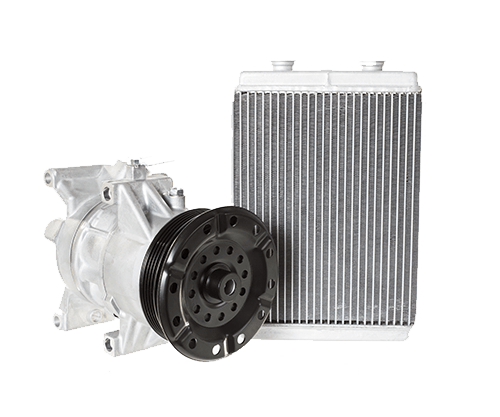
Your vehicle’s climate control system operates using two distinct processes: The A/C system uses a compressor and refrigerant (Freon) to absorb and remove heat from the cabin, while the heating system reroutes hot engine coolant through a small radiator (the heater core) behind your dashboard to blow warm air inside.
Because the system relies on pressurized gases, mechanical compressors, and a network of hoses, even a tiny pinhole leak can cause the entire system to fail.
4 Warning Signs Your A/C or Heater Needs Repair
If you notice any of these practical symptoms while driving around Arlington, it is time to bring your vehicle in for a professional HVAC inspection:
Blowing Warm Air on the Max A/C Setting: This is the most common complaint. It usually indicates a low refrigerant level due to a leak, a failing A/C compressor, or a broken blend door actuator inside the dashboard.
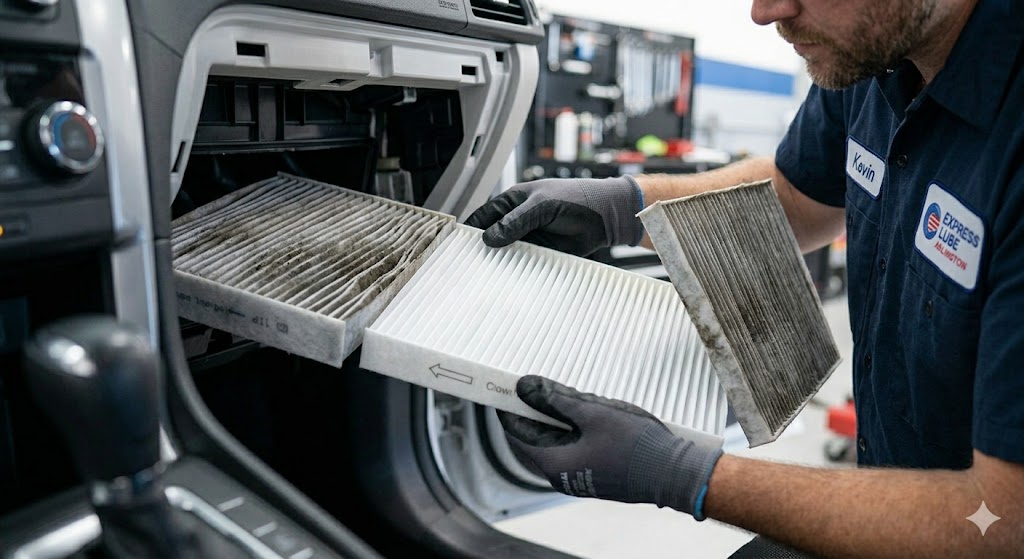
Weak Airflow from the Vents: If you have the fan turned all the way up but barely feel a breeze, you likely have a severely clogged cabin air filter or a failing blower motor.
Musty or Sweet Smells: A moldy, gym-sock smell means bacteria is growing on your A/C evaporator. However, if your vents smell sweet (like maple syrup) when you turn the heater on, you likely have a dangerous coolant leak in your heater core.
Loud Rattling or Squealing Noises: If turning on the A/C causes a loud squeal or heavy engine vibration, the A/C compressor clutch is likely seizing or the drive belt is slipping.
Common Climate Control Symptoms to Watch For:
- A/C blows warm or barely cool air
- Musty smells from vents
- Weak airflow from vents
- Interior won’t warm up in cold weather
- A/C or heat only works while driving
- Coolant puddles under the vehicle
- Overheating engine or dashboard temp spikes
Cooling System & Radiator Services
Your cooling system is critical to both your comfort and your engine’s health. Overheating can lead to warped heads, blown gaskets, or complete engine failure. That’s why we offer comprehensive inspections and maintenance for your radiator, thermostat, coolant, and associated components.
Cooling System Services We Offer:
- Complete radiator flush & coolant exchange
- Radiator cap, hose, and fan replacement
- Water pump & thermostat replacement
- Pressure testing for leaks
- Coolant sensor inspection & replacement
- Heater core and heater hose service
- Fan belt and serpentine belt replacement
- Radiator leak repair and diagnostics
We use high-quality antifreeze and safe chemical flushes to remove rust, scale, and contaminants from your system-ensuring proper flow and protection across every mile.
Signs You May Need a Radiator or Coolant Flush:
- Temperature gauge is running hot
- Bright green, yellow, or pink fluid leaking under the car
- Gunky, rust-colored radiator fluid
- Visible corrosion on radiator fins
- Your heater doesn’t blow warm air or takes too long to do so
Most manufacturers recommend coolant replacement every 30,000 to 60,000 miles, depending on driving habits and fluid type. If you’re unsure, stop by for a quick system evaluation.
Don’t sweat through another Texas summer. Keep your cabin comfortable year-round with professional heating and cooling services at Express Lube Arlington.
In the DFW metroplex, a working car air conditioner isn’t a luxury—it’s an absolute necessity. Whether you are battling 100-degree summer afternoons or needing your heater to defrost your windshield on a chilly winter morning, your vehicle’s HVAC system works hard. At Express Lube Arlington, our certified technicians provide comprehensive diagnostics, leak detection, and repairs for all automotive heating and cooling systems.
The Truth About “A/C Recharges” vs. Proper Repairs
Many drivers come into the shop asking for a quick “A/C recharge” using a can from the auto parts store.
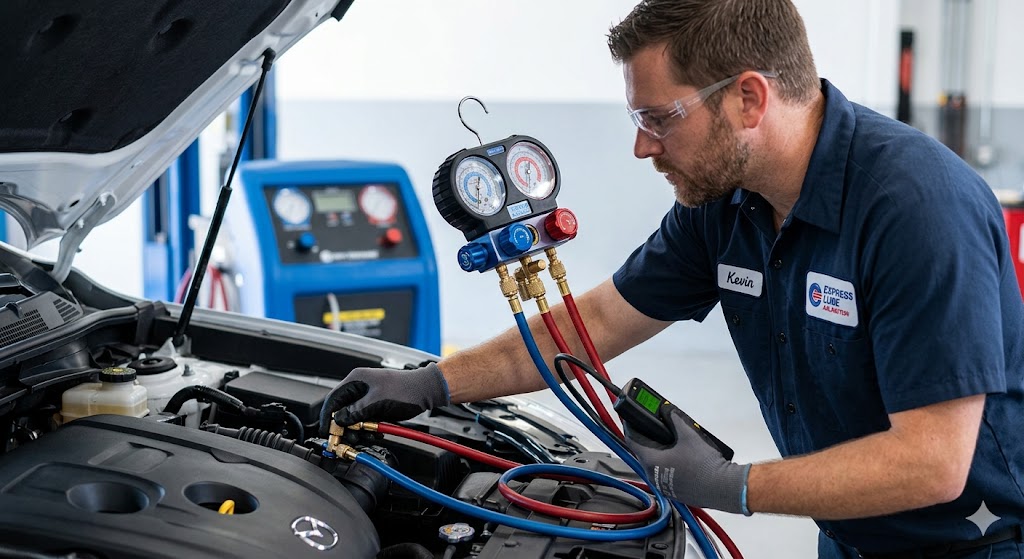
Here is the reality: Your vehicle’s air conditioning is a closed, sealed system. Refrigerant doesn’t just “burn off” or get used up over time like engine oil. If your vehicle is low on refrigerant, it means there is a leak somewhere in the system. Simply adding more Freon without fixing the leak is like putting air in a tire with a nail in it—it might work for a few days, but the problem will return. At Express Lube Arlington, we use UV dye and electronic sniffer tools to pinpoint the exact location of the leak (whether it’s an O-ring, a cracked hose, or a punctured condenser) so we can fix it right the first time.
R-134a vs. R-1234yf: Which Refrigerant Does Your Car Need?
Modern vehicles use different types of refrigerant depending on their manufacturing year. Vehicles built before 2014 generally use R-134a, while most newer vehicles use R-1234yf, a vastly more environmentally friendly, but technically complex, refrigerant.
It is absolutely critical that these two chemicals are never mixed. Using the wrong type of Freon can completely destroy your A/C compressor and contaminate the entire system, leading to thousands of dollars in repairs.
At Express Lube Arlington, our shop is fully equipped with dedicated recovery and recharge machines for both R-134a and the newer R-1234yf systems. We accurately verify your vehicle’s exact OEM requirements before servicing to ensure peak performance and compliance with environmental laws.
Pro Tips to Help Your A/C Survive Arlington Summers
Texas heat puts extreme stress on automotive cooling systems. Here are a few practical habits to extend the life of your A/C components:
Use the Recirculate Button: On 100-degree days, pulling fresh air from outside forces your A/C to work twice as hard. Pressing the “recirculate” button pulls the already-cooled air from inside the cabin and cools it further, removing strain from the compressor.
Run the A/C in the Winter: It sounds counterintuitive, but you should run your air conditioner for at least 10 minutes every couple of weeks during the winter. The refrigerant actually carries the oil that lubricates the internal compressor seals. Letting it sit unused for months causes the rubber seals to dry out and leak.
Park in the Shade: Whenever possible, use a windshield sunshade or park under a covered spot. A cooler dashboard means your A/C system doesn’t have to battle 140-degree interior temperatures when you start the car.
Why Express Lube & Car Care in Arlington?
- Full-service heating & A/C diagnostics and repairs
- Radiator and coolant services for all vehicles
- Certified technicians using advanced diagnostic tools
- Honest inspections and transparent pricing
- Premium fluids, parts, and system-safe cleaners
- 24-month / 24,000-mile limited warranty on qualifying repairs
Don’t let a broken heater or underperforming A/C ruin your drive. Whether you’re sweating through your commute or freezing on a winter morning, trust the experts at Express Lube & Car Care in Arlington to get your comfort back under control-fast.
Frequently Asked Questions (FAQs)
Why did my car A/C suddenly stop blowing cold air? Sudden A/C failure is often caused by a blown fuse, a snapped compressor belt, or a catastrophic failure of the A/C compressor itself. If it gradually stopped getting cold over a few weeks, it is usually a slow refrigerant leak.
How often should I change my cabin air filter? We recommend replacing your cabin air filter every 15,000 to 30,000 miles. If you drive frequently on dusty Texas backroads or suffer from severe spring allergies, changing it once a year is highly recommended to maintain strong airflow and clean cabin air.
Can a broken heater damage my engine? Yes, it absolutely can. Your heating system is directly connected to your engine’s cooling system. If your heater stops working because of a coolant leak or a clogged heater core, your engine is at a high risk of overheating, which can cause thousands of dollars in engine damage.
How much does an A/C diagnostic cost? Because modern A/C systems are complex, a proper diagnostic requires connecting the vehicle to a specialized pressure machine and performing a visual and electronic leak test. Contact our Arlington shop directly for our current diagnostic rates, which are always transparent and upfront.
Why does my car A/C only work when I am driving on the highway? If your A/C blows cold while you are driving down I-20 but gets warm when you are stopped at a red light, you likely have a failing condenser cooling fan. At highway speeds, the air rushing through the front grill naturally cools the condenser. At a stop, the fan must engage to pull air through. If the fan is broken, the heat cannot escape, and the A/C stops working.
Can I drive my car if the heater core is leaking? We strongly advise against it. A leaking heater core not only risks overheating your engine by draining your vital coolant supply, but it also blows vaporized engine coolant into the cabin. This coats your interior windshield with a greasy, impossible-to-wipe film that severely limits your driving visibility.
Is it normal for water to drip under my car after using the A/C? Yes, it is completely normal. Your A/C system removes humidity from the cabin as it cools the air. This moisture collects on the evaporator and drains out through a tube under the vehicle, leaving a small puddle of clear water. However, if the fluid is brightly colored (green, orange, or pink) or smells sweet, that is an engine coolant leak and needs immediate attention.
Why does my car heater take so long to get warm? Your car’s heater uses hot engine coolant to warm the cabin. It naturally takes a few minutes of driving for the engine to reach its proper operating temperature. If it takes an unusually long time, or never gets fully hot, you likely have a stuck thermostat or a low coolant level, which should be inspected immediately to prevent engine damage.
Does using the air conditioning affect my gas mileage? Yes, but the impact is minimal in modern vehicles. The A/C compressor is driven by the engine, so it does use a small amount of extra fuel. However, driving on the highway with your windows down creates aerodynamic drag that actually burns more gas than simply running the A/C. We recommend rolling the windows down at low city speeds, but rolling them up and using the A/C when driving on the highway.

Learn more about our commitment to automotive service excellence.