
Walking into a shop and getting handed a repair estimate can feel like reading a foreign language. Numbers, codes, labor categories, parts prices — it’s a lot to process when you’re already stressed about your car. But here’s the truth: auto repair estimates aren’t random. They follow a structured system built on industry-standard labor guides, parts pricing databases, and yes, a few Texas-specific legal rules you should absolutely know about. Once you understand how the pieces fit together, you stop feeling like a passenger in your own repair and start making smart, confident decisions about your vehicle.
Table of Contents
- What goes into an auto repair estimate?
- Labor rates and flat-rate billing explained
- Texas laws and your rights with repair estimates
- Common pitfalls and how to handle supplements
- Our hard-won lessons: What most drivers miss about estimates
- Ready for reliable auto repairs? Get expert estimates in Arlington
- Frequently asked questions
Key Takeaways
| Point | Details |
|---|---|
| Estimate basics | Auto repair estimates include labor, parts, fees, and possible supplements, each detailed for clarity and control. |
| Flat-rate billing | Repair shops use standard labor guides, so your bill may not match the technician’s actual hours spent. |
| Texas consumer rights | Written authorizations are crucial in Texas—get every approval in writing to avoid unwanted repairs. |
| Handling supplements | Review every supplement closely, and demand additional approval for unexpected charges. |
| Certified local service | Choosing certified Arlington shops means better transparency and reliable estimates for all repairs. |
What goes into an auto repair estimate?
Now that we’ve set the stage, let’s break down what actually appears on the estimate sheet.
Think of an estimate as a recipe. Every ingredient has a name, a quantity, and a cost. Miss one line item, and you won’t understand what you’re actually paying for. Estimates commonly break labor into categories such as body work, mechanical repairs, frame and structural work, and paint, and they also include procedures and fees like diagnostic scans, calibrations, and road tests. Supplements can be added after teardown when hidden damage surfaces.
Here’s a quick look at the main components you’ll see on most estimates:
| Line item | What it means | Example |
|---|---|---|
| Labor (body) | Time to repair or replace panels and trim | Door skin replacement |
| Labor (mechanical) | Engine, brake, or drivetrain work | Brake caliper replacement |
| Labor (paint) | Prep, prime, and paint time | Blend and refinish quarter panel |
| Parts (OEM) | Original manufacturer parts | Factory bumper cover |
| Parts (aftermarket) | Non-factory alternative parts | Third-party headlight assembly |
| Diagnostic fee | Time to scan and identify problems | Engine light scan |
| Calibration fee | Sensor or camera recalibration post-repair | ADAS camera reset |
| Supplement | Added charge after new damage is found | Rusted frame rail discovered on teardown |
Each one of those rows represents a real cost decision. If a line says “aftermarket” on a part you expected to be OEM, that’s worth a conversation. If you see a calibration fee and your car doesn’t have advanced driver assistance systems, ask why it’s there. Running a quick check on your vehicle’s setup through an engine diagnostics guide can help you understand what systems your car actually has before you walk into that conversation.
Here’s a quick rundown of fees that often surprise drivers:
- Diagnostic scan fee: Charged when a technician hooks up a scanner to read fault codes. This is separate from actually fixing the problem.
- Road test fee: Some shops charge for a post-repair test drive to verify the repair was successful.
- Sublet fee: If part of the work is sent to a specialist (like a glass shop or alignment center), that shows up as a sublet charge.
- Hazardous materials fee: Disposal of fluids, batteries, and other regulated materials.
- Shop supplies fee: Consumables like rags, cleaners, and tape used during the repair.
Pro Tip: Before you authorize any work, ask the service advisor to walk you through each line item out loud. You’re not being difficult. You’re being a smart consumer. A good shop will welcome the questions.
It’s also worth noting that most shops use industry repair software like Mitchell, CCC, or Audatex to generate estimates. These platforms pull from standardized databases, so the labor times and parts prices aren’t made up on the spot. They’re calculated from national data, adjusted for your specific year, make, and model. Knowing this can actually make you feel better about the numbers, because there’s a real system behind them, not just a finger in the air.
If your car is due for a Texas state inspection, keep in mind that inspection findings are separate from repair estimates. You can review what’s required through Texas inspection requirements so you’re never caught off guard by what’s legally necessary versus what’s recommended.
Labor rates and flat-rate billing explained
With the basic elements explained, next comes the crucial question: how are labor costs determined?
Here’s where a lot of drivers get confused. You might expect to pay for the exact number of hours a technician spends under the hood. That’s not usually how it works. Most shops use what’s called flat-rate billing, and once you understand it, the whole system makes more sense.
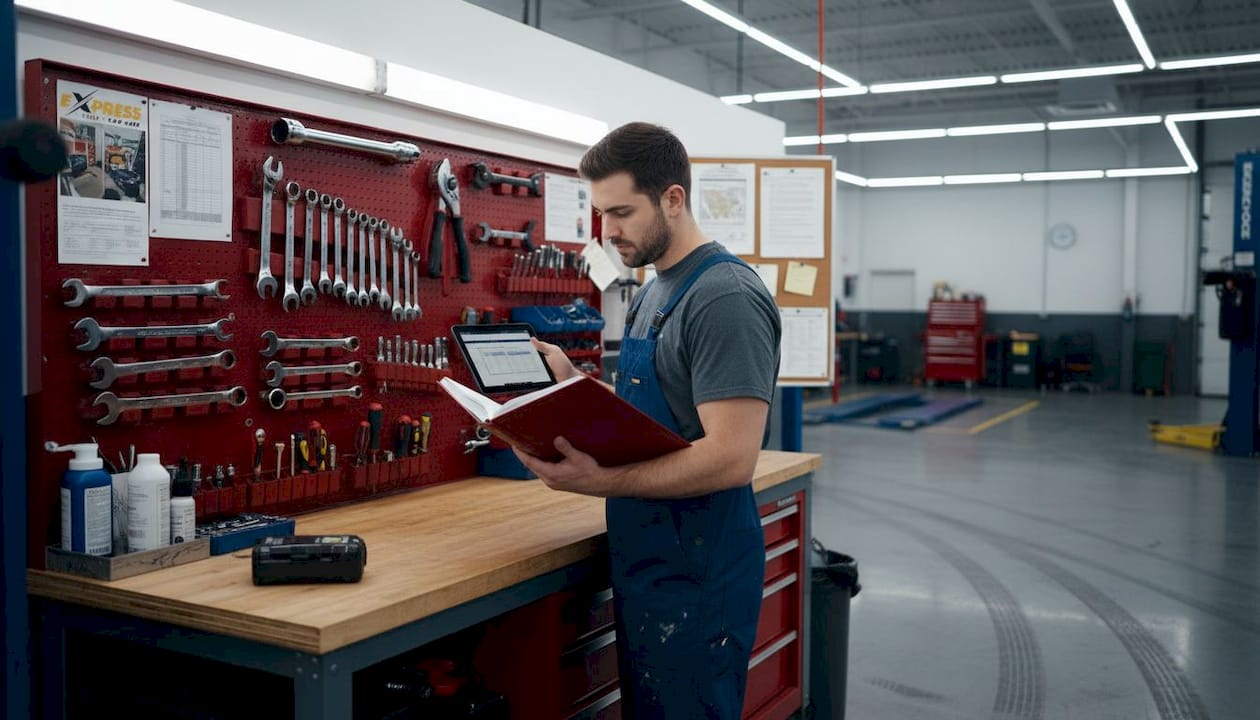
Flat-rate billing means your bill is calculated using published book hours multiplied by the shop’s labor rate for that specific repair. If the book says a water pump replacement takes 2.5 hours and the shop charges $120 per hour, you’re billed $300 in labor, regardless of whether the tech finished in 2 hours or 3.5 hours.
Here’s a side-by-side look at how flat-rate and actual-time billing compare:
| Factor | Flat-rate billing | Actual-time billing |
|---|---|---|
| Basis for charge | Published labor guide (book hours) | Real clock time on the job |
| Cost if repair takes longer | You pay book time | You pay more |
| Cost if repair is faster | You pay book time | You may pay less |
| Predictability | High | Low |
| Common in shops? | Very common | Less common |
“Flat-rate billing equals book hours multiplied by the shop’s labor rate for a specific repair. This can cost the customer the same whether the technician finishes faster or slower than the guide time.”
This system has pros and cons. On the upside, you get a predictable quote that won’t balloon just because a job got complicated. On the downside, if a technician hits an unexpected snag, like a bolt that’s corroded solid or a part that needs to be re-ordered, the shop may need to file a supplement to cover the extra time. This is especially common on older vehicles here in the DFW area where rust and wear can hide problems until things are already taken apart.
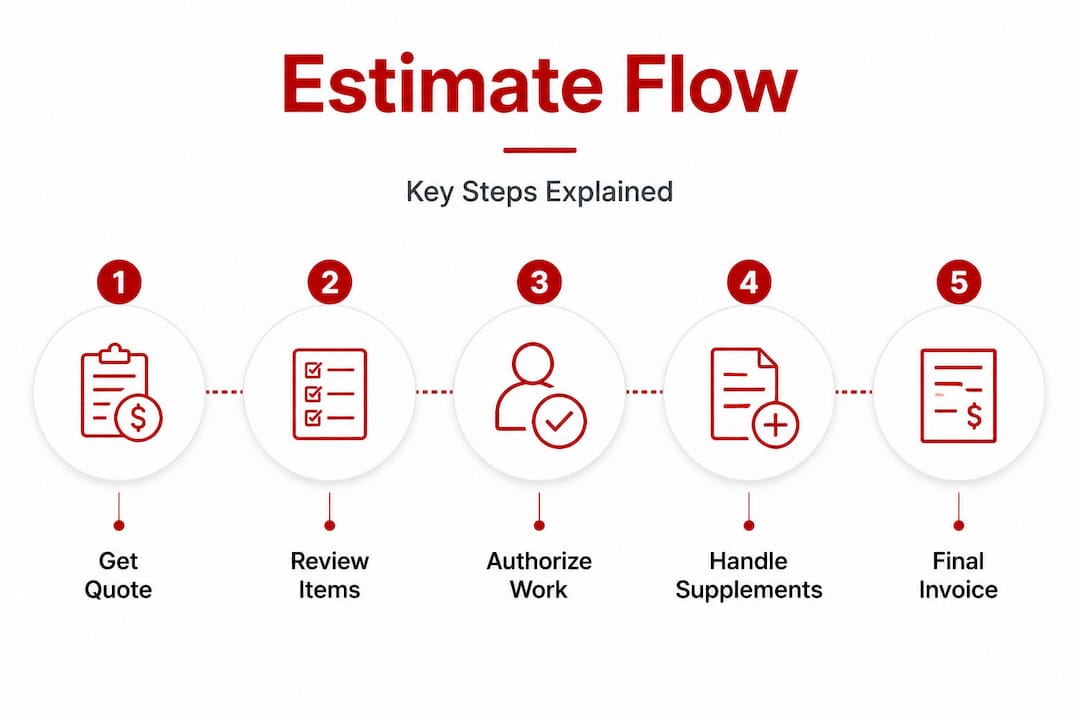
Here’s a quick numbered breakdown of how flat-rate billing flows from start to finish:
- Technician identifies the repair needed (brake pads, for example)
- Shop looks up the book time in a labor guide (e.g., 1.2 hours)
- Book time is multiplied by the shop’s hourly rate ($115/hr × 1.2 = $138 in labor)
- You receive a written estimate with that labor cost clearly listed
- Work begins after your authorization
- If unexpected complications arise, a supplement is created and re-authorization is requested
Understanding this flow is genuinely powerful. When you see flat-rate billing explained in practice, you can ask smarter questions and avoid sticker shock when the final invoice arrives.
Texas laws and your rights with repair estimates
Knowing the numbers is great, but understanding your legal rights is just as important.
Here’s something that surprises a lot of Arlington drivers: Texas does not always require a shop to give you a written estimate before starting work. Texas shops may not mandate a written estimate in every situation, but experts strongly recommend getting all key authorizations in writing, especially when separating inspection approval from actual repair approval, to avoid accidentally agreeing to major repairs without knowing the full cost.
Let that sink in for a second. You could drop your car off, agree to an inspection over the phone, and come back to find a full repair was completed without your explicit written approval. This is why your habits matter as much as the law.
Here are the most important rights and practices to keep in mind:
- Always request a written estimate before any work begins, even if the shop says it isn’t required.
- Sign separately for inspection vs. repair. Approving a diagnostic check is not the same as approving the repairs that follow.
- You can decline additional work discovered during the repair without penalty.
- Ask for itemized estimates, not just a total number, so you can review each cost independently.
- Keep copies of everything you sign, including initial estimates and any supplement approvals.
Pro Tip: When you drop off your car, send a quick text or email to the service advisor confirming what you authorized. That creates a paper trail even if nothing official is signed. It’s a small habit that can save you a big headache.
Working with certified repair authorizations through a shop that’s upfront about the process makes this so much easier. When estimate transparency is built into how a shop operates, you’re not fighting for information. It’s just part of the deal.
Important stat to know: According to consumer advocacy data, billing disputes are among the most common complaints filed against auto repair shops in Texas. A written estimate dramatically reduces your exposure to that kind of conflict.
Common pitfalls and how to handle supplements
Even with careful estimates, unexpected costs can pop up. Here’s what to watch for next.
Supplements are probably the biggest source of frustration for drivers who thought they had a clear number. You agreed to $800. Now the shop is calling to say it’s $1,200. What happened? Usually, something was hidden until the repair was already in progress.
Supplements and re-approved additional work are common when real-world repairs differ from guide time estimates, especially for older vehicles or cars that have been previously repaired. A fender that looks clean from the outside might have corrosion underneath. A brake job might reveal a caliper that’s seized beyond what the original estimate covered.
Here’s how to stay in control when supplements come up:
- Pause before saying yes. A supplement is a new authorization. Treat it like a new estimate.
- Ask for a written supplement with an itemized list of what was found and what it costs to fix.
- Request photos of the hidden damage if possible. Reputable shops will often offer this without being asked.
- Compare the supplement to the original estimate to make sure nothing from the original scope has been double-billed.
- Ask whether the supplement is essential or optional. Sometimes extra work is truly necessary for safety. Other times, it’s a nice-to-have that can wait for a future visit.
Pro Tip: When handling supplement charges, never feel rushed. A shop that pressures you to approve additional work on the spot without giving you time to review is a red flag. Good shops respect that you need a moment to think.
The best way to minimize supplement surprises is to choose a shop that does a thorough inspection upfront and communicates clearly before work begins. That doesn’t eliminate supplements entirely, because some damage really is invisible until teardown, but it does reduce the shock factor significantly.
Our hard-won lessons: What most drivers miss about estimates
Here’s the perspective that most articles won’t give you, because it comes from years of watching real repair situations play out on real cars in Arlington.
Most drivers walk into a shop thinking the estimate is the final number. It isn’t. It’s an educated starting point. The shops that are honest about this upfront are the ones worth trusting. The shops that present estimates as locked-in prices and then load up the invoice with undiscussed add-ons? That’s a business model built on confusion, not service.
We’ve seen it play out so many times. A driver approves a $600 job and drives away with a $950 invoice because they didn’t know to ask whether the estimate included fluids, shop supplies, or a diagnostic fee. Not every add-on is a scam. Some are completely legitimate. But you deserve to know about them before, not after.
There’s also a real challenge that shops face with flat-rate guides on older or high-mileage vehicles. The labor database was built around clean, well-maintained cars. A 2009 pickup with 180,000 miles and Texas road grime doesn’t always cooperate with the book time. The guides say 1.5 hours; the actual job takes 3. That’s not the shop padding the bill. That’s physics. Rust doesn’t read the manual.
Our honest advice? Don’t just review real-world repair scenarios online. Ask your shop directly: “What could make this estimate change?” A great service advisor will give you a straight answer. That conversation, right at the beginning, sets the tone for the whole repair experience.
True transparency in auto repair is rarer than it should be. But it’s absolutely worth demanding. When you find a shop that welcomes your questions and explains every line item without getting defensive, hold onto that relationship. It’s more valuable than a coupon.
Ready for reliable auto repairs? Get expert estimates in Arlington
If you’re ready to put this knowledge to work, here’s where Arlington drivers can find reliable help.
Understanding estimates is only useful if the shop you’re working with plays it straight. At Express Lube & Car Care, we’re a certified shop near you and proud RepairPal Certified Shop and CarFax Top-Rated Service Center, which means transparency and accountability are baked into how we operate, not just how we talk.
When you bring your vehicle to us, you get a written estimate before any work starts, clear explanations of every line item, and no surprises when you come to pick up your car. If a supplement is needed, we’ll call you, explain what was found, and get your approval before we touch anything extra. We also offer a mechanical repair discount to help keep your costs manageable. Browse our full range of complete auto repair services and see why DFW drivers keep coming back.
Frequently asked questions
Are auto repair estimates legally required in Texas?
No, Texas shops may not mandate a written estimate in every case, but getting estimates and all authorizations in writing is strongly recommended to protect yourself from unexpected charges.
How does flat-rate billing affect my repair costs?
Flat-rate billing means you pay based on a standard guide time, not actual hours worked. Flat-rate billing equals book hours multiplied by the shop’s labor rate, so the price stays the same whether the job runs fast or slow.
What are supplements in a repair estimate?
Supplements are additional charges added when hidden damage is discovered after the repair begins. Supplements may appear after disassembly and always require your re-approval before the extra work proceeds.
Can I approve only certain parts of an estimate?
Yes, you absolutely can. Texas consumer-protection expectations support getting agreements in writing and clearly authorizing inspection separately from repairs, so you’re always in control of what gets done.