
You’re standing at the service counter, your car just got towed in, and the technician slides an estimate across the desk that makes your stomach drop. Sound familiar? Most Arlington drivers feel that same knot of anxiety when unexpected repairs hit, and the instinct is to just sign and hope for the best. But here’s the thing: you have more power at that counter than you realize. This guide walks you through every step of negotiating car repair prices, from knowing your rights under Texas law to the exact words to use when asking for a better deal.
Table of Contents
- What you need to know before you negotiate
- Step 1: Get multiple quotes and use benchmarks
- Step 2: Master the negotiation conversation
- Step 3: Review, approve, and verify before paying
- Why negotiation works and what most drivers miss
- Save more with certified local repair and special offers
- Frequently asked questions
Key Takeaways
| Point | Details |
|---|---|
| Always get written estimates | Written, itemized estimates protect you from surprise costs and provide leverage for negotiation. |
| Gather multiple quotes first | Comparing local and online quotes gives you negotiating power and can save you hundreds of dollars. |
| Negotiate all parts and labor | Ask about using aftermarket parts and clarify fees to lower your total bill before approving any repairs. |
| Double-check all approvals | Only sign off on inspections and repairs you understand, and always verify the final bill against your agreement. |
What you need to know before you negotiate
With the problem clear, let’s review the essentials every Arlington driver should know before haggling on price.
Knowledge is your biggest asset walking into any repair shop. Before you even think about asking for a discount, you need to understand the rules of the game. Texas has specific consumer protections around auto repair, and knowing them puts you in a much stronger position than the average customer who just nods and signs.
Texas law and written estimates
Texas law requires repair shops to provide a written estimate before starting any work if the total cost will exceed a certain threshold. That estimate is not just a formality. It’s a legal document that protects you from surprise charges. According to Texas consumer rights, you should always ask for an itemized written estimate and make sure authorizations are clear, ideally separate, so you don’t accidentally approve higher costs.
One of the biggest mistakes drivers make is signing a single form that covers both the inspection and the actual repair. Those should be two separate authorizations. If you sign one blanket form, the shop can technically proceed with everything at once, and you lose your window to review the findings before committing to the full job.
What certified shops bring to the table
Working with certified repair shop protections at ASE or RepairPal certified facilities gives you an added layer of security. These shops are held to higher standards of transparency and workmanship. They’re more likely to honor written estimates, explain their pricing clearly, and stand behind their work with warranties.
Here’s a quick look at what to confirm before any work begins:
| Item to confirm | Why it matters |
|---|---|
| Itemized written estimate | Breaks down parts, labor, and fees separately |
| Separate inspection authorization | Lets you review findings before approving repairs |
| Parts grade listed (OEM vs. aftermarket) | Affects cost and warranty coverage |
| Labor rate per hour | Lets you compare against other shops |
| Warranty terms in writing | Protects you if the repair fails |
Before you leave the shop for estimates, make sure you also know the range of repair services you might need, so you can ask informed questions.
- Always request a written estimate before authorizing any work
- Keep inspection and repair authorizations on separate documents
- Ask specifically about warranty coverage on parts and labor
- Confirm the shop’s hourly labor rate upfront
Pro Tip: If a shop refuses to give you a written estimate or pressures you to sign a combined authorization, that’s a red flag worth paying attention to.
Step 1: Get multiple quotes and use benchmarks
Once you know your rights, it’s time to gather intel. Here’s how to stack the odds in your favor.
Think of collecting quotes like doing your homework before a big purchase. You wouldn’t buy a TV without checking a few prices first, right? Car repairs are no different, except the stakes are usually a lot higher. Getting at least three local quotes gives you real data to work with, and that data is your secret weapon at the negotiating table.
How to collect quotes the smart way
Start by calling or visiting two or three shops in the Arlington area and describing the same problem in the same terms. Be specific: mention the symptoms, the make and model of your car, and any diagnostic codes if you have them. You want comparable quotes, not apples to oranges comparisons. Multiple quotes and online estimates give you real negotiation leverage before you approve any work.
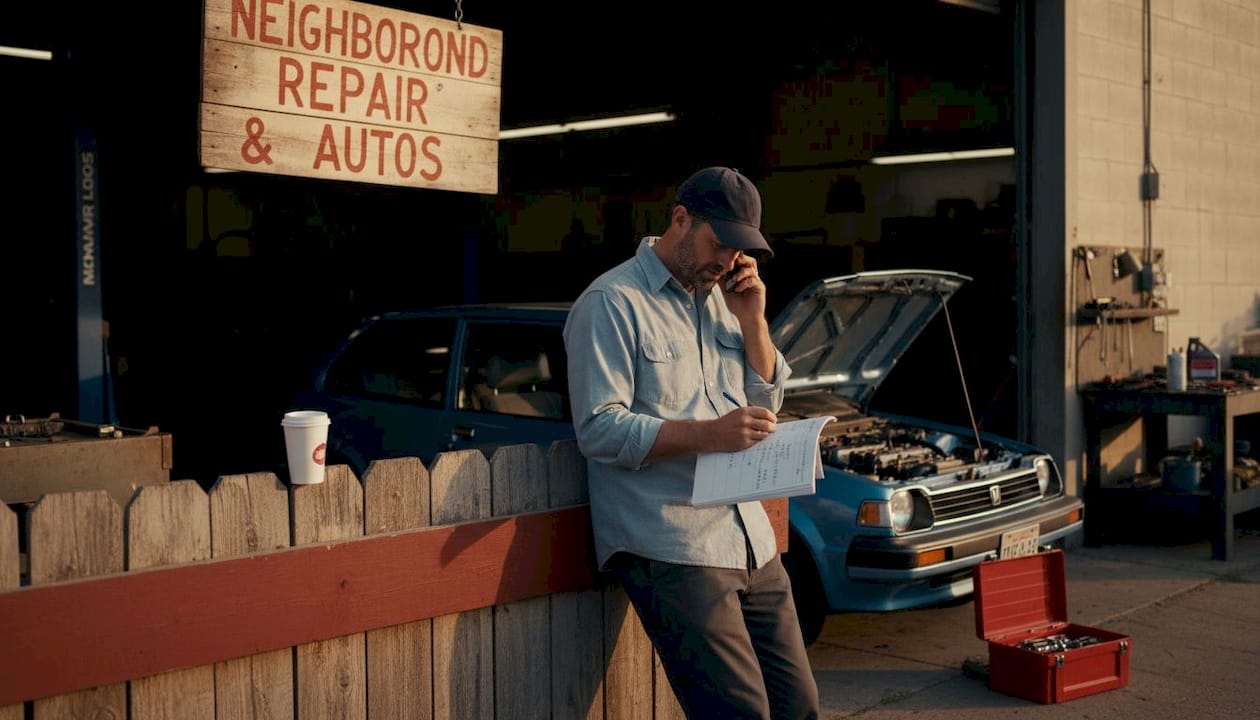
Online repair cost estimators are another powerful tool. Sites that let you enter your vehicle information and zip code can give you a solid ballpark for what a job should cost in your area. Using a repair cost estimator as a benchmark and comparing apples to apples on parts, labor, and fees is one of the most effective ways to walk into a negotiation prepared.
Here’s a simple comparison table you can fill in yourself:
| Shop | Labor rate/hr | Parts cost | Total estimate | Warranty offered |
|---|---|---|---|---|
| Shop A | $95 | $180 | $355 | 12 months |
| Shop B | $110 | $160 | $390 | 6 months |
| Shop C | $85 | $200 | $365 | 90 days |
When you lay it out like this, you can see that the cheapest total doesn’t always mean the best deal. A shorter warranty or higher labor rate can cost you more in the long run.
How to use quotes as leverage
- Gather at least three written or emailed quotes for the exact same repair
- Note the labor hours each shop estimates, not just the total price
- Check online estimators to see if the quotes fall within a reasonable range
- Bring printed or digital copies of competing quotes to your preferred shop
- Ask the shop directly if they can match or beat the lowest comparable offer
You can also check for mechanical repair discounts and auto repair coupons before your visit. For bigger jobs like engine repair options or compare electrical system repairs, the price differences between shops can be significant, making this step even more valuable.
Pro Tip: Showing a shop a printed quote from a competitor often triggers a price match or an offer to throw in a free service. Shops would rather keep your business than lose it over a small margin.
Step 2: Master the negotiation conversation
Armed with your quotes, here’s how to approach the conversation and get those prices down.
Negotiating at a repair shop feels uncomfortable for a lot of people. There’s this unspoken assumption that the price is fixed, like you’re at a grocery store rather than a service business. But the reality is that most shops have flexibility built into their pricing, especially on labor and parts selection. The key is knowing how to ask.
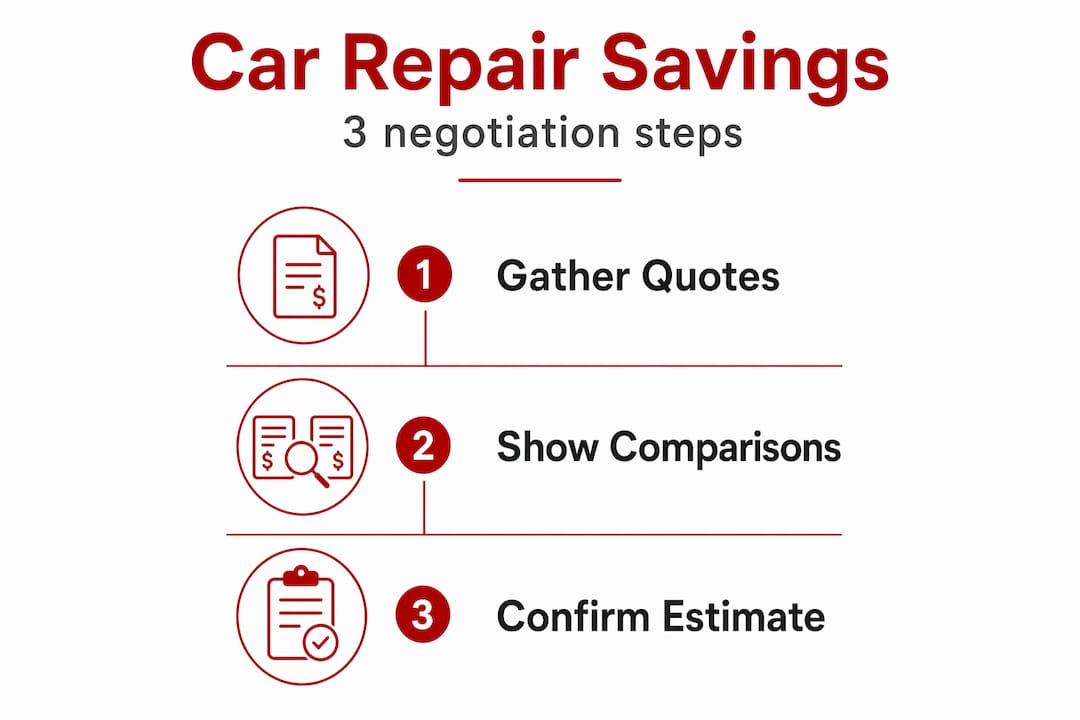
Opening the conversation
Start politely and confidently. You’re not accusing anyone of overcharging. You’re simply doing what any informed customer would do. Something like this works well:
“I’ve gotten a few estimates for this repair, and I’d love to work with you. Is there any flexibility on the price, or are there options that could bring the total down?”
That’s it. No confrontation, no ultimatum. Just a calm, direct question that signals you’ve done your homework. A practical negotiation approach includes requesting a written, itemized estimate, asking what’s included, whether parts can be aftermarket or remanufactured to reduce cost, and whether diagnostic fees can be credited toward approved repairs.
Breaking down the estimate
If a price feels high, don’t just push back on the total. Separate labor from parts in your negotiation, because it’s often the parts selection and labor time that drive the differences, not some vague “room to bargain.” Ask specifically:
- “Can you show me the labor hours you’re estimating for this job?”
- “Are these OEM parts, or is there an aftermarket option that carries a warranty?”
- “If I approve the repair today, can the diagnostic fee be credited toward the total?”
- “Is there a package deal if I’m getting multiple services done at the same visit?”
Aftermarket and remanufactured parts can sometimes save by using non-OEM parts without sacrificing quality, especially for older vehicles where OEM parts aren’t critical for resale value. And combining repairs in a single visit often reduces labor time since the car is already disassembled. That’s a legitimate way to maximize repair value without asking for a handout.
Pro Tip: Asking whether the diagnostic fee can be credited toward the repair is one of the most effective moves you can make. It shows you’re an informed customer, and many shops will say yes just to keep the job.
Step 3: Review, approve, and verify before paying
Negotiation done, protect your wallet by verifying the agreement before you pay.
You’ve done the hard work. You have a revised estimate you feel good about. Now comes the part most people skip: actually reading what they’re about to sign. This is where a lot of the savings you just negotiated can quietly disappear if you’re not paying attention.
What to check line by line
Go through the estimate like you’re reviewing a contract, because you are. Look for these specific things:
- Parts grade: Does it say OEM, aftermarket, or remanufactured? Make sure it matches what you agreed on
- Labor hours: Compare to what the technician quoted verbally. If the hours changed, ask why
- Additional fees: Shop supplies, disposal fees, and environmental charges can add up fast
- Warranty terms: Is the warranty on both parts and labor? Is it in writing on the estimate?
| Red flag | What it might mean |
|---|---|
| Unusually low total estimate | Possibly missing repairs or lower-grade parts |
| Vague line items like “misc. repairs” | Could be padding or unauthorized work |
| No warranty listed | Shop may not stand behind the work |
| Labor hours seem excessive | May be billing for time not actually spent |
A collision repair estimate that comes in unusually low can indicate an incomplete assessment or use of lower-grade parts. The same logic applies to any repair. If a number looks too good to be true, it’s worth asking exactly what’s included.
Protections at certified shops
AAA Approved Auto Repair facilities provide written estimates and include protections that prevent shops from exceeding the written estimate without your authorization. Reputable Texas shops operate on the same principle. If additional work is discovered mid-repair, they must contact you for approval before proceeding.
This is why choosing certified shops in Arlington matters so much. Certification isn’t just a marketing badge. It’s a commitment to a specific standard of transparency. For detailed repairs like shocks and struts, where labor time can vary widely, having that written protection is especially valuable.
What you should and shouldn’t approve
Approve only what’s on the written estimate you reviewed. If a technician calls mid-repair with additional recommendations, ask for a revised written estimate before saying yes. Never approve work verbally over the phone without a follow-up in writing.
Why negotiation works and what most drivers miss
Here’s a perspective most articles won’t give you, and it comes from watching this play out on the shop floor day after day.
Most Arlington drivers walk in assuming the price on the estimate is as fixed as a price tag at a department store. It’s not. Shops build their pricing with some flexibility because they know costs vary: parts availability changes, labor time estimates aren’t always exact, and keeping a good customer long-term is worth more than squeezing every dollar out of a single visit.
The real reason most people leave money on the table isn’t that they didn’t ask. It’s that they asked the wrong way, or they came in without any preparation. A customer who walks in with competing quotes, knows the difference between OEM and aftermarket parts, and asks calm, specific questions is immediately recognized as someone who did their homework. Shops respect that. They’re far more likely to work with you than with someone who just demands a lower price without any supporting information.
There’s also a mindset shift worth making. Negotiation isn’t confrontation. It’s a conversation between two parties trying to reach a fair agreement. When you approach it that way, with clarity, respect, and documentation, the whole dynamic changes. You’re not the difficult customer. You’re the prepared one.
Working with shop certifications like ASE and RepairPal already signals that a shop values transparency. That environment makes negotiation easier because both sides are working from the same set of facts.
Save more with certified local repair and special offers
Ready to put your new negotiation skills to work? Here’s how to save big on your next visit.
At Express Lube & Car Care in Arlington, we’re a RepairPal Certified Shop and a CarFax Top-Rated Service Center, which means you already have built-in protections the moment you walk through our door. Our ASE-certified technicians give you itemized estimates, clear authorizations, and the kind of honest communication that makes the whole process feel less stressful.
Bring your competing quotes, ask your questions, and take advantage of our local mechanical repair coupons to stretch your budget even further. Whether you need routine maintenance or a more involved repair, Express Lube & Car Care Arlington is ready to work with you, not just for you. Check out our certified repair shops in Arlington page to learn more about what our certifications mean for your wallet and your peace of mind.
Frequently asked questions
Are car repair prices negotiable in Arlington, TX?
Yes, most repair shops allow negotiation, especially when you have multiple quotes as leverage and use written estimates to support your case.
What should I request in writing before approving repairs?
You should get an itemized written estimate and clearly separate authorizations for inspection and repair. As Texas consumer protection guidelines note, keeping those authorizations separate prevents accidentally approving higher costs.
How can I tell if a repair estimate is too low?
If an estimate is unusually low, it may be missing required repairs or using lower-quality parts. Incomplete assessments are a common reason estimates come in below what the job actually requires.
What protections do certified repair shops offer?
Certified shops like ASE and RepairPal facilities must provide written estimates and cannot exceed them without your approval. AAA Approved facilities specifically include this protection as part of their standards, and reputable Arlington shops follow the same practice.