

Oil changes are one of those car expenses that sneak up on you. They feel routine, almost invisible, until you look back and realize you’ve spent hundreds of dollars in a single year. The good news? There are real, practical ways to save money on oil changes without cutting corners on your engine’s health. Whether you’re considering a do it yourself oil change or just want to stop overpaying at the shop, this guide gives you a clear path forward.
Table of Contents
- Key takeaways
- How to save money on oil changes by knowing your intervals
- Finding deals, tools, and materials before you start
- Doing your own oil change safely
- Saving money at the shop without sacrificing quality
- Verifying your oil change was done right
- My honest take on saving money with oil changes
- Get real savings at Express Lube & Car Care Arlington
- FAQ
Key takeaways
| Point | Details |
|---|---|
| Skip the 3,000-mile myth | Most modern engines need oil changes every 5,000 to 7,500 miles, not every 3,000. |
| DIY can cut costs in half | A synthetic oil change at home costs around $35 versus about $100 at a shop. |
| Coupons are worth hunting | Groupon and local shop specials regularly offer discount oil change services that include bundles. |
| Small parts matter a lot | Never skip a drain plug crush washer. A $2 part prevents leaks that cost far more to fix. |
| Quality beats cheapness | Using quality synthetic oil at the right interval saves more money long-term than always buying the cheapest option. |
How to save money on oil changes by knowing your intervals
The single biggest mistake drivers make is changing their oil too often. That’s money flushed straight out of your wallet. The old “every 3,000 miles” rule is outdated. Most modern engines have a recommended oil change interval of 5,000 to 7,500 miles, depending on oil type and driving habits.
If your car uses full synthetic oil, the numbers get even better. Synthetic oil change intervals range from 7,500 to 15,000 miles under normal driving conditions. That could mean half as many oil changes per year compared to what some quick-lube shops recommend.
Here’s what to watch so you never change too early or too late:
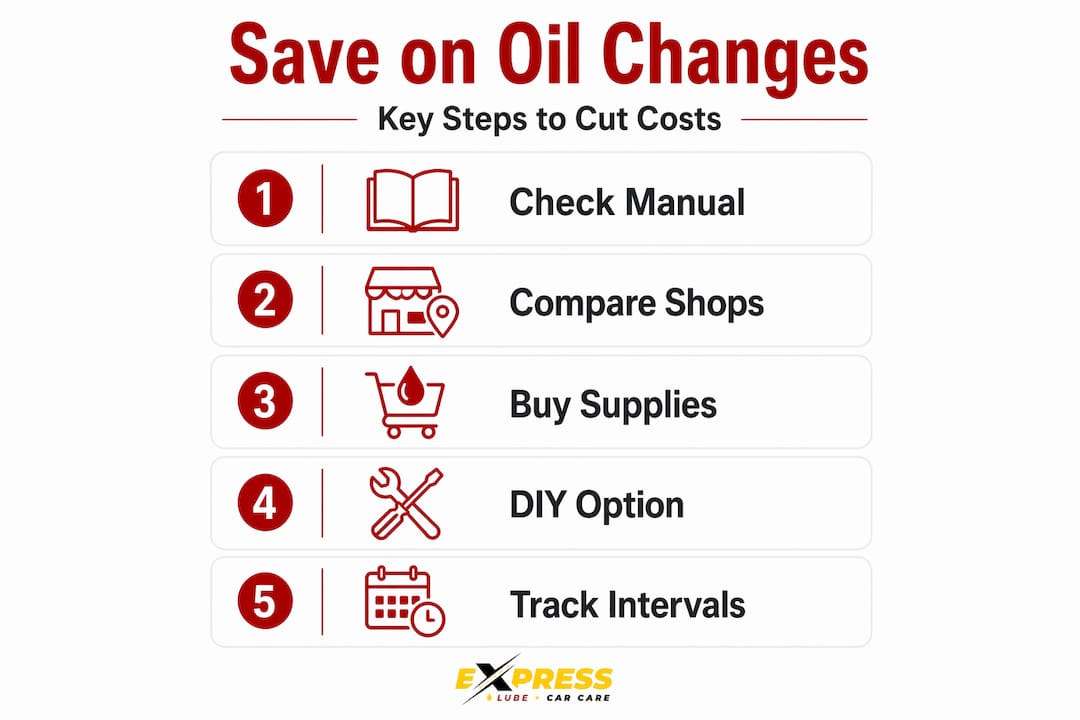
- Check your owner’s manual. Your manufacturer’s recommendation is the only interval that actually matters for your specific engine.
- Use your oil life monitor. Most cars built after 2010 have one. It calculates real-time oil degradation based on your driving patterns, not just mileage.
- Watch for warning signs. Dark, gritty oil on the dipstick, a burning smell, or the oil pressure warning light are all signals to act sooner rather than later.
- Know your driving type. Short trips, lots of stop-and-go, or towing a trailer all count as “severe” driving and can shorten your interval somewhat.
- Don’t let the shop decide for you. Some service centers put stickers recommending 3,000 miles to get you back sooner. Your manual, not a sticker, sets the schedule.
Understanding your actual frequency of oil changes is the foundation of any good oil change savings guide. Get this right, and you’ve already saved money before you’ve done a single thing else.
Finding deals, tools, and materials before you start
Whether you’re going DIY or heading to a shop, preparation is where the savings really stack up. Let’s talk about both paths.
DIY vs. shop: the real cost comparison
A DIY synthetic oil change costs about $35 for oil and filter, compared to roughly $100 at a professional shop. That’s a real difference over a year with two or three changes. But the math isn’t purely financial. Modern vehicle designs sometimes require special tools and safety equipment, and the time and mess involved can make DIY feel less worthwhile for some drivers.
| Option | Approx. Cost | Time Required | Skill Level |
|---|---|---|---|
| DIY (synthetic) | ~$35 | 45 to 60 minutes | Moderate |
| Shop (synthetic) | ~$100 | 30 to 45 minutes | None |
| Shop with coupon | ~$50 to $70 | 30 to 45 minutes | None |
If you’re comfortable under a car and own basic tools, DIY is genuinely worth it. If you’re not, a coupon at a quality shop gets you surprisingly close to DIY prices without the hassle.
How to hunt down deals before spending anything
- Look for oil change coupons on Groupon. Bundles that include tire rotations or inspections give you more value per dollar.
- Check the websites of local shops directly. Many post specials that never make it to deal sites.
- Search “oil change coupons near me” before every single appointment. New deals appear constantly.
- Buy oil and filter separately from an auto parts store. Bundled kits at retailers like Advance Auto Parts often cost less than buying items individually at the counter.
One thing to watch: drain plug crush washers cost about $2 and are critical for preventing leaks, but they’re sometimes missing from bundled kits. Add one to your cart every time. Skipping it is a cheap oil change tip that costs you on the back end.
Pro Tip: When comparing shop prices, always ask what’s included. Some shops advertise a low price but charge separately for the filter, washer, or disposal fee. Get the full-service price upfront.
Deciding between synthetic versus conventional oil also plays directly into your total annual cost. Synthetic costs more per change but stretches your intervals significantly, often coming out cheaper over a full year.
Doing your own oil change safely
Ready to go the DIY route? Here’s how to do it right the first time. Safety first: always use proper jack stands. Never rely on a floor jack alone to support the car while you’re under it.
- Warm up the engine briefly. Run it for two to three minutes. Warm oil drains faster and more completely than cold oil.
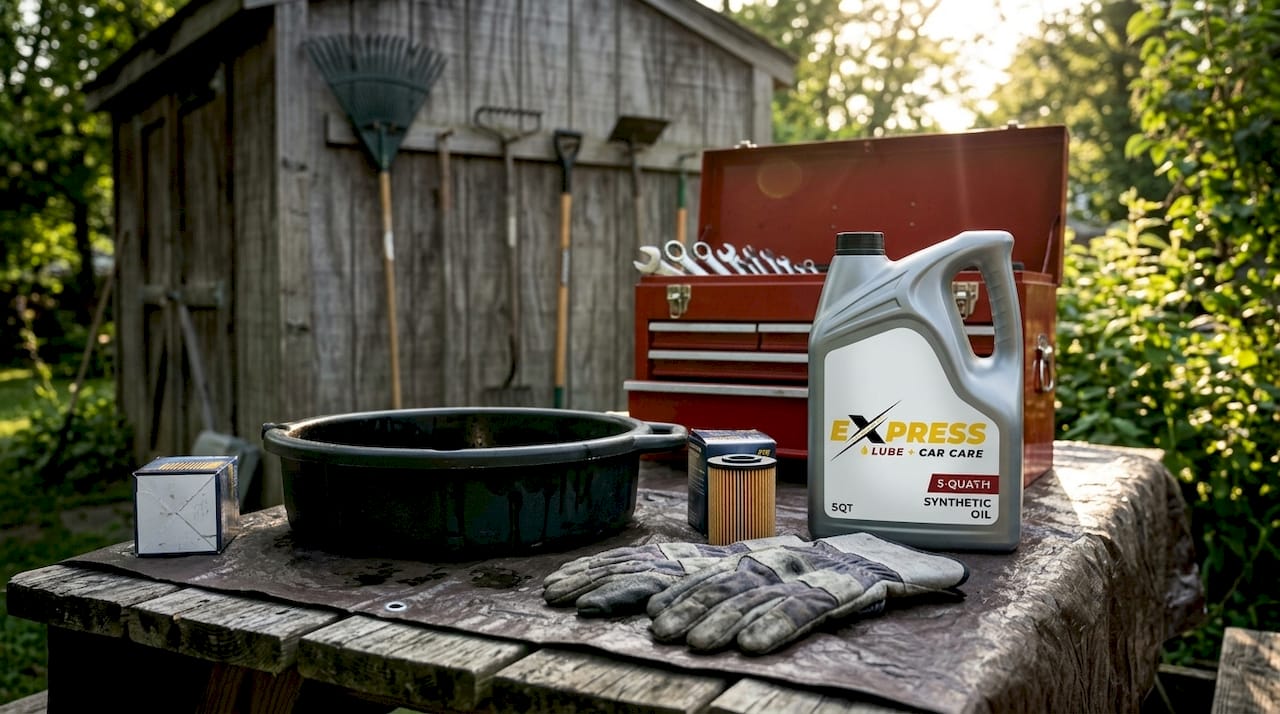
- Gather your gear. You need a drain pan, an oil filter wrench, the correct oil and filter for your vehicle, a new crush washer, gloves, and safety glasses.
- Locate the drain plug. Slide under the car and position your drain pan beneath it. Loosen the plug counterclockwise with a wrench, then remove it by hand.
- Let it drain completely. This usually takes five to ten minutes. While it drains, remove the old oil filter.
- Check the old filter’s seal. This is where many people trip up. Always check that the old rubber gasket came off with the filter. If it sticks to the engine block and you put the new filter on top of it, you’ve got a serious oil leak on your hands.
- Install the new filter. Hand-tighten it until the gasket makes contact, then turn it an additional three-quarters of a turn. Do not use a wrench to tighten it.
- Replace the crush washer and reinstall the drain plug. Tighten to your vehicle’s torque spec if you have a torque wrench, or snug-plus-a-quarter-turn by hand if not.
- Fill with fresh oil. Check your manual for the correct type and quantity.
- Run the engine for 30 seconds. Check under the car for leaks. Then shut it off, wait two minutes, and check the dipstick level.
- Dispose of used oil properly. Most auto parts stores accept used oil for free recycling.
Pro Tip: Write the mileage and date on a piece of masking tape and stick it inside your hood. It’s a simple maintenance log that helps you track intervals and is a great asset if you ever sell the car.
Modern cars also require you to reset the maintenance reminder after a DIY change. The process varies by make and model, so search specifically for your vehicle’s reset procedure. Skipping this step means the warning light keeps nagging you even after a perfectly good oil change.
Saving money at the shop without sacrificing quality
Not everyone wants to crawl under a car on a Saturday morning. That’s completely fair. The goal is still to reduce oil change costs without ending up with shoddy work. Here’s how to work the system smartly.
- Bundle your services. Routine maintenance bundles that include fluid checks, tire rotations, and top-offs during oil changes add real value and help you avoid costly repairs down the road.
- Ask about loyalty programs. Many local shops offer a punch card or account discount after a few visits. It adds up quickly.
- Avoid upsells you don’t need. Shops often suggest air filters, cabin filters, and wiper blades during an oil change. Some of those may be legitimate, but check your manual first.
- Compare synthetic pricing. Not all shops charge the same for the upgrade to synthetic. Calling around takes five minutes and can save $20 to $30 per visit.
- Use franchise specials with caution. Big chains run impressive coupons, but they also have high upsell pressure. Go in knowing exactly what you want and decline politely but firmly.
The best places for cheap oil changes aren’t always the cheapest shops on the list. A shop with a $49 synthetic special that respects your time, skips the upsell pressure, and does the job right is worth more than a $39 deal that adds on three things you didn’t ask for.
Verifying your oil change was done right
Whether you did it yourself or paid someone else, taking two minutes to verify the work protects everything you just saved. Here’s your post-change checklist:
- Check the oil level on the dipstick. It should sit between the MIN and MAX marks, ideally closer to MAX.
- Look under the car. No drops on the ground means a good drain plug and filter seal.
- Confirm the oil type used. If you asked for full synthetic, make sure the sticker or receipt reflects that.
- Log the service. Write down the mileage, date, oil brand, and viscosity. This matters for warranty claims and resale value.
- Watch for warning signs in the first 50 miles. A burning smell, oil pressure light, or visible dripping are signals to stop driving and investigate. Ignoring these can turn a cheap oil change into an expensive engine repair.
Proper engine maintenance steps go hand in hand with confirming your oil change was done correctly. A good oil change is the foundation. Verifying it seals the deal.
My honest take on saving money with oil changes
I’ve watched drivers chase the cheapest deal and end up spending three times as much fixing what went wrong afterward. My experience has been pretty clear on one thing: the biggest savings come from doing oil changes at the right interval with quality oil, not from finding the rock-bottom price every single time.
When I started following manufacturer intervals instead of the old 3,000-mile habit, the savings were immediate and obvious. I was doing fewer changes per year with zero engine problems. That’s the foundation.
On the DIY side, I enjoy it when I have the time and the right setup. But I’ve also learned that a good shop offering a legitimate oil change special with a trusted technician is often the smarter call. The time and convenience tradeoff is real, and there’s no shame in admitting that.
The one place I never cut corners? The filter and the crush washer. Saving $3 on a cheap filter and then dealing with a clogged oil passage later is not a win. Buy quality parts and the math still works in your favor.
— Hassan
Get real savings at Express Lube & Car Care Arlington
When you want professional service that actually respects your wallet, Expresslubearlington is worth the stop. Their current oil change specials include bundled deals and synthetic options that make professional service genuinely competitive with DIY pricing. And because their ASE-certified technicians handle it right the first time, you’re not going back to fix anything.
Expresslubearlington is also a RepairPal Certified Shop and a CarFax Top-Rated Service Center, which means the quality is verified, not just claimed. You can check out their oil change tips guide for more expert advice on keeping your engine healthy between visits. DFW drivers trust them for a reason. Go see why.
FAQ
How often should I really change my oil?
Most modern engines need oil changes every 5,000 to 7,500 miles, and cars using full synthetic oil can often go 10,000 to 15,000 miles. Always follow your owner’s manual, not the sticker on your windshield.
Is a DIY oil change actually worth the savings?
A DIY synthetic oil change costs around $35 compared to about $100 at a shop, so the savings are real. Whether it’s worth it depends on your comfort level, available tools, and how much you value your time.
Where can I find discount oil change services near me?
Check Groupon, local shop websites, and search “oil change coupons near me” before every appointment. Bundled deals that include tire rotations or inspections give you the most value per dollar.
What’s the most common mistake in a DIY oil change?
Leaving the old oil filter gasket stuck to the engine block is one of the most costly errors. Always confirm the rubber seal came off with the old filter before installing the new one.
Does using synthetic oil actually save money long-term?
Yes. Even though synthetic oil costs more per change, its longer interval means fewer changes per year. Over 12 months, most drivers come out ahead by switching to a quality synthetic oil.