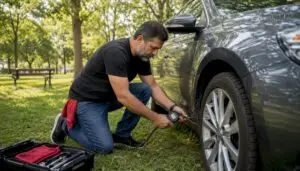

The fastest way to avoid costly engine repairs is to check your oil and coolant regularly, follow your manufacturer’s oil-change intervals, address warning lights the same day they appear, and replace your timing belt or chain on schedule. ASE-certified technicians consistently report that the majority of catastrophic engine failures they see were entirely preventable. A full engine replacement averages $5,500 nationally, with typical costs ranging from around $3,000 to $10,000 for mainstream vehicles, while luxury and performance models can reach $15,000–$25,000.
Start here — your immediate action checklist:
- Check your oil level and color today (pull the dipstick; dark, gritty oil means change it now)
- Confirm your coolant reservoir is between the MIN and MAX marks
- Look under the car for any fresh drips or puddles
- Note any dashboard warning lights currently on
- Find your owner’s manual and confirm when your next oil change and timing belt service are due
Table of Contents
- A quick preventive checklist you can follow this month
- System-by-system maintenance that prevents expensive failures
- Early warning signs you should never ignore
- Common costly engine repairs and how routine care prevents them
- When to act and what repairs actually cost in the U.S.
- How to choose a trustworthy shop and keep records that save you money
- The three basics that stop catastrophic engine failure
- Key Takeaways
- What we see every day at the shop
- Expresslubearlington keeps your engine out of the danger zone
- Useful sources and references
- FAQ
A quick preventive checklist you can follow this month
You don’t need a full weekend or a mechanic’s toolkit to dramatically cut your engine-failure risk. These steps take under an hour total and can be spread across the next 30 days.
Today:
- Pull the dipstick with the engine cold, wipe it clean, reinsert, pull again, and read the level. Low oil is an emergency, not a “check later” situation.
- Pop the hood and squeeze your radiator hoses. They should feel firm, not mushy or cracked. Soft spots mean the rubber is failing from the inside out.
- Scan for any active warning lights on your dashboard. If the check-engine light is on, an OBD-II code reader (available at AutoZone or O’Reilly for free) tells you exactly what the car is flagging.
This week:
- Check your coolant level in the overflow reservoir. If it’s low, top it off with the correct coolant type listed in your owner’s manual — mixing types can cause gel deposits that clog your radiator.
- Pull your air filter and hold it up to a light source. If you can’t see light through it, it’s time to replace it. A clogged filter starves the engine of air and forces the fuel system to compensate.
This month:
- Confirm your oil-change date and mileage. If you’re within 500 miles of your interval, just get it done. Skipping even one change under severe-service conditions (frequent short trips, towing, extreme heat) can accelerate sludge buildup faster than most people realize.
Pro Tip: When you check your oil, look at the color on the dipstick, not just the level. Fresh oil is amber and translucent. Oil that looks black and smells burnt has already lost most of its protective additives. Don’t wait for the mileage interval if the oil looks like that.
System-by-system maintenance that prevents expensive failures
Think of your engine as five interconnected systems. When one gets neglected, the others pay the price. Here’s what to watch, when to act, and what happens if you don’t.
Oil system
Oil is your engine’s lifeblood, and the right grade matters as much as the change interval. Using 5W-30 when your engine calls for 0W-20 might seem like a minor substitution, but thicker oil flows more slowly at cold start — exactly when most engine wear occurs. Follow the grade listed in your owner’s manual, not what the parts store recommends off the shelf.
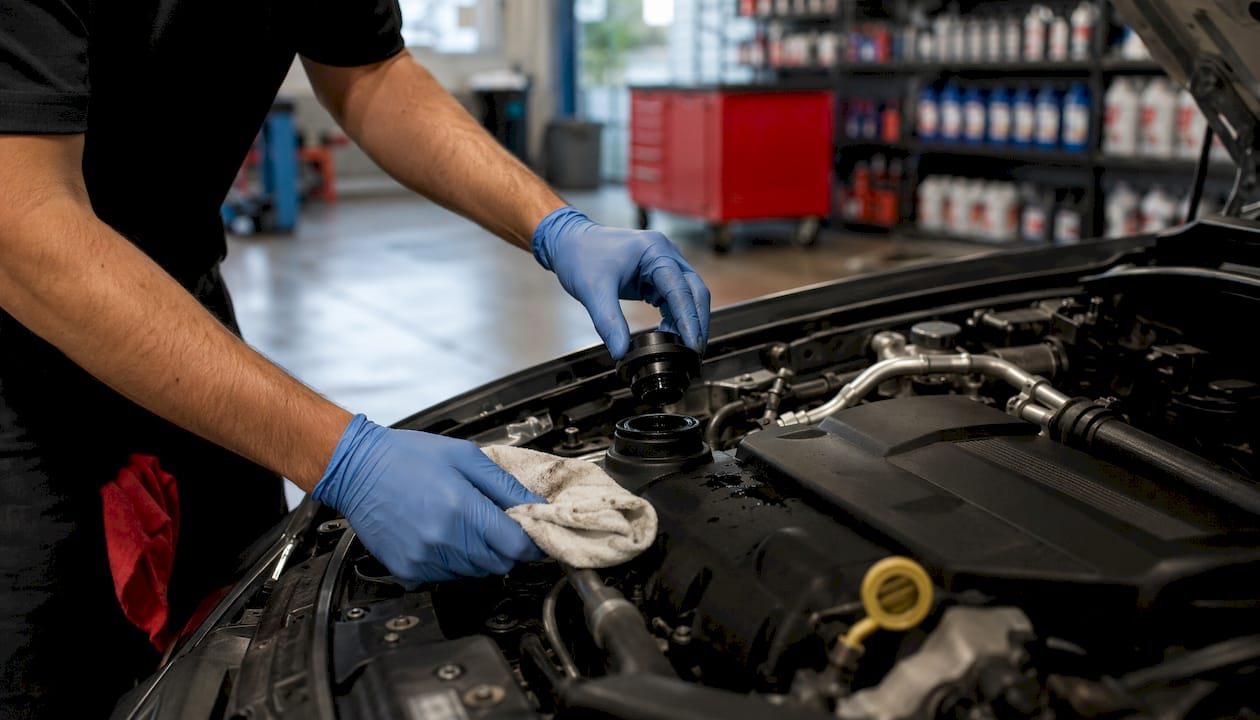
Routine oil changes prevent the sludge buildup that blocks oil galleries and starves bearings. Once a bearing runs dry, you’re looking at a full engine rebuild. The interval most manufacturers recommend for oil changes depends on oil type and driving conditions, with severe-service conditions shortening these intervals.
Cooling system
Overheating is the single fastest way to destroy an engine. A blown head gasket, warped cylinder head, or cracked block can all result from a single overheat event. The cooling system’s weak points are the thermostat, water pump, radiator cap, and hoses. Check coolant level monthly and inspect hoses for swelling or soft spots, as manual inspection often catches material fatigue before any sensor triggers.
Air and fuel systems
A dirty air filter makes your engine work harder for every combustion cycle. Most manufacturers recommend replacement at regular intervals, though driving in dusty environments can necessitate more frequent changes. Fuel quality matters too. Top-tier gasoline contains detergent additives that keep injectors clean; consistently using lower-grade fuel without additives can leave deposits that disrupt spray patterns and reduce combustion efficiency.
Ignition system
Worn spark plugs cause misfires. A misfire means unburned fuel passes into the exhaust, which overheats and eventually destroys your catalytic converter — a repair that can run $1,000–$2,500 on its own. Copper plugs typically have a shorter lifespan, while iridium or platinum plugs last significantly longer, varying based on manufacturer recommendations and usage. Symptoms of ignition trouble include rough idle, hesitation on acceleration, and a flashing check-engine light (a flashing light almost always means an active misfire).
Timing belt and timing chain
This is the one most owners forget until it’s too late. A timing belt failure at highway speed can bend valves, destroy pistons, and turn a $500 replacement into a $4,000–$8,000 engine repair. Timing belts need replacement at intervals specified by the manufacturer, which can vary widely. Timing chains last longer but are not maintenance-free — they stretch over time, and a rattling noise on cold start is a warning you should not ignore.
Recommended maintenance intervals
| Service | Typical Interval | Severe-Service Interval |
|---|---|---|
| Oil change (conventional) | Every 5,000–10,000 miles | Every 3,000–5,000 miles |
| Oil change (full synthetic) | Every 7,500–10,000 miles | Every 5,000–10,000 miles |
| Air filter replacement | Every 15,000–30,000 miles | Every 10,000–15,000 miles |
| Coolant flush | Every 30,000–50,000 miles | Every 25,000–30,000 miles |
| Spark plugs (copper) | Every 30,000 miles | Every 20,000–25,000 miles |
| Spark plugs (iridium/platinum) | Every 60,000–100,000 miles | Every 50,000–75,000 miles |
| Timing belt | Every 60,000–100,000 miles | Per manufacturer spec |
Early warning signs you should never ignore
Your car is constantly sending signals. The problem is most owners don’t know which ones are “watch it” and which ones are “pull over right now.” Here’s the priority breakdown.
Stop driving immediately if you notice:
- Temperature gauge in the red or steam from the hood. Overheating is an engine killer. Pull over safely, shut the engine off, and do not open the radiator cap. Call a shop.
- Oil pressure warning light. This is not a “drive to the shop” situation. It means oil pressure has dropped to a level where bearings are running dry. Every second you keep driving multiplies the damage.
- Loud knocking or rod knock. A deep, rhythmic knock from the engine block usually means a bearing has failed. Continuing to drive will turn a $1,500 repair into a full rebuild.
- Heavy blue or white smoke from the exhaust. Blue smoke means burning oil; white smoke (not condensation on a cold morning) often means coolant is entering the combustion chamber — a head gasket symptom.
Schedule a diagnostic within 48 hours if you notice:
- A steady (not flashing) check-engine light
- Rough idle or hesitation under acceleration
- Fuel smell inside the cabin
- A sudden drop in fuel economy with no change in driving habits
What to tell your mechanic: Give them the symptom, when it started, and any recent changes (new fuel station, recent repair, mileage milestone). An OBD-II scan is the fastest and most cost-effective first step. Many shops, including Expresslubearlington, will read codes as part of a diagnostic visit so you know exactly what you’re dealing with before authorizing any work.
Common costly engine repairs and how routine care prevents them
Let’s talk numbers, because the math on prevention is pretty hard to argue with.
| Repair | Typical U.S. Cost Range | What Usually Causes It | What Prevents It |
|---|---|---|---|
| Timing belt failure | $1,500–$4,000+ | Missed replacement interval | Replace on schedule (60k–100k miles) |
| Blown head gasket | $1,500–$2,500 | Overheating, low coolant | Coolant checks, thermostat maintenance |
| Turbocharger failure | $1,000–$3,500 | Oil starvation, dirty oil | Regular oil changes, correct oil grade |
| Full engine rebuild | $2,500–$5,000+ | Accumulated neglect | All of the above, consistently |
| Engine replacement | $3,000–$10,000+ | Catastrophic failure | Prevention; remanufactured engines often the best replacement option |
A full engine replacement averages $5,500 nationally for mainstream vehicles, though the range is broad: $3,000 to $10,000 is typical, while luxury or performance models can cost $15,000–$25,000. When facing a repair of this size, a remanufactured long block usually offers better value and factory-spec reliability; used engines entail greater risk unless mileage is clearly verified under 60,000.
The hard truth about neglect: Skipping routine maintenance — oil changes, coolant flushes, spark plugs — doesn’t just delay a small repair. It turns low-cost items into high-cost powertrain failures. The cascade is predictable: dirty oil leads to sludge, sludge starves bearings, bearings fail, and suddenly you’re pricing engines.
When to act and what repairs actually cost in the U.S.
Timing matters as much as the service itself. Here’s a practical guide to when things need attention and what you’ll pay if you skip them.
Mileage-based replacement guide:
- Every 5,000–10,000 miles: Oil and filter change (adjust for oil type and driving conditions)
- Every 15,000–30,000 miles: Air filter inspection and replacement
- Every 30,000–50,000 miles: Coolant flush, fuel filter (if serviceable), spark plugs (copper)
- Every 60,000–100,000 miles: Timing belt, spark plugs (iridium/platinum), serpentine belt inspection
- Every 100,000+ miles: Consider a full fluid service and a high-mileage vehicle inspection to catch wear items before they cascade
Severe service accelerates everything. If you tow regularly, make frequent short trips under 5 miles, drive in extreme heat (hello, DFW summers), or sit in heavy stop-and-go traffic, cut every interval by 20–30%.
Cost comparison: prevention vs. repair
| Service | Preventive Cost | Repair Cost if Skipped |
|---|---|---|
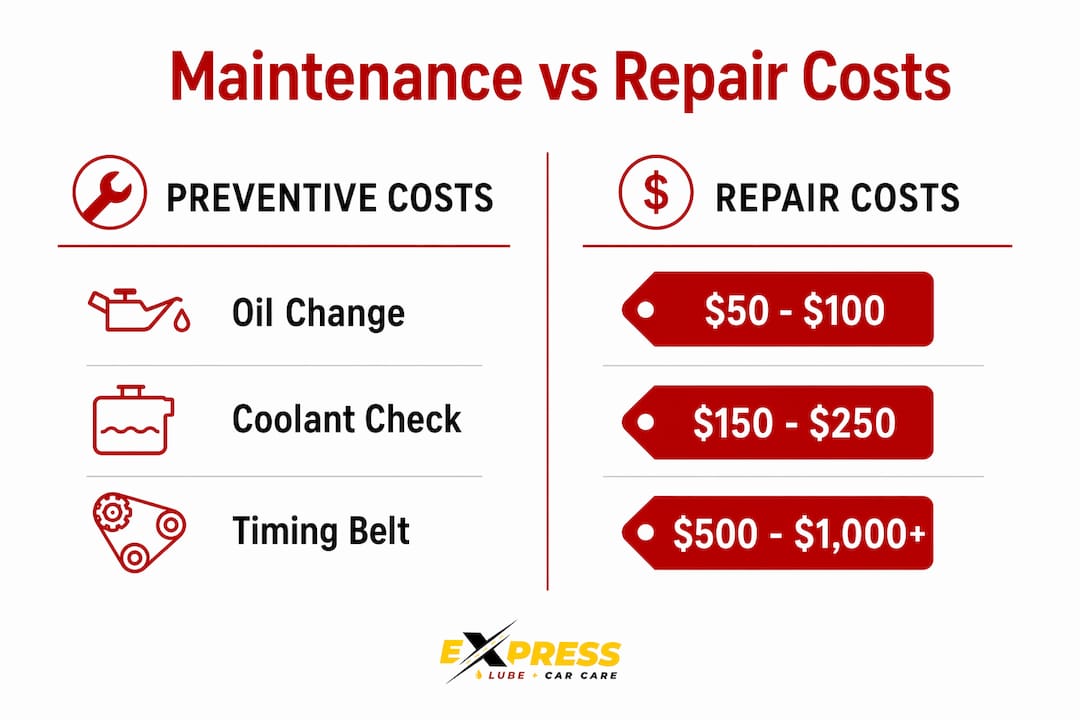
| Oil change | $50–$100 | $2,500–$5,000+ (bearing/rebuild) |
| Coolant flush | $100–$150 | $1,500–$2,500 (head gasket) |
| Timing belt replacement | $500–$1,000 | $1,500–$4,000+ (engine damage) |
| Spark plug replacement | $100–$300 | $1,000–$2,500 (catalytic converter) |
Labor rates across the U.S. vary significantly by region and shop type, often leading to a wide range in hourly charges. Getting two or three quotes for any repair over $500 is worth the hour it takes. For major work, ask specifically whether the shop uses OEM parts, aftermarket, or remanufactured components — that choice alone can shift your total bill by hundreds of dollars.
How to choose a trustworthy shop and keep records that save you money
A good mechanic is worth more than any single repair. Here’s how to find one and make sure you’re getting what you pay for.
Trust signals that actually matter
- ASE certification: The National Institute for Automotive Service Excellence certifies technicians by specialty. An ASE-certified shop means the techs working on your car have passed standardized competency tests.
- RepairPal certification: RepairPal-certified shops agree to fair pricing standards and a minimum 12-month/12,000-mile warranty on repairs. You can cross-reference RepairPal cost estimates before you walk in.
- CarFax Top-Rated designation: Based on verified customer reviews, this signals consistent service quality over time.
- Written estimates: Any shop that won’t give you a written, itemized estimate before starting work is a shop to walk away from.
Questions to ask before you authorize work
- What specific parts are you replacing, and are they OEM or aftermarket?
- What warranty covers this repair (parts and labor separately)?
- How many labor hours are you billing, and what’s your hourly rate?
- If you find additional problems during the repair, will you call me before proceeding?
- Can I see the old parts after the job is done?
Keep a maintenance log — it pays off
A simple digital folder with photos of receipts, mileage at each service, and diagnostic reports does three things: it helps you stay on schedule, it supports warranty claims if a repair fails, and it adds real value at resale. Buyers and dealers both pay more for vehicles with documented service histories.
Pro Tip: Use your phone’s notes app or a free spreadsheet to log every service: date, mileage, shop name, what was done, and cost. Takes 90 seconds per visit and can save you hundreds in disputed warranty claims or negotiation leverage when you sell.
The three basics that stop catastrophic engine failure
Here’s the thesis that Bell Performance puts plainly, and it’s backed by decades of engine chemistry research: keep your fuel clean, keep your oil clean, and keep your fluid levels within spec. Everything else in engine maintenance flows from those three basics.
What that looks like in practice:
- Clean fuel: Use top-tier gasoline when possible. If your injectors are already showing deposits, a quality fuel-system cleaner used at the correct interval can help — but don’t reach for an engine flush if your engine has high mileage and known sludge issues. Bell Performance specifically cautions that aggressive flushes on compromised engines can dislodge deposits that then block oil galleries, making things worse, not better.
- Clean oil: Change it before it degrades, not after. Dark, gritty oil is already past the point of full protection. Synthetic oil holds its viscosity and additive package longer, which is why it earns its higher price tag on engines that run hard.
- Correct fluid levels: Low coolant, low power steering fluid, and low transmission fluid all create friction and heat in systems that depend on fluid for both lubrication and cooling. A five-minute monthly check costs nothing.
Pro Tip: The preventive maintenance approach that consistently delivers the best return isn’t one big annual service — it’s small, regular checks that catch problems before they compound. Think of it as compound interest, but for your engine.
Key Takeaways
Staying on top of oil changes, coolant checks, and timing belt replacement is the most reliable way to avoid engine repairs that cost thousands of dollars.
| Point | Details |
|---|---|
| Oil changes are the highest-ROI habit | Skipping oil changes leads to sludge and bearing failure; a $50–$100 change prevents $2,500–$5,000+ in damage. |
| Timing belt failure is the most avoidable catastrophe | Replace every 60,000–100,000 miles per manufacturer spec; failure can cost $1,500–$4,000+ in engine damage. |
| Engine replacement averages $5,500 nationally | Remanufactured engines offer better long-term value than used cores and typically include warranties. |
| OBD-II diagnostics are your cheapest first step | Reading codes early identifies problems before they escalate; many shops offer this as part of a diagnostic visit. |
| Expresslubearlington is a RepairPal Certified, CarFax Top-Rated shop | ASE-certified technicians, written estimates, and a 24-month warranty make it a trusted prevention partner in the DFW area. |
What we see every day at the shop
The most common story we hear at Expresslubearlington goes something like this: a driver notices a warning light, figures it’s probably nothing, and waits a few weeks. By the time they bring the car in, what started as a $150 sensor fix has turned into a $2,000 repair because the underlying issue ran unchecked. We see it with oil pressure lights, coolant leaks, and misfires that quietly cook catalytic converters over thousands of miles.
The smaller version of that story happens with oil changes. A customer comes in for a routine service and we pull out oil that looks like tar. The engine isn’t knocking yet, but the sludge is already coating the oil galleries. Catch it at that stage and a flush and fresh oil usually sorts it out. Wait another 5,000 miles and you’re talking about bearing replacement.
Our recommendation is straightforward: when a warning light comes on, get the codes read first. It’s the fastest, lowest-cost diagnostic step available, and it tells you exactly whether you’re dealing with a $50 sensor or a $500 repair. From there, you can make an informed decision instead of guessing.
Expresslubearlington keeps your engine out of the danger zone
Skipping maintenance doesn’t save money — it just delays the bill and makes it bigger. Expresslubearlington is a full-service shop built around exactly the kind of prevention this article covers: routine oil changes, coolant service, timing belt replacement, fuel-system cleaning, and full diagnostics, all performed by ASE-certified technicians.
As a RepairPal Certified Shop and CarFax Top-Rated Service Center, Expresslubearlington backs every major repair with a 24-month warranty and provides written, itemized estimates before any work begins. If a larger repair comes up, auto repair financing is available so cost doesn’t force you into a bad decision. DFW drivers can book an oil change or diagnostic visit online or stop by — keeping your engine healthy starts with one appointment.
Useful sources and references
These sources back the cost figures, maintenance intervals, and prevention guidance throughout this article.
| Source | What It Covers |
|---|---|
| Bell Performance — Engine Destruction Causes | The three-basics prevention framework (fuel, oil, fluids); engine flush risks |
| CostWhale — Engine Replacement Cost | National average engine replacement cost ($5,500) and typical ranges |
| Empire Auto Protect — Most Expensive Car Repairs | Cost ranges for major repairs; remanufactured vs. used engine guidance; severe-service intervals |
| Cost Insider — Internal Engine Damage Guide | Low/average/high repair and rebuild cost breakdowns |
| USA Today — DIY Car Maintenance Tips | Manual inspection techniques; hose squeeze test; oil-level checks |
| MrLeeCarExperts — Engine Replacement Cost USA | Regional labor rate variation; comparison shopping guidance |
| Torque Notes — Repairing a Car With 300k Miles | Repair vs. replace decision framework; TCO analysis |
FAQ
When is a car no longer worth repairing?
A widely used rule of thumb: if the repair cost exceeds 50% of the vehicle’s post-repair market value, replacement often makes more financial sense. A documented service history and recently replaced major components can shift that threshold in favor of repair.
What is the most expensive engine repair?
A full engine replacement averages $5,500 nationally for mainstream vehicles and can reach $15,000–$25,000 for luxury or performance platforms. Timing belt failure causing valve and piston damage is the most expensive repair that routine maintenance directly prevents.
Is rebuilding an engine with 300,000 miles worth it?
It depends on the vehicle’s overall condition and documented maintenance history. If the engine and transmission are otherwise sound and the car has a strong reliability record, a targeted repair can still offer a lower cost per mile than purchasing a replacement vehicle with an unknown history.
What is the 30-60-90 rule for cars?
The 30-60 rule refers to common service milestones: at 30,000 miles, inspect and replace air filters, fuel filters, and fluids; at 60,000 miles, address spark plugs, timing belts, and brake components. Always cross-reference with your specific manufacturer’s schedule, since intervals vary by vehicle.