
Most drivers assume the brake pad does all the stopping. That’s a reasonable guess, but it’s only half the story. The role of brake caliper is what actually makes the pad useful. Without the caliper converting your foot’s pressure into a mechanical grip on the spinning rotor, the pad just sits there doing nothing. Think of the caliper as the hand and the pad as the glove. One holds the other in place and gives it power. Understanding how this system works, what can go wrong, and how to keep it healthy gives you a real edge in caring for your vehicle safely.
Table of Contents
- Key takeaways
- The role of brake caliper in disc braking systems
- Brake caliper types and when each one applies
- Common signs your brake caliper is failing
- Maintenance and replacement guidance
- Performance factors and the future of caliper tech
- My honest take on caliper knowledge
- Keep your brakes in expert hands
- FAQ
Key takeaways
| Point | Details |
|---|---|
| Calipers convert force | They translate hydraulic brake fluid pressure into a physical clamp on your rotors. |
| Two main caliper types | Floating calipers suit everyday driving; fixed calipers are built for performance applications. |
| Early symptoms save money | Uneven pad wear, pulling, and burning smells are the first warning signs to catch before rotor damage happens. |
| Lifespan is not indefinite | Most calipers last 75,000 to 100,000 miles, but harsh conditions shorten that significantly. |
| Professional inspection matters | Slide pins, seals, and fluid condition all affect caliper health and should be checked regularly. |
The role of brake caliper in disc braking systems
When you press the brake pedal, you set off a chain reaction inside your braking system. The pedal compresses brake fluid inside the master cylinder. That fluid travels under pressure through brake lines to the caliper sitting at each wheel. Inside the caliper, the pressurized fluid pushes against one or more pistons. The pistons extend outward and press the brake pads against both sides of the spinning rotor. Friction slows the rotor, and that slows your wheel.
This process sounds simple, but the physics behind it are precise. Brake calipers clamp pads onto rotors using hydraulic pressure that gets multiplied through piston area. Once you release the pedal, the pressure drops and the pads retract slightly to avoid dragging against the rotor. That micro-retraction is handled by the caliper’s internal seals and is one reason seal condition matters so much. A caliper that does not release properly causes unnecessary heat, accelerated pad wear, and a pulling sensation in the steering.
The key components at work
The function of brake caliper relies on several parts working together. The pistons are the muscle, the seals are the precision, the caliper bracket and slide pins (on floating designs) are the guide, and the bleeder screw allows air purging from the hydraulic circuit. Each component has a direct impact on how confidently your car stops.
- Pistons: Push pads into the rotor when fluid pressure rises
- Seals: Retract pistons slightly when pressure is released, preventing pad drag
- Slide pins: Allow the caliper body to float and self-center on the rotor
- Bleeder screw: Releases trapped air that can cause a spongy pedal feel
Pro Tip: If your brake pedal feels soft or spongy even after bleeding the system, suspect worn caliper piston seals before assuming the master cylinder is at fault.
Brake caliper types and when each one applies
Not all calipers are built the same, and understanding brake caliper types helps you make smarter decisions when it comes to upgrades or repairs.
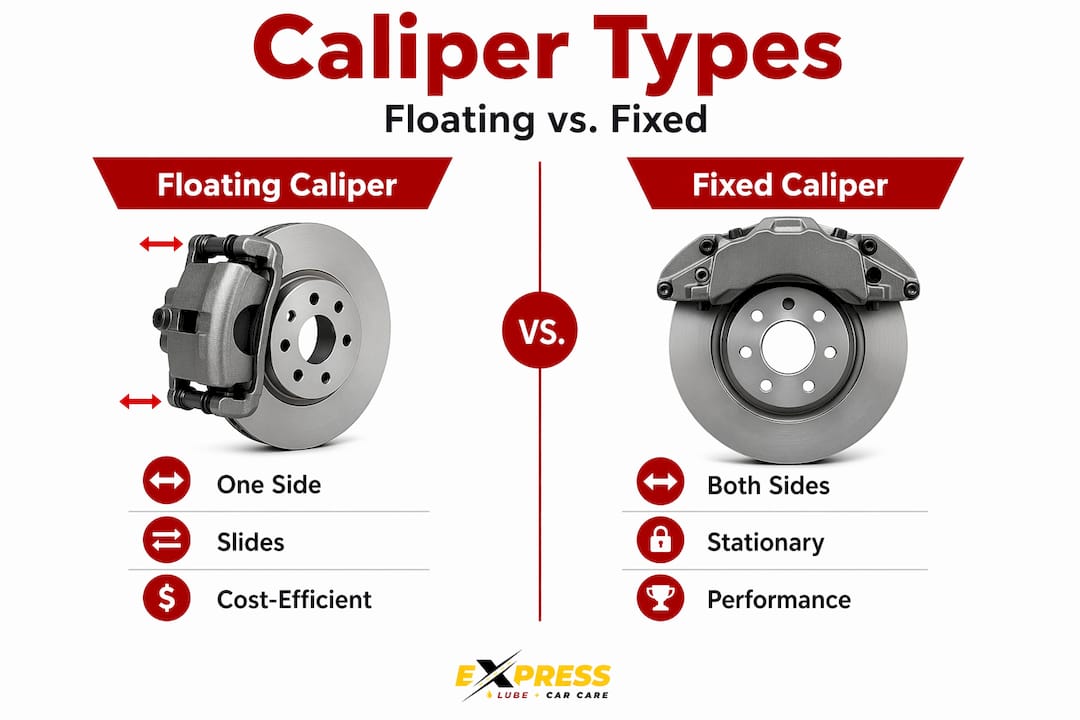
Floating calipers
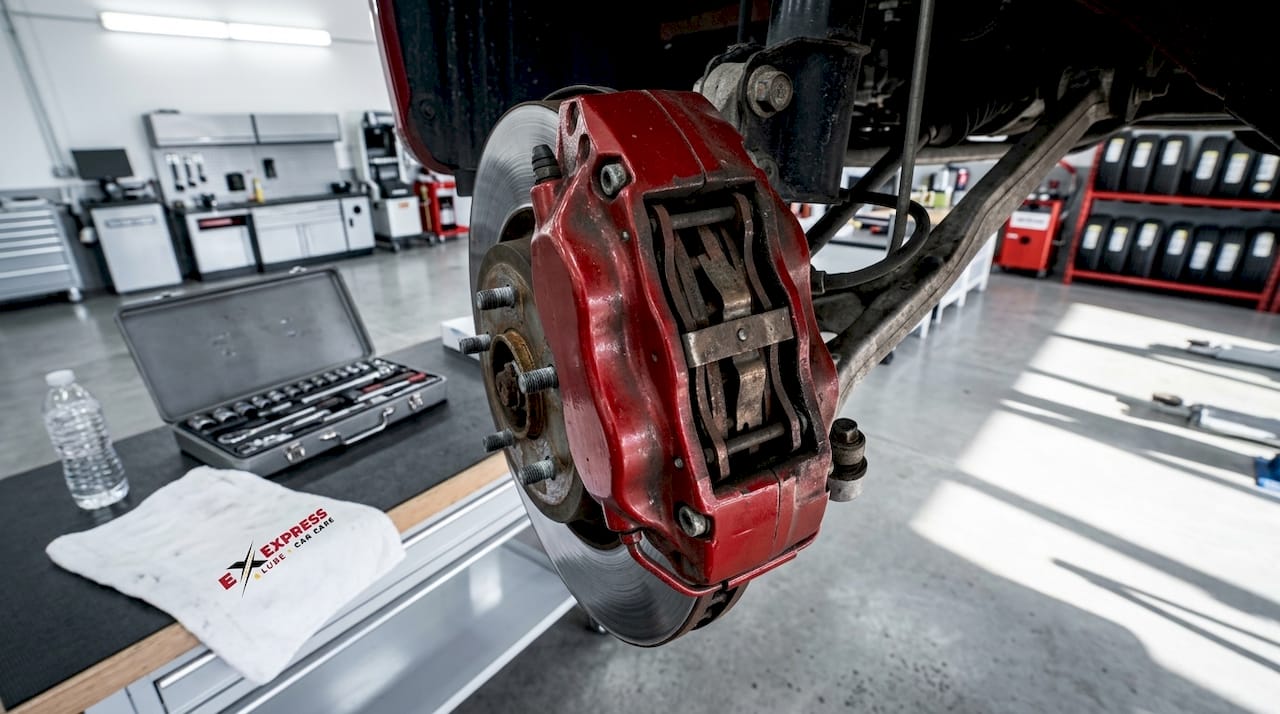
Floating calipers use pistons on one side only and slide laterally on guide pins to clamp both sides of the rotor. They are lighter, less expensive, and easier to service. You’ll find them on the vast majority of passenger cars and trucks. The trade-off is that they rely on clean, lubricated slide pins to center themselves properly. When those pins seize, the caliper applies uneven force and the inner pad wears much faster than the outer one.
Fixed calipers
Fixed calipers bolt solidly to the suspension upright and carry pistons on both sides of the rotor. They do not move. Because both sides apply equal force simultaneously, fixed calipers provide consistent braking pressure and better pedal feel under heavy use. Sports cars, track vehicles, and high-performance trucks commonly run fixed calipers with four, six, or even eight pistons. They run heavier and cost more, but the braking modulation they offer is hard to match.
Electronic parking brake (EPB) calipers
EPB calipers replace mechanical parking brakes with electromechanical actuators built directly into the caliper housing. A small motor drives the piston to hold the vehicle stationary. In Europe, EPB penetration has exceeded 90% in new vehicles, and global adoption continues to climb alongside EV growth and brake-by-wire integration. These calipers offer convenience and precision, but they are rarely serviceable. If an EPB caliper fails, replacement is almost always the only fix. You can read more about how these fit into the broader braking picture at 8 types of car brakes.
| Caliper type | Piston placement | Best for | Serviceability |
|---|---|---|---|
| Floating | One side only | Everyday passenger vehicles | High, repair kits available |
| Fixed | Both sides | Performance and sport applications | Moderate, depends on design |
| EPB | Integrated actuator | Modern sedans, SUVs, EVs | Low, typically replacement only |
Pro Tip: Before buying aftermarket calipers for a performance upgrade, confirm whether your car’s ABS calibration was tuned around your original piston sizing. Mismatched piston area can throw off brake bias and lockup behavior.
Common signs your brake caliper is failing
Caliper problems rarely announce themselves loudly all at once. They creep in gradually, and if you know what to look for, you can catch them well before a costly repair becomes necessary. Think of these symptoms as your caliper sending up a flare.
-
Uneven pad wear on the same axle. Uneven pad wear often signals a sticking piston or slide pin. If one side of a single pad is much thinner than the other, the caliper is not applying pressure evenly.
-
Vehicle pulling to one side under braking. When one caliper clamps harder or fails to release fully, the car steers itself toward that side during braking. This is a classic floating caliper symptom tied to a seized slide pin.
-
Soft or spongy brake pedal. A pedal that sinks further than usual can indicate fluid leaking past worn caliper seals. This is a direct brake caliper and safety concern. Do not delay diagnosis.
-
Burning smell after normal driving. A stuck caliper that never fully releases keeps the pad in constant contact with the rotor, generating serious heat. Sticking calipers cause heat buildup and burning smells that become noticeable after short trips.
-
Visible fluid leak near the wheel. Brake fluid weeping from the caliper body or around the piston area is a clear sign of seal failure. You may also notice your brake fluid reservoir level dropping without explanation.
If you spot any of these, brake problem symptoms you should not ignore include the pulling and burning smell combination. That pairing almost always points to a stuck caliper rather than a worn pad.
Pro Tip: After a long highway drive, carefully hold your hand near each wheel (do not touch) and feel for unusual heat. One wheel dramatically hotter than the others is a quick DIY clue that a caliper may be dragging.
Maintenance and replacement guidance
The good news is that brake calipers are not as fragile as people assume. Caliper lifespan typically runs 75,000 to 100,000 miles under normal driving conditions. Aggressive driving, mountain terrain, salty coastal roads, or extreme heat shrink that window considerably. Here’s how to protect your investment and know when enough is enough.
- Lubricate slide pins at every brake job. Clean pins prevent the stuck caliper scenario entirely. Use only high-temperature, non-petroleum lubricant. Regular grease melts off and actually attracts debris.
- Change brake fluid on schedule. Old brake fluid absorbs moisture, which lowers its boiling point and corrodes caliper internals from the inside out. Replacing fluid every two to three years protects piston seals significantly.
- Inspect rubber boots at every tire rotation. Torn caliper boots expose the slide pins to road grime and water. A torn boot is a cheap fix today versus a full caliper replacement three months later.
- Know when to repair versus replace. Repair kits work well for minor sticking or torn boots, addressing seals and slide pin hardware. Severe corrosion, a seized piston that will not compress, or an EPB caliper with a failed actuator all call for full replacement.
Pro Tip: When replacing one caliper, replace both on the same axle. A new caliper paired with a heavily worn one creates unbalanced braking force that can compromise your stopping distance and make the car pull.
For a full overview of what to check and when, brake repair at Express Lube covers the full range of inspection and replacement services.
Performance factors and the future of caliper tech
Here’s something most everyday drivers do not think about: clamp force scales with piston area. A larger piston diameter generates exponentially more clamping force for the same hydraulic pressure. This is why performance calipers with large-diameter pistons offer a more responsive, confident pedal. Increase piston size without retuning your ABS or proportioning valve, though, and you risk upsetting brake balance.
Material choices also shape caliper behavior. Brake calipers endure thermal cycling beyond 500°F during hard use. Aluminum alloy calipers shed heat faster than cast iron but can flex slightly at extreme temperatures. Forged aluminum, titanium pistons, and phenolic (plastic) pistons each manage heat conduction differently. Phenolic pistons actually insulate the caliper from rotor heat, which protects the fluid from boiling.
Looking ahead, the caliper is changing fast. The same EV boom driving EPB adoption is now pushing full brake-by-wire systems where no hydraulic connection exists at all. The caliper becomes a purely electronic actuator. Lightweight materials keep unsprung weight low in performance and EV applications, and thermal management engineering is becoming a specialized field within brake design. If you own or plan to buy an EV, the EPB electronic components integrated into modern calipers are worth understanding before your first service appointment.
My honest take on caliper knowledge
I’ve seen too many brake jobs where the caliper was treated like an afterthought. The technician swaps the pads, does not touch the slide pins, and hands the car back looking fine. Two months later, the customer returns with uneven wear and a dragging caliper that now needs full replacement. That’s a preventable outcome.
What I’ve found is that caliper awareness pays off in real money. When you understand the difference between a floating and a fixed caliper, you know immediately whether a repair kit is a smart fix or a waste of time. When you know that EPB calipers almost never get rebuilt, you don’t fall for a shop quoting you an unnecessary rebuild. That knowledge is power in the service bay.
My advice is this: learn your car’s caliper type, check the slide pins every time someone touches your brakes, and do not skip brake fluid changes. These three habits cover 80% of preventable caliper failures I’ve witnessed. And if you ever feel that pull under braking or catch a burning smell, diagnosing brake noises early is the fastest route to figuring out whether it’s the caliper before you end up on the side of the road.
— Hassan
Keep your brakes in expert hands
At Expresslubearlington, our ASE-certified technicians inspect your entire braking system, not just the pads. From caliper slide pins to brake fluid condition and piston seal integrity, we check what most quick-service shops skip. As a RepairPal Certified shop and a CarFax Top-Rated Service Center, we hold ourselves to a standard that protects your safety and your wallet. Whether you need a full caliper replacement, a fluid flush, or a simple inspection to put your mind at ease, we make it fast and straightforward. Explore our certified brake repair services or check your car maintenance schedule to stay ahead of your next service.
FAQ
What does a brake caliper actually do?
A brake caliper converts hydraulic pressure from the brake fluid into mechanical force, squeezing the brake pads against the spinning rotor to slow or stop your vehicle. Without it, pedal input cannot translate into friction at the wheel.
How long does a brake caliper last?
Most brake calipers last between 75,000 and 100,000 miles under normal driving conditions. Heavy use, road salt, and extreme heat all reduce that lifespan, so regular inspection is the best way to catch wear early.
What are the signs of brake caliper failure?
Common warning signs include the vehicle pulling to one side during braking, uneven pad wear, a soft or spongy brake pedal, a burning smell after driving, and visible brake fluid leaking near the wheel.
Can a brake caliper be repaired instead of replaced?
Yes, floating calipers with sticking slide pins or torn boots can often be restored with a repair kit addressing seals and hardware. Severely corroded calipers, seized pistons, or EPB calipers with failed actuators typically require full replacement.
Do you need to replace calipers in pairs?
Replacing calipers in pairs on the same axle is strongly recommended. Mismatched calipers, one new and one heavily worn, create uneven braking force that affects stopping distance and can cause the vehicle to pull under braking.