

TL;DR:
- Auto repair transparency involves openly sharing vehicle condition details, costs, and evidence before work begins.
- Most drivers distrust repair shops due to poor communication and lack of documented explanations.
Auto repair transparency is defined as a shop’s practice of openly sharing every detail about your vehicle’s condition, the repairs it needs, the exact costs involved, and the evidence behind every recommendation. 70% of consumers say transparency is the most important factor when selecting a repair shop. That number tells you something real: car owners are not just looking for the lowest price. They want to understand what is happening to their vehicle and why. When a shop practices genuine transparency in car repairs, you walk in with questions and walk out with answers, not anxiety.
What does auto repair transparency mean in practice?
Auto repair transparency means you receive clear, documented information at every stage of the repair process. It is not a vague promise of honesty. It is a specific set of behaviors a shop either does or does not follow.
The core components include upfront disclosure of diagnostic fees, a written itemized estimate before any work begins, and visual evidence of the problem. Without formal reports and visual evidence, customers are asked to trust blindly. That is a major red flag, and any shop worth your business knows it.
Transparency also means the shop explains the difference between what needs fixing today and what can wait. Not every issue is an emergency. A transparent mechanic tells you which repairs are urgent, which are preventive, and which you can simply monitor over time. That kind of honest prioritization respects your budget and your intelligence.
Why does the trust gap in auto repair exist?
2 out of 3 U.S. drivers distrust auto repair shops due to fears of overcharging and unnecessary repairs. That is not a small problem. It means the majority of people sitting in a waiting room right now are wondering if they are being taken advantage of.
The trust gap exists because auto repair has historically been a one-sided conversation. The mechanic holds all the technical knowledge. The customer holds the checkbook. Without transparency, that imbalance creates fertile ground for doubt, even when the shop is completely honest.
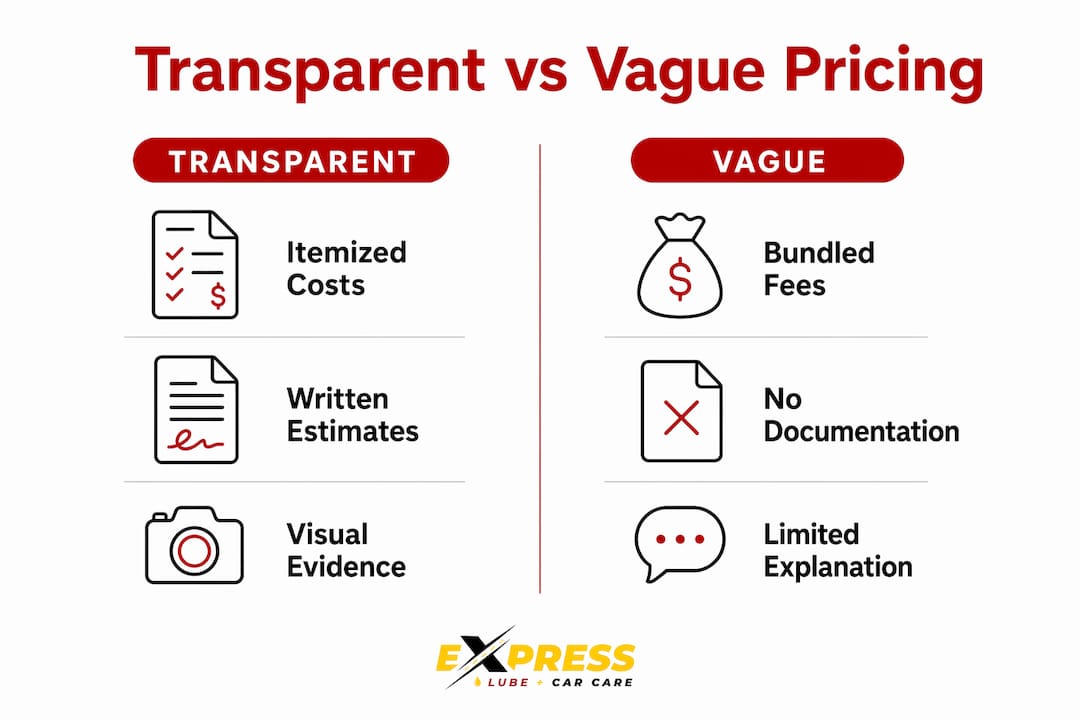
The auto repair honesty problem is not always about bad actors. Sometimes it is simply poor communication. A shop might recommend a legitimate repair but fail to explain why it matters or show any evidence. The customer hears a dollar amount with no context, and distrust fills the gap.
Transparent shops close that gap by doing a few things consistently:
- Sharing photos or videos of worn or damaged parts before recommending repairs
- Providing written estimates that break down labor, parts, taxes, and fees separately
- Explaining repair priorities without pressure or urgency tactics
- Welcoming questions and never making customers feel foolish for asking
“Transparency is not about giving customers the lowest price. It is about giving them enough information to feel confident in whatever decision they make.” — AutoServe1
Shops that embrace transparency treat it as a competitive advantage, not just a courtesy. In a market where most drivers are skeptical, being the shop that shows its work is a powerful differentiator.
What does transparent auto repair pricing look like?
Transparent pricing is itemized, complete, and free of surprises. Nearly half of repair shops charge labor rates between $120 and $159 per hour. Knowing that range helps you recognize when a quote is reasonable and when it warrants a follow-up question.
A truly transparent estimate breaks down every line: labor hours and rate, parts cost with OEM or aftermarket distinction, shop supply fees, taxes, and any diagnostic charges. A transparent quote should tell you whether the price covers the base repair or the full job, and whether taxes and supply fees are itemized separately. That distinction matters more than most car owners realize.
Here is a quick comparison of what transparent versus vague pricing looks like in practice:
| Element | Transparent pricing | Vague pricing |
|---|---|---|
| Labor | Listed as hours x hourly rate | Listed as a flat dollar amount |
| Parts | OEM or aftermarket specified with cost | Listed as “parts” with no detail |
| Diagnostic fee | Disclosed upfront, applied or not to repair | Buried in final bill |
| Taxes and shop fees | Itemized separately | Rolled into a total |
| Repair scope | Specifies full job vs. base repair | Unclear what is included |
Understanding repair estimates before you approve any work is the single best way to avoid bill shock. A shop that cannot or will not break down its pricing in writing is not a shop practicing transparency.
Pro Tip: Ask the service advisor two specific questions before approving any estimate: “Does this price cover the full job, including taxes and shop fees?” and “Is the diagnostic fee separate, and will it be credited toward the repair cost?” Those two questions reveal a lot about how a shop operates.
How do modern tools and inspections improve repair transparency?
Digital inspections are the clearest sign that a shop takes transparency seriously. A full digital inspection includes photos, videos, measured data, and a written report delivered to the customer before any approval is requested. You see exactly what the technician sees, in real time.
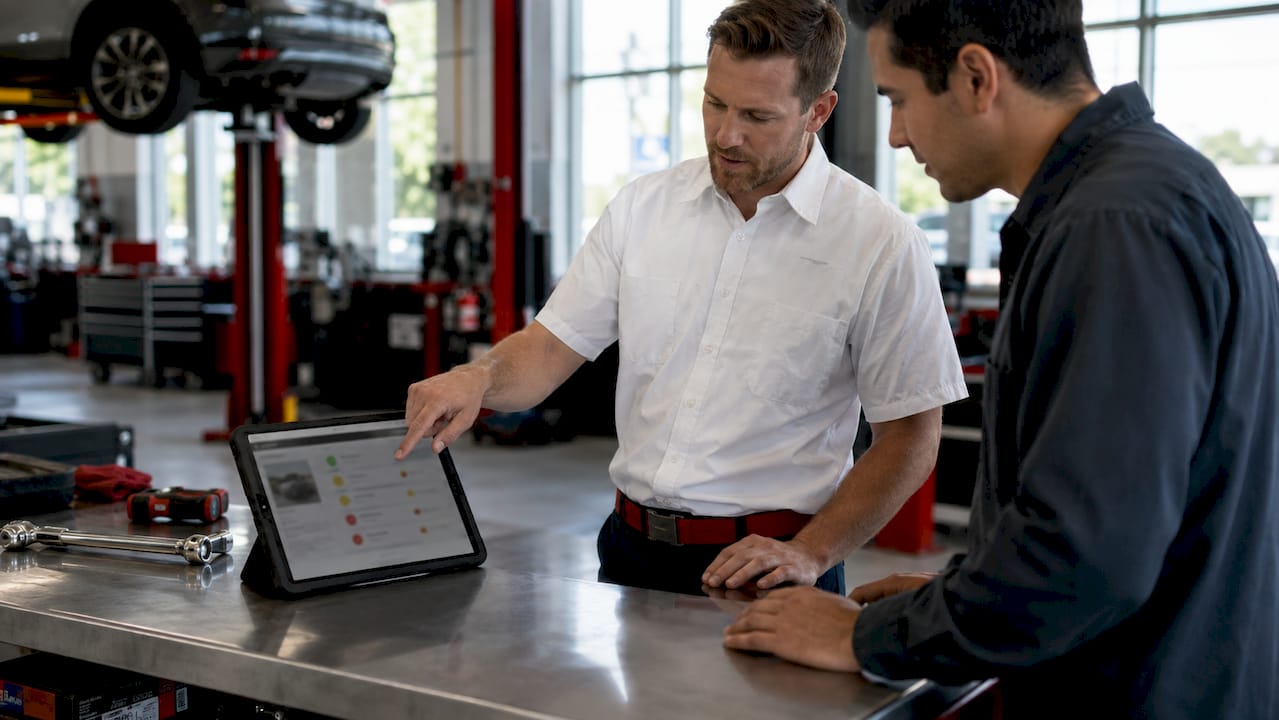
This matters because visual evidence removes the “just trust me” dynamic entirely. When a shop sends you a photo of a cracked serpentine belt or a video of a leaking CV axle boot, you are not being asked to take anyone’s word for it. The evidence speaks for itself. Visual evidence like photos and videos of worn parts builds customer understanding and trust in a way that verbal explanations simply cannot match.
Honest shops also use professional diagnostic tools that produce measurable, documented results. These include:
- Digital multimeters for measuring electrical system voltage and resistance
- Smoke machines for pinpointing vacuum leaks and EVAP system failures
- Fuel pressure gauges for diagnosing fuel delivery problems
- OBD-II scanners for reading and interpreting fault codes from the vehicle’s computer
- Brake fluid testers for measuring moisture content and boil point
The data from these tools gets documented in the inspection report. That documentation is what separates a transparent shop from one that is guessing and charging you for the privilege.
Digital communication channels, including text message links to inspection reports and email summaries, make it easy for you to review findings from your phone while you wait. You can look at the photos, read the technician’s notes, and approve or decline each repair individually. That level of control is what the importance of auto repair transparency is really about.
How to ensure you get transparency when your car is repaired
Getting transparency starts before you hand over your keys. Here is a practical process that puts you in control:
- Ask for a written estimate before approving any work. A verbal quote is not enough. You need a document that lists every charge.
- Confirm what the estimate includes. Ask directly whether the price covers the full job or just the base repair, and whether taxes and shop supply fees are included.
- Request photos or videos of any damaged parts. Any shop with a digital inspection process can send these to your phone within minutes.
- Ask how repairs are prioritized. Honest shops categorize repairs as fix now, fix soon, and plan for later. That structure helps you manage your budget without feeling pressured.
- Get a second opinion if something feels off. Honest mechanics do not get offended by second opinions. A shop that discourages you from seeking one is telling you something important about how it operates.
Reading online reviews is also a reliable filter. Look specifically for mentions of clear communication, itemized estimates, and no surprise charges. Those details in reviews signal a shop that practices real transparency, not just a shop with a friendly front desk.
Pro Tip: Check if a shop holds a RepairPal Certified designation or a CarFax Top-Rated Service Center recognition. These certifications require shops to meet specific standards for pricing fairness and customer communication, which are direct indicators of transparency practices.
Learning how to negotiate car repair prices is also a skill worth developing. Transparency gives you the information you need to have that conversation confidently.
Key Takeaways
Auto repair transparency is the practice of providing car owners with documented evidence, itemized pricing, and prioritized repair recommendations before any work is approved.
| Point | Details |
|---|---|
| Transparency is defined behavior | It means written estimates, visual evidence, and repair prioritization, not just a friendly attitude. |
| Most drivers distrust repair shops | 2 out of 3 U.S. drivers distrust auto repair shops, making transparency a real competitive advantage. |
| Pricing must be fully itemized | A transparent quote separates labor, parts, taxes, diagnostic fees, and shop supplies into distinct line items. |
| Digital inspections are the standard | Photos, videos, and measured data sent before approval remove the need for blind trust. |
| You have the right to ask questions | Requesting written estimates, photos, and second opinions is normal and expected at any honest shop. |
Transparency changed how I think about the whole repair experience
I have spent years watching car owners leave repair shops confused, frustrated, and convinced they overpaid. The common thread is almost never a dishonest mechanic. It is a communication failure. The shop knew exactly what it did and why. The customer had no idea.
What I find most interesting is that transparency does not cost a shop anything extra. Sending a photo takes ten seconds. Writing out a line-item estimate takes five minutes. The shops that skip those steps are not saving time. They are losing trust, and they often do not realize it until the reviews start rolling in.
The real shift happens when a shop stops thinking about transparency as a policy and starts treating it as respect. Showing a customer a photo of their worn brake pad is not just good practice. It is saying, “We see your car the same way you do. Here is the proof.” That changes the entire dynamic of the interaction.
Car owners sometimes feel like they need a mechanical degree to advocate for themselves at a repair shop. They do not. They just need to ask for the evidence. A shop that practices genuine auto repair honesty will hand it over without hesitation. A shop that gets defensive when you ask for a written estimate or a photo is telling you everything you need to know.
The trusted mechanic relationship is not built on charm or low prices. It is built on consistent, documented honesty over time. Find a shop that shows its work, and you will never dread a repair visit again.
— Hassan
Transparent service is what Expresslubearlington is built on
At Expresslubearlington, transparency is not a talking point. It is the standard every ASE-certified technician on the team is held to. Every estimate is itemized. Every recommended repair comes with a clear explanation of why it matters and when it needs to happen.
Expresslubearlington is both a RepairPal Certified Shop and a CarFax Top-Rated Service Center, two designations that require demonstrated commitment to fair pricing and honest communication. Whether you need a routine oil change or a more involved repair, you will know exactly what is being done and exactly what it costs before any work begins. Drivers across the DFW area trust Expresslubearlington because the shop treats every customer like someone who deserves the full picture. Come see what that feels like firsthand at our certified repair center.
FAQ
What does auto repair transparency mean?
Auto repair transparency means a shop provides written itemized estimates, visual evidence of problems, and clear repair priorities before asking for your approval. It removes blind trust from the equation entirely.
Why do so many drivers distrust auto repair shops?
2 out of 3 U.S. drivers distrust repair shops due to fears of overcharging and unnecessary repairs. The distrust comes from a lack of documentation and explanation, not necessarily dishonest mechanics.
What should a transparent repair estimate include?
A transparent estimate lists labor hours and rate, parts cost with OEM or aftermarket specification, diagnostic fees, shop supply charges, and taxes as separate line items. It also specifies whether the price covers the full job or just the base repair.
How do I know if a mechanic is being honest with me?
An honest mechanic provides photos or videos of damaged parts, categorizes repairs by urgency, and welcomes second opinions without pressure. Shops with RepairPal Certified or CarFax Top-Rated designations meet verified standards for honest communication.
Is it normal to ask for a second opinion on a repair estimate?
Asking for a second opinion is completely normal and expected. Honest mechanics actively support informed, pressure-free decisions and will not be offended by the request.