
TL;DR:
- Building a trusted mechanic relationship safeguards your vehicle, wallet, and peace of mind. Consistent routine visits and clear communication foster long-term trust and better service. Independent shops often provide higher satisfaction, lower costs, and stronger personal connections than dealerships.
A trusted mechanic relationship is the single most effective tool a car owner has for protecting their vehicle, their wallet, and their peace of mind. Think of it less like a transaction and more like having a family doctor for your car. The role of trusted mechanic relationship goes far beyond oil changes and tire rotations. It means having someone who knows your vehicle’s history, spots problems early, gives you honest advice, and treats you like a person rather than a repair ticket. Two in three Americans lack trust in auto repair shops. That statistic alone tells you how much is at stake when you find the right one.
How does a trusted mechanic relationship benefit car owners?
The benefits of a trusted mechanic go well beyond getting your car fixed. They show up in your bank account, your stress levels, and the long-term health of your vehicle.
Here is what a solid mechanic-client relationship actually delivers:
- Personalized service with vehicle history on file. A mechanic who has serviced your car for two years knows its quirks. They remember the brake job from last spring and the transmission fluid change before that. That history speeds up diagnostics and reduces guesswork.
- Protection against upselling. 50% of car owners surveyed in 2023 reported shops trying to sell them unnecessary repairs, and 35% felt overcharged. A mechanic who values your relationship has no incentive to pad your bill.
- Real cost savings. Independent repair shops charge $90–$130 per hour on average, compared to $130–$175 per hour at dealership service departments. Over a vehicle’s lifetime, that gap adds up to thousands of dollars.
- Consultant-level guidance. A trusted mechanic acts as an advisor, telling you which repairs are safety-critical versus deferrable so you can manage your cash flow without gambling on your safety.
- Faster, more accurate diagnostics. Knowing your car’s baseline makes it easier to spot what changed. A mechanic who has seen your vehicle regularly will catch an unusual noise or a subtle fluid leak that a stranger might miss.
Pro Tip: Ask your mechanic to keep a running service log for your vehicle. Many shops do this digitally now. That record becomes your car’s medical chart and saves time every single visit.
The importance of mechanic trust is not abstract. It is the difference between a shop that recommends a $200 fix and one that talks you into a $1,200 job you did not need.
What qualities make a mechanic trustworthy?
Finding a trustworthy mechanic means knowing what to look for before you hand over your keys. The industry has clear markers of credibility, and you do not need to be a gearhead to spot them.
- ASE certification. The National Institute for Automotive Service Excellence (ASE) is the gold standard in the industry. ASE certification covers 50+ competency areas and requires retesting every five years. A shop displaying ASE credentials has made a real commitment to technical excellence. You can verify credentials at the ASE website directly.
- Written estimates before work begins. Transparency through written estimates is one of the clearest trust signals a shop can send. If a mechanic refuses to put a quote in writing, that is a red flag. Understanding how repair estimates work before you approve any job protects you from surprise charges.
- Show-don’t-tell honesty. Trustworthy technicians show you the worn part, the scan result, or the photo of the problem. Physical proof reduces anxiety and removes the need for blind faith. If a mechanic explains a problem but cannot show you evidence, ask them to.
- Plain-language communication. A good mechanic translates technical findings into plain English. They do not hide behind jargon to justify a bigger bill. They explain what broke, why it matters, and what happens if you wait.
- Repeat customers and local reputation. A shop with loyal, returning customers is a shop that has earned trust over time. Check RepairPal, CarFax reviews, and Google ratings. Look for patterns in the feedback, not just the star count.
Pro Tip: When visiting a new shop, start with a simple job like an oil change. Watch how they communicate, whether they return your car on time, and whether they try to add services you did not ask for. That first visit tells you almost everything.
The role of mechanic shop certification in building trust is not just symbolic. It is a verifiable, renewable commitment to doing the job right.
How to build a long-term relationship with your mechanic
Building mechanic relationships takes time and consistency. Think of it the way you would build trust with any professional. You show up regularly, communicate clearly, and treat the relationship with respect.
- Start with routine maintenance. Treat your mechanic like a medical home: begin with oil changes and tire rotations before an emergency forces your hand. Routine visits create a vehicle health history that makes complex diagnostics faster and more accurate later.
- Describe symptoms precisely. Do not just say “it makes a noise.” Tell them when it happens, under what conditions, and how long it has been going on. The more specific you are, the less time they spend hunting for the problem, and the lower your diagnostic bill.
- Set realistic expectations. Complex vehicles sometimes need multiple visits to nail down an intermittent problem. AAA advises car owners to understand that modern diagnostics are not always instant. Patience here pays off in accuracy.
- Pay fairly and promptly. A mechanic who feels respected is a mechanic who goes the extra mile for you. Prompt payment and fair treatment build goodwill that shows up when you need a favor, like a loaner car or a rushed turnaround.
- Refer friends and family. Word-of-mouth referrals are the lifeblood of independent shops. Sending someone their way signals that you value the relationship. Most mechanics remember who brought them new business.
- Trust the professional judgment. Customers who second-guess diagnoses based on internet research create friction and slow down the repair process. Bring questions, not conclusions. A good mechanic welcomes questions but needs room to do their job.
Consistently using the same shop for routine maintenance signals loyalty and gives your mechanic the vehicle history they need to catch problems early. That history is one of the most underrated benefits of establishing mechanic trust over time.
Independent mechanic vs. dealership: where does trust thrive?
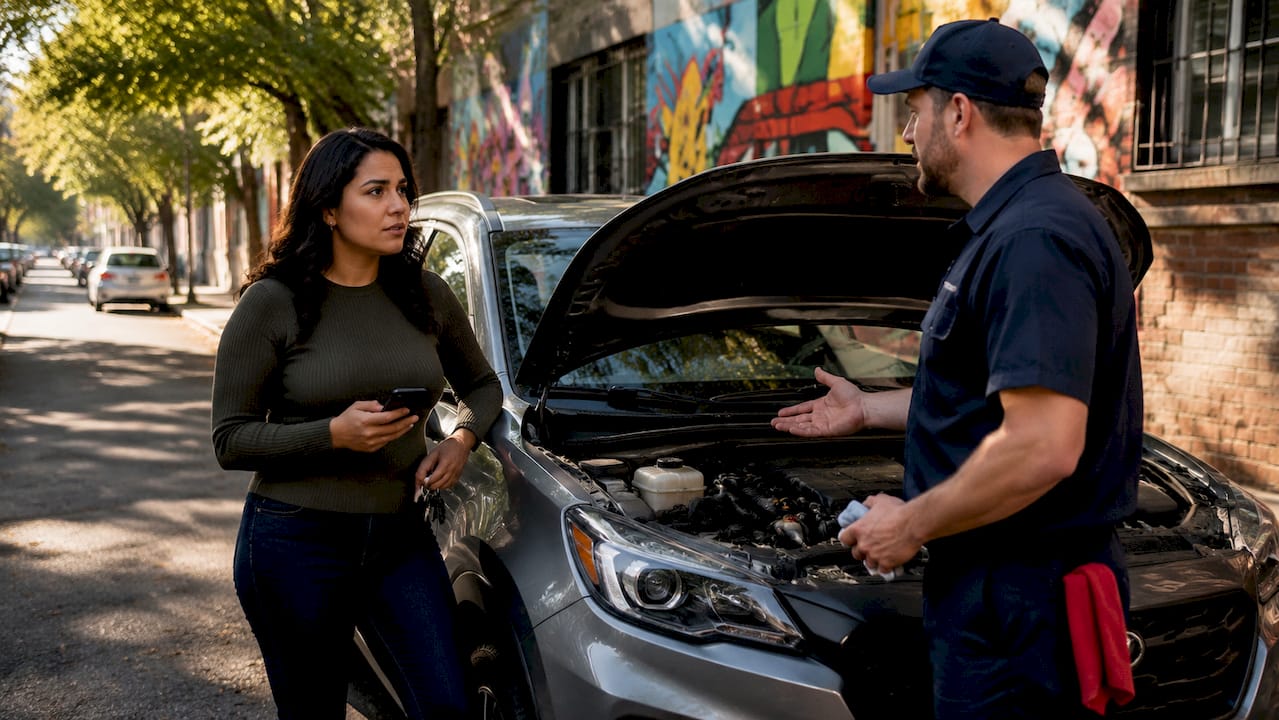
Choosing between an independent shop and a dealership service department is one of the first decisions you make when finding a trustworthy mechanic. Both have real advantages. The right choice depends on your vehicle, your budget, and your relationship goals.
| Factor | Independent Shop | Dealership Service Dept. |
|---|---|---|
| Average labor rate | $90–$130 per hour | $130–$175 per hour |
| Customer satisfaction | Higher ratings in Consumer Reports survey of 10,973 members | Lower satisfaction scores on average |
| Personalized service | Strong, owner-focused relationships | More transactional, staff turnover common |
| Brand-specific expertise | General expertise across makes and models | Factory-trained for specific brands |
| Best for | Routine maintenance, long-term relationships | Warranty work, recalls, complex brand-specific repairs |
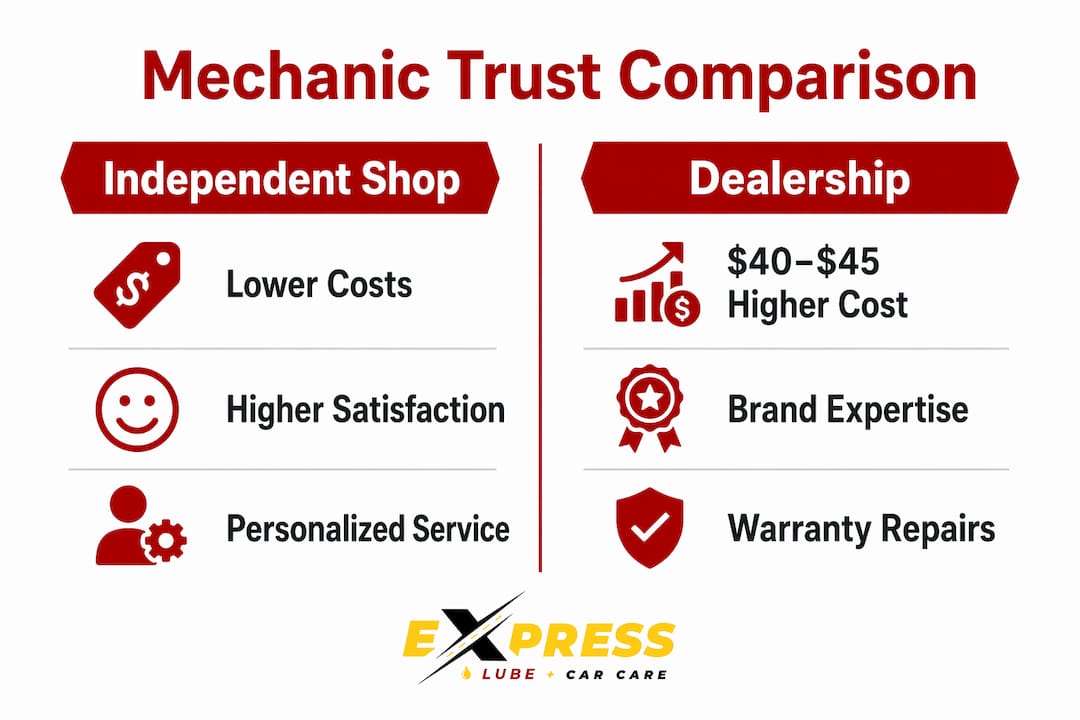
Independent repair shops received higher satisfaction ratings in a Consumer Reports survey of 10,973 members. That result reflects the personal attention and accountability that smaller shops deliver. When the owner is the mechanic, or works alongside the team, the incentive to do right by you is direct and personal.
Dealerships make sense for warranty repairs, recalls, or highly specialized brand issues. But for building a long-term, trust-based relationship, independent shops win on both price and personal connection. The local auto repair shop advantage is real, and it compounds over time as your mechanic learns your vehicle inside and out.
Key takeaways
A trusted mechanic relationship is built through consistent visits, clear communication, and choosing a certified shop that proves its honesty with written estimates and physical evidence.
| Point | Details |
|---|---|
| Trust is the foundation | Two in three Americans distrust auto shops; finding one you trust protects your wallet and your vehicle. |
| ASE certification matters | Look for ASE-certified technicians who retest every five years across 50+ competency areas. |
| Start with routine visits | Oil changes and tire rotations build vehicle history and rapport before emergencies arise. |
| Independent shops cost less | Labor rates run $40–$45 per hour lower at independent shops than at dealerships on average. |
| Good clients get better service | Clear symptom descriptions and trust in professional judgment reduce friction and improve outcomes. |
What i have learned about mechanic trust after years in the DFW area
I will be direct with you: the auto repair industry has a trust problem, and pretending otherwise does not help anyone. I have seen car owners get burned by shops that recommended repairs they did not need, and I have also seen car owners make their mechanic’s job harder by walking in armed with a YouTube diagnosis and a chip on their shoulder.
The truth sits in the middle. Healthy skepticism is smart. Bring questions. Ask for written estimates. Request to see the worn part. These are reasonable expectations, and any reputable shop will meet them without hesitation. But there is a line between informed and combative, and crossing it poisons the relationship before it starts.
What I have found is that the car owners who get the best service are the ones who treat their mechanic like a long-term partner rather than an adversary. They show up for routine maintenance. They describe problems clearly. They pay on time and say thank you. In return, those mechanics go out of their way during emergencies, squeeze them into a packed schedule, and flag small problems before they become expensive ones.
The car maintenance practices that keep a vehicle running well are the same ones that keep a mechanic relationship healthy: consistency, attention, and follow-through. You get out what you put in. If you want a mechanic who treats your car like their own, start by treating them like a professional you genuinely respect.
— Hassan
Why Expresslubearlington is the trusted shop DFW drivers rely on
If you are ready to stop guessing and start building a real relationship with a mechanic you can count on, Expresslubearlington is the place to start.
Expresslubearlington is both ASE and RepairPal Certified, and recognized as a Top-Rated Service Center by CarFax. Those credentials are not just badges on a wall. They are verifiable proof that every technician meets a high standard of skill and that the shop operates with transparency and accountability. Written estimates come before any work begins. Worn parts get shown, not just described. And every visit adds to your vehicle’s service history, making future diagnostics faster and more accurate. Start with an oil change. Build from there. That is how trusted automotive services are born.
FAQ
What is the role of a trusted mechanic relationship?
A trusted mechanic relationship gives car owners access to honest diagnostics, personalized service, and cost-effective repairs from a professional who knows their vehicle’s history. It shifts the mechanic’s role from a service provider to a long-term automotive advisor.
How do i find a trustworthy mechanic?
Look for ASE-certified technicians, shops with RepairPal or CarFax recognition, written estimates before work begins, and a willingness to show physical evidence of any problem. Starting with a small job like an oil change lets you evaluate the shop before committing to major repairs.
Are independent mechanics better than dealerships for building trust?
Independent shops receive higher customer satisfaction ratings and charge $40–$45 less per hour on average than dealership service departments, according to a Consumer Reports survey of 10,973 members. For long-term relationship building, independent shops typically offer more personalized and consistent service.
How long does it take to build trust with a mechanic?
Trust builds gradually through repeated positive experiences, usually over several routine maintenance visits. AAA advises that realistic expectations and clear communication from the start accelerate the process significantly.
What should i tell my mechanic to get better service?
Describe symptoms in detail: when the problem occurs, under what driving conditions, and how long it has been happening. Avoid arriving with a firm diagnosis from online research. Clear symptom reporting and openness to professional judgment lead to faster, more accurate repairs.