

If you’ve ever stared at that little oil change sticker in your windshield and wondered whether it’s really necessary, you’re not alone. What is an oil change, exactly, and why does skipping one feel like such a big deal? The short answer: it’s one of the simplest things you can do to protect your engine from expensive damage. This guide breaks down what an oil change actually involves, how to spot when your car needs one, what happens during the process, and how to stay on the right schedule going forward.
Table of Contents
- What is an oil change and why does it matter?
- Signs your car needs an oil change
- How to change your car’s oil: a step-by-step overview
- When to change your oil: recommended intervals and technology
- Resetting your oil life monitor and post-change checks
- Our honest take: the 3,000-mile myth is costing you money
- Keep your engine protected with Express Lube & Car Care
- Frequently asked questions
Key Takeaways
| Point | Details |
|---|---|
| Oil lubricates and protects | Engine oil reduces friction and carries away heat to keep your engine running smoothly. |
| Regular oil changes prevent damage | Changing oil on time helps avoid engine wear, improve fuel efficiency, and prevent costly repairs. |
| Oil change timing varies | Use your car’s oil-life monitor or follow manufacturer intervals for precise oil change scheduling. |
| Reset oil monitor after change | Reset the oil-life monitor after changing oil to ensure accurate reminders and proper maintenance. |
| Safety first when adding oil | Never add oil when the engine is hot to avoid injury and ensure accurate oil level readings. |
What is an oil change and why does it matter?
Think of engine oil as your car’s bloodstream. It flows through every moving part, keeping metal from grinding against metal, carrying heat away from critical components, and flushing out tiny debris that builds up with every drive. As oil naturally breaks down over time, it loses its ability to do any of those jobs well. What starts as a clear amber fluid slowly turns into dark, gritty sludge that does more harm than good.

An oil change is the process of draining that old, degraded oil out of the engine and replacing it with fresh oil, along with a new oil filter. It sounds simple because it is. But the impact on your engine’s long-term health is anything but small.
Here’s what engine oil actually does for your car on every single drive:
- Lubricates moving parts like pistons, crankshafts, and camshafts to reduce metal-on-metal friction
- Controls temperature by absorbing and transferring heat away from the combustion chamber
- Cleans the engine by suspending debris and carrying it to the oil filter
- Protects against corrosion by creating a thin barrier between metal surfaces and moisture
“Oil serves as the lifeblood of your engine, lubricating its components, reducing friction, and carrying away heat. Over time, engine oil breaks down, loses its effectiveness, and can become contaminated with debris.”
Fresh oil also has a direct effect on fuel efficiency. A well-lubricated engine doesn’t have to work as hard, which means it burns less fuel doing the same job. Check out these top oil change tips to get the most out of every service.
Now that you know why oil changes are crucial, let’s explore how you can recognize when one is needed.
Signs your car needs an oil change
Your car is surprisingly good at telling you when it wants attention. The trick is knowing what to look for before things get serious.
The most obvious signal is the oil itself. Clean oil appears amber or light brown on the dipstick, while dirty oil looks dark, thick, and sometimes gritty. Pull the dipstick out, wipe it clean, dip it back in, and take a look. If it’s black and opaque, your engine is running on oil that’s well past its prime.
Here are the most common oil change signals to watch for:
- Dark, dirty oil on the dipstick — your most reliable early indicator
- Low oil level — if you’re topping off frequently, something is off
- Loud or knocking engine sounds — metal-on-metal noise means lubrication is failing
- Burning oil smell inside the cabin — could mean oil is leaking onto hot engine parts
- Excessive exhaust smoke — dark or bluish smoke often points to oil burning inside the engine
- The oil change warning light — never ignore this one
Modern vehicles take a lot of the guesswork out of this. Oil-life monitors display alerts based on your actual driving habits and engine condition, not just a mileage number. That means if you do mostly short city trips in Arlington traffic, your monitor might flag an oil change earlier than someone doing long highway miles.
Worth knowing: Ignoring your oil change light is one of the fastest ways to turn a $40 maintenance visit into a $4,000 engine repair. The warning light isn’t sending up a flare just to annoy you.
Staying ahead of these oil change signals and pairing them with a solid car maintenance schedule will keep your engine humming for years.
With these signs in mind, let’s break down what actually happens during an oil change.
How to change your car’s oil: a step-by-step overview
Whether you want to do it yourself or just understand what a shop is doing under your hood, knowing the oil change process gives you confidence. A standard oil change takes about 30 minutes and costs under $30 in supplies for most everyday vehicles, though high-performance or European engines can run higher.
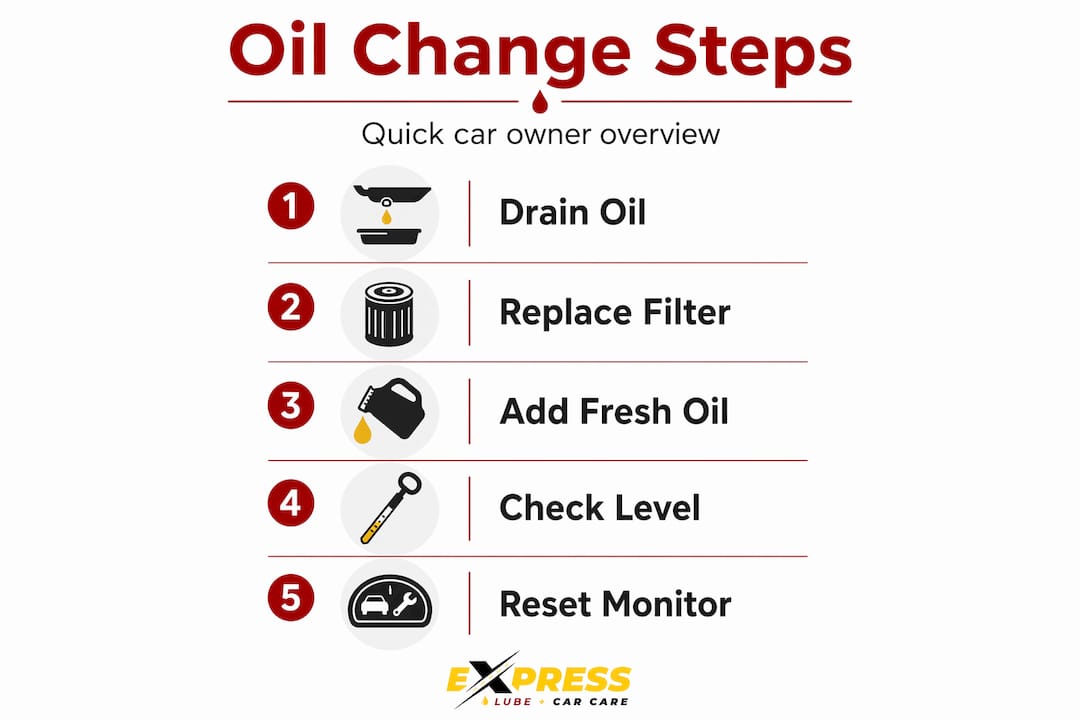
Here’s how it works, step by step:
-
Gather your supplies. You’ll need fresh oil (the correct type and viscosity for your vehicle), a new oil filter, a drain pan, a wrench, and a funnel. Check your owner’s manual for the right oil spec.
-
Warm up the engine slightly, then let it cool. A briefly warmed engine helps the oil drain more completely. But never add oil to a hot engine — burns are no joke, and hot oil also gives you an inaccurate dipstick reading.
-
Drain the old oil. Position your drain pan underneath the engine, remove the drain plug, and let the old oil fully drain out. This usually takes a few minutes.
-
Swap out the oil filter. Unscrew the old filter (have a rag ready, it’ll drip), then lightly coat the gasket on your new filter with a little fresh oil before screwing it on. This ensures a clean, leak-free seal.
-
Reinstall the drain plug. If your vehicle uses a crush washer on the drain plug, replace it with a new one. Tighten it firmly but don’t overtorque — you’ll be removing it again in a few thousand miles.
-
Add fresh oil. Use a funnel to pour in the correct amount of new oil. Check your owner’s manual for the exact quantity. Most engines take between 4 and 6 quarts.
-
Start the engine and check for leaks. Run the engine for about a minute, then shut it off and peek underneath for any drips. Check the dipstick once more to confirm the level is in the safe range.
Pro Tip: Always check your oil level on a flat surface with the engine cool for the most accurate reading. Slopes and a warm engine can both skew what the dipstick shows you.
For more guidance on doing it right at home, the DIY oil change tips page has you covered.
Understanding how oil changes work leads naturally to questions about timing and intervals for this service.
When to change your oil: recommended intervals and technology
This is where a lot of car owners get confused. The old rule of “every 3,000 miles” has been largely retired. Today’s answer depends on your oil type, your engine, and how you drive.
Conventional oil typically needs changing every 3,000 to 5,000 miles. Full synthetic oil can stretch that interval significantly, sometimes up to 15,000 miles or one full year between changes, depending on your vehicle.
| Oil type | Typical interval | Best for |
|---|---|---|
| Conventional | 3,000 to 5,000 miles | Older vehicles, standard engines |
| Synthetic blend | 5,000 to 7,500 miles | Mixed driving, moderate conditions |
| Full synthetic | 7,500 to 15,000 miles | New vehicles, high-performance engines |
| High-mileage synthetic | 5,000 to 7,500 miles | Vehicles with 75,000+ miles |
Modern vehicles like newer Ford models use an Intelligent Oil Life Monitor that calculates your actual oil condition based on driving behavior, not just odometer clicks. If you spend a lot of time idling in DFW traffic or doing short stop-and-go trips, your monitor may alert you sooner than someone who takes long freeway drives.
Factors that can shorten your oil change interval:
- Frequent short trips under 5 miles (oil never fully warms up)
- Towing or hauling heavy loads regularly
- Driving in extreme heat (hello, Texas summers)
- High-performance or turbocharged engines
Understanding the difference between oil types is worth your time. The synthetic vs regular oil breakdown explains which one makes the most sense for your car and driving habits. Pair that with a solid car maintenance schedule by mileage and you’ll never be guessing.
After knowing when to perform oil changes, it’s important to understand the follow-up steps for modern vehicles.
Resetting your oil life monitor and post-change checks
Here’s a step most people skip entirely, and it causes real problems. After you change the oil, the car doesn’t automatically know you did it. The oil life monitor is still counting down from wherever it left off. That means it could trigger a premature warning or, worse, lull you into thinking you have more time than you do.
Resetting the oil life monitor after every oil change is a required step, not optional, to keep accurate tracking going forward. For most vehicles, it’s a quick process through the instrument cluster menu or by holding down the trip reset button with the ignition on.
Post-change checklist before you drive away:
- Check underneath the vehicle for any drips around the drain plug or filter
- Verify the oil level on the dipstick (cool engine, flat ground, always)
- Reset the oil life monitor through your vehicle’s settings menu
- Confirm the oil cap is fully tightened so you don’t pump fresh oil all over your engine bay
- Note your mileage so you know exactly when the next service is due
Pro Tip: Always check oil on flat ground with a cool engine. Park on a slope or check while it’s still warm and you’ll get a false reading almost every time.
These post-service steps might feel like extra work, but they take less than five minutes and protect the fresh oil service you just put into the vehicle. Get the full breakdown on oil change follow-up tips to make sure nothing gets missed.
Our honest take: the 3,000-mile myth is costing you money
Here at Express Lube & Car Care, we see it constantly. Car owners pulling in every 3,000 miles because that’s just what their parents did, spending money on oil changes their engine doesn’t need yet. On the flip side, we also see people who have clearly pushed 12,000+ miles on conventional oil and are driving around with something closer to motor molasses than motor oil.
The uncomfortable truth is that both extremes are avoidable, and they both cost you money. Changing oil too soon wastes cash. Changing it too late can destroy an engine that a timely $50 service would have protected for another 150,000 miles.
Our advice is to stop guessing and start reading your actual vehicle. Check your oil color every month. Take your oil-life monitor seriously. And understand what kind of driving you’re actually doing. Arlington summer heat and stop-and-go highway traffic are hard on oil. If you’re commuting daily on I-20 or running errands around the city, your oil degrades faster than it would for someone doing weekend highway cruises.
The benefits of oil change services stack up fast when you’re consistent: better fuel economy, quieter operation, longer engine life, and peace of mind. We’d rather help you protect your car than fix it after the fact.
Keep your engine protected with Express Lube & Car Care
Understanding what an oil change does is the first step. The next one is making sure it gets done right.
At Express Lube & Car Care in Arlington, TX, our ASE-certified technicians handle every oil change with the care your engine deserves. As a RepairPal Certified Shop and CarFax Top-Rated Service Center, we bring real expertise to every bay. Whether you’re due for a standard conventional change or ready to switch to full synthetic, we’ll get you in, take care of your vehicle, and get you back on the road fast. No upsells. No runaround. Just honest, quality service from a shop the DFW community trusts. Schedule your oil change today and let us take it from here.
Frequently asked questions
How often should I get an oil change for my car?
Most vehicles with conventional oil need a change every 3,000 to 5,000 miles, but synthetic oil can extend that interval to 15,000 miles or one year depending on your driving habits and vehicle type.
What happens if I don’t change my oil regularly?
Neglected oil breaks down into sludge, which means increased engine wear and reduced protection that can eventually lead to major engine failure and repairs far costlier than a routine service.
Can I add oil when the engine is hot?
No. You should never add oil to a hot engine because of the serious burn risk, and a hot engine also gives you an inaccurate dipstick reading.
Why do I need to reset my oil life monitor after an oil change?
Without a reset, your vehicle’s system doesn’t know the oil was changed, which means the monitor’s future alerts will be based on old data and could tell you to change your oil too early or too late.