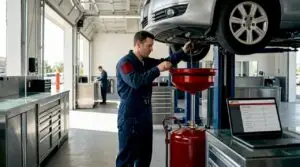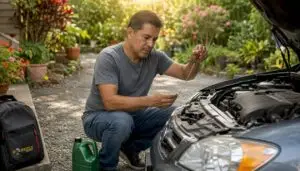

You’ve got an oil change overdue, a brake squeak that’s getting louder, and a check engine light that’s been glowing for two weeks. Do you hit three different shops, or find one place that handles everything? That choice matters more than most people realize. The benefits of full-service auto shops go well beyond convenience. They affect your safety, your wallet, and how long your car actually lasts. With 83% of car owners preferring a nearby, trusted shop for personalized care, the demand for reliable, all-in-one service has never been higher. Here’s what you actually get when you choose a full-service provider.
Table of Contents
- Key takeaways
- 1. Benefits of full-service auto shops: deeper inspections that protect your car
- 2. One-stop convenience that actually saves you time
- 3. Financial advantages you probably haven’t thought about
- 4. Personalized service built on knowing your specific vehicle
- 5. Why full-service auto shops beat quick-lube for long-term value
- My honest take on why full-service shops are worth it
- Why Expresslubearlington is the full-service shop DFW drivers trust
- FAQ
Key takeaways
| Point | Details |
|---|---|
| One shop handles everything | Full-service auto shops manage mechanical, diagnostic, and repair needs under one roof. |
| Early detection saves money | Comprehensive inspections catch minor problems before they become expensive failures. |
| Financial flexibility helps | Payment plans stretching up to 48 months make unexpected large repairs manageable. |
| Documented history builds resale value | Consistent service records at one shop reassure future buyers and preserve your car’s worth. |
| Personalized care improves outcomes | Technicians who know your vehicle’s history give better, faster, and more accurate diagnoses. |
1. Benefits of full-service auto shops: deeper inspections that protect your car
When you pull into a quick-lube spot, you’re getting in and out fast. That’s fine for an oil top-off. But a full-service shop does something completely different. Every visit includes a thorough look at the systems that quietly fail before you notice them.
Full-service shops inspect your engine condition, AC performance, brake wear, wiper blade integrity, and fluid levels every single time. That’s not a bonus. That’s the baseline. A quick-lube tech is focused on one task. A full-service technician is playing detective across your entire vehicle.
Here’s why that matters:
- A cracked serpentine belt looks fine until it snaps on the highway
- Low brake fluid often signals a slow leak that gets worse, not better
- Worn wiper blades are a $12 fix that becomes a windshield replacement if ignored
- AC issues spotted in spring cost far less than a failed compressor in July
Advanced diagnostic tools are another piece of this puzzle. Using OBD-II scanners and pressure testers, full-service technicians spot trouble codes your dashboard hasn’t flagged yet. They’re catching the problem when it’s a whisper, not a shout.
Pro Tip: Schedule a full multi-point inspection at least twice a year, not just when something feels wrong. Use our car inspection checklist to know what to expect before you walk in.
2. One-stop convenience that actually saves you time
Most car owners don’t have hours to spare managing multiple service appointments across different shops. That’s a real frustration. The auto service shop advantages become obvious the moment you realize you can skip the coordination headache entirely.

Full-service shops consolidate mechanical repairs, body work, collision repair, and routine maintenance under one roof. You bring in your car once. You explain your concerns once. The team handles everything in a coordinated way.
Think about what that eliminates:
- Multiple drop-off and pickup trips across different locations
- Repeating your vehicle’s history to a new mechanic every time
- Waiting on estimates from three different shops before deciding
- Managing separate invoices and service timelines
When a collision shop and a mechanical shop are the same place, your insurance claim and repair job get handled together. That means faster turnaround and far less back-and-forth.
83% of customers say convenient scheduling and single-location repairs are among their top priorities. That stat reflects real life. When everything lives in one place, you spend less time managing your car and more time driving it.
3. Financial advantages you probably haven’t thought about
Most people assume a full-service shop costs more. And sometimes the upfront estimate is higher than a quick-lube visit. But that framing misses the bigger picture.
Full-service auto centers offer flexible payment plans for major repairs with terms stretching up to 48 months. That means a $1,200 transmission service doesn’t have to wait until you’ve saved up enough to cover it. You can address the problem now, before it becomes a $3,500 failure.
The long-term math also tilts in your favor. Comprehensive inspections catch minor wear early, saving money over time by preventing major failures. A $60 inspection that spots a worn tie rod end is a lot cheaper than the $800 alignment and replacement job you’d need after it fails.
A few financial wins worth noting:
- Transparent estimates mean you know exactly what you’re approving before work starts
- Bundle discounts at full-service shops reward customers who handle multiple services in one visit
- Warranty coverage on parts and labor gives you protection that most quick shops don’t offer
If you’re planning a bigger repair and want to avoid overpaying, learning how to negotiate repair prices in Texas is worth your time. The full-service shop advantages extend to your negotiating position too since a shop that knows your car has real incentive to keep you as a long-term customer.
4. Personalized service built on knowing your specific vehicle
Here’s something that rarely gets mentioned when people compare shop types: the value of being a known customer. When you visit the same full-service shop consistently, the technicians aren’t starting from scratch every time. They know your car. That’s worth more than most people realize.
Centralized digital vehicle histories prevent redundant diagnostics and let technicians see patterns across visits. If your car has been burning through brake pads faster than normal, a technician with your full history will notice that and investigate the cause instead of just replacing pads again.
This relationship changes your entire maintenance experience:
- Tailored service recommendations based on your actual driving habits
- Faster diagnosis because the technician already knows your vehicle’s quirks
- Honest advice grounded in your car’s real condition, not a generic service menu
- A record of every repair that tells the next owner your car was genuinely cared for
That last point is about money. Preventive maintenance preserves vehicle resale value because documented service history reassures buyers. A potential buyer who sees five years of consistent, documented care at a reputable shop is a much more confident buyer. Check out these proven care tips to understand exactly what documented maintenance does for your car’s worth.
Pro Tip: Keep a personal copy of your service records alongside whatever your shop maintains digitally. A complete paper trail is your best friend when it’s time to sell.
5. Why full-service auto shops beat quick-lube for long-term value
Some people choose quick-lube shops for speed and think they’re saving money. That works for pure oil changes. But as a long-term vehicle strategy, it leaves real gaps. Here’s an honest side-by-side look:
| Factor | Full-service auto shop | Quick-lube or specialized shop |
|---|---|---|
| Service scope | Mechanical, diagnostic, body, collision | Limited to one or two service types |
| Inspection depth | Multi-point, every visit | Usually none beyond the specific task |
| Convenience | One location for everything | Multiple shops needed for different needs |
| Upfront cost | Moderate to higher | Lower per individual service |
| Long-term savings | High, due to early issue detection | Lower, as problems compound undetected |
| Technician familiarity | Builds over time with your vehicle | Starts fresh every visit |
| Resale value support | Strong, with documented full history | Minimal, fragmented records |
The takeaway here isn’t that quick-lube shops are bad. They serve a specific purpose. But if you’re thinking about your car’s long-term health and total cost of ownership, the full-service auto repair importance becomes clear. You get more for your money when you stop treating maintenance as a series of one-off transactions.
My honest take on why full-service shops are worth it
I’ve talked with hundreds of car owners over the years who came in frustrated. Not because their car broke down, but because they felt blindsided. A shop they trusted had missed something obvious. A repair they thought was done right had to be redone somewhere else. That frustration is almost always the result of fragmented, transactional service.
What I’ve seen consistently is this: the car owners who fare best are the ones who pick one good full-service shop and stick with it. They build a relationship. The technicians learn their vehicle. And when something goes wrong, those customers get answers faster and pay less to fix it.
The financial case for preventive care is real. I’ve watched a $90 coolant flush prevent a $1,100 head gasket replacement. I’ve seen a $40 belt replacement save someone from a $600 tow and a blown engine. These aren’t edge cases. They’re predictable outcomes when someone is actually watching your whole car, not just responding to your last complaint.
My advice? Don’t just look for a shop that does everything. Look for a shop where the people actually know what they’re doing and care about getting it right. Certifications matter. RepairPal recognition matters. So does talking to the technician like a real person and getting straight answers.
A good full-service shop isn’t an expense. It’s the thing that keeps a $30,000 asset running reliably for years longer than it would otherwise.
— Hassan
Why Expresslubearlington is the full-service shop DFW drivers trust
If you’re in the Arlington area and looking for a shop that actually lives up to the full-service promise, Express Lube & Car Care is worth a visit. Our ASE-certified technicians handle everything from engine diagnostics to routine oil changes, and our RepairPal certification and CarFax Top-Rated Service Center recognition aren’t just badges. They reflect real accountability.
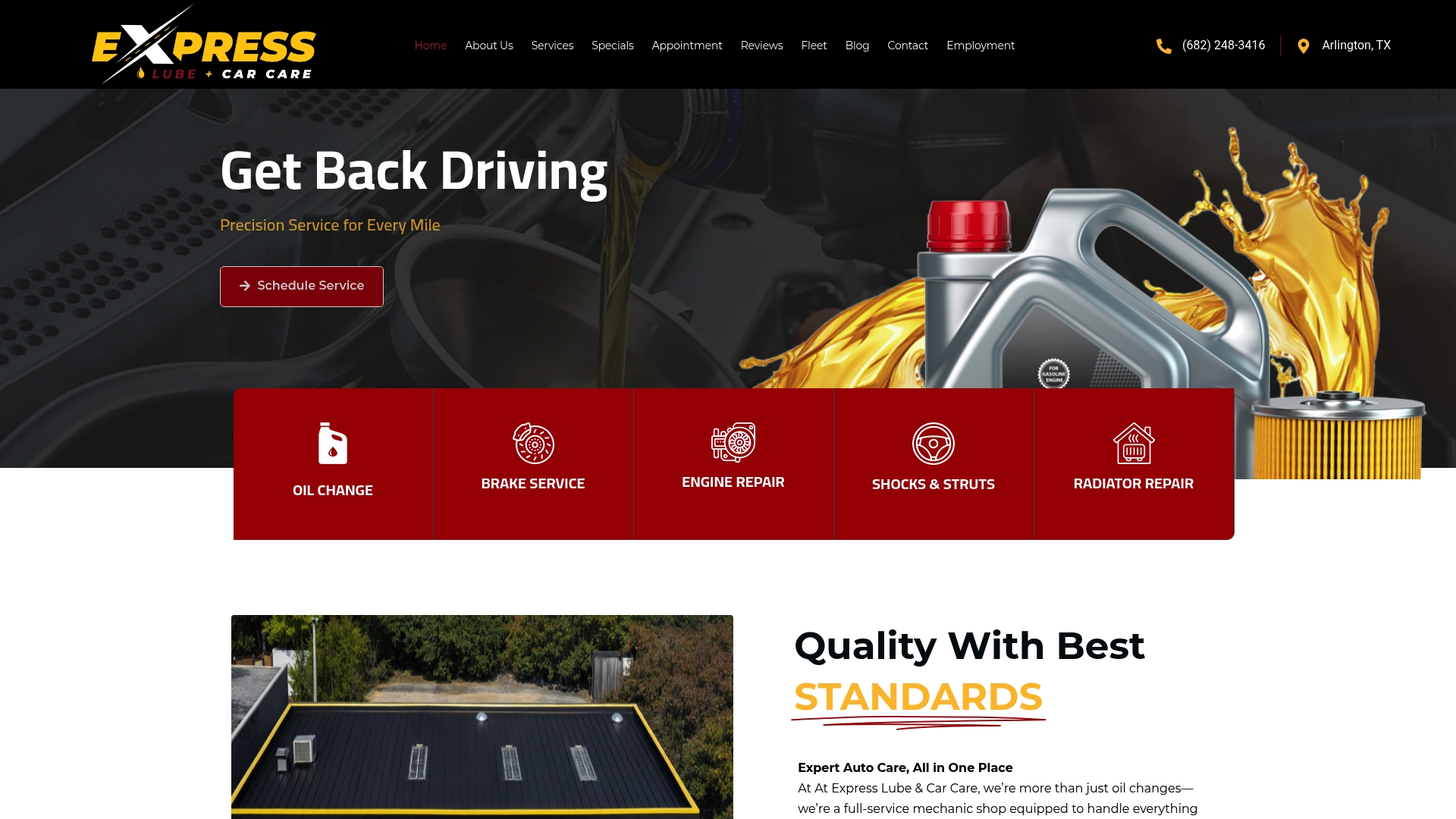
Whether you’re due for an oil change special or dealing with a warning light that’s been nagging you, we’ll give you a straight answer and a fair price. If you’re facing a bigger repair, our mechanical repair discount puts $45 back in your pocket. You can also learn about our ASE and RepairPal certifications to see exactly what qualifies our team to work on your vehicle. Stop in today and see why more DFW drivers are making us their go-to shop for everything their car needs.
FAQ
What makes a full-service auto shop different from a quick-lube?
A full-service auto shop handles a broad range of services including diagnostics, mechanical repairs, and often body work, while quick-lube shops focus on fast oil changes and limited maintenance tasks. Full-service providers also conduct multi-point inspections that catch issues early.
Are full-service auto shops more expensive?
The upfront cost can be slightly higher, but comprehensive inspections prevent costly failures down the road, making full-service shops the more economical choice long-term. Many also offer flexible payment plans with terms up to 48 months.
Does a full-service shop help with resale value?
Yes. Consistent preventive maintenance with documented service history at the same shop builds a paper trail that reassures buyers and supports a higher resale price.
How often should I visit a full-service shop?
At minimum, schedule a visit every six months or every 5,000 to 7,500 miles depending on your vehicle and driving habits. Regular visits let your technician build familiarity with your car and catch wear patterns before they become problems.
Can a full-service shop handle insurance claims?
Yes. Shops that offer both mechanical and collision repair services can coordinate directly with your insurance company, simplifying the claims process and getting your car back faster than splitting the work across multiple locations.