

Your car just rolled past 100,000 miles. Maybe you’re proud of that. Maybe you’re a little nervous. Either way, the truth is that crossing that threshold doesn’t mean your vehicle is headed downhill. It means your maintenance approach needs to grow up a little. The practical car care tips for high mileage vehicles in this guide go well beyond the basics you’ll find in your owner’s manual. We’re talking condition-based thinking, smarter fluid choices, and the kind of proactive habits that turn aging vehicles into long-haul machines. Let’s get into it.
Table of Contents
- Key takeaways
- 1. Car care tips for high mileage vehicles start with shifting your mindset
- 2. Oil and fluid management for aging engines
- 3. Engine and cooling system inspection
- 4. Suspension, tires, brakes, and steering
- 5. Exterior care and rust prevention
- My honest take on high mileage car ownership
- Keep your high mileage vehicle in good hands at Expresslubearlington
- FAQ
Key takeaways
| Point | Details |
|---|---|
| Shift to condition-based care | Stop relying on mileage intervals alone. Inspect components regularly and respond to what you actually see. |
| Use high mileage motor oil | Specialized formulations help protect aging seals and reduce oil consumption in engines over 75,000 miles. |
| Cooling system is your top priority | Water pump, thermostat, and hose failures accelerate at high mileage and can cause catastrophic engine damage. |
| Suspension needs regular checks | Inspect bushings, ball joints, and tie rods every 50,000 miles to protect tires and handling. |
| Exterior care prevents hidden damage | Washing the undercarriage and touching up paint chips stops rust before it becomes a structural problem. |
1. Car care tips for high mileage vehicles start with shifting your mindset
Most car owners treat maintenance like a calendar event. Change the oil every 5,000 miles. Rotate tires every 6,000. Done. But high mileage maintenance shifts that model entirely, moving from interval-only scheduling to condition monitoring. Your car’s needs are no longer predictable just by the clock.
Think of it this way. A 12-year-old car with 110,000 highway miles in a dry climate is in a completely different shape than one with the same mileage driven through Chicago winters on salted roads. Same odometer reading. Very different maintenance story.
Here’s what condition-based monitoring actually looks like in practice:
- Check oil color and level every time you fill up with gas, not just at change intervals
- Listen for new sounds at startup, during braking, and around turns
- Watch for any new warning lights and log when they appear
- Note if the car pulls to one side, vibrates at speed, or feels sluggish on acceleration
Pro Tip: Start a simple maintenance log. A notes app on your phone works fine. Record oil top-offs, any new noises, and fluid checks with the date and current mileage. This log becomes incredibly useful when something does go wrong.
A log also helps you follow a maintenance schedule by mileage with more precision, because you’ll actually know what was done and when.
2. Oil and fluid management for aging engines
If there’s one area where older car maintenance diverges most from standard advice, it’s here. High mileage oil isn’t just a marketing gimmick. It’s a genuinely different formulation.
Mobil 1 High Mileage oils, for example, are specifically engineered for engines over 75,000 miles and include seal conditioners that help reduce oil seepage from aging gaskets. The best oil for high mileage engines contains additives that standard oils simply don’t carry.
That said, a quick word of clarity here. High mileage oil is a supplement to good habits, not a replacement. As Mobil themselves note, these formulations support extended drain intervals but still recommend following your manufacturer’s guidelines. Switching to a high mileage formula doesn’t mean you can skip your oil changes.
Here’s what to stay on top of across all your fluids:
- Engine oil: Check level monthly. Oil consumption of one quart per 3,000 to 5,000 miles can be normal, but anything faster than that signals a leak or burning issue you need to address.
- Coolant: Look at the color. Clear to bright green or orange is healthy. Brown or murky means it’s degraded and needs flushing.
- Transmission fluid: Dark brown or burnt-smelling fluid is a red flag, especially in automatics.
- Brake fluid: This one absorbs moisture over time, which lowers its boiling point. Flush it every two years regardless of mileage.
- Power steering fluid: Foamy or discolored fluid usually means air in the system or a slow leak somewhere.
Pro Tip: Keep a small notebook in your glove box specifically for oil top-offs. Write the date, mileage, and how much you added. This “oil log” helps you track oil consumption accurately and catch a slow burn or leak before it snowballs into engine damage.
3. Engine and cooling system inspection
The cooling system is ground zero for high mileage failures. Water pumps, thermostats, and radiator hoses are three components that wear quietly and fail loudly. Cooling system failures escalate fast in older vehicles, and when a water pump goes without warning, you’re often looking at serious engine damage within minutes.
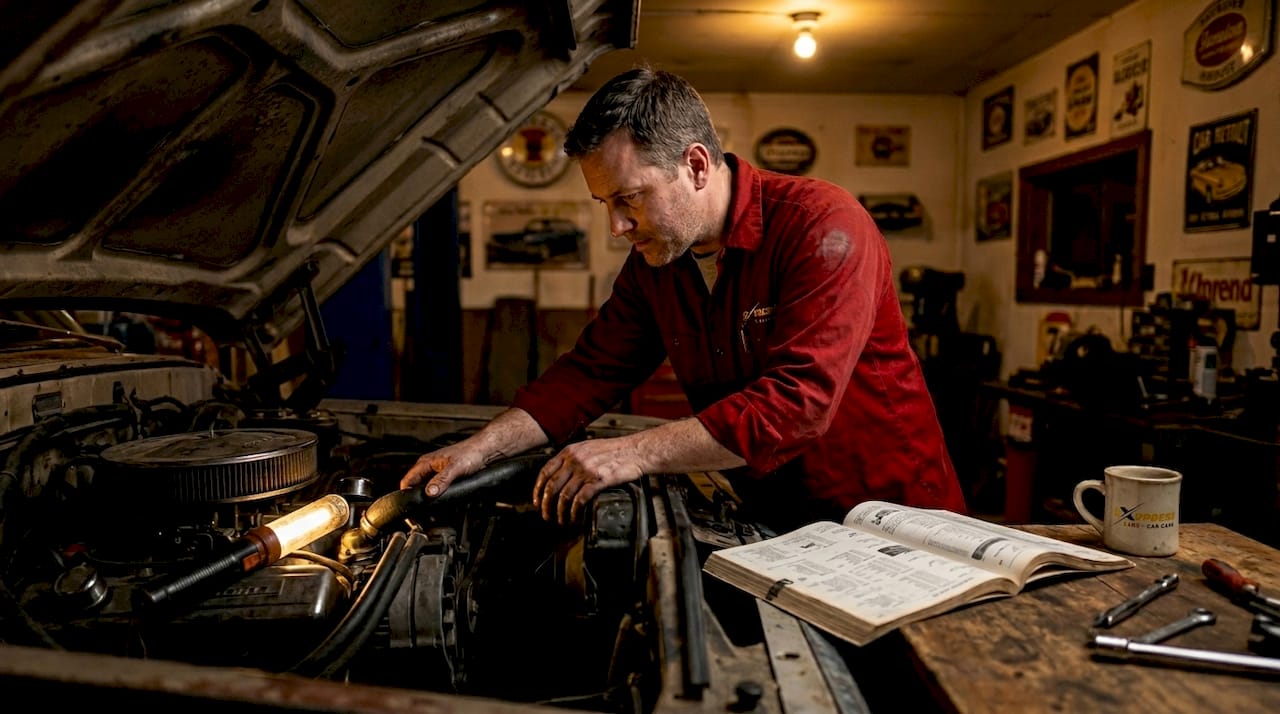
The smart move is scheduled replacement, not waiting for failure. If your car is past 100,000 miles and you don’t know when the water pump or timing belt was last replaced, treat that as unknown and get it inspected now.
Here’s a practical inspection checklist for your engine and cooling components:
- Radiator hoses: Squeeze them when the engine is cold. They should feel firm, not spongy or cracked.
- Water pump: Look for weeping coolant near the pump housing and listen for a rattling noise at idle, which usually means a failing bearing.
- Thermostat: If your engine takes a long time to warm up or runs hot without explanation, the thermostat is a likely culprit.
- Spark plugs: Worn plugs cause rough idle, poor fuel economy, and misfires. Most should be replaced by 100,000 miles, but iridium plugs can go longer.
- Drive belts: Inspect for glazing, cracking, or fraying. A serpentine belt failure stops everything at once.
- Gaskets and seals: Minor oil seepage from aging seals is common. Monitor it. If a drip becomes a puddle, it’s time to act.
One thing people overlook is that you can often spot trouble through signs of engine wear before it becomes catastrophic. White smoke at startup, oil in the coolant, or a persistently rising temperature gauge are not minor annoyances. They’re your car waving its arms.
4. Suspension, tires, brakes, and steering
These four systems work together to keep your car planted, predictable, and safe. In a high mileage vehicle, they deserve a level of attention that most people reserve for the engine.
Worn suspension components like ball joints, bushings, and tie rods don’t just create annoying clunks. They cause uneven tire wear, unpredictable handling, and in extreme cases, steering failure. Inspect these every 50,000 miles as a baseline rule.
Here’s what to watch for across these systems:
- Bushings and ball joints: A clunking or squeaking sound when going over speed bumps or turning sharply usually points here.
- Tie rods: Play in the steering wheel or a car that wanders on straight roads suggests tie rod wear.
- Tire pressure: Underinflated or overinflated tires wear unevenly and hurt fuel economy. Check pressure monthly, not just when the light comes on.
- Tire rotation: Every 5,000 to 7,500 miles. Front tires wear faster on front-wheel-drive cars, and skipping rotation kills tires prematurely.
- Brake pads and rotors: Squealing is your first warning. Grinding metal means you’ve waited too long. If you’re unsure, learn the common brake warning symptoms before you end up needing rotors instead of just pads.
- Brake fluid: Already mentioned above, but worth repeating here because it directly affects braking performance.
Pro Tip: After a long highway drive, park and walk around the car. Look at each tire. Uneven wear on the inside edge means alignment issues. Wear in the center only means overinflation. These patterns tell you exactly what your car needs.
5. Exterior care and rust prevention
The body of your car is more than cosmetic. Rust eats through structural metal over time and can compromise the integrity of the frame, floor pans, and wheel wells. For a high mileage vehicle you’re planning to drive for years, this matters more than people realize.
Here’s a simple seasonal approach to keeping the exterior solid:
- Wash the undercarriage at least twice a year, especially after winter months. Road salt doesn’t just look dirty. It actively corrodes metal and shortens body life significantly.
- Inspect wheel wells and door edges after washing. These are where rust starts because water collects and paint chips go unnoticed.
- Touch up paint chips immediately. A chip the size of a pencil eraser can become a rust bubble in one winter if left alone.
- Check and clear drain holes in the doors and rocker panels. These small holes let trapped water escape. When they’re clogged with debris, water sits inside your doors and rusts them from the inside out.
- Apply a spray wax or sealant twice a year to maintain paint protection.
For a deeper auto cleaning routine that protects paint and seals, working from the roof down and finishing with the undercarriage gives you the most thorough result. It’s not glamorous work, but it adds years to a vehicle’s usable life.
My honest take on high mileage car ownership
I’ve watched a lot of people make the same mistake: they treat a high mileage car like a ticking time bomb and either ignore everything waiting for the inevitable, or they panic and spend money on repairs that weren’t urgent yet.
In my experience, the cars that make it to 200,000 miles and beyond almost always have one thing in common. Their owners paid attention. Not expensive attention. Just consistent attention. They noticed when the oil smelled different. They didn’t ignore the faint shimmy that appeared at highway speed. They kept a log.
What I’ve found is that condition-based care beats reactive fixes every single time. The owner’s manual tells you when to change fluids. It doesn’t tell you to notice that your coolant has turned the color of coffee, or that you’re adding a quart of oil every 1,500 miles instead of every 4,000. Those observations come from you, and they’re worth more than any service interval chart.
One maintenance task I rarely hear people talk about: transmission fluid flushes on high mileage automatics. Most mechanics will tell you not to flush a transmission that’s been neglected for a long time, and that’s fair. But if you’ve been maintaining it? A fresh flush at 100,000 and again at 150,000 can genuinely extend transmission life by years.
Balancing DIY checks with professional service is smart, not lazy. Know what you can see and feel yourself. Trust a certified shop with the rest.
— Hassan
Keep your high mileage vehicle in good hands at Expresslubearlington
At Express Lube & Car Care in Arlington, we specialize in exactly the kind of thorough, attentive service that high mileage vehicles need. Our ASE-certified technicians bring real expertise to every inspection, oil change, and diagnostic, and we’re proud to carry RepairPal certification and a Top-Rated CarFax service center designation.
Whether your car needs a high mileage oil service, a cooling system inspection, engine diagnostics, or a full suspension check, we’ve got the tools and the knowledge to get it done right. We serve drivers across the DFW area who trust us to give their vehicles honest, reliable care without the guesswork. Stop in and let us take a thorough look at where your vehicle stands. Your next 100,000 miles starts here.
FAQ
What counts as high mileage for a car?
Most mechanics consider 100,000 miles the threshold where specialized maintenance becomes necessary, though some high mileage oil formulations are designed for engines over 75,000 miles.
Is high mileage bad for cars?
High mileage itself isn’t the problem. Neglected maintenance at high mileage is. Vehicles with consistent service records regularly reach 200,000 miles and beyond without major failures.
What’s the best oil for high mileage engines?
High mileage motor oils with seal conditioners, like Mobil 1 High Mileage 5W-30, are specifically formulated for engines over 75,000 miles and help reduce oil seepage from aging gaskets.
How often should I check my oil on a high mileage car?
Check your oil level every time you fuel up. Monitoring consumption closely helps you catch leaks or burning issues before they cause serious engine damage.
When should suspension components be inspected on an older car?
Inspect ball joints, bushings, and tie rods every 50,000 miles as a baseline. Any clunking over bumps or wandering steering is a signal to check sooner.