
TL;DR:
- Basic car maintenance involves routine checks like oil, tires, fluids, and lights that keep the vehicle safe and reliable. Following these habits consistently prevents costly repairs and extends the car’s lifespan, while independent shops can handle routine services without voiding warranties. Building simple routines such as monthly checks and detailed logs helps new drivers effectively maintain their vehicles and avoid safety risks.
Basic car maintenance is defined as the routine care that keeps your vehicle safe, reliable, and running for the long haul. As a new driver, understanding why new driver car maintenance basics matter is the difference between a car that serves you for years and one that strands you on the highway. The average age of vehicles on U.S. roads reached 12.6 years in 2024, which means even newer cars need consistent attention. Your owner’s manual, a digital tire pressure gauge, and a basic fluid check routine are the three tools that make this manageable from day one. This guide gives you everything you need to build those habits confidently.
What basic car maintenance tasks should new drivers know?
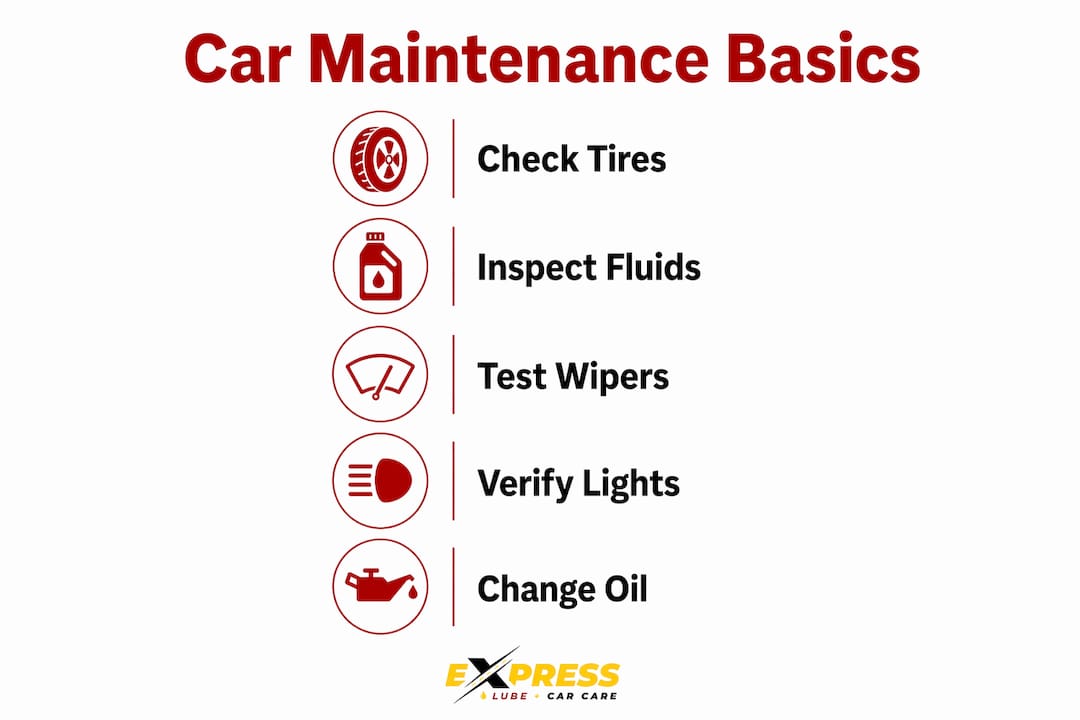
New driver vehicle care starts with five core areas: tires, fluids, wipers, lights, and oil. Each one is something you can monitor yourself, and most checks take under five minutes. Skipping them is where small problems quietly become expensive ones.
Tires: your first safety check
Tire pressure affects safety, fuel efficiency, and how long your tires last. Check pressure at least once a month and before any long trip. A digital tire gauge costs under $15 and gives you a reading in seconds. Do not forget the spare. It does you no good flat in the trunk when you actually need it.
Pro Tip: Check tire pressure when the tires are cold, meaning the car has been parked for at least three hours. Heat from driving temporarily inflates the reading.
Fluids: the lifeblood of your engine
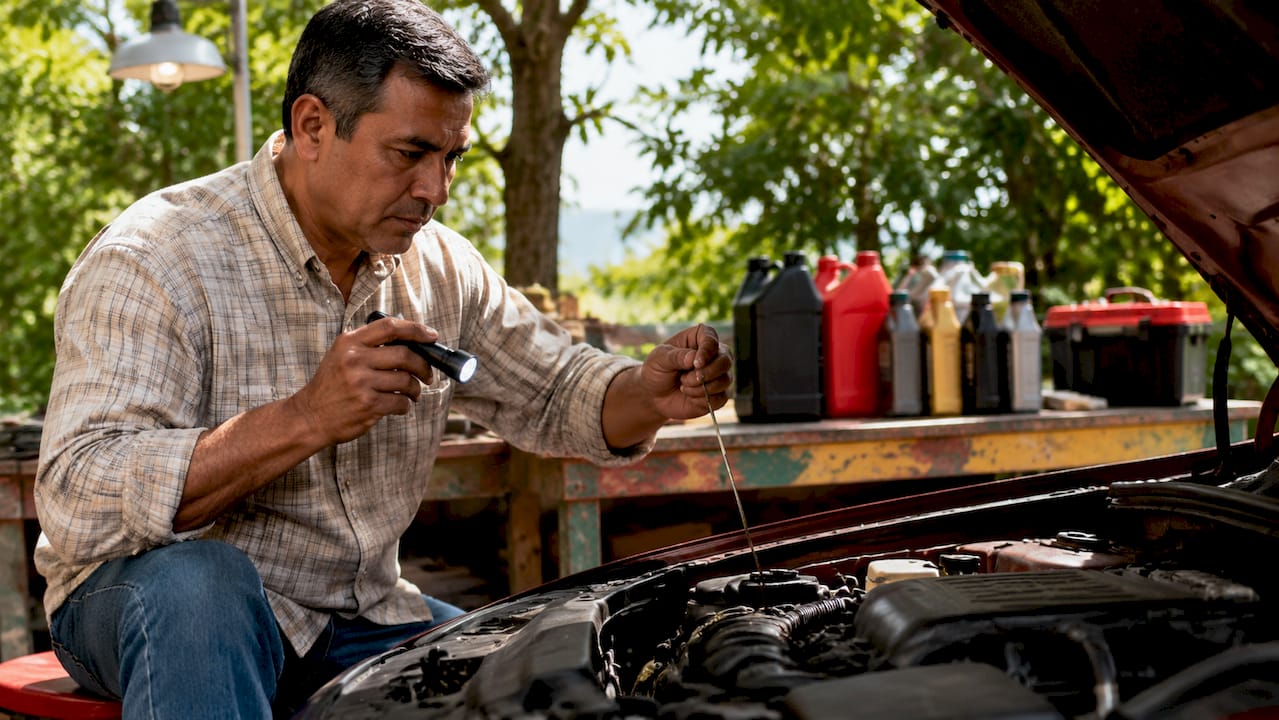
Your car runs on six key fluids: engine oil, coolant, brake fluid, transmission fluid, power steering fluid, and windshield washer fluid. Checking fluids between services catches leaks and low levels before they cause damage. Engine oil is the most critical. Pull the dipstick, wipe it clean, reinsert it, and pull again. The oil level should fall between the two marks. If it looks black and gritty rather than amber, an oil change is overdue.
Wipers, lights, and brakes
Worn wiper blades smear instead of clear, which is a real hazard in rain. Replacing them is a DIY task that takes about ten minutes and costs under $30 for most vehicles. Walk around your car periodically and check that all lights work, including brake lights and turn signals. For brakes, listen for squealing or grinding sounds. Dashboard warning lights and unusual noises are signals that a professional needs to take a look. Do not wait on those.
- Check tire pressure monthly and before long trips
- Inspect all fluid levels every two to four weeks
- Replace wiper blades at least once a year or when streaking starts
- Test all exterior lights monthly
- Listen for brake noise and watch for warning lights
How does a maintenance schedule protect your car long-term?
Following a maintenance schedule is the single most effective habit a new driver can build. Sticking to your owner’s manual intervals prevents small issues from snowballing into major repairs. Think of it as paying a small bill now to avoid a massive one later.
“Regular upkeep is a risk management strategy. It prevents cascading failures that turn a $50 fix into a $1,500 repair.” — Consumer Reports
Oil changes: the non-negotiable interval
Oil change intervals range from 3,000 to 10,000 miles depending on your vehicle and driving conditions. Your owner’s manual tells you exactly where your car falls. Severe conditions like stop-and-go traffic, extreme heat, or towing shorten that interval. Drivers in the DFW area, for example, deal with summer heat that accelerates oil breakdown. Check out these oil change interval tips to understand what your specific vehicle needs.
A practical schedule for beginners
- Every month: Check tire pressure, inspect fluid levels, test all lights.
- Every 3,000–5,000 miles: Change engine oil and filter per your owner’s manual.
- Every 6,000–7,500 miles: Rotate tires to even out wear across all four.
- Every 12 months or 12,000 miles: Inspect brakes, replace wiper blades, check battery terminals.
- Every 30,000 miles: Replace air filter, inspect transmission fluid, check coolant level.
Adjust these intervals for harsh driving conditions. If you tow, drive in dusty environments, or sit in heavy traffic daily, move up your service dates. Harsh driving conditions accelerate wear on almost every system in your car. Keep a simple log, whether in a notebook or a notes app, so you always know when each service is due.
What misconceptions do new drivers have about car maintenance?
The biggest misconception new drivers carry is that routine maintenance must happen at the dealership. Independent mechanics can handle oil changes, fluid checks, and most scheduled services without voiding your warranty. The Magnuson-Moss Warranty Act protects your right to use any qualified shop for routine upkeep. You do not need to pay dealer prices for an oil change.
The over-servicing trap
Some shops push services you do not need yet. “Double-wrenching,” meaning performing the same service twice in a short period, wastes money and does nothing for your car. The fix is simple: follow your owner’s manual, not a service advisor’s upsell. If a shop recommends something not listed in your manual, ask them to show you why it is needed.
Pro Tip: Bring your owner’s manual to every service appointment. It is your best defense against unnecessary add-ons and gives you a clear reference point for what is actually due.
- You do not need dealer-only service for routine maintenance
- Warranties remain valid when using qualified independent shops
- Your owner’s manual is the authority on service intervals, not marketing materials
- Some simple tasks like wiper blade replacement and air filter swaps are DIY-friendly
- Several automakers offer free maintenance during the first years of ownership, so check your paperwork before paying for early services
A RepairPal Certified shop or an ASE-certified technician gives you the same quality as a dealer for most routine work. Knowing this saves you real money over the life of your car.
How can new drivers build effective car maintenance habits?
Building a maintenance routine does not require mechanical knowledge. It requires consistency. A simple feedback loop of quick checks, logging, and scheduled shop visits keeps you on track without overdoing it or missing anything critical.
Four steps to make maintenance automatic
- Set calendar reminders. Put oil change dates, tire rotation reminders, and annual inspection dates in your phone. Treat them like appointments you cannot skip.
- Do a five-minute walkaround weekly. Check tire appearance, look under the car for fluid spots, and glance at your dashboard. Early detection of problems saves money every time.
- Keep a maintenance log. Record every service with the date and mileage. This log also adds value when you sell the car.
- Know your limits. Tire pressure checks, fluid top-offs, and wiper replacements are DIY-friendly. Brake repairs, suspension work, and engine diagnostics need a professional.
Pro Tip: A car inspection checklist printed and kept in your glove box makes weekly walkarounds faster and more thorough.
DIY between-service checks increase your awareness of how your car normally looks, sounds, and feels. That awareness is what lets you catch something unusual early. A car that reaches 200,000 miles almost always got there because its owner paid attention consistently, not because it was a special vehicle. You can use a car maintenance schedule by mileage to map out exactly what needs attention at each stage.
Key Takeaways
New drivers who follow a consistent maintenance routine protect their safety, extend their vehicle’s life, and avoid the most expensive repairs.
| Point | Details |
|---|---|
| Start with five core checks | Monitor tires, fluids, wipers, lights, and oil every month without exception. |
| Follow your owner’s manual | It sets the correct service intervals for your specific vehicle and conditions. |
| Independent shops are valid | ASE-certified and RepairPal Certified mechanics handle routine work without voiding warranties. |
| Build a feedback loop | Log every service, set reminders, and do weekly walkarounds to catch problems early. |
| Know when to call a pro | Warning lights, unusual noises, and fluid leaks always need professional diagnosis. |
What I have learned watching new drivers skip the basics
New drivers tend to fall into one of two camps. Some ignore maintenance entirely until something breaks. Others get so anxious about doing it wrong that they over-service their car or pay for things they do not need. Both approaches cost more money than a simple, consistent routine.
What I have seen work, time and again, is treating your car like a relationship. You check in regularly, you pay attention to small changes, and you do not wait for a crisis to take action. The drivers who reach high mileage without major repairs are not lucky. They are consistent. They check their oil. They rotate their tires. They do not ignore the little amber light on the dashboard for three weeks.
The other thing I want new drivers to understand is that this knowledge is not intimidating once you start. Your first tire pressure check feels awkward. By the third one, it takes 90 seconds and you do it without thinking. That is the goal. Build the habit small, and it compounds into a car that runs well for years. For new drivers who want a solid starting point, the essential guide for new drivers covers the practical side in plain language.
The cars that get neglected do not just cost more to repair. They become unsafe. A tire that has not been checked in six months, brakes that have been grinding for two weeks, an engine running on oil that is three quarts low. These are not hypotheticals. They are the calls that end with a tow truck. You have the information now. Use it.
— Hassan
Expresslubearlington is here when you need a hand
Getting your maintenance routine started is the hardest part. Once you know what to check and when, the rest falls into place. At Expresslubearlington, our ASE-certified technicians and RepairPal Certified shop handle everything from your first oil change to full-service inspections, with fast turnaround and no unnecessary upsells.
New drivers across the DFW area trust Expresslubearlington because we explain what your car actually needs and why. Whether you are due for your first oil change service or want to understand your full car care package options, we make it straightforward. Stop by and let us help you build the maintenance habit that keeps your car running safely for years to come.
FAQ
What is basic car maintenance for new drivers?
Basic car maintenance covers routine checks and services including oil changes, tire pressure monitoring, fluid inspections, wiper replacement, and brake monitoring. These tasks protect vehicle safety and prevent costly repairs.
How often should a new driver change their oil?
Oil change intervals range from 3,000 to 10,000 miles depending on the vehicle and driving conditions. Your owner’s manual gives the exact interval for your specific car.
Do new drivers have to use a dealership for routine maintenance?
No. Independent mechanics can perform routine maintenance like oil changes and fluid checks without voiding your warranty. Look for ASE-certified or RepairPal Certified shops for reliable service.
When should a new driver call a professional instead of doing it themselves?
Dashboard warning lights, unusual noises, or fluid leaks always require professional diagnosis. DIY tasks are limited to checks and simple replacements like wipers and air filters.
How does a maintenance log help new drivers?
A maintenance log records every service by date and mileage, preventing missed intervals and duplicate work. It also increases resale value and gives any mechanic a clear picture of your car’s history.