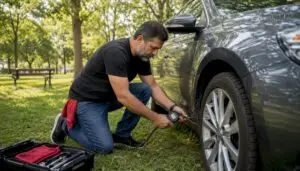

Here’s the short version: eight checks separate a car that runs fine from one that surprises you on the highway. Check your oil level, tire pressure and tread, all your lights, look for fluid leaks under the car, pay attention to how your brakes feel, glance at your battery terminals, top off wiper fluid and check the blades, and confirm your spare tire and emergency kit are actually usable. That’s your baseline car servicing checklist, and you can run through it in about ten minutes.
- Oil level (dipstick or dashboard monitor)
- Tire pressure and tread depth
- All exterior lights working
- No fluid puddles under the car overnight
- Brakes feel firm, not spongy, no grinding
- Battery terminals clean, no corrosion
- Wiper blades and washer fluid topped off
- Spare tire inflated, jack and basic tools present
Pro Tip: Your owner’s manual is the real authority here. It lists your manufacturer’s exact intervals and flags safety-critical items you should never skip, no matter what a generic checklist might say.
Regular maintenance keeps repair costs predictable instead of catastrophic, and this hard fact backs it up: manufacturer maintenance schedules in the owner’s manual remain the most authoritative source for service intervals, not the generic templates floating around the internet.
Key Takeaways
A reliable car servicing checklist organizes tasks by urgency, from immediate red flags down to annual mileage milestones, and always defers to your owner’s manual over generic rules.
| Point | Details |
|---|---|
| Follow urgency tiers | Sort tasks into immediate, monthly, quarterly, six-month, and annual buckets instead of guessing. |
| Owner’s manual wins | Manufacturer intervals override generic templates like 30-60-90 whenever they conflict. |
| Adjust for severe driving | Shorten oil and filter intervals if you drive short trips, tow, or face extreme heat or dust. |
| Keep one service log | Record date, mileage, work performed, and receipts to protect warranty coverage and resale value. |
| Let a shop handle major work | Expresslubearlington’s ASE-certified technicians back services with a 24-month, 24,000-mile warranty and digital inspection records. |
Table of Contents
- What Warning Signs Mean You Should Get Your Car Serviced Immediately?
- What Should You Check on Your Car Every Month?
- What Should You Inspect Every Quarter?
- What Happens at a Six-Month Car Service Appointment?
- What Major Services Does a Car Need Every Year or at Mileage Milestones?
- How Do You Track and Customize Your Car’s Maintenance Records?
- Does an Electric Vehicle Need a Different Maintenance Checklist?
- Are There Eco-Friendly Ways to Service Your Car?
- Sources
- FAQ
What Warning Signs Mean You Should Get Your Car Serviced Immediately?
Some signs don’t wait for your next scheduled appointment. They mean stop what you’re doing and get the car looked at.
- Check-engine light paired with rough running, stalling, or unusual smells
- Any red dashboard warning light (oil pressure, brake system, temperature)
- Puddles or active drips of oil, coolant, or transmission fluid
- Brakes that suddenly feel spongy, or a pedal that sinks to the floor
- A tire losing pressure fast or showing a bulge, gash, or exposed cord
- Smoke, steam, or a burning smell coming from under the hood
- The temperature gauge climbing into the red
If any of these happen while you’re driving, pull over somewhere safe, shut off the engine, and take note of exactly what you noticed. Sound, smell, warning light, timing. That detail helps a technician diagnose faster. If the car isn’t safe to drive, call a tow rather than risk it.
Never clear a check-engine light yourself without a diagnostic scan first. Resetting it hides the code a technician needs to actually fix the problem, and the light almost always comes back once the underlying issue resurfaces.
AAA’s time-stamped checklist treats several of these as immediate-service triggers rather than something to schedule around, and that ranking is worth taking seriously.
What Should You Check on Your Car Every Month?
Run this routine once a month or before any long road trip. None of it requires tools you don’t already own.
- Pull the dipstick, wipe it, reinsert, and check the oil level against the markings.
- Open the hood and eyeball the coolant reservoir against its “full” line (only when the engine is cold).
- Check tire pressure against the PSI number on your driver’s door jamb, not the number on the tire sidewall.
- Insert a penny into the tread, Lincoln’s head down. If you see all of his head, it’s time to shop for tires.
- Walk around the car and test headlights, brake lights, turn signals, and hazards.
- Top off washer fluid and confirm the wipers clear the windshield without streaking.
- Do a quick visual scan under the car for fresh spots or stains on the pavement.
- Check tire pressure and tread
- Confirm all lights function
- Look for leaks and top off washer fluid
Pro Tip: Check tire pressure when the tires are cold, ideally before you’ve driven more than a mile or two. Tires warm up quickly and give you a falsely high reading once you’ve been on the road.
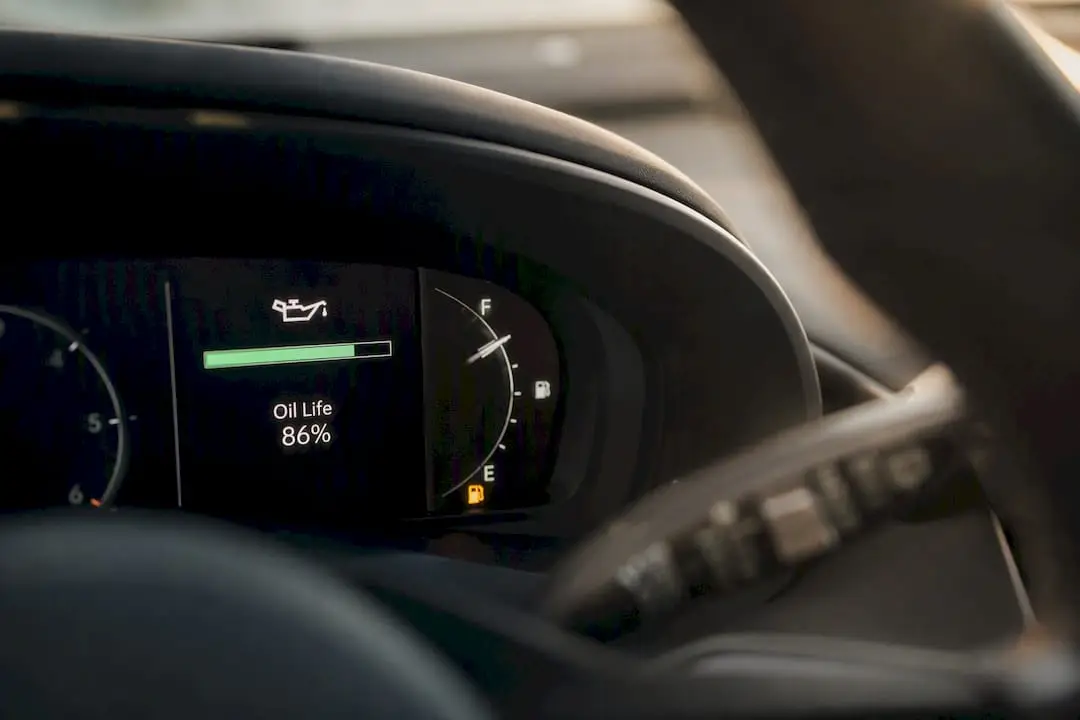
One thing worth knowing: modern oil-life monitoring systems paired with synthetic oil often stretch change intervals well past the old 3,000-mile rule. Check your dashboard display or manual before assuming you’re overdue.
What Should You Inspect Every Quarter?
Every three months, or roughly every 3,000 to 5,000 miles, step up from the monthly glance to a slightly deeper look. This is where you catch problems before they turn into a stranded car.
- Inspect the battery terminals for corrosion and confirm cables are seated tightly.
- Look over belts and hoses for cracking, fraying, or soft spots.
- Check or replace the cabin air filter if airflow feels weak or smells musty.
- Examine wiper blades for splitting rubber, even if they’re still clearing the glass.
- Test the horn and confirm every light still works, including reverse lights.
- If you can see the brake pads through the wheel spokes, check thickness visually.
- Battery and cable condition
- Belt and hose wear
- Cabin air filter condition
- Brake pad thickness (if visible)
Jot down anything questionable. A quick note like “front pads look thin” saves time and guesswork at your next shop visit.
What Happens at a Six-Month Car Service Appointment?
Around the six-month mark, or somewhere in the 5,000 to 10,000 mile range depending on your driving, most shops run a fuller service that covers what you can’t easily check at home. Expect an oil and filter change if you’re due, a tire rotation, a multi-point inspection, and top-offs on anything low.
- Brake inspection, including pad thickness and rotor condition
- Suspension components checked for leaks or wear
- Exhaust system inspected for rust, holes, or loose mounts
- Battery load-tested rather than just eyeballed
- Tires rotated front to back to even out wear
Walking in with the right questions turns a routine visit into useful information instead of a mystery invoice.
- “What’s the tread depth on all four tires?”
- “Did the battery test pass, and what’s its remaining life?”
- “Is anything close to needing replacement in the next 5,000 miles?”
- “Can you show me the fluid condition, not just tell me?”
Pro Tip: Bring your mileage history or service records if you have them. A shop that knows what’s already been done gives sharper, more specific recommendations instead of defaulting to “replace everything.”
The Kelley Blue Book maintenance guide breaks intervals down this same way, by month and mileage together, because relying on time alone misses drivers who put on far more or far fewer miles than average.
What Major Services Does a Car Need Every Year or at Mileage Milestones?
Your owner’s manual sets the real schedule here. Treat mileage milestones as a planning template, especially useful if you bought the car used and don’t have full service history.
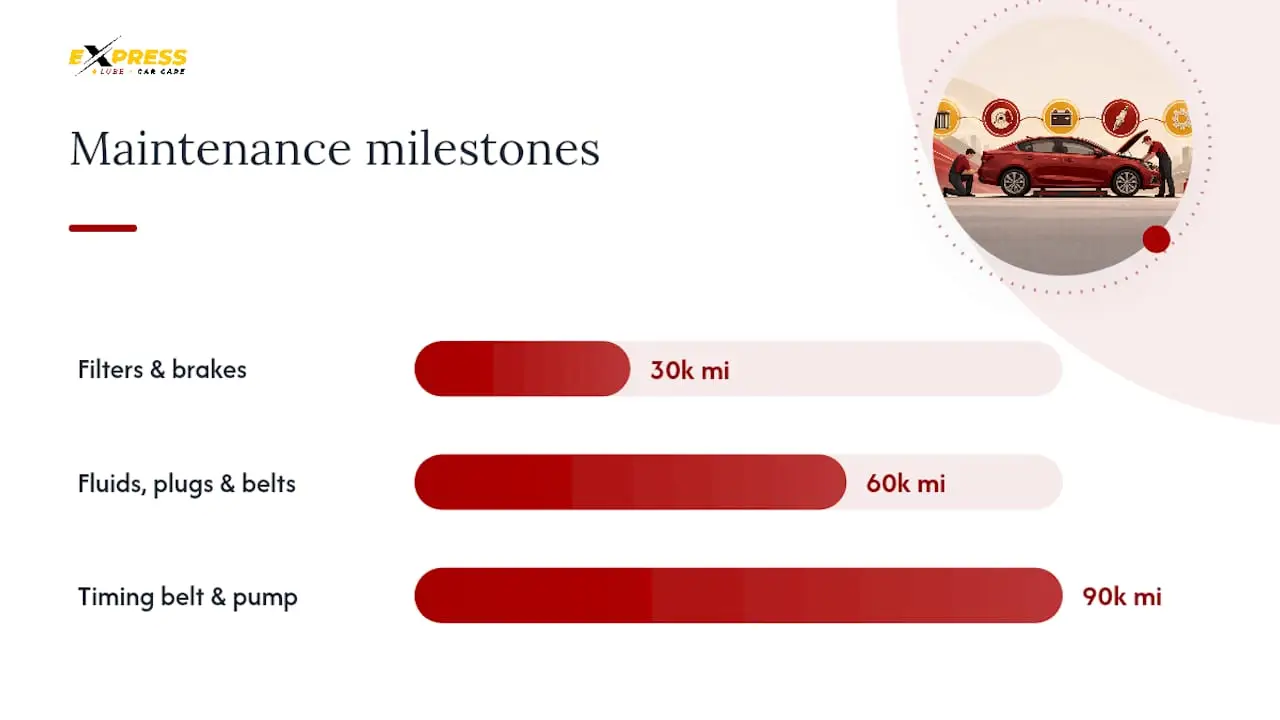
- around 30,000 miles: fresh filters, brake inspection, tire rotation, fluid checks across the board
- around 60,000 miles: deeper fluid flushes, spark plug inspection, belt and suspension checkup
- around 90,000 miles: timing belt and water pump evaluation, comprehensive diagnostic review
Skipping the timing belt interval is one of the costlier mistakes a car owner can make. A snapped timing belt on an interference engine can bend valves and wreck the engine entirely, turning a scheduled repair into a replacement bill. Because labor to access the timing belt overlaps almost entirely with water pump replacement, replacing both at the same time is standard shop practice and saves you a second labor charge down the road.
The 30-60-90 rule works well as a fallback plan. However, if your manufacturer’s schedule says something different for your specific engine, follow that instead, and shorten every interval if you drive in severe conditions: extreme heat, dusty roads, constant short trips, or heavy towing.
For a deeper breakdown by mileage, our maintenance schedule by mileage guide walks through each milestone in more detail.
How Do You Track and Customize Your Car’s Maintenance Records?
Keep one running service log. Every entry should note the date, mileage, what was done, which parts were used, and the receipt. That’s it. It doesn’t need to be fancy.
Your intervals shift based on how you actually drive. “Severe conditions” isn’t just off-roading. It includes stop-and-go city driving, frequent short trips under ten minutes, towing, extreme heat or cold, and dusty or gravel roads. If two or more apply to you, shorten your oil and filter intervals rather than sticking to the standard schedule.
- Date and odometer reading for every service
- What was done and which parts went in
- Photo or scan of the receipt
- Shop name and technician if applicable
Pro Tip: A phone folder of receipt photos works fine, but sticking with one consistent shop makes recordkeeping almost automatic since they keep your history on file.
Consistent records aren’t just paperwork. They materially improve resale value by proving to a future buyer, or a warranty department, that the car was actually cared for. Our guide on documenting car repair history covers this in more depth, and how maintenance records help your car last explains the longevity side of the equation.
Does an Electric Vehicle Need a Different Maintenance Checklist?
Yes, and the difference is bigger than most new EV owners expect. There’s no engine oil, no oil filter, and no timing belt to worry about. Instead, your attention shifts to the high-voltage battery, software, and brakes that wear differently than you’d expect.
- Software and over-the-air update status
- Battery thermal management system performance
- Brake inspection, even though regenerative braking means pads last longer
- Coolant designed specifically for battery packs, not standard engine coolant
Regenerative braking changes wear patterns enough that some owners assume brakes never need checking. They still do, just less often. Ask about battery and software warranties specifically when you book service, since those terms vary more between EV manufacturers than traditional powertrain warranties ever did.
Are There Eco-Friendly Ways to Service Your Car?
Servicing your car well and servicing it responsibly aren’t separate goals. A well-maintained engine burns fuel more efficiently, and a neglected one wastes gas while pushing out more emissions than it should. Something as simple as keeping tires properly inflated improves fuel economy meaningfully, since underinflated tires create extra rolling resistance your engine has to fight constantly.
Where your maintenance byproducts end up matters too. Used motor oil, old coolant, and spent batteries are all recyclable, but only if they’re handled correctly instead of poured down a drain or tossed in the trash. Any legitimate repair shop has systems in place for this. Ask if you’re not sure how yours handles it.
A few habits make a real difference over the life of your vehicle:
- Replace air filters on schedule. A clogged filter forces the engine to work harder and burn more fuel.
- Keep tires at the right pressure. Underinflated tires reduce fuel efficiency and wear out faster, meaning more rubber in landfills.
- Choose the correct oil grade for your engine rather than defaulting to whatever’s cheapest. The wrong viscosity can reduce efficiency and increase wear.
- Address small issues immediately. A minor coolant leak ignored for months often becomes a bigger repair with more waste involved.
None of this requires special “green” products. It’s mostly about not deferring the basics, since deferred maintenance almost always costs more in wasted fuel, wasted parts, and wasted trips to the shop later.
Author perspective: why regular checks matter
I’ve seen enough neglected vehicles come through a shop door to know the pattern: small warning signs ignored for months turn into four-figure repairs. Our ASE-certified technicians and our standing as a RepairPal Certified Shop exist because consistent, documented maintenance is what actually prevents breakdowns, not luck.
Soft CTA: let a professional handle the parts you’d rather not
Running through this checklist yourself catches most problems early, but some jobs, like timing-belt replacement or a full multi-point inspection, are worth handing to a shop with the right equipment and training. Expresslubearlington’s ASE-certified technicians back every job with a 24-month, 24,000-mile warranty, so you’re not gambling on the repair holding up.
Every visit includes a digital vehicle inspection, which means you get photos and documentation of exactly what was checked and what condition it’s in, the same kind of paper trail that protects your warranty and boosts resale value down the line. If you’re due for an oil change, a rotation, or you just want a second set of eyes on something that’s been nagging at you, schedule a service appointment and let a technician take it from there.
Sources
- Your car maintenance checklist (Consumer Reports)
- Car Maintenance Guide: Everything You Need to Know – Kelley Blue Book
- Does The 30-60-90 Rule For Car Maintenance Actually Make Sense?
- Time-Stamped Car Maintenance Checklist | AAA Automotive
- Car Maintenance Checklist: The Ultimate Guide | Capital One Auto Navigator
FAQ
What Is the 30-60-90 Rule for Cars?
It’s a mileage-based planning template that stages bigger inspections at roughly 30,000, 60,000, and around 90,000 miles, covering filters and brakes at 30k, deeper fluid flushes at 60k, and timing-belt and water-pump evaluation at 90k. It’s a useful fallback, but your manufacturer’s specific schedule takes priority whenever the two disagree.
What Maintenance Does a Car Actually Need?
At minimum, a car needs regular oil changes, tire pressure and tread checks, brake inspections, and prompt attention to warning lights. Beyond that, the exact list depends on your make, model, and how you drive, which is why the owner’s manual matters more than any universal checklist.
What Is a Good Maintenance Checklist to Follow?
A solid checklist separates tasks by timing: monthly checks for oil, tires, and lights; quarterly checks for battery and belts; six-month service for rotations and inspections; and annual or mileage-based checks for brakes, fluids, and major components like timing belts.
What Is the Recommended Maintenance Schedule for a Car?
The schedule printed in your owner’s manual is the recommended one for your specific vehicle. General guides like the 30-60-90 rule work as a backup when that documentation isn’t available, such as with a used car bought without service history.
Should I DIY My Car Servicing Checklist or Book a Shop?
Monthly and quarterly checks are easy to do yourself with no special tools. For anything involving brakes, timing belts, or diagnostics, a shop with ASE-certified technicians and diagnostic equipment, like Expresslubearlington, catches issues a visual check alone would miss.