

Use your manufacturer’s “refill with filter” number as your target. For most passenger cars, that lands somewhere within the typical range for oil capacity, though the right range depends on your engine size. Small 4-cylinders usually take a moderate amount of oil. V6 engines require somewhat more oil. Bigger V8s and some trucks need even more.
Here’s the fast version before we get into the details:
- Check your manual or a VIN-based spec lookup for the exact “refill with filter” number.
- Add most of that volume, leaving a little room.
- Run the engine for 20 to 30 seconds.
- Shut it off, wait a minute, then check the dipstick.
- Top off in small increments until it reads full.
That’s the whole game. Everything below just fills in the “why” and the “how” so you don’t end up guessing.
Key Takeaways
Using the manufacturer’s refill-with-filter specification, then verifying with a short engine run and dipstick recheck, is the most reliable way to add the correct amount of oil.
| Point | Details |
|---|---|
| Use the right spec | Find “refill with filter” in your owner’s manual, not the dry-fill number. |
| Add oil in stages | Start slightly under spec, run the engine briefly, then top off in quarter-quart increments. |
| Know your ballpark | Most passenger cars need 4 to 8 quarts depending on engine size. |
| Treat overfill seriously | Anything more than a small fraction over full needs draining or a fresh oil change. |
| Let a shop verify when unsure | Expresslubearlington’s ASE-certified technicians confirm exact capacity and back the work with a warranty. |
Table of Contents
- How Much Oil Do I Put in My Car? Finding the Exact Number
- What “Refill With Filter” Actually Means
- Step-by-Step: Adding Oil Without Under- or Overfilling
- How Do You Read the Dipstick Correctly?
- Typical Oil Capacities by Engine Size
- What Happens If You Add Too Much Oil?
- Should You DIY or Let a Shop Handle It?
- Ready to Skip the Guesswork Entirely?
- Sources
- FAQ
How Much Oil Do I Put in My Car? Finding the Exact Number
Your owner’s manual has a “Capacities” or “Specifications” table buried in the back, and it lists “drain and refill” or “refill with filter” right there in black and white. That’s the number you want, not the “dry fill” figure, which only applies to a brand new engine that has never run.
No manual? You’ve got backup options:
- Your manufacturer’s website often has a VIN-based lookup tool that pulls exact capacity and viscosity for your specific build.
- Reliable fluid-capacity lookup sites can fill the gap when the glovebox comes up empty.
- A dealership or repair shop’s service manual will have it if all else fails.
Pro Tip: Two trims of the same model year can carry different capacities if one has a turbocharger or an extra oil cooler. Match the spec to your exact engine code, not just the model name.
What “Refill With Filter” Actually Means
Think of your oil filter as a small reservoir that soaks up its own share of oil. It typically holds between a quarter and a half quart, and that’s the gap between “dry” capacity and “refill with filter” capacity.
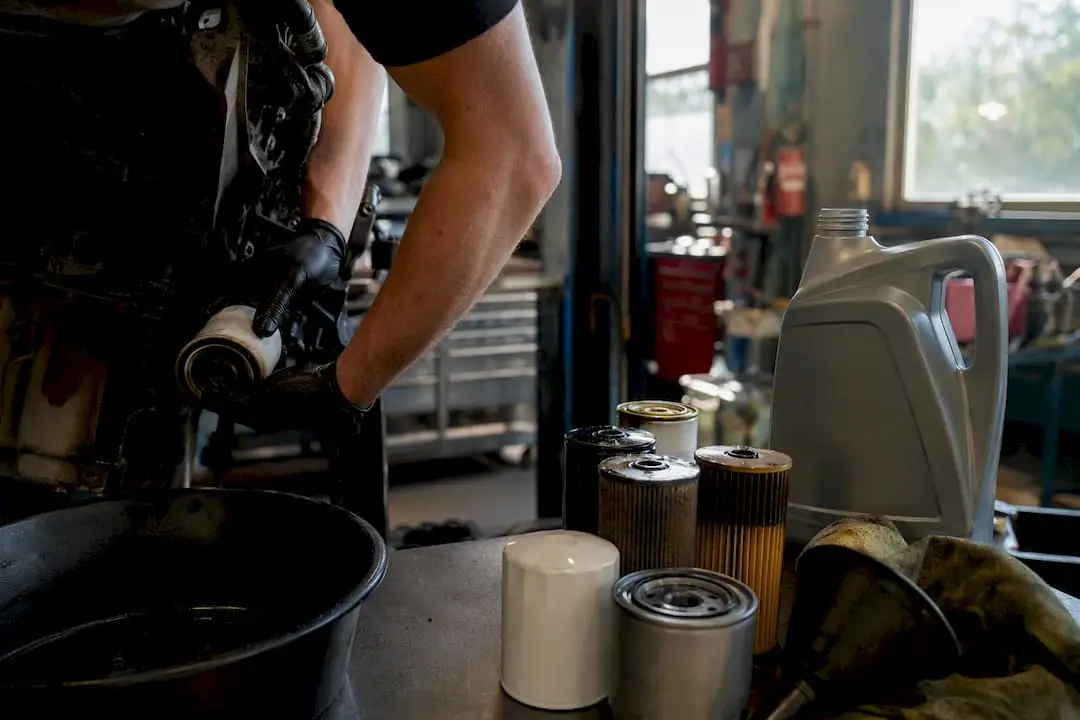
Dry capacity is what a brand new engine needs before it has ever turned over. Refill with filter is what you need after a normal oil change, when the filter is already holding oil from its last fill. Say your engine’s dry spec is 5.5 quarts. The refill-with-filter number might be 5.0 quarts instead, because the filter absorbs that difference. Always use the refill-with-filter figure for routine service. It’s the number your manual lists for a standard oil change, and it’s the one that keeps you from overshooting.
Step-by-Step: Adding Oil Without Under- or Overfilling
Let the engine cool if it’s been running. Hot oil and hot exhaust components can burn you, so give it a few minutes and keep a rag and gloves handy for drips.
- If you’re changing the filter, install the new one first, before you add any oil.
- Start under your target spec. If the book calls for a certain amount, pour in slightly less than that to start.
- Let the oil settle for 60 to 120 seconds, then pull the dipstick and check where it lands.
- Start the engine and let it run for 20 to 30 seconds. This circulates oil up into the filter and galleries, which is why your first reading always looks a little low.
- Shut the engine off, wait 60 seconds, and recheck the dipstick.
- Top off in quarter-quart increments, rechecking after each pour, until the level sits right at (or just under) the full mark.
This same add-run-recheck rhythm is exactly what experienced techs use to avoid guessing their way into an overfill. Wipe up any spills immediately, and dispose of used oil at a recycling center or auto parts store rather than down a drain.
Pro Tip: Buy one extra quart when you shop, but don’t pour it in all at once out of habit. Keep it in reserve strictly for that final topping-off stage, a quarter at a time.
How Do You Read the Dipstick Correctly?
- Park on level ground and, if possible, check when the engine is cold or has been off for several minutes. A hot check reads slightly differently, and some manufacturers specify exact conditions in the manual, so when in doubt, follow the book.
- Pull the dipstick, wipe it clean with a rag, and reinsert it fully.
- Pull it out again and read the oil line against the marks, whether that’s L and H, Min and Max, or a cross-hatched safe zone.
The gap between the low and high marks usually represents about one quart of oil, so a reading that’s slightly under full when the engine is warm isn’t automatically a problem. Some newer vehicles skip the dipstick entirely and show oil level electronically through the gauge cluster or infotainment screen. Check your manual for how that reading is triggered. Some require the engine off for a set time before the number is accurate.
Pro Tip: If your dashboard oil-level reading and a physical dipstick check ever disagree, trust the dipstick and mention the discrepancy to a technician. That kind of mismatch can point to a failing sensor.
Typical Oil Capacities by Engine Size
Once you know your engine type, you can shop with confidence instead of buying oil by guesswork.
- Compact and commuter 4-cylinders: roughly 4 to 5 quarts.
- Most V6 engines: roughly 5 to 6 quarts.
- Common V8 engines: roughly 6 to 8 quarts.
- Heavy-duty diesel trucks: often 10 quarts or more, with some large diesel setups climbing past that range.
For shopping purposes, most DIYers with a small car do fine buying a 6-quart jug and using the leftover for future top-offs. If you’re servicing a V6 or V8 truck, grab 7 to 8 quarts and fine-tune the exact amount with the dipstick rather than assuming you’ll use it all.
What Happens If You Add Too Much Oil?
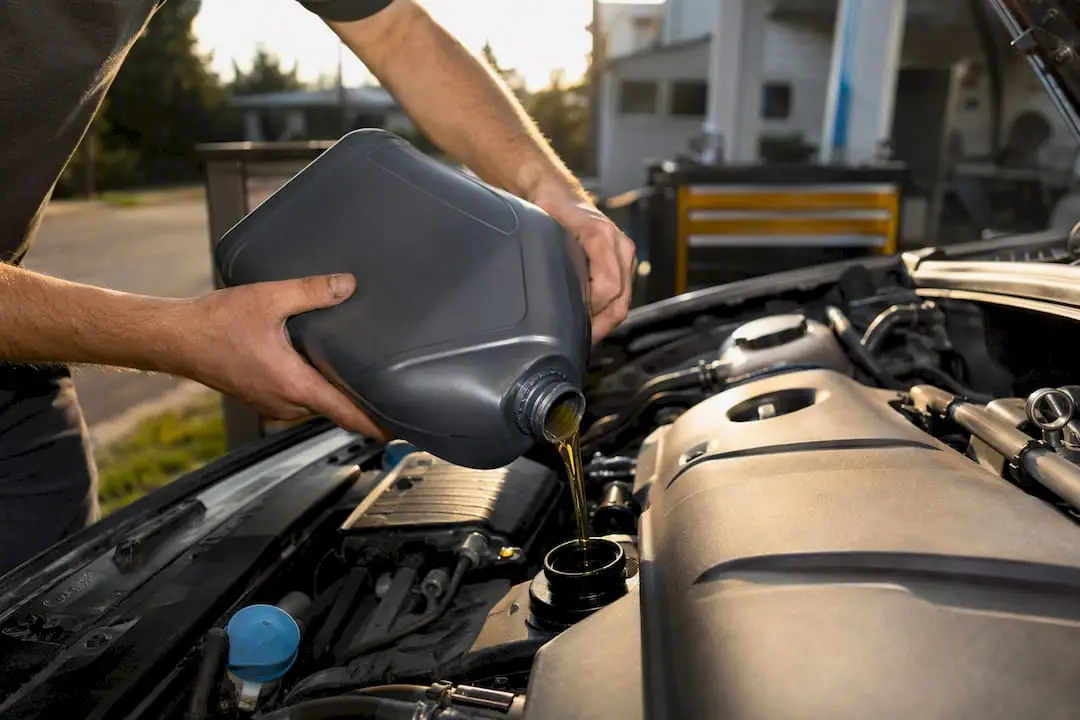
Too much oil isn’t a safety margin. It’s a problem. When the crankshaft spins through oil that’s sitting too high in the pan, it whips air into it, aerating and frothing the oil until it loses much of its lubricating effectiveness. That frothy oil also raises internal pressure, which can force its way past seals and gaskets.
Watch for these warning signs:
- Blue-tinted exhaust smoke
- A burning oil smell
- New oil leaks around seals or the pan
- Rough idle or misfires
- Unusual oil pressure readings or a lit check engine light
If you catch it early:
- Check the dipstick to confirm how far over full you are.
- For a small overfill, a fraction of a quart, it will often burn off or get handled at your next service without drama.
- For anything more than that, don’t drive the car. Drain the excess or perform a full drain-and-refill oil change with a fresh filter rather than trying to siphon oil out through the dipstick tube.
- If you’re not confident diagnosing how far over you are, have a shop check it.
Multi-quart overfills need immediate correction, not a “wait and see” approach.
Should You DIY or Let a Shop Handle It?
Topping off oil yourself is a reasonable weekend job when you’ve got the right spec, a clean dipstick, and basic comfort with tools. It gets more complicated when you’re changing the filter, dealing with an unfamiliar engine, or noticing signs that something’s already off, like unexplained oil consumption or a level that keeps changing between checks.
| Factor | DIY topping off | Professional shop service |
|---|---|---|
| Accuracy | Depends on your own dipstick reading | Verified with a digital vehicle inspection |
| Warranty coverage | None | Backed by shop warranty on parts and labor |
| Handling contamination | Hard to detect coolant or fuel mixing | Diagnosed with proper equipment |
| Cleanup and disposal | Your responsibility | Handled for you |
Bring the car in if you’re dealing with a large overfill, suspected coolant or fuel contamination, an engine variant you can’t confidently identify, or a missing dipstick. A guaranteed service also just takes the guesswork off your plate.
An ASE-Certified Technician’s Take
The refill-with-filter number, followed by a short run and recheck, is the method we rely on every day. It’s not a shortcut. It’s the accurate one. When a customer’s unsure about their engine variant, our ASE-certified techs verify it and back the work with warranty coverage, which takes the guesswork out entirely.
Ready to Skip the Guesswork Entirely?
If you’d rather hand off oil level checks to someone who does it dozens of times a week, that’s exactly what Expresslubearlington’s ASE-certified technicians handle, backed by a 24 month/24,000 mile warranty so you’re covered if anything’s off after the visit.
Every visit includes a digital vehicle inspection, so you get a clear picture of your oil condition and anything else worth watching, not just a top-off and a wave goodbye. Booking is straightforward, and it beats standing in a parking lot squinting at a dipstick in bad light. Check out our oil change tips for more on what a proper service includes, or stop by Expresslubearlington and let us handle the measuring for you.
Sources
- Oil capacity: How to put the right amount of oil in your engine every time — CarParts blog
- What happens if you overfill engine oil? — JEGS tech articles
- What happens when you put too much oil in your car? — J.D. Power
FAQ
Is 2 quarts of oil enough for a car?
Almost never. Most passenger cars require an amount of oil beyond a small partial top-off; 2 quarts is generally insufficient for a full refill.
How do I know how much oil to put in a car?
Check your owner’s manual’s “refill with filter” specification or use a VIN-based lookup tool from your manufacturer, then confirm the level with the dipstick after a short engine run.
Can I drive straight after adding oil?
Yes, once you’ve run the engine briefly, rechecked the dipstick, and confirmed the level reads correctly, it’s fine to drive, though a significant overfill means you should hold off until it’s corrected.
Is it better to overfill or underfill oil?
Neither is good, but overfilling causes more immediate harm since it aerates the oil and raises internal pressure, so aim for the exact spec rather than erring in either direction.
What if I’m not sure which engine variant I have?
Bring the car to a shop like Expresslubearlington, where ASE-certified technicians can verify the exact spec and handle the fill correctly the first time.