
A soft or spongy brake pedal means something compressible — air, vapor, or leaking fluid — is robbing your hydraulic system of the pressure it needs to stop your car. That’s the short answer. The immediate priority: if your pedal sinks toward the floor or your vehicle isn’t stopping reliably, stop driving. Pull over safely, turn on your hazard lights, and either call for a tow or run the staged checks below before moving the car again.
Three quick checks you can do right now, before anything else:
- Reservoir level and color. Pop the hood and look at the brake fluid reservoir. Low fluid points to a leak somewhere in the system. Dark brown or black fluid signals contamination.
- Visible leaks. Crouch down and scan the wheels, brake lines, and calipers for wet spots, drips, or dried fluid residue.
- Pump-to-firm test. With the engine off, pump the brake pedal several times. If it firms up with pumping but goes soft again when held, air in the brake lines is the likely culprit. If it slowly sinks to the floor under steady pressure, the master cylinder is suspect.
Pro Tip: NHTSA’s vehicle safety database at nhtsa.gov lets you check for open recalls or technical service bulletins (TSBs) specific to your make and model. A known brake defect on your vehicle changes the repair path entirely — always check before you start replacing parts.
Brake fluid types matter here too. Most passenger vehicles use DOT 3, DOT 4, or DOT 5.1 — all glycol-based fluids compatible with standard brake systems. An ASE-certified technician can confirm which your vehicle requires and whether the fluid condition is contributing to the problem.
Key Takeaways
A soft brake pedal almost always traces back to air in the lines, a failing master cylinder, or a fluid leak — and the pump-to-firm test is the fastest way to tell which direction to look first.
| Point | Details |
|---|---|
| Pump-to-firm test | If pumping firms the pedal, air is likely; if it sinks under steady hold, suspect the master cylinder. |
| Don’t drive on a sinking pedal | A pedal that drops to the floor under pressure is a safety-critical condition — tow, don’t drive. |
| Flush every two years | Brake fluid absorbs moisture over time; a flush every two years (or per OEM interval) prevents vapor lock. |
| ABS needs a scan tool | Many vehicles require a scan tool to cycle the ABS unit during bleeding; a DIY bleed alone may not clear trapped air. |
| Expresslubearlington | ASE-certified technicians in Arlington, TX offer full brake diagnostics, pressure bleeding, and a 24-month/24,000-mile warranty. |
Table of Contents
- What does a soft or spongy brake pedal actually feel like?
- Common causes of a soft brake pedal and how each one creates the symptom
- How to diagnose a soft brake pedal step by step
- How to fix a soft brake pedal — DIY steps and when to call a shop
- Is it safe to drive with a soft brake pedal?
- What does it typically cost to fix a soft brake pedal?
- How to prevent spongy brakes before they happen
- Why an ASE-certified shop matters for brake diagnosis
- A technician’s perspective on what the pedal is really telling you
- Expresslubearlington can diagnose and fix your brake problem today
- Sources
- FAQ
What does a soft or spongy brake pedal actually feel like?
Not every mushy pedal feels the same, and the difference in feel is your first diagnostic clue. Here’s how to read what your foot is telling you.
A spongy pedal compresses like a foam ball. You push, and instead of a firm, progressive resistance, the pedal feels springy or bouncy. That compressible sensation almost always means air or vapor is trapped somewhere in the hydraulic lines.
A soft pedal is different — it travels farther than normal before braking engages, but it may still feel relatively firm once it gets there. Think of it as a pedal that needs more travel to do the same job.
A pedal that sinks to the floor is the most serious variant. You press and hold, and the pedal slowly drops under your foot even without releasing pressure. That slow sink under steady load is a classic sign of internal master cylinder seal failure rather than trapped air.
Observable signs that confirm you’re dealing with a hydraulic problem:
- Pedal travel is noticeably longer than usual before braking kicks in
- The pedal feels compressible or bouncy rather than firm
- Pumping the pedal temporarily firms it up (classic air-in-lines behavior)
- The pedal slowly sinks under constant pressure (master cylinder suspect)
- The ABS warning light or brake warning light is on — check your dashboard warning lights for context
- You need to pump the brakes to stop confidently
Quick tests to run safely while parked:
With the engine off, pump the pedal five or six times to build pressure, then press and hold firmly for 30 seconds. If it holds position, air is less likely. If it slowly drops, the master cylinder is the prime suspect. Start the engine and press the pedal — if it drops slightly when the engine fires up, the brake booster is working normally. No change at all may indicate a booster problem.
Common causes of a soft brake pedal and how each one creates the symptom
Understanding the root cause is what separates a quick fix from an expensive guessing game. Here are the main culprits, in order of how commonly they show up.
1. Air trapped in the brake lines
Air is compressible; brake fluid is not. When air enters the hydraulic circuit — through a loose fitting, a leaking caliper, or after opening the system for repairs — it acts like a tiny shock absorber. The result is that classic spongy, springy feel. Pumping the pedal often firms it temporarily because pumping pushes the air bubble toward the reservoir. The fix is bleeding the system.
2. Moisture-contaminated fluid and vapor lock
Brake fluid is hygroscopic — it absorbs moisture from the atmosphere over time. As water content rises, the fluid’s boiling point drops. Under hard or sustained braking, the fluid can actually boil, creating vapor bubbles that are just as compressible as air. The pedal goes soft or fades during heavy use. Dark, murky fluid in the reservoir is the visual tell.
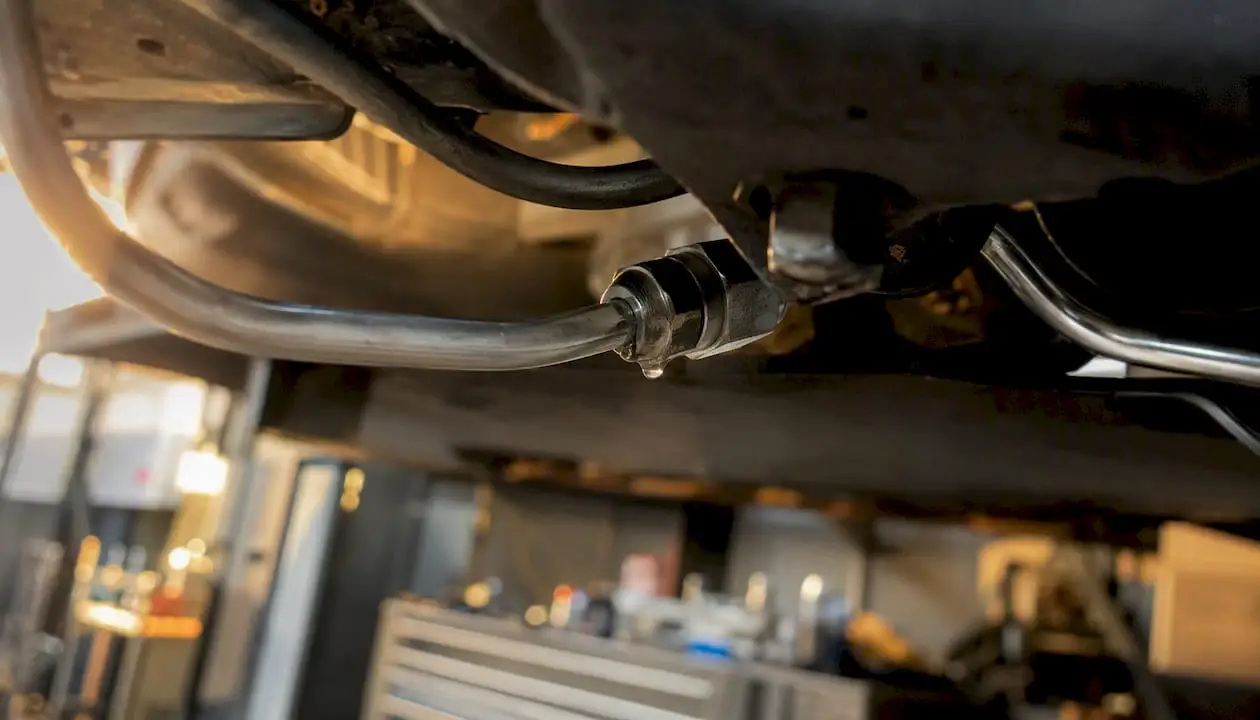
3. External fluid leaks
A leaking caliper piston seal, a corroded steel brake line, or a cracked rubber hose can all bleed hydraulic pressure out of the system. Corroded steel lines and damaged hoses are frequent service items. You’ll often see wet spots at the wheel, along the frame rails, or dripping from a caliper. Low reservoir level with no obvious internal cause almost always means fluid is escaping somewhere.
4. Failing master cylinder (internal bypass)
When the master cylinder’s internal seals wear out, fluid bypasses the piston internally instead of building pressure. No fluid escapes externally, so there’s no puddle to find. The symptom is that slow, steady sink to the floor under held pressure — a safety-critical condition that means the master cylinder needs replacement.
5. Collapsed or swollen rubber brake hoses
Rubber brake hoses deteriorate from the inside out. The inner lining can swell and act like a one-way valve, letting pressure in but not fully releasing it (causing a dragging brake) or collapsing under pressure and absorbing the hydraulic force instead of transmitting it. Squeeze the hose gently while a helper presses the pedal — a hose that bulges visibly is failing.
6. Sticking or retracting caliper pistons
A caliper piston that doesn’t retract properly after braking creates excessive travel on the next pedal press. Worn or damaged caliper piston seals are usually the cause. The pedal may feel normal after the first press but soft on subsequent presses, or you may notice uneven braking pull.
7. Pad knockback from warped rotors or worn bearings
This one surprises a lot of drivers. A warped rotor or a worn wheel bearing lets the rotor wobble slightly, physically pushing the caliper piston back into its bore. On the next brake application, the piston has to travel farther before the pad contacts the rotor — mimicking a spongy feel on the first press. It’s a mechanical clearance issue, not a hydraulic one, but it produces the same symptom.
8. ABS/HCU internal faults or incomplete ABS bleed
The ABS hydraulic control unit (HCU) contains valves and a pump that can trap air if not bled correctly. Many modern vehicles require a scan tool to cycle the ABS module during bleeding — a standard gravity or pressure bleed alone won’t reach air pockets inside the HCU. An ABS warning light alongside a soft pedal is a strong signal that the HCU is involved.
Pro Tip: Dark, brownish fluid that smells slightly burnt is a reliable sign of moisture contamination. Fresh DOT 4 fluid is nearly clear or light yellow. If yours looks like old coffee, a flush is overdue regardless of other symptoms.
| Cause | Key symptom | Visual clue |
|---|---|---|
| Air in lines | Spongy, firms when pumped | None visible |
| Contaminated fluid / vapor lock | Fade under hard braking | Dark, murky fluid |
| External leak | Soft + low reservoir | Wet spots at wheel or lines |
| Master cylinder failure | Slow sink to floor under hold | No external leak |
| Collapsed hose | Soft + possible drag | Hose bulges under pressure |
| Pad knockback (warped rotor) | Soft on first press only | Warped rotor, worn bearing |
| ABS/HCU fault | Soft + ABS warning light | ABS light on dash |
How to diagnose a soft brake pedal step by step
Run these checks in order. Each step either confirms a cause or rules it out, so you’re not guessing.
Tools and safety gear you’ll need:
- Floor jack and jack stands (or ramps)
- Wheel chocks
- Gloves and eye protection
- Brake bleeder kit (manual two-person or pressure bleeder)
- Flare-nut wrench set
- OBD-II scan tool (with ABS DTC capability)
- Quality blocker fittings (for isolation tests)
- Clean rags and brake cleaner
Step-by-step diagnostic sequence:
-
Confirm the symptom. Perform the pump-to-firm test and the hold test described above. Note whether the pedal firms with pumping (air likely) or sinks under steady pressure (master cylinder suspect).
-
Inspect the reservoir. Check fluid level and color. Low fluid means a leak exists somewhere. Dark or contaminated fluid means a flush is needed regardless of other findings.
-
Visual undercarriage and wheel inspection. Lift the vehicle safely on jack stands. Inspect all four wheels for wet caliper seals, dripping wheel cylinders, and rust-damaged steel lines along the frame. Look for hose bulging on the rubber sections near each wheel.
-
Pump-to-firm and hold test (detailed). With a helper, pump the pedal to firm, then hold steady pressure for 30 seconds. If the pedal drops, the master cylinder or a hidden leak is the cause. If it holds, the system is likely intact and air is the issue.
-
Blocking test to isolate the section. Blocking master cylinder ports and wheel outlets is a standard technician method to pinpoint which section of the system is failing. Block the wheel outlets one at a time and retest pedal feel. If the pedal firms when a specific wheel is blocked, that wheel’s circuit has the problem.
-
Isolate the master cylinder. Block the master cylinder outlet ports with quality fittings. If the pedal now holds firm, the master cylinder is good and the fault is downstream. If it still sinks, the master cylinder is bypassing internally.
-
Scan for ABS DTCs. Connect an OBD-II scan tool with ABS capability. Any stored ABS or brake system codes point toward HCU valve faults, wheel speed sensor issues, or an incomplete ABS bleed sequence.
-
Pressure-bleeder observation. Attach a pressure bleeder to the reservoir and pressurize to approximately 10–15 PSI. Watch for fluid weeping from fittings, hoses, or calipers — leaks that are invisible at rest often show up under pressure.
Pro Tip: Never use vice-grip pliers to clamp a rubber brake hose during a blocking test. Crimping a hose can damage the inner lining and create a new problem. Use proper brake hose clamps or dedicated blocker fittings only.
How to fix a soft brake pedal — DIY steps and when to call a shop
The right fix depends entirely on what the diagnosis found. Here’s how to tackle the most common repairs.
Materials and tools for DIY repairs:
- Correct DOT fluid for your vehicle (DOT 3, DOT 4, or DOT 5.1 — check your owner’s manual or reservoir cap)
- Manual brake bleeder kit or pressure bleeder
- Flare-nut wrenches (never use open-end wrenches on brake fittings)
- Jack, stands, and wheel chocks
- Brake cleaner and clean rags
- Replacement hoses, calipers, or master cylinder as needed
- ABS scan tool with bleed-sequence capability (for ABS-equipped vehicles)
Bleeding the brakes (the most common fix)
Two-person manual method:
- Fill the reservoir to the MAX line with fresh, vehicle-specified DOT fluid.
- Start at the wheel farthest from the master cylinder (typically right rear on most vehicles).
- Attach a clear hose to the bleeder screw and submerge the other end in a jar of clean fluid.
- Have a helper press the pedal slowly to the floor and hold it.
- Open the bleeder screw a quarter turn — fluid and air bubbles will flow out.
- Close the screw before the helper releases the pedal. Repeat until no bubbles appear.
- Move to the next wheel in the OEM sequence and repeat. Top off the reservoir after each wheel.
One-person pressure bleeder method:
Fill the pressure bleeder reservoir with fresh DOT fluid, attach it to the master cylinder reservoir, and pressurize to the manufacturer’s recommended level (typically around 10–15 PSI). Open each bleeder screw in sequence and let fluid flow until no bubbles appear, then close. This method is faster and reduces the risk of reintroducing air.
ABS bleed note: Many modern vehicles require a scan tool to command the ABS pump and cycle the HCU valves during bleeding. A standard bleed without cycling the ABS unit can leave air trapped inside the HCU, keeping the pedal spongy even after a thorough manual bleed. If your vehicle has ABS and the pedal is still soft after bleeding, this is the likely reason.
Replacing a collapsed brake hose
- Safely lift and support the vehicle.
- Use a flare-nut wrench to disconnect the steel line from the hose fitting. Cap the line immediately to minimize fluid loss.
- Remove the hose bracket clip and unthread the hose from the caliper.
- Install the new hose, torque fittings to spec, and bleed that corner of the system before lowering the vehicle.
Replacing the master cylinder
Bench-bleed the new master cylinder before installation — this pre-fills the internal chambers and dramatically reduces the amount of bleeding needed afterward. Install, reconnect lines with a flare-nut wrench, torque to spec, then bleed the entire system in the OEM sequence.
After any repair, verify with a road test: pump the pedal several times before moving, confirm firm feel, drive at low speed and test braking, then recheck the reservoir level and inspect for new leaks.
Pro Tip: Never mix DOT 5 silicone fluid with DOT 3, DOT 4, or DOT 5.1 glycol-based fluids. They are incompatible and will damage seals throughout the system. DOT 5.1 is glycol-based despite the similar number — it IS compatible with DOT 3 and DOT 4.
When to call a professional shop: ABS/HCU faults requiring a scan tool bleed sequence, internal master cylinder leaks, leaks you cannot locate visually, or any situation where you lack the tools or confidence to safely complete the repair.
Is it safe to drive with a soft brake pedal?
No. A soft or spongy pedal that gets worse under braking, sinks to the floor, or leaves you pumping to stop is a safety emergency. Pull over now.
Prioritized action list if the symptom appears while driving:
- Reduce speed gradually — avoid sudden steering inputs.
- Pump the brakes to build temporary hydraulic pressure if the pedal goes low.
- Use engine braking by downshifting (manual) or releasing the throttle (automatic) to slow the vehicle.
- Find a wide shoulder or parking lot and exit traffic.
- With the vehicle stopped, check the reservoir level and scan for visible leaks.
- Call for a tow or roadside assistance (AAA or your insurer’s roadside program) if braking is unreliable. Do not drive to the shop.
Pro Tip: If your pedal suddenly goes to the floor while moving, pump rapidly — this can temporarily firm a pedal softened by air. Use the parking brake gently as a last resort to assist stopping, but apply it gradually to avoid locking the rear wheels.
For a broader look at brake warning signs that signal when to stop driving immediately, that resource covers the full range of symptoms beyond pedal feel.
What does it typically cost to fix a soft brake pedal?
Repair costs vary by cause, vehicle, and region. Here are realistic ranges for the most common fixes.
- Brake fluid flush and bleed: $80–$150 at most shops; a DIY bleed costs $15–$40 in fluid and a basic bleeder kit.
- Brake hose replacement (per hose): $100–$200 parts and labor; steel line replacement runs higher depending on length and routing.
- Caliper rebuild or replacement (per axle): $150–$400 depending on vehicle and whether rebuilt or new calipers are used.
- Master cylinder replacement: $200–$450 parts and labor for most passenger vehicles; luxury or performance vehicles can run higher.
- ABS/HCU service or replacement: $300–$1,000 or more, depending on whether the unit needs a scan-tool bleed sequence, valve replacement, or full HCU replacement.
| Repair type | Typical cost range | Typical shop time |
|---|---|---|
| Brake fluid flush/bleed | $80–$150 | 30 minutes |
| Brake hose replacement | $100–$200 per hose | 1–2 hours |
| Caliper rebuild/replace | $150–$400 per axle | 1–3 hours |
| Master cylinder replacement | $200–$450 | 2–3 hours |
| ABS/HCU bleed or service | $300–$1,000+ | 1–4 hours |
Regional labor rates, vehicle complexity, and whether multiple components need replacement all push costs upward. An ABS fault combined with a leaking caliper and contaminated fluid, for example, can easily combine into a $600–$800 repair. Getting a diagnostic inspection first — rather than guessing and replacing parts — usually saves money.
How to prevent spongy brakes before they happen
Brake problems rarely appear without warning. A consistent maintenance routine catches most of these issues before they strand you.
Maintenance checklist:
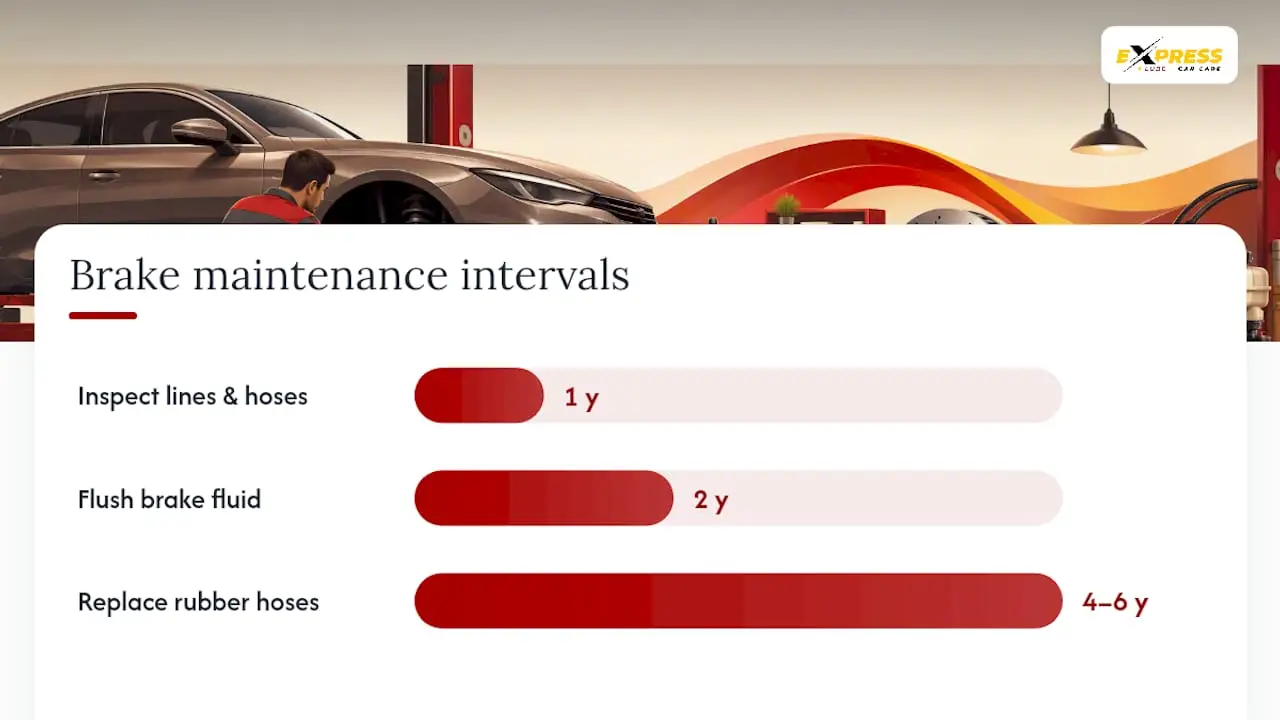
- Inspect brake lines and hoses annually for cracks, corrosion, or swelling
- Check the brake fluid reservoir at every oil change — level and color take 30 seconds
- Replace rubber brake hoses every 4–6 years or at the first sign of cracking or bulging
- Replace brake pads before they wear to metal to avoid rotor damage and pad knockback
- Flush brake fluid every two years (or per your manufacturer’s interval) — scheduled fluid replacement is preventive, not reactive
- Follow your vehicle maintenance schedule for brake inspection intervals
The two-year flush guideline exists because brake fluid absorbs moisture continuously from the moment it’s in the system. As water content rises, the fluid’s boiling point drops, increasing the risk of vapor lock during hard braking.
Fluid type matters. Use only the DOT specification listed on your reservoir cap or in your owner’s manual. DOT 3 is the baseline for most older vehicles. DOT 4 offers a higher dry boiling point and suits vehicles with more demanding brake systems. DOT 5.1 matches DOT 4’s performance or exceeds it and is glycol-based, making it compatible with DOT 3 and DOT 4 systems. Never use DOT 5 silicone fluid in a system designed for glycol-based fluid — the two are chemically incompatible.
For model-specific brake issues, NHTSA’s safety ratings and recall database lets you search by VIN or model year. Some vehicles have known TSBs for brake hose deterioration or ABS bleed procedures that change the repair approach entirely.
Why an ASE-certified shop matters for brake diagnosis
Some brake problems you can handle yourself. Others genuinely require professional tools and training — and confusing the two can make the problem worse or mask a safety-critical fault.
Trust signals and credentials at Expresslubearlington:
- ASE-certified technicians on every brake job
- RepairPal Certified Shop status, reflecting verified workmanship standards
- CarFax Top-Rated Service Center recognition
- 24-month/24,000-mile warranty on qualifying repairs — so if a brake repair doesn’t hold, you’re covered
When professional tools are required:
- ABS/OEM bleed procedures: Many vehicles need a scan tool to command the ABS pump and cycle HCU valves during bleeding. Without it, air stays trapped and the pedal stays spongy.
- Hydraulic pressure testing: A shop-grade pressure bleeder and hydraulic gauge can detect leaks and pressure loss that visual inspection misses.
- Blocking tests with proper fittings: Isolating the master cylinder or individual wheel circuits requires quality blocker fittings and experience reading the results correctly.
- Diagnostic scan tools: Reading and clearing ABS DTCs, and commanding module functions, requires a professional-grade scan tool — not a basic OBD-II reader.
If your vehicle has ABS, the pedal is still soft after a DIY bleed, or you cannot locate the source of the pressure loss, those are the situations where bringing it to a shop with the right equipment pays for itself. Signs your brakes need professional attention covers the broader list of when to stop DIYing and make the call.
A technician’s perspective on what the pedal is really telling you
The most common diagnostic mistake I see is drivers who bleed the brakes, feel a firmer pedal, and call it done — only to return two weeks later with the same spongy feel. Nine times out of ten, the air came back because the underlying cause wasn’t fixed. A leaking caliper seal, a cracked hose, or a master cylinder that’s bypassing internally will reintroduce air or lose pressure no matter how many times you bleed the system.
The pump-to-firm test is genuinely useful, but it’s a starting point, not a conclusion. A pedal that firms with pumping and then slowly sinks under a held load is pointing at two different problems simultaneously — air in the lines AND a master cylinder that can’t hold pressure. That combination is easy to miss if you stop investigating after the first bleed.
What I’d tell any driver: trust the pedal feel, run the hold test, and don’t skip the blocking test if the bleed doesn’t fix it. The system is telling you exactly where the fault is — you just have to listen methodically. And if the ABS light is on alongside a soft pedal, don’t attempt a DIY bleed and hope for the best. The HCU needs to be cycled with a scan tool, or you’ll be back in the same spot.
Bring your vehicle to Expresslubearlington for a digital vehicle inspection and road test. We’ll run the full diagnostic sequence and tell you exactly what’s causing the problem before any parts are replaced.
Expresslubearlington can diagnose and fix your brake problem today
A spongy pedal that’s already affecting your stopping distance isn’t something to put off until next week. At Expresslubearlington, our ASE-certified technicians handle the full range of brake repairs that cause soft pedal symptoms — from a simple fluid flush and bleed using a professional pressure bleeder, to brake hose replacement, master cylinder replacement, and ABS scan-tool bleed sequences for vehicles that need it.
Every brake repair comes with our 24-month/24,000-mile warranty, so you’re not just getting the repair — you’re getting the peace of mind that it’s done right. If cost is a concern, auto repair financing is available for larger jobs like master cylinder or ABS/HCU work. You can also save with our $45 off mechanical repair coupon on qualifying brake services. Call us or book online at Expresslubearlington to schedule your brake inspection today.
Sources
- Soft or Spongy Brake Pedal: Causes and Fixes | R1 Concepts
- Soft Brake Pedal: Causes, Repair Cost & Is It Safe To Drive? | AutOwner
- Diagnosing brake pedal problems | Brake & Front End
- Carparts
- Causes of Spongy Brakes | Wagner Brake
- Why is my brake pedal spongy? | The Car Buzz
FAQ
How do you fix a soft brake pedal?
The fix depends on the cause. Bleed the system to remove air, flush contaminated fluid, replace a collapsed hose or leaking caliper, or replace the master cylinder if it’s bypassing internally. ABS-equipped vehicles may also need a scan-tool bleed sequence to fully purge trapped air from the HCU.
What does it mean if the brake pedal is soft?
A soft or spongy pedal means something compressible — air, vapor, or escaping fluid — is preventing the hydraulic system from building full pressure. The most common causes are air in the brake lines, moisture-contaminated fluid, an external leak, or a failing master cylinder.
Is it safe to drive with a soft brake pedal?
No. If the pedal sinks toward the floor, requires pumping to stop the vehicle, or feels unreliable, stop driving immediately. Pull over safely, check the reservoir, and call for a tow if braking is compromised.
How much does it cost to fix a soft brake pedal?
Costs range from $80–$150 for a brake fluid flush and bleed, $100–$200 per hose for hose replacement, $150–$400 per axle for caliper work, $200–$450 for a master cylinder replacement, and $300–$1,000 or more for ABS/HCU service, depending on the vehicle and region.