
TL;DR:
- Choosing a certified repair shop ensures your vehicle’s safety systems are properly restored and your warranty remains protected. Certification programs verify technicians’ expertise and OEM compliance, reducing the risk of incomplete repairs and future issues. Always ask for documentation and verify credentials to ensure high-quality, safe vehicle repairs.
Choose a certified repair shop because it most reliably restores your vehicle’s safety systems, protects your warranty coverage, and cuts the odds of a repeat repair. That’s the short answer. The longer one involves a few things worth understanding before you hand over your keys.
The bottom line: Certification programs like ASE, OEM maker programs, and I-CAR/Assured Performance exist because the U.S. has no government licensing requirement for mechanics. Without them, you have no reliable way to verify that the person working on your car actually knows what they’re doing. Choosing a shop that holds these credentials is the closest thing to a guarantee you’ll get.
Here’s what that means in practice:
- Safety: Certified technicians follow documented OEM procedures for structural repairs, airbag systems, and ADAS recalibration — the systems that keep you alive in a crash.
- Warranty and resale: Documented, OEM-compliant repairs protect your factory warranty and give future buyers proof the vehicle was fixed correctly.
- Diagnostic accuracy: Certified shops use professional-grade scanners that access every electronic module, not just the basic codes a cheap OBD-II reader can pull.
Table of Contents
- What does “certified” actually mean for a repair shop?
- Why certified repairs protect your safety and your wallet
- What a shop actually has to do to earn certification
- How to pick and verify a certified repair shop
- What certified repairs typically cost and how long they take
- How certified repairs protect your resale value and warranty
- What Expresslubearlington offers Arlington drivers who want certified care
- Key Takeaways
- The part most drivers don’t think about until it’s too late
- Ready to book with a certified shop in Arlington?
- Useful sources and further reading
- FAQ
What does “certified” actually mean for a repair shop?
Not all certifications are the same, and that matters when you’re choosing a repair shop. There are four main types you’ll encounter.
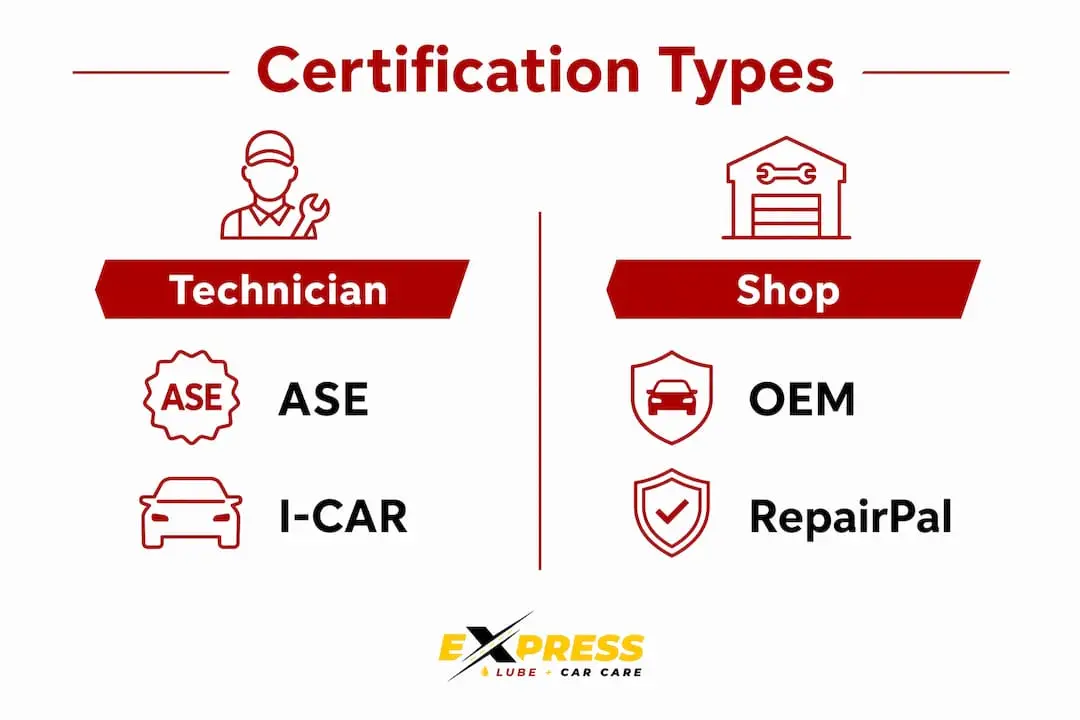
ASE (Automotive Service Excellence) is technician-focused. ASE requires a minimum of two years of documented work experience, a proctored exam, and recertification every five years. It covers 58 tests across 13 areas of expertise, from engine repair to advanced electronics. The credential is individual, not shop-wide, so a shop can display the ASE logo only if its technicians hold current, verified credentials.

OEM maker certifications operate at the shop level. Manufacturers like Ford, GM, Toyota, and luxury brands require shops to invest in factory-approved tools, training, and facility upgrades before granting certification. These programs exist to ensure technicians consistently follow OEM repair procedures, which is especially critical for collision work, ADAS calibration, and structural repairs.
I-CAR and Assured Performance are OEM-aligned collision repair standards. I-CAR training is role-specific and ongoing; Assured Performance is a network program that verifies a shop meets OEM equipment and training requirements for collision repair. Both are recognized by major automakers as proof a shop can handle modern vehicle complexity.
RepairPal and CarFax are third-party recognition programs. RepairPal certifies shops based on verified customer reviews, fair pricing, and quality standards. CarFax recognizes top-rated service centers based on customer feedback and service history transparency. Neither replaces ASE or OEM credentials, but they add a layer of consumer-facing accountability that’s easy to verify online.
| Certification Type | What It Verifies | Recertification |
|---|---|---|
| ASE (technician) | Exam-based knowledge, work experience | Every 5 years |
| OEM maker program (shop) | Tools, facility, training, documented procedures | Ongoing audits |
| I-CAR / Assured Performance | Collision repair training, OEM alignment | Annual role-based training |
| RepairPal / CarFax (shop) | Customer reviews, pricing fairness, transparency | Continuous monitoring |
Understanding how shop-level certification works helps you ask better questions before authorizing any repair.
Why certified repairs protect your safety and your wallet
Modern vehicles are, as one industry expert put it, “rolling computers.” Your car’s airbag deployment, lane-keeping assist, automatic emergency braking, and adaptive cruise control all depend on sensors and modules that must be calibrated precisely after any significant repair. A shop without the right training and tools can put those systems back together in a way that looks fine but fails when you actually need them.
Certified shops are equipped for ADAS and complex electronic diagnostics in a way that uncertified shops often aren’t. Professional diagnostic scanners, like the Autel IM-608 and similar full-system tools, can read every module on a vehicle’s CAN network, including ABS, airbag, body control, and transmission modules. A basic OBD-II reader can’t do that. When a shop misses a fault code in the airbag module because their scanner can’t access it, you drive away thinking everything is fine.
The structural side is just as serious. Certified technicians follow OEM-specified repair procedures for frame and unibody work, which means the vehicle absorbs crash energy the way it was designed to. Cut corners on a structural repair and the car may not protect you in a second accident, even if it looks perfect from the outside.
There’s also a real financial argument here. Accurate diagnosis the first time means fewer return visits, less wasted labor, and no paying twice for the same problem. Certified work produces documentation including photos, written diagnostic steps, and post-repair validation records that support warranty claims and give future buyers confidence.
Stat to know: ASE requires technicians to retest every five years specifically to keep pace with new vehicle technology, including hybrid systems, ADAS, and advanced electronics. That recertification cycle is what separates a credential that means something from one that doesn’t.
What a shop actually has to do to earn certification
Getting certified isn’t a one-afternoon process. For OEM programs, a shop typically goes through a formal application, a facility inspection or audit, verification of technician training records, and confirmation that the shop owns the specific tools the manufacturer requires. That can include factory-approved frame machines, ADAS calibration targets, and diagnostic software licensed from the OEM.
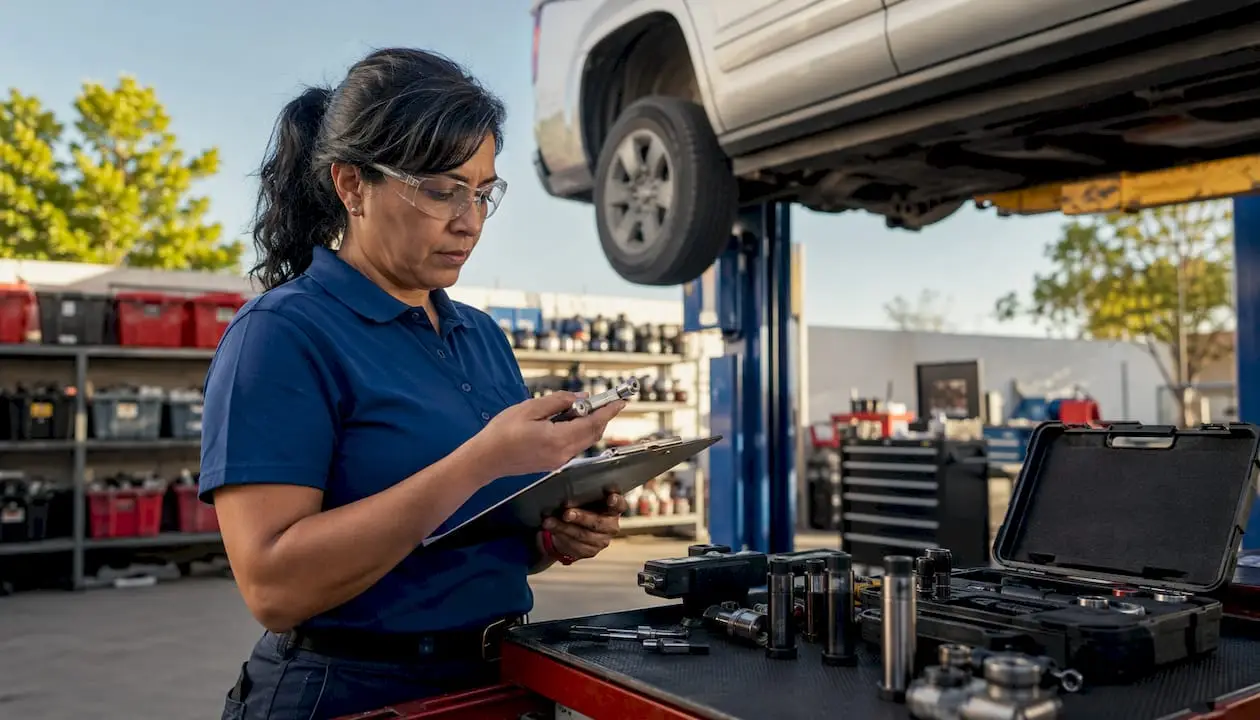
OEM certification requires shops to invest in factory-approved tools, training, and facility upgrades before they can claim the credential. Some programs can be completed in roughly 90 days; others take up to a year, depending on how quickly a shop completes training and acquires required equipment. Shops that drag their feet on training rarely make it across the finish line.
Maintaining certification requires ongoing work too. OEM programs evolve as vehicle technology changes, so shops face periodic re-audits and must complete updated training as new models and systems roll out. A shop that earned an OEM certification three years ago and hasn’t touched it since may not be current.
What to ask your shop: “Can you show me your current OEM certification documentation and the last audit date?” A shop that’s genuinely certified will answer that question without hesitation. One that gets vague or defensive is telling you something important.
Certification is the starting point, not the finish line. As industry insiders put it, “Certification is the first part — then the next step is making sure you have processes and procedures in place.” The best shops pair their credentials with documented internal quality-control steps and post-repair validation.
How to pick and verify a certified repair shop
Here’s a practical checklist you can run through before authorizing any repair.
- Ask which ASE certifications the technicians hold. Don’t accept a generic “we’re ASE certified.” Ask for the specific test series (A1 through A9 for automotive, for example) and the technician’s name. You can then verify credentials through ASE’s public lookup tool.
- Ask for the OEM program name. If the shop claims OEM certification, ask which manufacturer and request documentation. Legitimate programs are listed on the manufacturer’s website with a shop locator.
- Confirm ADAS calibration capability. Ask directly: “Do you have the calibration targets and software for my vehicle’s make and model?” If they hesitate, that’s your answer.
- Request a written warranty. A reputable certified shop will provide a written warranty covering parts and labor. Get the terms and duration in writing before work begins.
- Check RepairPal and CarFax ratings. These third-party platforms give you a quick read on customer experience and pricing fairness. Learn more about how shop reputation is rated before you decide.
- Ask about parts policy. Will they use OEM parts or aftermarket? For safety-critical components, OEM parts are the safer choice. Aftermarket parts may fit but might not meet original factory safety specifications.
Red flags to watch for: vague “we’re certified” claims with no documentation, pressure to approve repairs before a written estimate, insistence on aftermarket-only parts for structural or airbag components, and no post-repair validation step.
Pro Tip: Use ASE’s free online verification tool to look up a technician by name and confirm their specific credentials and expiration date. A shop that encourages you to do this is one you can trust.
For a deeper look at evaluating an ASE-certified mechanic, there’s a full guide that walks you through the exact questions to ask.
What certified repairs typically cost and how long they take
Certified shops often cost more per line item, and that’s worth understanding rather than resisting. Specialized equipment, OEM parts, and ongoing technician training all carry real costs that show up in labor rates. The tradeoff is fewer comebacks, better documentation, and repairs that actually hold.
Where certification saves you money is in diagnostic time. A full-system scan at a certified shop takes longer upfront than a quick code read, but it catches problems the first time. That means you’re not back in the shop two weeks later paying for a second diagnosis because the first one missed a fault in the body control module.
On insurance: The shop, not your insurer, holds the liability for a repair’s safety performance. Shop liability rests with the shop, which means if an insurer steers you toward a lower-cost option and that repair fails, the shop that did the work is on the hook. Ask your shop directly whether they follow OEM procedures regardless of insurer direction.
ADAS recalibration adds time to any repair involving cameras, radar sensors, or suspension components. Depending on the vehicle, a proper static or dynamic calibration can add a half-day to a full day to the repair timeline. That’s not padding; it’s a required step. For a realistic look at how repair timelines work, it helps to know what’s involved before you drop off your car. If cost is a concern, auto repair financing is an option worth exploring before you compromise on quality.
How certified repairs protect your resale value and warranty
This is where documentation becomes your best friend. When you sell a vehicle, a buyer who sees a repair history filled with certified, OEM-compliant work is looking at proof the car was fixed right. That’s a real advantage in a private sale or trade-in conversation.
On the warranty side, using non-OEM parts or skipping documented repair procedures can give a manufacturer grounds to deny a warranty claim on a related component. Certified shops document every step, which means you have a paper trail if a claim comes up later.
| Certification Attribute | Warranty Impact | Resale Impact |
|---|---|---|
| OEM-compliant procedures | Supports warranty claim approval | Demonstrates factory-standard repair |
| Documented repair records | Provides evidence for dispute resolution | Builds buyer confidence |
| OEM parts used | Meets manufacturer specifications | Reduces buyer concern about safety |
| Post-repair validation | Confirms repair completed correctly | Verifiable quality record |
Understanding how auto warranties interact with repairs is worth a few minutes of your time before any major service.
What Expresslubearlington offers Arlington drivers who want certified care
Expresslubearlington, operating as Express Lube & Car Care in Arlington, TX, holds the credentials that matter most to DFW drivers.
- ASE-certified technicians on staff, covering diagnostics, engine repair, brakes, electrical, A/C, and more
- RepairPal Certified Shop status, verified through customer reviews and pricing standards
- CarFax Top-Rated Service Center recognition, based on documented service history and customer feedback
- 24-month/24,000-mile warranty on repairs, in writing, every time
- Digital vehicle inspections with photos and documented findings shared with you before work begins
- Transparent parts policy with OEM-quality parts for safety-critical repairs
When you book, bring your insurance information, your VIN, and any photos you have of the damage. The team will run a full digital inspection, walk you through the findings, and give you a written estimate before anything gets authorized. How to choose an auto repair shop in Arlington covers what to expect from the full process.
Key Takeaways
Choosing a certified repair shop is the single most reliable way to protect your vehicle’s safety systems, preserve your warranty, and avoid paying for the same repair twice.
| Point | Details |
|---|---|
| Certification fills a real gap | The U.S. has no government licensing for mechanics; ASE and OEM programs are the consumer’s only verifiable standard. |
| Safety depends on certified procedures | Structural, airbag, and ADAS repairs require OEM-specified tools and training to function correctly after a repair. |
| Always verify credentials | Use ASE’s public lookup to confirm technician names and expiration dates before authorizing work. |
| Documentation protects you | Certified repair records support warranty claims and increase buyer confidence at resale. |
| Expresslubearlington is certified locally | ASE-certified technicians, RepairPal Certified, CarFax Top-Rated, and a 24-month/24,000-mile written warranty in Arlington, TX. |
The part most drivers don’t think about until it’s too late
Here’s what I keep coming back to after working through the evidence on certified repairs: most drivers only think about certification after something goes wrong. A repair that looked fine turns out to have skipped an ADAS recalibration step. A warranty claim gets denied because the shop used non-OEM parts and didn’t document the procedure. A car that was in a fender-bender sells for less than expected because there are no repair records to show the buyer.
The frustrating part is that none of those outcomes are inevitable. The information to avoid them is right here. Certification programs exist specifically because the industry recognized that consumers had no way to tell a qualified technician from an unqualified one. ASE, OEM programs, I-CAR, RepairPal, and CarFax all exist to solve that problem for you.
What I’d push back on is the idea that certification alone is enough. The shops that consistently deliver great outcomes pair their credentials with documented internal processes, post-repair validation, and a culture of getting it right rather than getting it done fast. That combination is what you’re actually looking for. A sign in the window is a starting point, not a finish line.
Ready to book with a certified shop in Arlington?
Expresslubearlington is the certified, full-service alternative to guessing whether your shop is qualified. ASE-certified technicians, a RepairPal Certified designation, CarFax Top-Rated recognition, and a written 24-month/24,000-mile warranty mean you know exactly what you’re getting before the work starts.
Right now, you can take $45 off mechanical repairs at Express Lube & Car Care in Arlington. Bring your insurance paperwork, your VIN, and any photos of the damage. The team will handle the rest, from the digital inspection through to post-repair validation. Book your appointment at expresslubearlington.com or stop by the shop at 2840 in Arlington, TX.
Useful sources and further reading
Why these sources matter: Each link below comes from a primary industry authority or a recognized publication. Use them to verify certification claims, look up technician credentials, or dig deeper into OEM repair standards.
- ASE Resources for Drivers — Use ASE’s official lookup tool to verify a technician’s current credentials and expiration date by name.
- About ASE — Explains why ASE was created and how it functions as a consumer-trust credential in the absence of government licensing.
- Autobody News: OEM Certifications and Long-Term Growth — Industry-insider perspective on what OEM certification actually requires and why documentation matters.
- Autobody News: Following OEM Repair Procedures — Explains shop liability, OEM parts policy, and why the shop, not the insurer, is responsible for repair safety.
FAQ
What makes a shop officially certified?
A certified shop has met documented requirements for technician training, facility standards, and equipment, verified through an application and audit process by the certifying body, whether ASE, an OEM maker program, I-CAR, or a third-party program like RepairPal.
What are the red flags when choosing an auto repair shop?
Watch for vague certification claims with no documentation, pressure to approve work before a written estimate, aftermarket-only parts for safety-critical repairs, and no post-repair validation step like an ADAS recalibration report.
What are the 3 C’s of auto repair?
Definitions vary by source, but a widely used version in professional repair training covers Condition (what the customer reports), Cause (the diagnosed root problem), and Correction (the documented repair performed). Certified shops document all three.
Does ASE certification expire?
Yes. ASE requires technicians to retest every five years to keep credentials current, specifically to stay current with new vehicle technology including hybrid systems and ADAS.
How does certification affect my vehicle’s warranty?
Using OEM-compliant procedures and parts, documented by a certified shop, supports warranty claim approval. Repairs that skip documented procedures or use non-specification parts can give a manufacturer grounds to deny a related warranty claim.