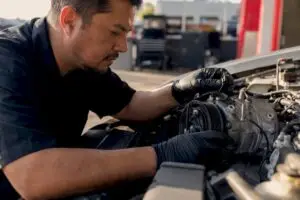

If your car struggles to start, loses power going uphill, idles rough, or stalls at stoplights, you’re likely looking at fuel filter symptoms worth taking seriously. The right next step is a professional fuel-pressure diagnostic rather than guesswork, and your owner’s manual combined with an ASE-certified technician gives you the most reliable answer.
TL;DR:
- Two or more symptoms, especially hard starts with power loss, point toward a clogged filter, but can also reflect injector or ignition faults.
- A technician should combine a fuel pressure test with a code scan; visual inspection alone can miss a restriction, even when the filter looks clean.
- Follow the vehicle’s owner’s manual for replacement timing, and consider earlier service after dusty driving, visible contamination, or a switch to high concentration biodiesel.
- Drive gently and avoid towing while arranging diagnosis; repeated stalling or power loss in traffic calls for stopping and arranging a tow.
Table of Contents
- Common symptoms of a bad or clogged fuel filter
- How a technician diagnoses a clogged fuel filter
- Common causes that lead to filter clogging or failure
- When to replace the fuel filter and maintenance guidance
- Immediate actions: what to do if you suspect a bad fuel filter
- From our ASE-certified technicians: how we approach fuel-filter problems
- Get your fuel system checked at Express Lube & Car Care
- FAQ
- Sources
Common symptoms of a bad or clogged fuel filter
A fuel filter’s job is simple: it screens out debris before dirty fuel reaches your engine. When it gets clogged, fuel flow slows down, and your engine starts telling you about it in some predictable ways.
Hard or slow starts happen because the fuel pump struggles to push enough fuel through a partially blocked filter during cranking. You might notice the engine turning over longer than usual before it catches.
Loss of power under load is another classic sign. Climbing a hill or merging onto a highway demands more fuel delivery, and a restricted filter can’t keep up, so the engine feels sluggish right when you need the power most.
Here’s what else to watch for:
- Rough idle or stalling at stoplights or in slow traffic, caused by inconsistent fuel pressure reaching the engine.
- Misfires that feel like a stumble or hesitation, especially during acceleration.
- Check Engine Light activation, though this isn’t a guarantee: fuel-trim or misfire codes can point toward a filter problem, but they can also stem from an unrelated issue, which is why a scan combined with a pressure test matters before replacing parts.
- Reduced fuel economy paired with noticeable hesitation when you press the gas pedal.
If you’re noticing two or more of these together, especially hard starts combined with power loss, a clogged filter becomes a much more likely suspect.
How a technician diagnoses a clogged fuel filter
Guessing at symptoms only gets you so far. A proper diagnosis follows a sequence that narrows down the actual cause before any parts get replaced.
- Visual inspection of accessible fuel lines and, where possible, the filter or fuel canister itself, checking for visible debris, discoloration, or damage.
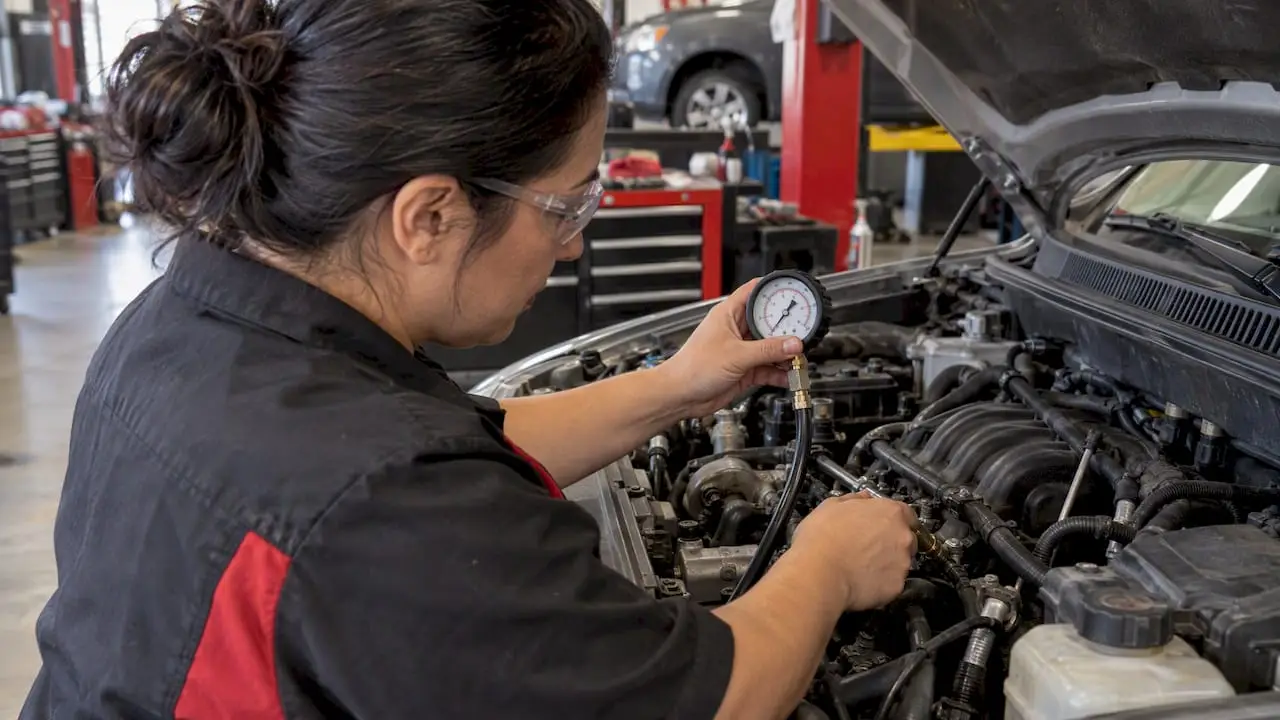
- Fuel pressure test, which measures whether fuel is reaching the engine at the correct pressure. Low readings often point to a restriction somewhere in the line, and the filter is a prime candidate.
- Listening for fuel pump behavior, since a pump working overtime against a clogged filter can sound louder or strained compared to normal operation.
- Scanning for engine codes and cross-referencing them with the symptoms you’re experiencing, since fuel-delivery issues often overlap with other sensor or ignition problems.
Pro Tip: A fuel pressure test takes just a few minutes but tells a technician more than any visual check alone, so don’t skip it even if the filter looks fine from the outside.
A basic visual check is something you can safely do yourself if your filter is easily accessible. But pressure testing and code interpretation call for the right equipment and training, which is where a shop visit saves you time and prevents replacing the wrong part.
Common causes that lead to filter clogging or failure
Fuel filters don’t fail randomly. A handful of recurring causes explain most of the clogs we see.
- Sediment and debris build up over time, especially in older fuel tanks or when fuel sits for extended periods.
- Water contamination and microbial growth inside storage tanks can introduce moisture and biological buildup that filters are forced to trap.
- Biodiesel or bio-blend fuel can act like a solvent, loosening old varnish and sediment that had been sitting in the tank, which can temporarily increase filter plugging right after a switch in fuel type.
- Normal age-related wear, where gums and varnish accumulate gradually until the filter can no longer flow fuel efficiently.
According to the Biodiesel Handling and Use Guide, fuel aging, oxidation, microbial growth, and water contamination are all documented contributors to filter plugging, and switching to higher-concentration biodiesel blends can cause a short-term spike in clogging as the new fuel cleans out old deposits.
Driving habits play a role too. Frequent short trips, letting the tank run low often, or driving in dusty conditions all accelerate how quickly sediment accumulates.
When to replace the fuel filter and maintenance guidance
Replacement intervals vary by vehicle, so your owner’s manual is the definitive source; for choosing between OEM and aftermarket options when replacing parts, see OEM vs. Aftermarket Parts: How to Choose the Right One. That said, general maintenance guidance often points to a commonly referenced rule-of-thumb mileage, though your specific make and model may call for a different schedule.
Certain conditions justify replacing the filter earlier than the standard interval:
- Regular driving in dusty or rural conditions, which accelerates sediment buildup.
- Recent exposure to high-concentration biodiesel blends.
- Visible contamination found during a routine inspection.
Some diesel and CNG fuel systems follow different maintenance schedules entirely, sometimes requiring inspection as often as once a year, so always defer to the manufacturer’s specific guidance for those setups rather than a generic timeline.
Immediate actions: what to do if you suspect a bad fuel filter
If you’re noticing these symptoms now, here’s how to handle it.
- Drive gently and avoid heavy acceleration or towing until you get it checked.
- Stop driving and arrange a tow if the engine stalls repeatedly or you lose power in traffic, since this creates a real safety risk.
- Note your symptoms and mileage before you call, along with any recent fuel changes, so the technician can start diagnosing faster.
- Expect a sequence: inspection, fuel pressure test, filter replacement if warranted, and sometimes a fuel-system cleaning if contamination shows up.
Pro Tip: Write down exactly when the symptoms happen, like “only when accelerating uphill” or “every cold start,” since those details often point technicians straight to the cause.
From our ASE-certified technicians: how we approach fuel-filter problems
When a vehicle comes in with suspected fuel filter symptoms, our ASE-certified technicians follow the same order every time: visual inspection first, then a fuel pressure test, then filter replacement if the data supports it. We don’t swap parts on a hunch.
We back that process with digital vehicle inspections that include photos and videos, so you can see exactly what we found before you approve any work.
— Express Lube & Car Care
Get your fuel system checked at Express Lube & Car Care
If these symptoms sound familiar, our team handles fuel filter diagnostics and replacement alongside the rest of your fuel system care, using the same inspection-first approach outlined above. We offer timely service for most common jobs, so a sluggish start or rough idle doesn’t have to mean days without your car.

Qualifying repairs come with a warranty, giving you some peace of mind once the work is done. If you’re due for a broader check, our maintenance services page covers everything from fluid exchanges to filter replacement in one visit. Ready to get it looked at? Book your diagnostic appointment with us today and let our ASE-certified team find the real cause before it turns into a bigger repair.
FAQ
What are signs of a clogged fuel injector?
A clogged fuel injector often causes rough idling, misfires, and poor acceleration, symptoms that overlap closely with a failing fuel filter. The main difference is that injector problems tend to affect one cylinder more than others, while a filter issue usually affects the whole engine’s fuel delivery evenly.
Will a bad fuel filter throw a code?
A clogged fuel filter can trigger codes related to fuel trim or misfires, but it doesn’t always generate a specific “fuel filter” code. A technician combines a code scan with a fuel pressure test to confirm whether the filter is the actual cause.
Can a fuel filter cause loss of power?
Yes, a restricted fuel filter limits how much fuel reaches the engine, which shows up most noticeably as power loss under load, like climbing hills or accelerating onto a highway. This happens because the engine can’t get the fuel volume it needs at higher demand.
How long can you drive with a bad fuel filter?
There’s no safe fixed distance, since a failing filter can worsen suddenly and leave you stalled in traffic. If you’re noticing hard starts, stalling, or power loss, it’s best to get it diagnosed promptly rather than continuing to drive on it.