

If someone told you every car needs an oil change every 3,000 miles, they meant well. But that advice is decades old, and sticking to it today could cost you money or, worse, leave your engine running on degraded oil longer than it should. Understanding why oil change intervals differ, the technical term is “oil service intervals,” helps you make smarter decisions, not just follow whoever’s advice sounds most confident. Your driving habits, your engine, and your oil type all pull the interval in different directions. Here’s what’s actually going on.
Table of Contents
- Key Takeaways
- Why oil change intervals differ by vehicle and driving conditions
- How oil type changes your service interval
- How oil-life monitoring systems optimize your intervals
- Practical tips for planning your oil changes
- Why intervals vary: clearing up the confusion
- My take on what most car owners get wrong
- Keep your engine protected with Expresslubearlington
- FAQ
Key Takeaways
| Point | Details |
|---|---|
| OEM guidelines beat old rules | Your owner’s manual, not the 3,000-mile myth, sets the correct interval for your specific vehicle. |
| Driving conditions change everything | Severe duty driving like towing or short trips can cut your oil service interval in half. |
| Oil type extends or shortens intervals | Full synthetic oil can safely last up to 10,000 miles; conventional oil typically needs changing at 3,000 to 5,000 miles. |
| Oil-life monitors personalize timing | Modern monitoring systems track real conditions and tell you exactly when your oil needs changing. |
| Time matters as much as mileage | Low-mileage drivers still need oil changes about twice a year since oil degrades chemically over time. |
Why oil change intervals differ by vehicle and driving conditions
The single biggest reason your neighbor’s car gets an oil change at 5,000 miles while yours goes to 10,000 comes down to how automakers define “service conditions.” There are two categories: normal service and severe service. Most drivers assume they fall into the normal bucket. Many actually don’t.
Severe duty conditions prevent the engine from fully warming up, which leaves moisture and combustion byproducts in the oil. That accelerates breakdown and means your oil gets dirty faster than the miles suggest. Here’s what qualifies as severe service:
- Frequent short trips under five miles, especially in cold weather
- Stop-and-go city driving with lots of idling
- Towing, hauling heavy loads, or driving in hilly terrain
- Extreme temperature swings, whether very hot summers or bitter winters
- Extended idling, like running heat or AC while parked
Towing alone generates significantly more heat and friction than normal driving. Manufacturers classify towing as severe duty and specify shorter intervals accordingly. So if you’re pulling a trailer on weekends, your interval isn’t the same as a coworker driving 30 miles of highway each way to work every day.
Your owner’s manual is the definitive source here. It doesn’t just give you one number. It gives you two schedules: one for normal conditions and one for severe. Most modern automakers now list intervals around 7,500 to 10,000 miles for normal conditions, which already replaces the old 3,000-mile rule for most people.
Pro Tip: Check your owner’s manual for the severe duty checklist before assuming you drive “normally.” If even two or three of those conditions apply to your week, follow the shorter interval.
How oil type changes your service interval
Not all oil is created equal. The formulation in your crankcase has a direct impact on how long it stays effective, and that’s where the real difference in oil change needs becomes clear for car owners.
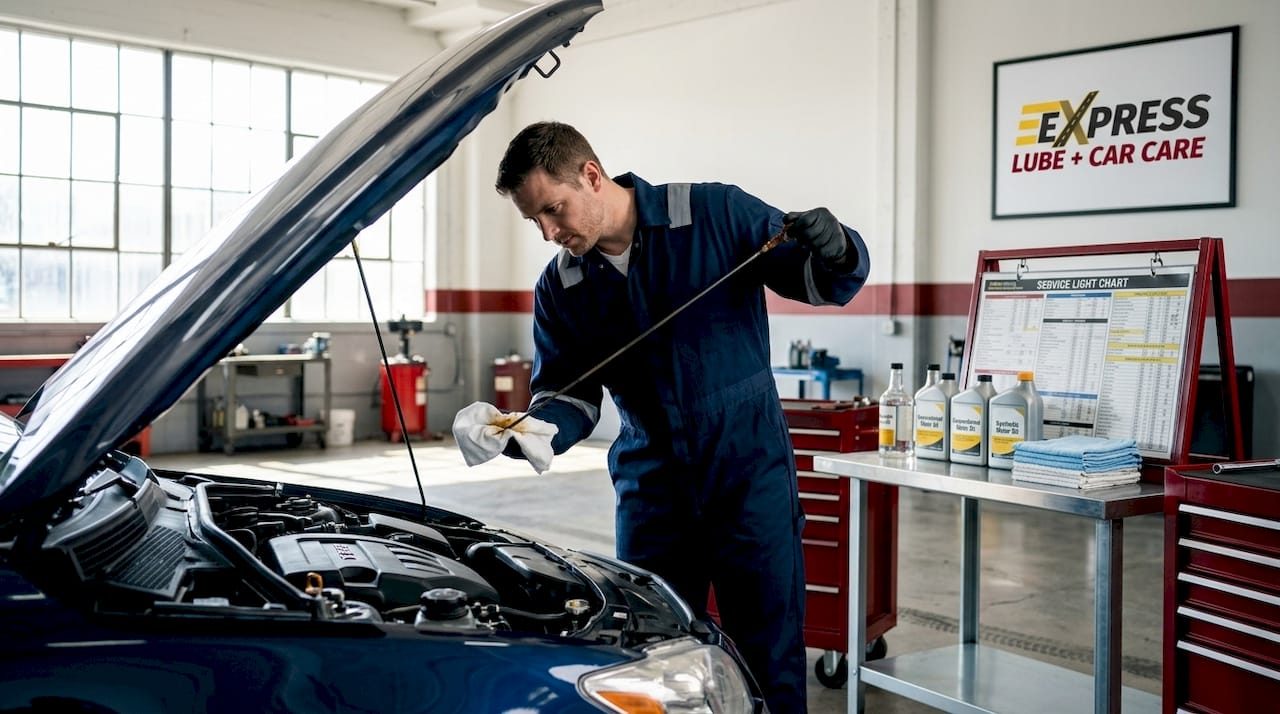
Here’s a quick breakdown of how the three main oil types compare:
| Oil Type | Typical Mileage Interval | Typical Time Interval |
|---|---|---|
| Conventional | 3,000 to 5,000 miles | Every 3 to 6 months |
| Synthetic blend | 5,000 to 7,000 miles | Every 6 to 9 months |
| Full synthetic | 7,500 to 10,000 miles | Every 9 to 12 months |
Full synthetic oil is engineered to resist breakdown from heat and oxidation far longer than conventional oil. It holds up better during severe driving, offers better cold-weather flow, and doesn’t lose its protective properties as quickly. That’s why vehicles factory-filled with full synthetic can go longer between changes.
But there’s a catch. Switching to synthetic doesn’t mean you get to ignore your intervals. The oil still picks up contaminants. Combustion byproducts, metal particles, and moisture still accumulate. Going to synthetic extends your window. It doesn’t open an indefinite one.
You also need to use the oil type your manufacturer specifies. Putting conventional oil in an engine designed for full synthetic won’t ruin it overnight, but it will throw off your interval math and potentially leave your engine underprotected during demanding conditions. Think of it like putting regular fuel in a car that calls for premium. It works, until it doesn’t.
Pro Tip: If you’re unsure which oil type is right for your engine, check the oil for your vehicle guide at Expresslubearlington, especially if you’re dealing with high mileage.
How oil-life monitoring systems optimize your intervals
Newer vehicles take the guesswork out of oil change frequency factors entirely. Oil-life monitoring systems, sometimes called OLM systems, are built into the car’s computer and constantly track the conditions your engine experiences in real time.
These aren’t simple odometer counters. They measure variables like engine temperature, RPM, idle time, trip length, and load. Complex algorithms process all of that data to calculate how much useful life your oil has remaining. A short errand in freezing weather uses up more oil life than 30 miles of smooth highway cruising.
The practical benefits are significant:
- You avoid changing oil too early, which wastes money and good oil
- You avoid changing oil too late, which risks engine wear and sludge buildup
- The system accounts for your actual driving style instead of a generic mileage estimate
- Highway-heavy drivers often find their OLM extends their interval well past standard recommendations
- City drivers in stop-and-go traffic often see the monitor recommend changes sooner than mileage alone would suggest
Oil-life monitoring systems have been shown to reduce unnecessary early oil changes by 35 to 40% in highway fleet applications. That’s a measurable benefit to your wallet and the environment.
The key is actually listening to what the system tells you. When your dashboard shows an oil life percentage dropping toward 15% or lower, that’s not a suggestion. That’s your car doing the math and telling you it’s time.
Practical tips for planning your oil changes
Knowing why intervals vary is useful. Putting that knowledge to work is what actually protects your engine. Here’s how to apply everything you’ve learned in a way that fits your life:
- Start with your owner’s manual. This is your baseline. Find both the normal and severe service intervals and honestly evaluate which one applies to your driving habits.
- Use the “whichever comes first” rule. Whether your interval is defined by mileage or months, oil degrades chemically over time even when you barely drive. Low-mileage drivers should change oil at least twice a year to maintain quality.
- Adjust for your driving patterns. City commuter? Tow a boat on weekends? Live somewhere with brutal summers? Each of these pushes you toward more frequent changes. A car maintenance schedule by mileage only tells part of the story when severe conditions are involved.
- Watch your dashboard. If your car has an oil-life monitor, don’t ignore it. Trust the system. It knows more about your oil’s current state than a calendar does.
- Know the signs that something’s off. Even with a monitor, there are physical signals worth paying attention to as signs you need an oil change: dark, gritty oil on the dipstick, a burning smell from the engine bay, or a new engine knock or rumble.
Pro Tip: Set a calendar reminder for your time-based interval even if you’re watching your mileage. Some months pass faster than you expect, and the double reminder catches both triggers.
Why intervals vary: clearing up the confusion
Let’s bring it all together. The reason oil change interval guidelines aren’t one universal number comes down to three things working simultaneously: vehicle design, oil formulation, and how you actually drive.
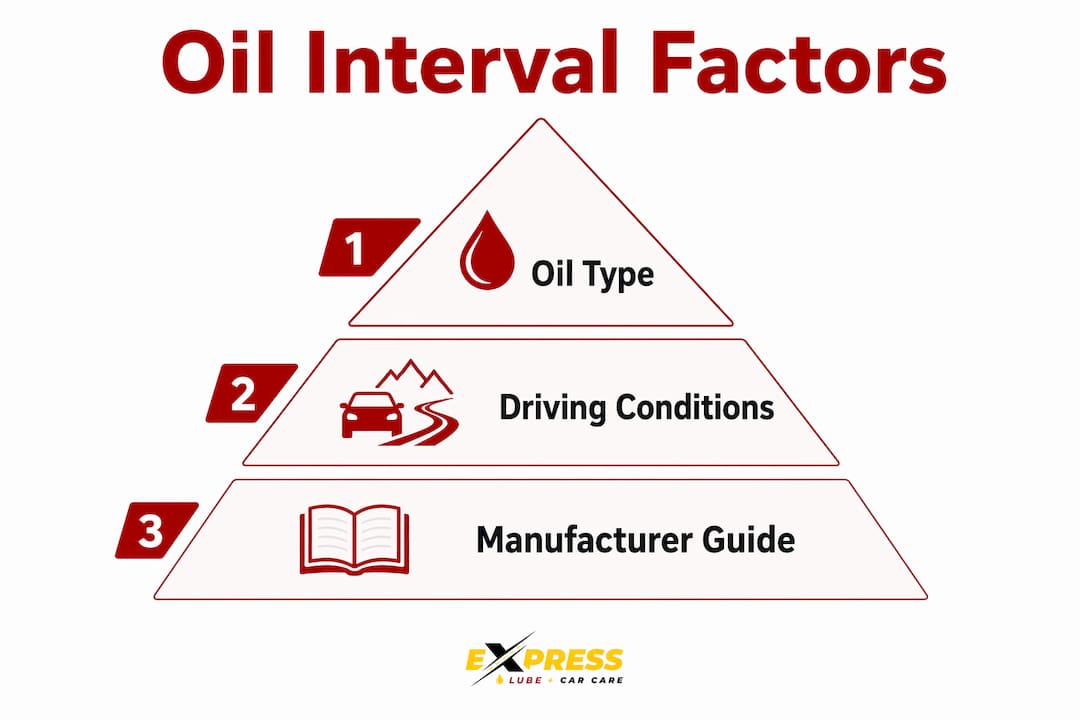
| Factor | Effect on Oil Life | Interval Impact |
|---|---|---|
| Severe driving conditions | Accelerates oil degradation significantly | Shortens interval, sometimes by half |
| Full synthetic oil | Resists heat and breakdown longer | Extends interval up to 10,000 miles |
| OLM system present | Tracks real-time conditions | Personalizes interval to actual use |
| Low annual mileage | Less mechanical wear but time-based chemical breakdown | Requires time-based changes regardless |
| Normal highway driving | Minimal stress, full engine warm-up | Supports longer intervals up to OEM maximum |
The real risk comes from ignoring these factors. Disregarding oil-life monitor warnings can degrade engine health even when service records look complete on paper. And following an arbitrary number instead of OEM guidance based on your conditions means you’re either wasting money or gambling with your engine. Neither is a great outcome.
My take on what most car owners get wrong
I’ve talked with hundreds of drivers who genuinely care about their vehicles but still cling to the 3,000-mile rule. I get it. It’s simple. It’s familiar. And quick-lube shops have reinforced it for decades because more frequent changes meant more business.
But here’s what I’ve observed up close: the owners who follow their OEM’s severe duty schedule consistently, not just the standard interval, are the ones whose engines hold up best over time. It’s not the people changing oil most often who win. It’s the people changing it at the right time.
I’ve also seen drivers ignore that oil-life monitor light for weeks because they weren’t near a service shop. That’s the kind of choice that shows up later as sludge buildup or accelerated bearing wear. The monitor isn’t being dramatic. As BMW and GM systems demonstrate, these tools are calibrated to your specific engine and conditions. Trusting them isn’t lazy. It’s smart.
What I tell every driver: read the severe duty checklist in your owner’s manual once. Seriously. It takes five minutes. You’ll either confirm you’re in the normal camp or realize you’ve been under-maintaining your engine for years. Either way, you’ll know exactly where you stand.
— Hassan
Keep your engine protected with Expresslubearlington
At Expresslubearlington, we’ve built our oil change services around exactly what your vehicle needs, not a generic schedule. Our ASE-certified technicians check your owner’s manual specifications, assess your driving conditions, and recommend the right oil type and interval for your situation. We stock both conventional and full synthetic oils and can walk you through which one makes the most sense for your engine, your mileage, and how you drive.
We’re RepairPal Certified and CarFax Top-Rated, which means our recommendations are grounded in accuracy, not upselling. Whether you’re due for a routine oil change service or want to understand more about your specific vehicle’s needs, we’re here to help you get it right. Check out our current oil change specials and stop by our Arlington location. Your engine will thank you.
FAQ
How often should I change my oil?
Most modern vehicles recommend oil changes every 7,500 to 10,000 miles or every 6 to 12 months for normal driving conditions. Drivers with severe conditions, like frequent short trips, towing, or extreme temperatures, should follow the shorter severe-duty schedule in their owner’s manual.
Does synthetic oil really last longer between changes?
Yes. Full synthetic oil typically lasts 7,500 to 10,000 miles compared to 3,000 to 5,000 miles for conventional oil. It resists heat and chemical breakdown better, but you still need to change it within manufacturer-recommended intervals.
What counts as severe driving conditions?
Severe conditions include frequent short trips under five miles, heavy stop-and-go traffic, towing, extended idling, and driving in extreme heat or cold. These conditions accelerate oil degradation and may require changes twice as often as normal intervals.
Can I trust my car’s oil-life monitor?
Absolutely. Modern oil-life monitoring systems use real-time data including temperature, load, and trip length to calculate remaining oil life far more accurately than a fixed mileage rule. When the monitor signals low oil life, schedule a change promptly.
What are the signs I need an oil change?
Common signs include dark, gritty oil on the dipstick, a burning smell from the engine, increased engine noise or knocking, and an oil-life warning on your dashboard. If you notice any of these, don’t wait until your next scheduled mileage point.