
A local auto repair shop is your most cost-effective, trust-driven option for vehicle maintenance, consistently outperforming dealerships on price, transparency, and personalized service. Whether you drive a 2018 Honda Civic or a 2023 Ford F-150, the decision of where to take your car shapes both your wallet and your peace of mind. Tools like RepairPal and certifications like ASE give you real ways to verify quality before you hand over your keys. This guide breaks down exactly why finding a trusted local mechanic matters, how to compare your options, and what to look for when choosing the right shop.
Why find a local auto repair shop instead of a dealership
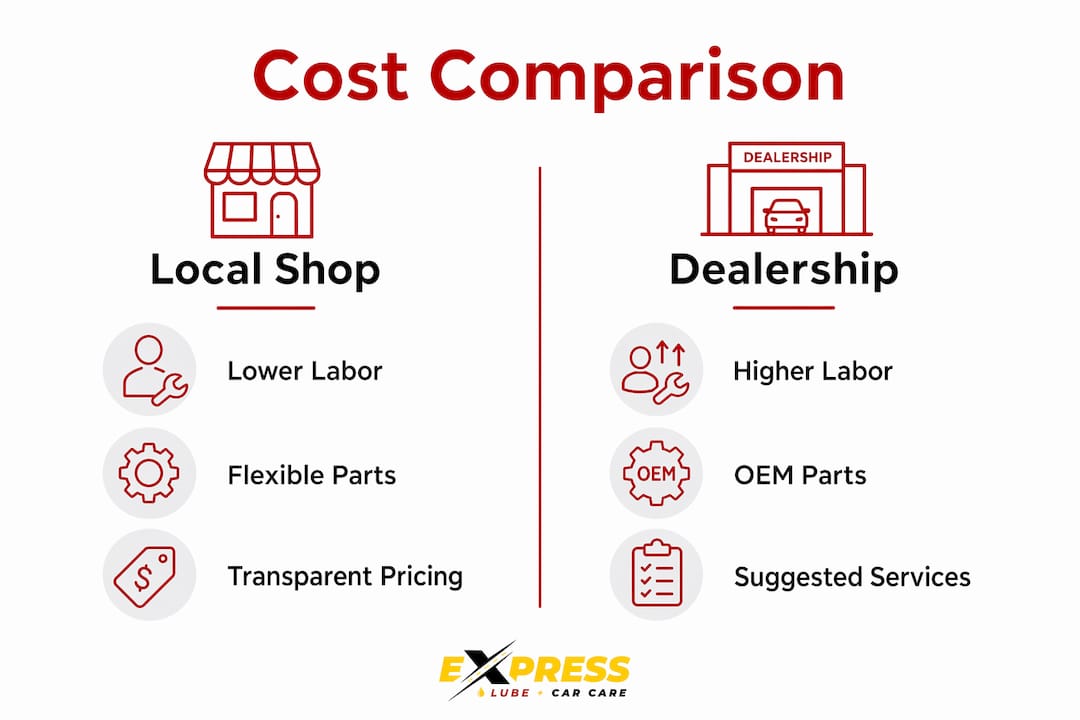
The cost difference between local shops and dealerships is not subtle. Dealership labor rates commonly run $130 to $175 per hour, while independent shops typically charge $90 to $130 per hour. That gap compounds fast on any repair lasting two or more hours.
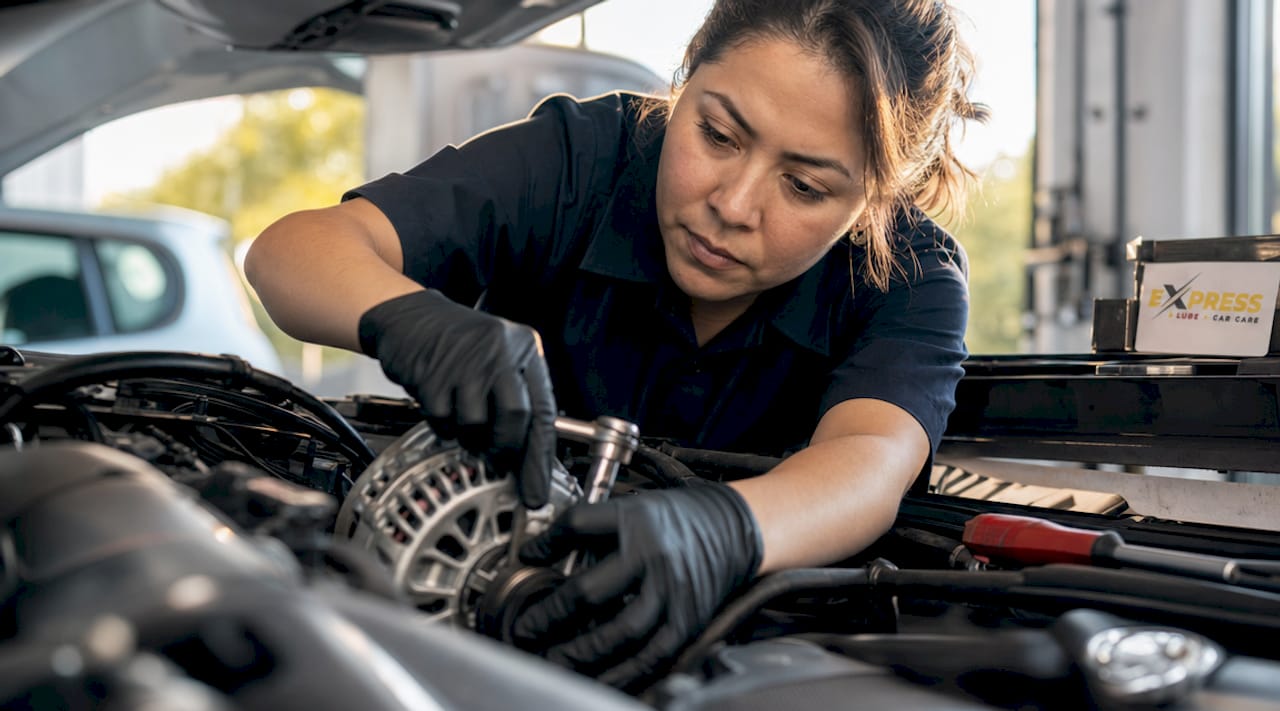
The savings go beyond hourly rates, too. Car Talk documents cases where local shops charge around $310 for an alternator replacement that a dealership quotes at $900. That is nearly three times the price for the same part, the same job, and often the same or better outcome. The markup at dealerships reflects overhead, not superior skill.
Dealerships also have a well-documented habit of recommending services your car does not actually need. Dealers frequently push flushes and maintenance packages that go well beyond what your owner’s manual requires. A trusted local mechanic who values your repeat business has no incentive to pad your bill with unnecessary work.
Independent shops also give you more flexibility on parts. You can choose between OEM (original equipment manufacturer) parts and quality aftermarket options, which can reduce costs further without sacrificing reliability. Dealerships almost always default to OEM parts at full markup.
Pro Tip: Before authorizing any repair, ask your shop to separate what needs fixing now from what can wait. A good mechanic will tell you honestly. A shop that treats everything as urgent is sending up a flare worth paying attention to.
Local vs. dealership: cost comparison at a glance
| Service | Local shop estimate | Dealership estimate |
|---|---|---|
| Alternator replacement | ~$310 | ~$900 |
| Labor rate (per hour) | $90–$130 | $130–$175 |
| Brake pad replacement | $150–$250 | $250–$400 |
| Oil change (synthetic) | $60–$90 | $90–$150 |
How trust and transparency set great local mechanics apart
Trust in auto repair is not built on a logo or a fancy waiting room. It is built on process. Procedural transparency — written estimates, documented warranty coverage, and clear approval steps — is the real measure of a shop worth your business.
Here is what a trustworthy local shop does consistently:
- Provides a written estimate before any work begins. Most states legally require written estimates for repairs above $100 to $200, but the best shops do it regardless of cost.
- Shares photos or short videos of the identified problem so you can see exactly what they see.
- Separates urgent repairs from those that can safely wait, giving you control over your budget.
- Communicates clearly about what happens if a repair is delayed, so you can make an informed call.
- Offers a warranty on parts and labor, typically 12 months or 12,000 miles, as a baseline standard.
ASE certification is a solid baseline indicator of mechanic competency, but it is not the whole picture. The best shops layer ASE credentials on top of strong communication habits, Better Business Bureau recognition, and consistent five-star reviews that mention specific technicians by name.
Personal referrals remain one of the strongest trust signals available. When a neighbor or coworker tells you their mechanic explained every repair in plain language and never surprised them with the bill, that story is worth more than any advertisement.
Pro Tip: Call a shop before your car needs emergency work. Ask how they handle estimates and whether their technicians are ASE-certified. A shop that answers those questions confidently and without hesitation is one worth keeping in your contacts.
Local auto shops vs dealerships: convenience and service quality
Convenience means different things depending on your situation. Dealerships can offer quicker turnaround and loaner vehicles, which matters when you rely on your car daily. Local shops, on the other hand, often provide more flexible scheduling and a level of personal attention that dealership service departments rarely match.
Consider the practical trade-offs:
- Scheduling flexibility: Local shops are more likely to accommodate same-day or next-day appointments. Dealership service bays are often booked days out.
- Personalized communication: At a local shop, you often speak directly with the technician working on your car. At a dealership, a service advisor acts as the go-between, which can slow down communication and create room for misunderstanding.
- Loaner vehicles: Dealerships frequently offer free loaners, especially for warranty work. Most independent shops do not, though some partner with nearby rental agencies.
- Specialized knowledge: A local shop that focuses on domestic trucks or European imports often develops deeper expertise in those vehicles than a general dealership service department handling dozens of makes per day.
- Warranty work: If your vehicle is still under the manufacturer’s warranty, the dealership is your required stop. Once that warranty expires, local shops become the stronger value for most repairs.
The honest answer is that neither option wins on every dimension. The right choice depends on your car’s age, your budget, and how much you value a relationship with the person holding the wrench.
How to choose a trustworthy local auto repair shop
Finding a reliable local mechanic is not guesswork. It is a process, and doing it before your car breaks down is the smartest move you can make.
-
Start with referrals. Ask friends, family, and coworkers who they trust. A shop with multiple personal endorsements from people you know is already ahead of the pack. Personal referrals and consistent reviews dramatically improve your odds of finding a mechanic who delivers on their promises.
-
Verify ASE certification. Look for the ASE logo displayed in the shop or ask directly. You can also verify technician credentials through the ASE website. Certification tells you the technician has passed standardized competency tests.
-
Request a written estimate before authorizing work. Written estimates prevent surprises and are a hallmark of shops that respect their customers. If a shop resists putting the estimate in writing, walk away.
-
Compare at least two quotes. For any repair over $200, get a second opinion. Prices vary, and a significant gap between two quotes is worth investigating before you commit.
-
Ask about warranty coverage. A shop confident in its work backs it up. The industry standard is 12 months or 12,000 miles on parts and labor. Shops that offer less, or nothing at all, are telling you something.
-
Evaluate how they communicate. Does the service advisor explain the repair in plain language? Do they answer your questions without making you feel rushed? Good communication is a preview of the entire service experience.
-
Check online reviews with a critical eye. Look for patterns across Google, Yelp, and RepairPal. A shop with 200 reviews averaging 4.7 stars, where reviewers mention specific technicians and honest pricing, is a much stronger signal than a shop with 12 perfect reviews and no detail.
Pro Tip: Build a relationship with a local shop before you need emergency repairs. Bring your car in for an oil change or tire rotation. You will learn how they communicate, how they treat customers, and whether you feel comfortable trusting them with bigger jobs down the road.
The right local mechanic in Arlington is not just a vendor. They become a partner in keeping your vehicle safe and your costs predictable. That relationship pays dividends every time something unexpected goes wrong.
A shop’s total cost depends more on accurate first-time diagnosis than on the hourly labor rate alone. A shop charging $100 per hour that nails the diagnosis on the first visit will cost you less than a $90-per-hour shop that misdiagnoses and charges you twice. Diagnostic accuracy is the hidden variable most car owners never think to ask about. Ask your prospective shop how they approach diagnosis and whether they charge a separate diagnostic fee. The answer tells you a lot about their process.
You can also use resources like Bumper’s repair guide to cross-check repair estimates and understand what a fair price looks like before you walk into any shop. Knowledge is your best negotiating tool.
Key takeaways
Local auto repair shops deliver better value than dealerships when you prioritize cost, transparency, and a long-term relationship with a mechanic who knows your vehicle.
| Point | Details |
|---|---|
| Labor rate advantage | Independent shops charge $90–$130/hour versus $130–$175/hour at dealerships. |
| Avoid unnecessary repairs | Local shops are less likely to recommend services beyond your owner’s manual guidelines. |
| Trust through process | Written estimates, photos of problems, and warranty documentation are the real trust signals. |
| Diagnostic accuracy matters | A correct first diagnosis saves more money than a low hourly rate with repeat visits. |
| Build the relationship early | Visiting a local shop for routine maintenance before emergencies leads to better outcomes and budgets. |
What I’ve learned after years of watching drivers choose the wrong shop
Here is the uncomfortable truth most car advice skips: the majority of drivers who get burned by auto repair do not get burned by dishonest mechanics. They get burned by choosing a shop at the worst possible moment, under pressure, with no prior relationship and no frame of reference for what a fair price looks like.
I have seen this pattern repeat itself. A driver’s check engine light comes on during a road trip. They pull into the nearest shop, get a quote that sounds high, but they have no comparison point and no time to shop around. They pay it. Later, they find out a local shop they could have vetted in advance would have charged half as much.
The local vs. dealership decision hinges more on trust, diagnostic accuracy, and transparency than on shop type or hourly rate. That insight changes how you should approach the whole process. Stop thinking about it as a transaction and start thinking about it as a relationship you build before you need it.
My honest advice: pick a local shop, bring your car in for something small, and pay attention to how they treat you. Do they explain what they found? Do they show you the problem? Do they separate what is urgent from what can wait? If yes, you have found your shop. If no, keep looking. The investment of one oil change appointment could save you thousands over the life of your vehicle.
— Hassan
Why Expresslubearlington is the local shop DFW drivers trust
Expresslubearlington, operating as Express Lube & Car Care in Arlington, TX, is a full-service shop built around exactly the principles this article covers. Every technician is ASE-certified, and the shop holds RepairPal Certified status along with a Top-Rated Service Center recognition from CarFax. That combination means transparent pricing, documented warranty coverage, and repairs done right the first time. Whether you need a routine oil change or a complex diagnostic, Express Lube & Car Care gives you written estimates, honest timelines, and the kind of communication that makes car ownership less stressful. Drivers across the DFW area keep coming back because trust, once earned, is worth protecting.
FAQ
What are the main benefits of a local auto repair shop?
Local shops offer lower labor rates ($90–$130/hour versus $130–$175/hour at dealerships), more personalized service, and greater transparency through written estimates and direct technician communication. They are also less likely to recommend unnecessary repairs.
How do I know if a local mechanic is trustworthy?
Look for ASE-certified technicians, written estimates before work begins, warranty coverage of at least 12 months or 12,000 miles, and consistent positive reviews on Google or RepairPal that mention specific technicians and honest pricing.
Are local auto shops as good as dealerships for quality repairs?
Yes, for most repairs. Local shops with ASE-certified technicians perform the same quality of work as dealerships, often at significantly lower cost. Dealerships are required only for active manufacturer warranty work.
How should I compare repair quotes between shops?
Request written estimates from at least two shops for any repair over $200. Compare the labor hours, parts costs, and warranty terms, not just the total price. A lower quote with no warranty is rarely the better deal.
When should I choose a dealership over a local shop?
Choose a dealership when your vehicle is still covered by the manufacturer’s warranty or when a repair requires proprietary software or specialized tools that only the manufacturer provides. For everything else, a trusted local shop is typically the smarter financial choice.