

TL;DR:
- Engine oil turns black mainly because it traps soot particles, combustion byproducts, and metal debris, indicating it is effectively cleaning the engine. The speed of darkening depends on engine type, with diesel and GDI engines turning oil black faster than conventional gasoline engines. Regular checks of oil texture, smell, and mileage provide better insight into engine health than color alone.
Engine oil turns black because it traps soot particles, combustion byproducts, and microscopic wear debris as it circulates through your engine. This process of oil discoloration, technically called oil oxidation and contamination, is a sign that your oil is doing its job. Detergent and dispersant additives suspend those particles in the oil rather than letting them stick to engine surfaces. Understanding why engine oil turns black helps you read your oil correctly, avoid unnecessary changes, and catch real warning signs before they become expensive repairs.
What are the main causes of engine oil turning black?
Soot is the single biggest driver of oil darkening. Sub-micron soot particles form during incomplete combustion and get pulled into the crankcase, where they mix with the oil almost immediately. These particles are so small they stay suspended rather than settling out, which is exactly what your oil’s dispersant additives are designed to achieve.
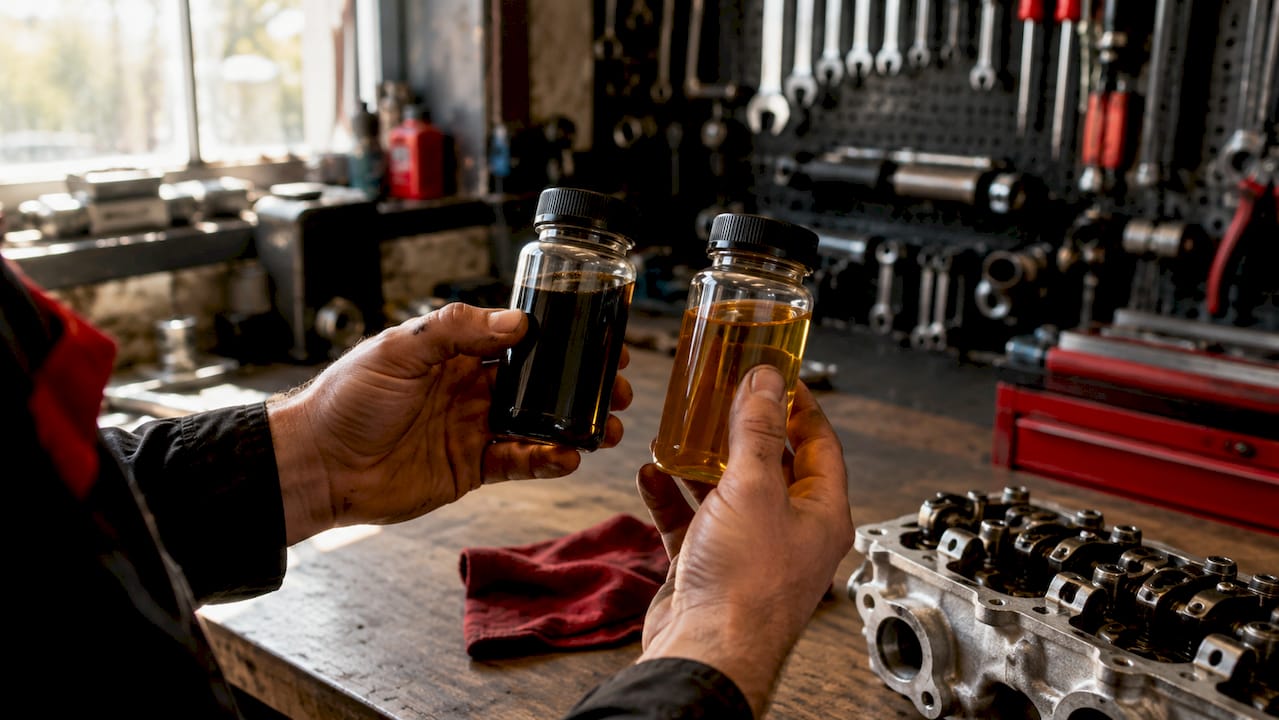
Heat is the second major factor. Thermal cycling between operating temperatures of around 90–104°C and ambient temperatures accelerates oil oxidation. Oxidation rates double with every 10°C rise in temperature. That means a hard summer drive in Texas heat puts your oil under far more chemical stress than a short winter commute.
Additive chemistry plays a role too. Detergent additives actively scrub carbon deposits off cylinder walls and valve trains, then hold that carbon in suspension. The darker your oil gets, the more cleaning work those additives have done. Think of it like a sponge that turns gray as it absorbs dirt. A gray sponge is not a broken sponge.
Microscopic metal wear particles also contribute. Normal engine operation produces tiny metal fragments from pistons, rings, and bearings. These particles mix with soot and oxidized oil compounds, deepening the color further. Fresh oil starts amber or light gold. Within a few hundred miles, it can shift noticeably darker.
- Soot from incomplete combustion: The primary cause, especially in Diesel and GDI engines.
- Thermal oxidation: Heat cycles chemically alter oil molecules, darkening the color.
- Additive action: Detergents and dispersants suspend carbon and soot, turning oil dark.
- Metal wear particles: Microscopic debris from normal engine friction adds to discoloration.
- Fuel contamination: Unburned fuel entering the crankcase can also affect oil color and consistency.
Pro Tip: Pull your dipstick after your next oil change and take a photo. Do the same at 1,000 miles and 3,000 miles. That visual record gives you a personalized baseline far more useful than any generic color chart.
How does engine type affect how fast oil turns black?
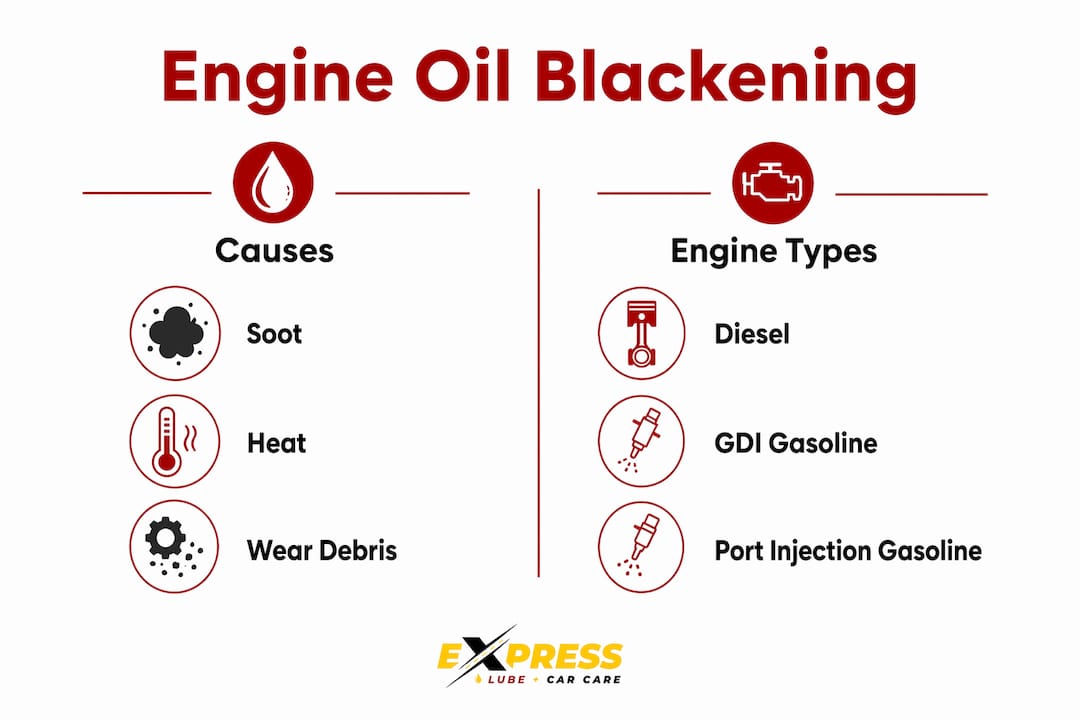
Not all engines darken oil at the same speed. The type of engine you drive is one of the biggest variables in how quickly you will see black oil in the engine.
Diesel engines produce substantially more soot than port-injected gasoline engines. Diesel combustion is inherently less complete, and the higher compression ratios push more combustion gases past the piston rings. Oil in a diesel can turn visibly dark within a few hundred miles of a fresh change. That is completely normal and not a cause for alarm.
Gasoline Direct Injection engines sit in an interesting middle ground. GDI engines spray fuel directly into the cylinder rather than mixing it in the intake port. This creates a richer, less uniform fuel mixture near the injector, which produces finer soot particles that darken oil quickly. In some GDI engines, oil can noticeably darken within 25 to 1,000 miles. Many owners of GDI vehicles, including popular models from Ford, GM, and Volkswagen, are surprised by how fast their fresh oil goes dark.
Conventional port fuel injection gasoline engines produce the least soot of the three. Oil in these engines typically darkens more gradually, giving owners a longer window before color changes become obvious.
| Engine type | Soot production | Oil darkening speed |
|---|---|---|
| Diesel | High | Very fast, within hundreds of miles |
| Gasoline Direct Injection (GDI) | Moderate to high | Fast, sometimes within 25–1,000 miles |
| Port fuel injection gasoline | Low | Gradual, over thousands of miles |
Comparing oil color between a diesel truck and a gasoline sedan tells you nothing useful. Each engine has its own normal. Knowing your engine type is the starting point for reading your oil correctly.
When does black oil signal a real problem?
Black oil with normal texture and smell is typically healthy. The additives are working, the soot is suspended, and the oil is protecting your engine. Color alone is not a reliable diagnostic tool. Texture and smell tell you far more.
Here is where you need to pay close attention. Certain changes in oil appearance go beyond normal darkening and send up a real flare:
- Milky, creamy, or foamy oil: This is a serious red flag. Milky oil texture indicates coolant contamination, usually from a failed head gasket or a cracked engine block. Coolant is corrosive to engine bearings and requires immediate professional attention. Do not keep driving.
- Gritty or sandy feel: Rub a drop of oil between your fingers. If it feels gritty, metal particles or dirt contamination are present at levels that can accelerate wear.
- Watery or thin consistency: Oil that feels unusually thin may have fuel dilution, where unburned gasoline is thinning the oil and stripping its protective film.
- Burnt or sharp chemical smell: A strong burnt odor can indicate oil overheating or coolant mixing with the oil.
Texture and smell offer better diagnostics than color in practice. Color changes rapidly and predictably. Texture and smell change only when something is actually wrong.
Synthetic oils may darken faster than conventional oils because their superior cleaning action picks up more contaminants. A synthetic oil that looks very dark at 3,000 miles may still be performing well within its rated interval. That is another reason to stop relying on color as your only signal.
Pro Tip: Every time you check your oil, do the three-point test: look at the color, rub a drop between your fingers for texture, and take a quick sniff. That 30-second routine catches problems color alone will miss.
How should you monitor and respond to oil color changes?
Good oil monitoring is less about reacting to color and more about building a routine that catches real changes over time. Here is a practical system that works.
- Check your oil monthly. Pull the dipstick, wipe it clean, reinsert it, and pull it again. Note the color and level. This takes under two minutes and gives you a running picture of your oil’s condition between changes.
- Document with photos. Photographing oil color alongside your odometer reading creates a personalized baseline. When something changes faster than usual, you will have a reference point to compare against.
- Follow manufacturer intervals, adjusted for your conditions. Manufacturer recommendations are a starting point, not a ceiling. Severe driving conditions, including frequent short trips, towing, or extreme temperatures, shorten effective oil life. Review oil change intervals for your specific driving pattern.
- Use the right oil for your engine. A GDI engine needs an oil with an additive package rated for high soot loads. Check your owner’s manual for the API or ILSAC specification. Using the wrong grade or spec can accelerate degradation.
- Combine color checks with performance awareness. If your oil looks unusual and your engine is also running rough, burning oil, or showing warning lights, that combination warrants a professional inspection. One symptom alone may be nothing. Two together are a pattern.
- Consult a mechanic when texture or smell changes. Color going dark is normal. Texture turning gritty or smell turning sharp is not. Those are the moments to bring your car in rather than wait for the next scheduled service.
Understanding the role of oil changes in engine longevity helps put these checks in context. Oil is not just a lubricant. It is a cleaning agent, a coolant for internal components, and a wear buffer. Treating it as a simple fluid to swap on a calendar schedule misses most of what it actually does.
Key Takeaways
Black engine oil is most often a sign of effective additive action, not imminent failure. Texture and smell are the real diagnostic tools for engine oil health.
| Point | Details |
|---|---|
| Soot drives darkening | Sub-micron soot particles from combustion are the primary cause of rapid oil discoloration. |
| Engine type matters | Diesel and GDI engines darken oil far faster than conventional gasoline engines. |
| Color alone is not enough | Texture and smell reveal contamination and wear that color cannot show. |
| Milky oil is a red flag | A creamy or foamy appearance signals coolant contamination requiring immediate attention. |
| Document your baseline | Photographing oil color with odometer readings helps you spot real changes over time. |
What I’ve learned from years of watching owners panic over black oil
Here is the honest truth: the most common oil-related mistake I see is an owner draining perfectly good oil because it looks dark. They pull the dipstick, see oil that is nearly black, and assume the worst. That reaction costs them money and, ironically, can actually harm the engine if it disrupts a well-functioning additive cycle.
Black oil is not dirty oil in the way that dirty water is dirty. It is loaded oil. It is carrying the contaminants that would otherwise be coating your valve train or clogging your oil passages. The moment you drain it prematurely, you are removing oil that still has cleaning capacity left.
What I tell every car owner is this: stop judging oil by color and start judging it by texture, smell, and mileage relative to your driving conditions. A diesel truck driver who changes oil every 5,000 miles because it looks black is wasting money. A GDI driver who ignores gritty-feeling oil because it “always looks dark” is risking real damage.
The nuance that most generic advice misses is that your engine has its own normal. A 2022 Ford F-150 with a 3.5L EcoBoost GDI engine will darken oil in a week of normal driving. That is not a problem. That is physics. Learn your engine’s pattern and you will never second-guess a dipstick check again.
— Hassan
Your engine deserves more than a color check
Knowing why oil turns dark is the first step. Acting on that knowledge with the right service interval is what actually protects your engine.

At Expresslubearlington, our ASE-certified technicians do more than swap oil. They inspect oil condition, check for contamination signs, and flag issues before they turn into costly repairs. As a RepairPal Certified Shop and CarFax Top-Rated Service Center, we bring real diagnostic expertise to every service bay visit. Whether you drive a diesel, a GDI engine, or a high-mileage gasoline vehicle, our team knows what normal looks like for your specific engine. Check out our oil change tips and book your next service with a team that reads your oil the right way.
FAQ
Why does engine oil turn black so quickly?
Soot particles under 1 micron from incomplete combustion are the primary cause. In GDI engines, oil can darken noticeably within 25 to 1,000 miles.
Is black engine oil always a sign it needs changing?
No. Black oil color typically means detergent additives are working correctly. Change oil based on mileage, manufacturer intervals, and texture, not color alone.
What does milky or creamy oil mean?
Milky or foamy oil indicates coolant contamination, usually from a failed head gasket. This requires immediate professional repair, as coolant corrodes engine bearings.
Does synthetic oil turn black faster than conventional oil?
Yes. Synthetic oil’s stronger cleaning action picks up more contaminants, causing faster darkening. That does not mean it needs changing sooner. It often lasts longer than conventional oil despite looking darker.
How often should I check my engine oil color?
Check your oil monthly and after any long trip or towing session. Pair the color check with a texture test by rubbing a drop between your fingers for a complete picture of oil health.