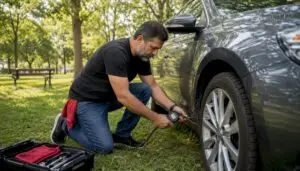

A working fleet maintenance checklist combines daily DVIRs with a tiered PM program (A, B, and C levels), multi-trigger service logic, and recurring work orders that assign a real owner and close the loop. Trigger service on whichever comes first: mileage, engine hours, or elapsed time. That single rule, more than any spreadsheet template, is what separates fleets with predictable uptime from fleets that get surprised by a roadside brake failure.
A correct setup looks like this:
- Daily DVIRs completed by drivers before every trip
- PM-A, PM-B, and PM-C tiers scheduled by system depth, not guesswork
- A master checklist organized by vehicle system (engine, brakes, tires, electrical, and so on)
- Multi-trigger intervals (mileage OR hours OR time, first to arrive wins)
- Every flagged defect converted automatically into a work order with an assigned owner
Key Takeaways
A fleet maintenance checklist only works when tiered PM levels, multi-trigger intervals, and closed-loop work orders operate together instead of as separate, disconnected habits.
| Point | Details |
|---|---|
| Separate DVIR from PM | Keep daily driver inspections and technician-level PM as distinct records to survive a DOT audit. |
| Use multi-trigger logic | Fire service on whichever comes first: mileage, engine hours, or elapsed time. |
| Organize by system, not task | Group checklist items by engine, brakes, tires, and electrical so nothing gets skipped during a walk-around. |
| Force ownerless lines into work orders | Assign a name and SLA window to every flagged defect, or it won’t get closed. |
| Get technician-led PM support | Express Lube & Car Care runs PM-A through PM-C tiers with ASE-certified technicians and digital inspection records. |
Table of Contents
- What Goes on a Fleet Vehicle Inspection Checklist Daily?
- What Should a Fleet Preventive Maintenance Checklist Cover by Frequency?
- What Belongs on a Master Fleet Maintenance Checklist by System?
- How Do You Set Fleet Maintenance Intervals Correctly?
- How Do You Customize a Checklist by Vehicle Class?
- How Do You Turn a Checklist Into Completed Work Orders?
- What Are the Compliance and Recordkeeping Requirements?
- Who Owns Each Step of a Fleet Maintenance Program?
- Sources
- FAQ
What Goes on a Fleet Vehicle Inspection Checklist Daily?
Every DVIR needs to answer one question fast: is this vehicle safe to send out today? That’s a different job than a technician’s preventive maintenance visit, and mixing the two is how defects slip through.
A minimum daily fleet vehicle inspection checklist covers:
- Headlights, taillights, turn signals, and brake lights
- Tire condition and visible pressure (kicking a tire doesn’t count)
- Service and parking brake function
- Steering response and free play
- Mirrors, windshield, and wipers
- Fluid leaks under the vehicle
- Horn, seat belts, and fire extinguisher or safety triangles if required
- Coupling devices and cargo securement for trucks and trailers
FMCSA’s DVIR form sets the compliance baseline drivers should mirror, and it’s worth building your own form around that structure rather than improvising one. The DVIR is a driver-completed, pre-trip and post-trip document, not a substitute for scheduled technician-level PM work. Structure your DVIR software so any “defect noted” checkbox fires an automatic work order to your shop queue, not a paper form that sits in a glovebox until Friday.
What Should a Fleet Preventive Maintenance Checklist Cover by Frequency?
Frequency tiers turn a vague “keep it maintained” goal into something you can actually schedule. Here’s the backbone most fleets should run:
- Daily: DVIR essentials, tire condition, lights, brakes, fluid leaks
- Weekly: Fluid top-offs, visual belt and hose check, battery terminal condition, tire pressure with a gauge (not a glance)
- Monthly: Fluid condition and contamination check, brake pad/shoe measurement, charging system output test
- Quarterly: PM-B service, deeper brake inspection, driveline components, cooling system service
- Annual: DOT periodic inspection and full PM-C, covering everything from frame integrity to emissions equipment
That tire pressure line item deserves more weight than it usually gets. Improper tire pressure can cut fuel efficiency by up to 15% and raises blowout risk substantially, which is why a weekly gauge check belongs on the checklist even for vehicles that “look fine.” Map each tier to your fleet maintenance schedule so a PM-B visit isn’t a surprise, it’s a calendar entry tied to an odometer trigger.
What Belongs on a Master Fleet Maintenance Checklist by System?
A frequency-based schedule tells you when. A system-based master checklist tells you what. When a unit rolls into the bay for a scheduled PM, your technician needs a list organized the way they actually work: system by system, not task by random task.
- Engine, oil, filters: Oil level and condition, filter housing seal, air filter restriction, vacuum leaks
- Cooling system: Coolant level and condition, hose cracking, thermostat function, radiator fin damage
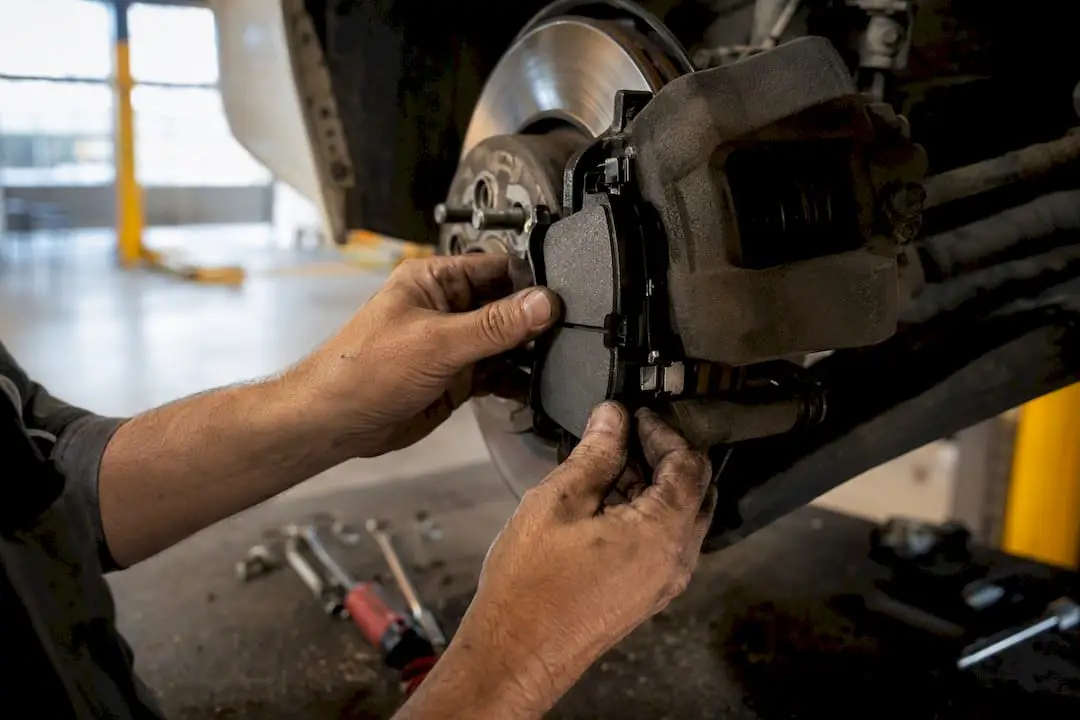
- Brakes: Pad and rotor thickness, chamber function on air brakes, slack adjuster travel, ABS warning lights
- Tires and wheel ends: Tread depth, pressure, wheel bearing play, lug torque
- Steering and suspension: Ball joint and tie rod play, bushing wear, alignment drift
- Electrical and battery: Terminal corrosion, cranking amps, alternator output
- Lights, exhaust/aftertreatment, body and safety equipment: DEF level, DPF warning codes, reflective tape, fire extinguisher charge
PM-A typically covers the daily and weekly layer plus a quick visual pass on everything above. PM-B adds brake teardown-level checks and driveline attention. PM-C is your annual deep dive, aligned with the DOT periodic inspection window.
Pro Tip: Print your master checklist in the same order your technician walks the vehicle, front to back, side to side. A checklist organized alphabetically instead of physically is how “check wheel bearings” gets skipped every third time.
If you want a downloadable starting point mapped to this exact structure, Express Lube & Car Care’s car inspection checklist breaks these system checks into a form you can hand a technician today.
How Do You Set Fleet Maintenance Intervals Correctly?
Mileage-only schedules under-service vehicles that sit and idle. Calendar-only schedules under-service vehicles that rack up miles fast. The fix is multi-trigger logic: service fires on whichever threshold, mileage, engine hours, or elapsed time, arrives first, a structure autosist’s guide to mixed-fleet PM scheduling lays out clearly for fleets running dissimilar duty cycles.
Two examples make this concrete:
- A regional linehaul tractor covering 100,000 miles a year needs mileage-driven triggers, since it’ll hit the odometer threshold long before the calendar date.
- A yard truck that barely moves but idles for ten hours a day needs an engine-hour trigger instead, since mileage alone would badly under-service it.
Improper tire pressure alone can knock up to 15% off fuel economy, which is exactly the kind of failure a time-only trigger misses between long-interval PM visits. Start with OEM intervals, then tighten whichever trigger your failure data shows is arriving too late.
How Do You Customize a Checklist by Vehicle Class?
OEM baselines assume average conditions, and almost nothing in a real fleet is average. Class 8 tractors, light delivery vans, and yard trucks wear differently, and your checklist should reflect that instead of treating every unit the same.
- Stop-and-go urban routes accelerate brake and transmission wear, so tighten PM-A intervals on those units
- Coastal or road-salt regions accelerate corrosion on frames, brake lines, and electrical connectors, warranting extra visual checks
- High-idle, low-mileage assets need engine-hour triggers, not odometer-based ones
A simple rubric: group vehicles by duty cycle first, vehicle class second, then assign PM tiers to the group rather than to each individual unit. It cuts scheduling complexity without losing coverage.
How Do You Turn a Checklist Into Completed Work Orders?
A checklist that lives in a binder catches nothing. The value shows up only when a flagged item automatically becomes a tracked job with a deadline.
- Configure your inspection app so any “fail” or “defect” answer auto-generates a work order, not a note for later
- Assign a specific owner to each open work order, not “the shop” as a whole
- Set an SLA window (24 hours for safety items, 5 to 7 days for non-critical wear items) and escalate anything overdue to the fleet manager
- Close the work order only when the repair is documented, creating an audit-ready record tied to that VIN
Digital inspection tools that centralize this workflow shrink the gap between defect detection and repair, which is where roadside failures and unplanned downtime actually get prevented. That gap, not the inspection itself, is usually the real weak point in fleets that “have a checklist” but still see high failure rates.
Pro Tip: Ownerless work orders are the single most common way a good checklist program quietly falls apart. If a line item doesn’t have a name attached, assume it won’t get closed.
What Are the Compliance and Recordkeeping Requirements?
DVIRs are a driver-facing compliance document. PM checklists are technician-level scheduled service. Keep them as separate records, because a DOT auditor will ask for both and expects them to look different.
- Retain closed DVIRs and completed work orders long enough to satisfy your carrier’s audit window
- Build recall checks into your PM workflow by running VINs against the NHTSA recall database at every scheduled service, not just when a notice arrives in the mail
- Check your state or local emissions inspection and maintenance program requirements, since I/M rules vary and directly affect which checklist items are mandatory in your jurisdiction
Who Owns Each Step of a Fleet Maintenance Program?
A checklist only works when specific people own specific parts of it. Drivers complete DVIRs. A designated inspector or lead tech reviews flagged defects. A scheduler converts PM due dates into work orders. Technicians execute the repair. The fleet manager audits completion.
Train drivers on DVIR standards quarterly, and spot-check technician PM records monthly. Track four numbers to know if the program is working: checklist completion rate, overdue PM count, cost per mile, and mean time to repair. If overdue PMs climb month over month, the ownership structure, not the checklist itself, is usually the failure point.
Who Backs This Fleet Maintenance Checklist Guidance?
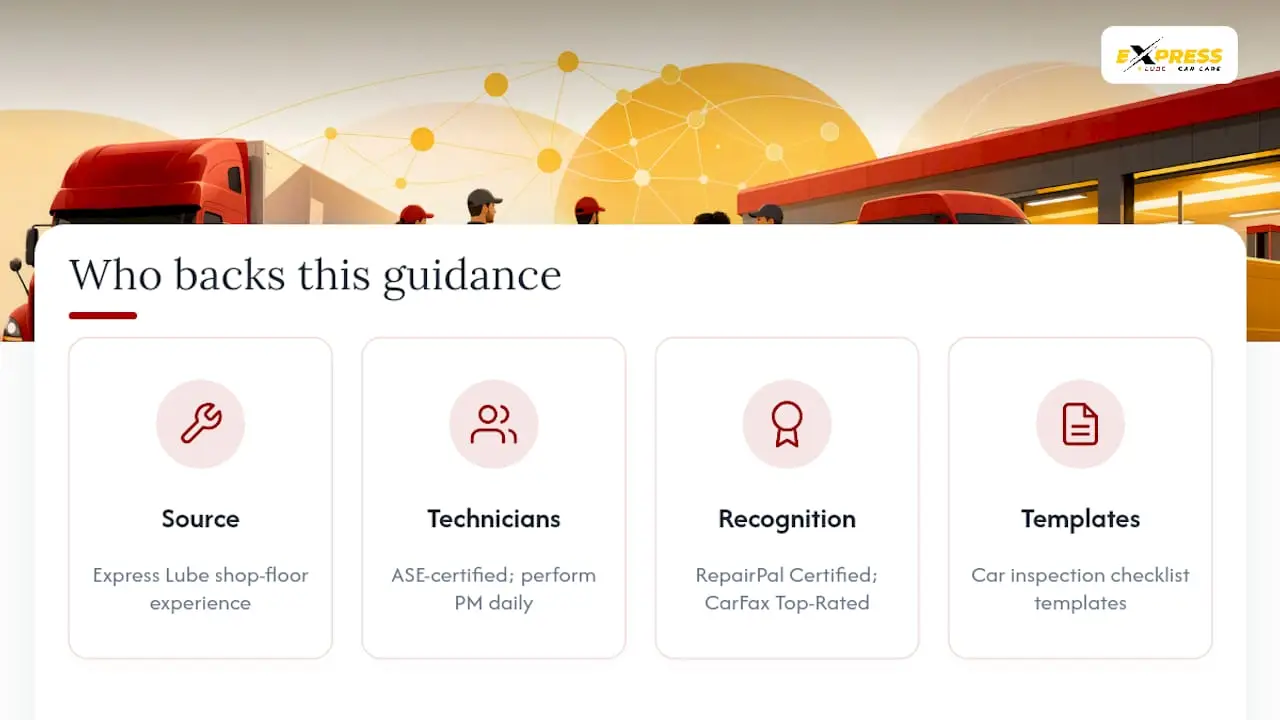
This guidance is written from Express Lube & Car Care’s shop floor experience, where ASE-certified technicians perform fleet PM work daily. The shop holds RepairPal Certified status and CarFax Top-Rated Service Center recognition. Fleet managers can pull ready-to-use templates from our car inspection checklist and adapt them directly.
The Rollout Mistake Almost Every Fleet Makes
The most common failure isn’t a bad checklist, it’s an ownerless one. Lines get checked but never assigned to anyone, so nothing closes. Fix it by tying every flagged item to a recurring work order with an alert, and pilot the change on one vehicle subgroup before rolling it fleet-wide.
— Hassan
Let Express Lube & Car Care Handle the Technician-Side Work
Building the checklist is half the job. Executing it consistently, tier after tier, is where most internal programs lose steam, and that’s where handing the technician-side work to a certified shop pays off. Express Lube & Car Care’s fleet vehicle services run PM-A through PM-C tiers with ASE-certified technicians, digital vehicle inspections that document every system check, and a 24-month/24,000-mile warranty backing the repairs, so your audit trail is already built for you.
If your fleet is drowning in overdue PMs or you just don’t have the bay capacity to run tiered service internally, that’s exactly the gap a fleet account with Express Lube & Car Care fills. For readers managing individual vehicles alongside fleet units, our oil change tips page covers the fluid side of the checklist in more depth. Call or book a fleet service consultation today to get your vehicles onto a tiered PM schedule with technician-verified digital records.
Sources
- fuel economy — maintain your vehicle
- How to build a preventive maintenance schedule for mixed fleets
- Driver’s Vehicle Inspection Report (DVIR) — FMCSA
- Vehicle emissions inspection and maintenance (I/M) general information — EPA
FAQ
How Do You Do Fleet Maintenance Correctly?
Run daily DVIRs alongside a tiered PM program (A, B, C), trigger service on whichever comes first among mileage, hours, or time, and convert every flagged defect into a work order with an assigned owner, as explained in this comprehensive maintenance & car care guide.
What Is a Maintenance Checklist for Fleets?
It’s a structured list of inspection and service items organized by frequency and vehicle system, used to catch defects before they become breakdowns and to create an audit-ready service record.
What Is a PM Checklist?
A preventive maintenance checklist is the technician-level service list, distinct from a driver’s DVIR, that specifies what gets inspected or replaced at each PM tier (A, B, or C).
What Factors Should You Consider When Performing Preventive Maintenance?
Key factors include OEM baseline intervals, duty cycle (mileage, engine hours, idle time), operating environment (corrosion, stop-and-go traffic), vehicle class, prior failure history, DOT compliance windows, and how quickly flagged defects convert to closed work orders. Express Lube & Car Care’s ASE-certified technicians factor duty cycle and environment into every fleet PM visit.