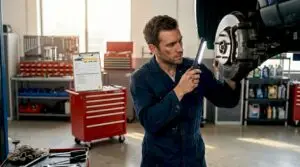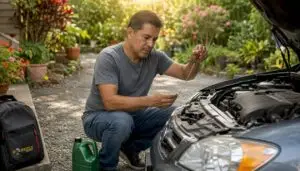

Types of auto repair services refer to the distinct categories of vehicle maintenance and repair providers available to car owners, each defined by their specialization, cost structure, and technical capability. Three core facility types exist in the U.S. auto repair industry: dealership service departments, independent repair shops, and chain repair shops, with specialty and diagnostic services rounding out the full picture. For Arlington, TX drivers juggling DFW traffic, Texas heat, and a wide range of vehicle makes, knowing which shop type fits your situation is the difference between a smart repair decision and an expensive mistake. Your choice comes down to three factors: the service you need, your vehicle’s age and warranty status, and your budget.
1. Types of auto repair services: the five main categories
The U.S. auto repair industry divides into five shop types: franchised dealerships, independent repair shops, chain and quick-lube centers, specialty shops, and automotive diagnostic services. Each serves a different purpose, and no single shop type wins across every situation. Matching your repair need to the right provider is what saves you time and money. Think of it like choosing between a general practitioner, a specialist, and an urgent care clinic. Each has a role, and using the wrong one costs you.
2. Dealership service departments: brand-specific expertise and warranty repairs
Dealership service departments are factory-authorized repair centers staffed by technicians trained specifically on one vehicle brand, such as Ford, Toyota, or GM. They use original equipment manufacturer (OEM) parts and have direct access to manufacturer software, technical service bulletins, and recall databases. That access matters most when your vehicle is under warranty or subject to a safety recall.
Warranty and recall repairs must be completed at franchised dealerships to preserve your coverage. Independent shops can legally perform routine maintenance without voiding your warranty, but only a dealership can execute recall work and factory warranty claims. This is a legal and financial boundary worth knowing before you schedule service anywhere else.
Dealership labor rates run higher than independent shops, and that premium is real. You are paying for brand-specific diagnostic software, OEM parts, and factory-certified training. For a new vehicle still under the manufacturer’s bumper-to-bumper warranty, that premium is justified. For a five-year-old sedan with 80,000 miles, it often is not.
Best for: new vehicles under warranty, safety recalls, manufacturer-specific diagnostic faults, and complex repairs requiring proprietary software access.
- Factory-trained technicians with brand-specific certification
- OEM parts that meet manufacturer tolerances exactly
- Direct access to recall and technical service bulletin databases
- Higher labor rates, typically $130 to $180 per hour in the DFW area
- Longest wait times, especially at high-volume domestic brand dealerships
Pro Tip: If your check engine light triggers a fault code tied to a known manufacturer defect, call your dealership’s service line first. Many repairs qualify for goodwill coverage even after the warranty expires, but only if you ask.
3. Independent repair shops: versatile and cost-effective for most repairs
Independent repair shops are privately owned facilities that service vehicles across multiple makes and models. They are the most flexible of all auto repair options and handle the widest range of car maintenance services, from oil changes and brake jobs to engine repairs and suspension work. Independent shops typically offer lower labor rates than dealerships and give you flexibility on parts, choosing between OEM, aftermarket, or remanufactured components based on your budget.
A well-run independent shop will also tell you when a job is beyond their equipment or expertise and refer you to a specialist. That honesty is a feature, not a weakness. Independent shops handle most dealership-level services but will refer out for major engine rebuilds or advanced system calibrations when appropriate.
ASE certification applies across dealership, independent, and specialty shops, but tool investments and software access differentiate service capability significantly. When you are evaluating an independent shop, ask whether their technicians hold ASE certifications and whether they subscribe to professional repair data platforms like ALLDATA or Mitchell 1.
Best for: out-of-warranty vehicles, routine maintenance, brake and suspension repairs, engine diagnostics, and owners who want a long-term relationship with a trusted local mechanic.
- Services all makes and models under one roof
- Parts flexibility: OEM, aftermarket, or remanufactured options
- Lower average labor rates than dealerships, typically $90 to $130 per hour
- Honest appraisals and referrals when specialized work is needed
- Quality varies widely, so ASE certification and RepairPal recognition matter
Pro Tip: Build a relationship with one independent shop before you need a major repair. A shop that knows your vehicle’s history will catch developing problems earlier and give you more accurate repair estimates.
4. Chain repair shops and quick-lube centers: fast and predictable for routine service
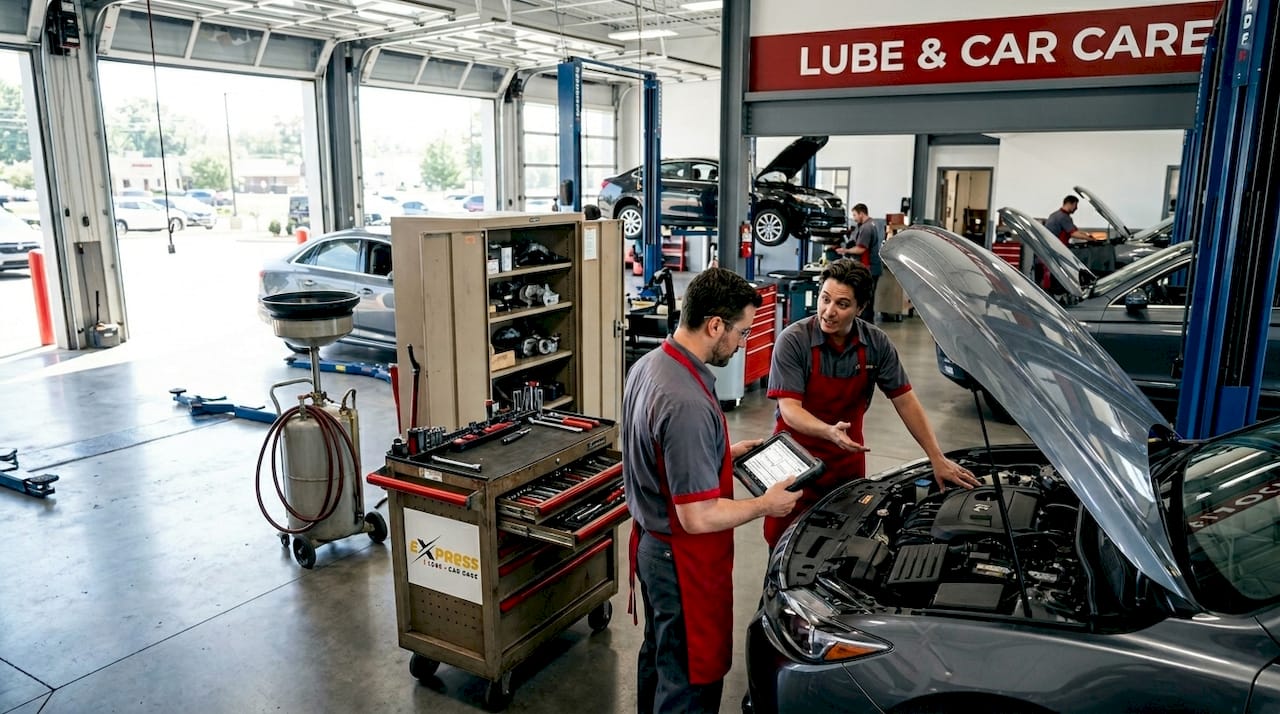
Chain repair shops and quick-lube centers like Jiffy Lube, Firestone, and Midas operate on volume and standardization. Their strength is speed and predictability for high-frequency, low-complexity services. If you need an oil change, a tire rotation, or a wheel alignment on your lunch break, a chain shop delivers that efficiently.
Here is what chain shops do well:
- Oil and filter changes with standardized pricing
- Tire installation, rotation, and balancing
- Wheel alignment using computerized equipment
- Battery replacement and basic electrical checks
- Air filter and cabin filter swaps
- Wiper blade replacement and fluid top-offs
What chain shops typically do not offer is deep diagnostic capability or complex mechanical repairs. Their technicians follow standardized service menus, which works perfectly for routine upkeep but falls short when your vehicle needs real troubleshooting. Pricing is predictable, which Arlington drivers on a tight schedule appreciate. Just know the ceiling of what these shops can handle before you bring in a car with a persistent warning light or a noise you cannot identify.
For a car maintenance schedule built around mileage intervals, chain shops cover the basics well. The risk is upselling. Chain locations are incentivized to recommend additional services, so go in knowing exactly what your vehicle needs.
5. Specialty auto repair shops: expert focus for complex systems
Specialty auto repair shops focus on one system or vehicle type and invest heavily in the tools, software, and certifications required to service it correctly. Transmission centers, collision repair facilities, EV and hybrid service shops, and ADAS calibration specialists all fall into this category. Specialty shops require significant investment in tooling and certification for advanced systems, and that investment is what justifies their higher labor rates.
Specialty shops fill the gap when general shops’ equipment and expertise do not meet the technical demands of newer vehicle technologies like ADAS and EV systems. A standard independent shop cannot safely recalibrate a forward-collision warning camera after a windshield replacement. A specialty ADAS shop can, and getting it wrong is a safety issue, not just a repair quality issue.
Best for: transmission rebuilds, hybrid and EV battery service, post-collision ADAS recalibration, and any repair requiring proprietary tooling that general shops do not carry.
| Shop type | Specialization | Cost level | Best use case |
|---|---|---|---|
| Transmission center | Automatic and manual gearboxes | High | Slipping gears, fluid leaks, rebuild |
| EV and hybrid shop | High-voltage battery, drivetrain | High | Battery degradation, motor faults |
| ADAS calibration shop | Camera, radar, sensor systems | Medium to high | Post-collision recalibration |
| Collision repair facility | Body, frame, structural damage | Varies | Accident damage, hidden structural faults |
For Arlington drivers with newer vehicles loaded with driver-assistance features, selecting a specialty shop for post-collision ADAS calibration is not optional. It restores safety systems and prevents costly rework or liability down the road.
6. Automotive diagnostic services: the foundation of accurate repair
Automotive diagnostic services are the process of identifying vehicle faults through electronic scanning, functional testing, and live data analysis. They are not the same as pulling a trouble code with a $30 OBD-II reader from an auto parts store. A true diagnostic service includes functional tests and live data trend evaluations to confirm the actual failing component, not just the system that triggered a warning.
Modern repair shops in 2026 use seven core diagnostic functions: full-system scans, bidirectional control testing, ECU coding, ADAS calibration, service resets, real-time data stream analysis, and EV system diagnosis. Each function serves a different purpose, and a shop that only offers code retrieval is working with one hand tied behind its back.
| Diagnostic function | What it does | When you need it |
|---|---|---|
| Full-system scan | Reads fault codes across all modules | Check engine light, warning lights |
| Bidirectional control | Commands components to activate for testing | Intermittent faults, actuator failures |
| Live data stream analysis | Monitors sensor values in real time | Driveability issues, misfires |
| ADAS calibration | Recalibrates safety sensors and cameras | Post-collision, windshield replacement |
| EV system diagnosis | Evaluates battery and motor health | Range loss, charging faults |
Diagnostic triggers include malfunction indicator lights, driveability complaints, emissions failures, and post-repair verification. Skipping a proper diagnostic to save $100 often leads to replacing the wrong part and spending $400 more. Think of diagnostics as the map before the road trip. You would not drive from Arlington to El Paso without one.
Pro Tip: Ask your shop whether their diagnostic process includes bidirectional testing, not just code retrieval. If they cannot answer that question clearly, their diagnostic capability may be limited to basic scanning.
7. Comparing auto repair service types for Arlington drivers
Choosing the right repair facility depends on warranty status, technical specialization, and cost structure more than proximity or convenience. Here is how the five types stack up across the criteria that matter most to Arlington car owners.
| Service type | Cost level | Technical depth | Best scenario |
|---|---|---|---|
| Dealership | High | Brand-specific | Warranty, recalls, proprietary software |
| Independent shop | Medium | Broad | Out-of-warranty, routine to complex repairs |
| Chain or quick-lube | Low to medium | Basic | Oil changes, tires, alignments |
| Specialty shop | High | System-specific | Transmissions, EVs, ADAS, collision |
| Diagnostic service | Medium | Advanced | Fault identification, pre-repair analysis |
A few practical guidelines for Arlington drivers:
- Vehicle under 3 years old with active warranty: use the dealership for covered repairs, independent for maintenance
- Vehicle 3 to 10 years old, out of warranty: an independent shop handles 90% of your needs at lower cost
- Routine oil change or tire rotation: a chain shop or full-service independent both work fine
- Transmission slipping or EV battery issues: go directly to a specialty shop
- Warning light you cannot explain: start with a proper diagnostic service before authorizing any repair
For high-mileage vehicles, car care tips specific to older cars can help you prioritize which services matter most at each mileage milestone.
Key takeaways
Matching your vehicle’s needs to the right shop type is the single most effective way to control repair costs and protect your car’s long-term reliability.
| Point | Details |
|---|---|
| Dealerships for warranty work | Only franchised dealerships can perform recall repairs and preserve factory warranty coverage. |
| Independents for most repairs | Independent shops handle the majority of services at lower cost with parts flexibility. |
| Chain shops for routine upkeep | Quick-lube and chain locations excel at oil changes, tires, and alignments but lack diagnostic depth. |
| Specialty shops for complex systems | ADAS, EV, and transmission repairs require specialized tooling that general shops do not carry. |
| Diagnostics before repairs | A full diagnostic service prevents unnecessary part replacements and improves repair accuracy. |
What I have learned choosing repair shops in Arlington
Arlington sits in a unique spot in the DFW market. You have dealership rows along I-20 and Division Street, a dense network of independent shops, and chain locations practically on every corner. That variety is a genuine advantage, but it also creates decision fatigue when something goes wrong with your car.
Here is what I have found after years of working with and observing how Arlington drivers navigate repair decisions. Most people default to the nearest shop or the cheapest quote, and both of those instincts lead to regret more often than not. The nearest shop is not always equipped for your specific problem. The cheapest quote often skips the diagnostic step that would have identified the real issue.
The most underused tool in a car owner’s arsenal is a proactive diagnostic scan. Running a full-system scan before a problem becomes a breakdown costs a fraction of emergency repair rates and gives you a clear picture of what your vehicle actually needs. I have seen Arlington drivers spend $800 on a part replacement that a $120 diagnostic would have ruled out in 45 minutes.
My honest advice: build a relationship with a certified independent shop for your ongoing maintenance. Use the dealership when warranty or recall work demands it. And when your car throws a warning light you do not recognize, start with a proper diagnostic, not a guess.
— Hassan
Experience the difference at Express Lube & Car Care in Arlington
Whether you need a quick oil change or a full engine diagnostic, Expresslubearlington has you covered. Our ASE-certified technicians and RepairPal certification mean you get verified expertise, not guesswork, every time you pull in.
We handle everything from routine oil changes and brake service to engine diagnostics and repair for complex faults. Arlington drivers trust us because we diagnose first and repair with precision. Right now, you can save with $45 off mechanical repairs on your next visit. Stop by or schedule online and see why CarFax recognizes us as a Top-Rated Service Center in the DFW area.
FAQ
What are the main types of auto repair services?
The five main types are dealership service departments, independent repair shops, chain and quick-lube centers, specialty shops, and automotive diagnostic services. Each serves a different need based on vehicle age, warranty status, and repair complexity.
How do I choose between a dealership and an independent shop?
Use a dealership for warranty repairs, recalls, and brand-specific software issues. For out-of-warranty vehicles, an independent shop typically delivers the same quality at lower cost with more parts flexibility.
What is the difference between a diagnostic scan and a full diagnostic service?
A scan retrieves stored fault codes, while a full diagnostic service includes functional testing and live data analysis to confirm the actual failing component. The full service prevents unnecessary part replacements.
When should I use a specialty auto repair shop?
Use a specialty shop for transmission rebuilds, EV or hybrid battery service, and post-collision ADAS recalibration. These repairs require proprietary tooling and certifications that most general shops do not carry.
Do independent shops void my car warranty?
No. Independent shops can legally perform routine maintenance without voiding your warranty, as long as they document the work and use appropriate parts. Only recall and factory warranty repairs must go through a franchised dealership.