

TL;DR:
- Auto warranties only cover specific repairs when proper procedures are followed, protecting consumers from large costs. Knowing the different warranty types, the claims process, and legal protections helps prevent claim denials and savings from unexpected expenses. Keeping detailed maintenance records and obtaining prior authorization are essential for successfully filing warranty claims.
An auto warranty is a contract that promises to cover specific repair costs when your vehicle experiences certain mechanical failures. Understanding how auto warranties interact with repairs is the difference between a $0 bill and a $3,000 surprise. The Magnuson-Moss Warranty Act of 1975 gives you federal legal protection, and knowing how to use it puts real money back in your pocket. This guide breaks down warranty types, the claims process, your legal rights, and the most common mistakes that get claims denied.
How auto warranties interact with repairs: types and coverage
Not all warranties work the same way, and the type you have determines exactly which repairs get paid for and who writes the check.

New car manufacturer warranties come in two forms. A bumper-to-bumper warranty covers nearly every component from the front bumper to the rear. A powertrain warranty covers only the engine, transmission, and drivetrain. Bumper-to-bumper terms typically run 3 years or 36,000 miles, while powertrain coverage often extends to 5 years or 60,000 miles.
Extended warranties, also called service contracts, are a different animal entirely. Extended warranties are service contracts and differ legally from factory warranties. They require proof of maintenance for claim approval and are regulated differently by state law. Many car owners buy them thinking they work just like a factory warranty. They do not.
Here is a quick comparison of the main warranty types:
| Warranty Type | What It Covers | Who Pays for Repairs | Deductible |
|---|---|---|---|
| Bumper-to-bumper | Nearly all components | Manufacturer | Usually $0 |
| Powertrain | Engine, transmission, drivetrain | Manufacturer | Usually $0 |
| Extended (service contract) | Varies by plan | Third-party provider | $100–$500 per visit |
| Full warranty (Magnuson-Moss) | All covered defects, parts and labor | Warrantor | $0 |
| Limited warranty | Specified components only | Warrantor (partial) | Varies |
When you are shopping for an extended warranty, the plan structure matters enormously. Comprehensive exclusionary service contracts cover all components except a listed set of exclusions. That is far better than a plan that only covers a named list of parts. Modern vehicles have hundreds of interconnected systems, and a named-component plan leaves huge gaps.
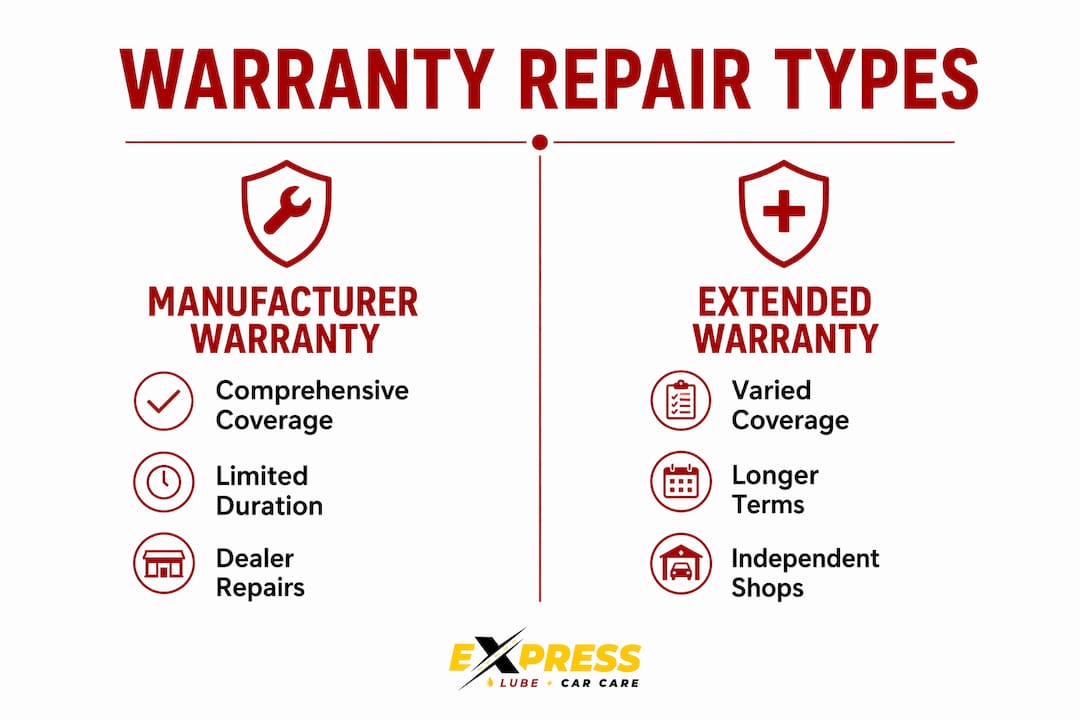
Extended warranties typically cost $1,300–$4,600, with powertrain-only plans running cheaper at around $600–$750 per year. Deductibles commonly fall in the $100–$500 range per repair visit. That upfront cost stings, but a single transmission replacement can run $4,000 or more out of pocket.
Pro Tip: When comparing extended warranty plans, always ask for the exclusion list in writing. A shorter exclusion list means broader coverage, not the other way around.
What is the warranty claims process for vehicle repairs?
The claims process is where most car owners run into trouble. Getting it right requires following a specific sequence before any wrench touches your car.
- Get a diagnosis first. Take your vehicle to an authorized repair facility. The technician identifies the failed component and documents the failure in writing.
- Contact your warranty provider before repairs begin. Call the claims line and report the failure. This step is non-negotiable.
- Obtain prior written authorization. Prior written authorization from the warranty administrator before starting repairs is the single most critical compliance step to secure claim approval. Without it, your claim is almost certainly dead.
- Allow the warranty inspector to review the vehicle. Some providers send an independent inspector. Others rely on the shop’s documentation.
- Repairs begin after approval. The shop completes the work, and the warranty provider pays the shop directly for covered costs.
- Pay your deductible. You pay your portion at pickup, typically $100–$500 depending on your plan.
One cost that catches car owners off guard is the teardown inspection. For complex failures like internal engine damage, the shop must disassemble the component to confirm the cause. Teardown inspections can cost $500–$1,500 and are often required for warranty claim approval. If the claim is denied after teardown, the owner pays the full teardown and reassembly costs, which can reach $1,000–$2,000. That is a painful outcome that proper pre-authorization helps you avoid.
Another cost to watch for is a betterment charge. Manufacturers can charge betterment when a new replacement part improves the vehicle beyond the failed part’s condition. Think of it like this: if your worn timing chain gets replaced with a brand-new one, the warranty provider may argue you received an upgrade and ask you to share the cost difference.
Pro Tip: Ask your repair shop if they have experience working with your specific warranty provider. Shops that regularly handle warranty claims know exactly what documentation the provider requires, which speeds up approval and reduces the chance of a denial.
What legal protections cover auto warranty repairs?
The Magnuson-Moss Warranty Act is your federal safety net. Congress passed it in 1975 specifically to protect consumers from vague or misleading warranty terms.
Here is what the law actually guarantees:
- Full warranties must cover parts and labor at no charge to you. Under the Magnuson-Moss Warranty Act, full warranties prohibit charging consumers for parts or labor on covered defects.
- Limited warranties can restrict coverage to parts only or require you to pay labor costs.
- Aftermarket service does not void your warranty. Independent servicing or aftermarket parts do not void factory warranties unless they directly cause the failure. The 1975 Magnuson-Moss Act protects you against blanket voiding for using a non-dealer shop.
- You can sue and recover legal fees. The Act includes a fee-shifting provision. If you win a warranty dispute in court, the warrantor pays your attorney fees.
“The Magnuson-Moss Warranty Act gives consumers the right to use independent repair shops without fear of losing their factory warranty coverage, as long as those repairs do not directly cause the failure in question.”
This protection is significant for car owners who prefer local certified shops over dealerships. You are not locked into dealer service to keep your factory warranty valid. If a dealer or manufacturer tries to void your warranty simply because you used an independent shop, that is a violation of federal law. Document everything and escalate through the Federal Trade Commission if needed.
Why are warranty repair claims denied, and how do you avoid it?
Claim denials are frustrating, but they are almost always preventable. The causes are consistent and well-documented.
- No prior authorization. Prior authorization before repairs is the most common reason warranty claims are denied. Starting repairs without approval is the fastest way to lose coverage.
- Missing maintenance records. If maintenance is not performed or proven, warranty claims related to failures caused by neglect can be denied. Oil change records and routine service receipts are your proof of compliance.
- Repairs done at an unauthorized facility. Some factory warranties require dealer service. Third-party extended warranties are generally more flexible, but always confirm which shops are authorized under your specific plan.
- Excluded components. Limited plans only cover named parts. If your failed component is not on the list, the claim is denied regardless of circumstances.
- Betterment disputes. The provider may approve the repair but charge you a betterment percentage. Know your plan’s betterment policy before you sign.
| Denial Reason | How to Prevent It |
|---|---|
| No prior authorization | Call the claims line before any repair starts |
| Missing maintenance records | Keep dated receipts for every oil change and service |
| Unauthorized repair facility | Confirm shop eligibility with your provider first |
| Excluded component | Read the exclusion list before purchasing the plan |
| Betterment charge dispute | Review betterment policy in your contract upfront |
Owners with thorough knowledge of their warranty rights and detailed service logs are better positioned to maximize warranty benefits. A simple folder of dated receipts is your best defense against a denied claim.
Key Takeaways
Auto warranties cover specific repair costs only when car owners follow the correct claims process, maintain service records, and obtain prior authorization before any repair begins.
| Point | Details |
|---|---|
| Prior authorization is mandatory | Starting repairs without warranty provider approval is the top reason claims are denied. |
| Maintenance records protect your claim | Dated oil change and service receipts prove compliance and prevent neglect-based denials. |
| Magnuson-Moss Act protects your rights | Federal law prohibits voiding warranties for using certified non-dealer repair shops. |
| Exclusionary plans offer broader coverage | Comprehensive plans covering all parts except exclusions beat named-component plans for modern vehicles. |
| Teardown costs fall on you if denied | A denied claim after teardown can cost $1,000–$2,000 out of pocket, making pre-authorization critical. |
What I have learned after years of watching warranty claims go sideways
Here is the honest truth: most warranty headaches are self-inflicted. Car owners skip the authorization call because they assume the shop handles it. They lose their oil change receipts because they never thought they would need them. Then they are standing at the service counter staring at a $2,800 bill that should have been covered.
The single habit that changes everything is documentation. Keep a dedicated folder, physical or digital, for every service receipt. Every oil change, every tire rotation, every fluid top-off. When a claim comes up, you hand over that folder with confidence. The repair process for car owners is already stressful enough without scrambling to prove you maintained your vehicle.
My other strong opinion: if you are buying an extended warranty, pay for the exclusionary plan. The named-component plans look cheaper on paper, but they leave you exposed on exactly the kind of complex, expensive failures you bought coverage for in the first place. Pay more upfront and sleep better when something breaks.
Finally, do not accept a denial without pushing back. The Magnuson-Moss Act gives you real legal leverage. File a complaint with the FTC, contact your state attorney general’s consumer protection office, and document every conversation with the warranty provider. Most providers settle before a lawsuit because the fee-shifting provision means they pay your legal costs if you win.
— Hassan
Protect your warranty coverage with the right maintenance partner
Keeping your warranty valid starts with one thing: consistent, documented maintenance. A missed oil change or a gap in your service records can hand the warranty provider a reason to deny your claim.
At Expresslubearlington, our ASE-certified technicians know exactly what warranty providers look for in a service history. We are a RepairPal Certified Shop and a CarFax Top-Rated Service Center, so your records carry real weight when a claim comes up. We handle pre-authorization reviews, provide detailed service documentation, and make sure your vehicle stays on the right side of your warranty terms. Check out our oil change maintenance tips to stay ahead of coverage requirements, or visit us in Arlington to keep your service log airtight and your warranty intact.
FAQ
What does an auto warranty cover for repairs?
An auto warranty covers the cost of parts and labor for specific mechanical failures listed in the contract. Bumper-to-bumper warranties cover nearly all components, while powertrain and limited warranties cover only named systems.
Does using an independent shop void my car warranty?
No. Under the Magnuson-Moss Warranty Act, using a certified independent shop does not void your factory warranty unless the repair or aftermarket part directly causes the failure in question.
What is the most common reason warranty repair claims are denied?
The most common reason is starting repairs without prior authorization from the warranty provider. Always call the claims line and get written approval before any work begins.
What is a betterment charge in a warranty repair?
A betterment charge is the portion of a repair cost you pay when a new replacement part is considered an upgrade over the worn part it replaces. Your warranty provider covers the base cost, and you pay the difference.
Do I need maintenance records to make a warranty claim?
Yes. Extended warranty providers require proof of routine maintenance, including oil changes, to approve claims. Missing records can result in denial if the provider argues the failure was caused by neglect.