
TL;DR:
- A repair shop’s reputation is evaluated by customer reviews, professional certifications, and third-party validations. High review volume, certification, and transparency in estimates build consumer trust and improve search rankings. Recent, specific reviews and layered credentials indicate a shop’s current quality and accountability.
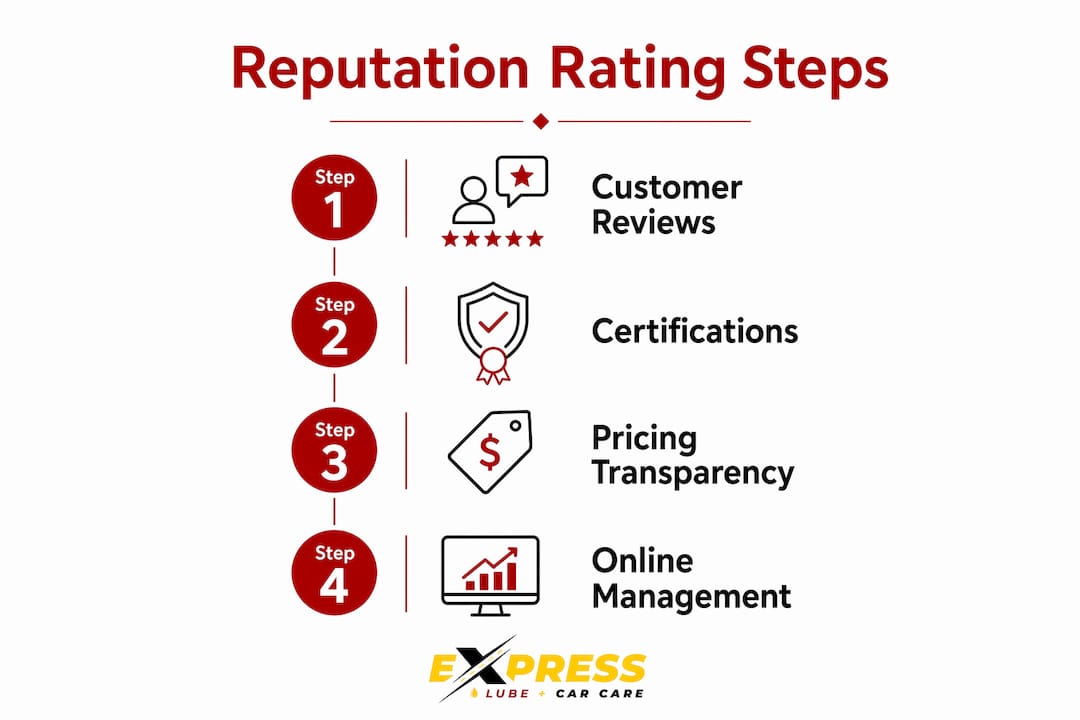
A repair shop’s reputation is rated through a combination of customer reviews, professional certifications, and third-party industry validations. These three pillars work together to give you a measurable picture of a shop’s trustworthiness before you hand over your keys. How repair shop reputation is rated matters more than most car owners realize, because the signals go far deeper than a simple star count. Platforms like Google Reviews, programs like ASE certification, and validators like AAA Approved Auto Repair each contribute a distinct layer of credibility. Understanding all three puts you in control of the decision.
What role do online reviews play in rating a repair shop’s reputation?
Online reviews are the most visible signal in any shop’s reputation rating. 90% of consumers check reviews before visiting a local repair shop, with competitive shops averaging 4.4 out of 5 stars and needing 50 or more reviews to be taken seriously. That benchmark tells you something important: volume and rating work together, not separately.
Not all reviews carry equal weight, though. Here is what actually matters when you read through a shop’s feedback:
- Review volume and average rating. A shop with 200 reviews at 4.3 stars is far more credible than one with 12 reviews at 5.0 stars. A perfect 5.0 rating often signals suspect feedback; a 4.2 to 4.5 average with high volume reads as authentic.
- Review velocity. Consistent new reviews over time impact visibility more than total count alone. A shop that earned 300 reviews three years ago and has gone quiet since then is not the same shop it used to be.
- Review specificity. Naming technicians, describing exact repairs, and noting communication quality strongly indicates genuine experiences. Vague five-word reviews like “great service, highly recommend” tell you almost nothing.
- How the shop responds to negative reviews. Professional replies to criticism reveal accountability and correlate with better long-term service. A shop that argues with unhappy customers online is showing you exactly how it handles conflict in person.
Pro Tip: When reading reviews, sort by “lowest rated” first. A shop’s response to its worst reviews tells you more about its service culture than its best testimonials ever will.
Review content also feeds AI tools that parse text to identify a shop’s specialties and reliability signals. A shop with dozens of reviews mentioning “transmission work” or “honest pricing” gets associated with those terms in AI-driven recommendation engines. That connection directly shapes which shops appear when you search for specific services.
How do professional certifications and industry validations impact reputation ratings?
Certifications are the backbone of objective reputation scoring. They replace guesswork with verified standards, and they carry real weight with both customers and AI recommendation systems.
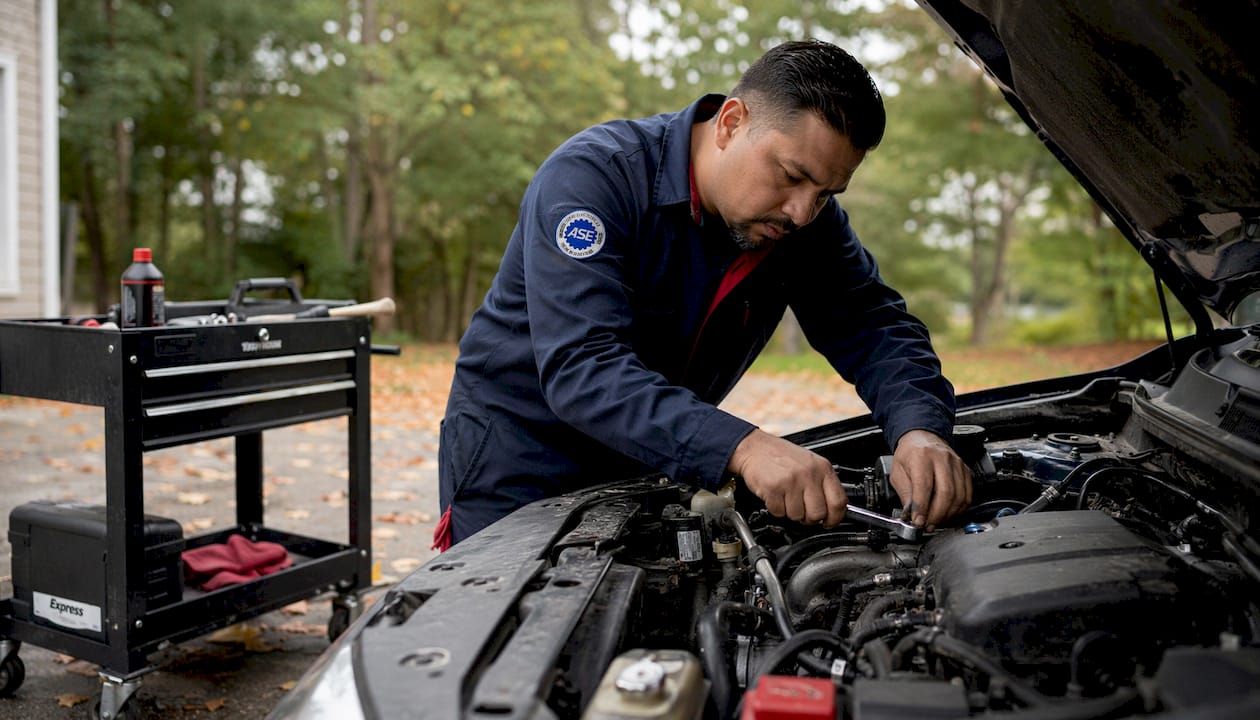
ASE certification is the most recognized benchmark in the industry. Fewer than 50% of U.S. mechanics hold ASE certification, which means a shop staffed with ASE-certified technicians is already in the top half of the field. You can learn more about what this credential actually means by reading about evaluating an ASE certified mechanic before your next service appointment.
AAA Approved Auto Repair is a different kind of validation. It requires shops to pass facility inspections and undergo quarterly satisfaction monitoring. AAA’s program covers 7,000+ shops nationwide and has operated since 1975. That longevity and ongoing oversight make it one of the most credible third-party validators in the industry.
Here is a quick comparison of what these two credentials actually measure:
| Credential | What it validates | Ongoing monitoring |
|---|---|---|
| ASE Certification | Technician knowledge and skill | Renewal required every 5 years |
| AAA Approved Auto Repair | Facility standards and customer satisfaction | Quarterly monitoring |
| RepairPal Certified | Fair pricing, quality repairs, and customer experience | Continuous review tracking |
| CarFax Top-Rated | Customer satisfaction and service history | Ongoing review analysis |
Independent shops that stack multiple certifications signal a deeper commitment to quality than those relying on a single badge. Expresslubearlington holds RepairPal Certified status and CarFax Top-Rated recognition alongside ASE-certified technicians, which is exactly the kind of layered validation worth looking for. The role of mechanic shop certification goes beyond marketing; it reflects real accountability to external standards.
Pro Tip: Always verify certifications directly. ASE-certified shops display technician credentials on-site. If a shop claims certification but cannot show you the paperwork, treat that as a red flag.
Why transparency in estimates and business practices influences reputation ratings
Pricing transparency is a direct reputation signal. Shops that hand you a vague verbal estimate and then present a larger bill at pickup generate negative reviews at a predictable rate. The pattern is consistent enough that transparency has become a measurable factor in how customers rate repair services.
Written estimates that separate parts and labor costs and disclose whether parts are OEM or aftermarket are the mark of a trustworthy shop. This level of detail protects you from surprise charges and gives you a basis for comparison. Understanding what auto repair transparency means for car owners can help you ask the right questions before any work begins.
Here are the transparency signals that experienced car owners check before approving any repair:
- Written, itemized estimates. Labor and parts listed separately, with part type (OEM vs. aftermarket) clearly noted.
- Warranty terms in writing. A standard warranty of 12 months or 12,000 miles signals confidence in the work. Expresslubearlington offers a 24-month repair warranty, which exceeds the industry standard and reflects genuine confidence in workmanship.
- Clear communication before work begins. Shops that call you before adding unapproved charges respect your budget and your time.
- Consistent pricing across platforms. If a shop’s website lists one price range and the invoice shows another, that inconsistency feeds directly into negative reviews.
Opaque pricing does not just hurt individual customers. It creates a cycle of low ratings, fewer new customers, and declining review velocity. Transparency, by contrast, generates the kind of specific, positive reviews that build a durable reputation over time.
How do AI and search engines evaluate and influence repair shop reputation?
AI and search engines have become active participants in how a shop’s reputation reaches you. Google does not just display reviews; it uses them to rank shops for specific searches.
- Google Business Profile signals. Google’s local ranking factors include relevance, distance, and prominence. Prominence is directly tied to review count and average score. A shop with more reviews and a higher rating ranks higher in local search results, which means more customers find it first.
- Textual review parsing. Google reviews serve as a primary source for AI-driven local business recommendations. AI reads the text of reviews, not just the star rating, to determine what a shop specializes in and how reliable it is.
- NAP consistency. Name, Address, and Phone number must match exactly across every platform where a shop appears. Inconsistencies in these details reduce a shop’s credibility score in local search algorithms.
- Keyword-rich business descriptions. Shops that describe their services clearly in their Google Business Profile get matched to more specific searches. A shop that lists “transmission repair, brake service, and oil changes” reaches customers searching for each of those terms individually.
The practical takeaway is straightforward. A shop that actively manages its online presence, responds to reviews, and maintains consistent business information across platforms will outrank a shop with better technicians but weaker digital hygiene. Reputation rating is no longer just about what happens in the bay; it is also about what happens online.
Key Takeaways
A repair shop’s reputation is rated through layered signals: review volume and specificity, professional certifications, pricing transparency, and consistent online presence all combine to produce a credible, measurable score.
| Point | Details |
|---|---|
| Review volume and rating | Competitive shops average 4.4 stars with 50+ reviews; volume and rating work together. |
| Review velocity matters | Recent, steady reviews reflect current quality better than a large but stagnant total. |
| Certifications differentiate shops | Fewer than 50% of mechanics hold ASE certification, making it a genuine quality signal. |
| Transparency builds trust | Written, itemized estimates with OEM disclosure and warranty terms drive positive reviews. |
| AI reads review text | Google and AI tools parse review content to rank shops for specific services, not just star ratings. |
What I’ve learned about reading shop reputations the right way
Here is something most articles won’t tell you: a perfect 5.0-star rating is often a warning sign, not a green light. Experienced car owners know this. A shop with 11 reviews at 5.0 stars has almost certainly not been tested by enough customers to reveal its real patterns. A shop at 4.3 stars with 400 reviews has been through the full range of situations and still comes out ahead. That is the rating worth trusting.
The other thing I’d push back on is the instinct to focus only on star averages. The text inside reviews is where the real information lives. When you see multiple reviews mentioning the same technician by name, describing the same kind of repair, and noting that the shop called before adding charges, that is a shop with a consistent process. Consistency is what you actually want when your car is on the lift.
Certifications matter, but they are not a substitute for reading the room. I’d always combine ASE or AAA Approved status with a look at how the shop handles its worst reviews. A certified shop that argues with customers online has a culture problem that no credential fixes. A shop that responds to criticism with accountability and a solution is showing you its real character.
Finally, do not overlook review recency. A shop that earned its reputation two years ago and has gone quiet since then may have changed ownership, lost key technicians, or simply stopped caring. Steady, recent reviews are the closest thing to a live quality signal you have access to as a customer.
— Hassan
Expresslubearlington: a reputation built on verified standards
Choosing a shop you can trust should not feel like a gamble. Expresslubearlington brings ASE-certified technicians, RepairPal Certified status, and CarFax Top-Rated recognition together under one roof in the DFW area. That combination of credentials, transparent pricing, and a 24-month repair warranty gives you the kind of documented assurance that a star rating alone cannot provide.
Drivers across Arlington trust Expresslubearlington for everything from routine oil changes to complex mechanical repairs, backed by honest estimates and real accountability. Read what verified customers say, and see why trusted auto mechanics make a measurable difference in how long your vehicle stays on the road. Schedule your next service with a shop whose reputation you can actually verify.
FAQ
How is a repair shop’s reputation officially rated?
A repair shop’s reputation is rated through aggregated customer reviews, professional certifications like ASE, and third-party programs like AAA Approved Auto Repair and RepairPal Certified. These signals combine to produce a credible picture of quality and reliability.
What star rating should I look for in a repair shop?
A rating between 4.2 and 4.5 stars with high review volume is viewed as more authentic than a perfect 5.0. A realistic average with many reviews indicates the shop has been tested across a wide range of situations.
Why do recent reviews matter more than total review count?
Review velocity, meaning consistent new reviews over time, reflects current service quality better than a large but stagnant total. A shop that earned hundreds of reviews years ago may not deliver the same experience today.
Does ASE certification affect a shop’s reputation rating?
Yes. Fewer than 50% of U.S. mechanics hold ASE certification, so shops with certified technicians stand out as a measurable quality signal. Customers and AI recommendation tools both treat certification as a credibility factor.
How does transparency in pricing affect repair shop reviews?
Shops that provide written, itemized estimates separating parts and labor generate more positive, specific reviews. Opaque pricing is one of the most common triggers for negative feedback and lower trust scores.