
TL;DR:
- Getting a second opinion on car repair helps verify diagnoses and avoid unnecessary costs.
- It involves reviewing estimates, documentation, and credentials to ensure unbiased, accurate assessments.
A second opinion on car repair is an independent verification of a mechanic’s diagnosis and cost estimate before you approve any work. Think of it as a financial safety check. A single disconnected hose has been misdiagnosed as a failed turbocharger, nearly costing one driver close to $9,000 in unnecessary repairs. That kind of mistake is not rare. When you get a second opinion on car repair, you protect both your vehicle and your wallet. Reputable shops welcome the process. Transparent mechanics treat it as a standard part of helping you make an informed financial decision, not a personal challenge to their expertise.
When should you get a second opinion on car repair?
Certain situations make a second mechanic opinion not just helpful but necessary. Recognizing those moments early saves you from approving work you may not need.
Watch for these red flags before you sign anything:
- The estimate is unexpectedly high. Any repair quote that surprises you deserves verification. Expensive repairs carry the highest risk of misdiagnosis.
- The shop uses high-pressure tactics. Urgent claims without clear proof are a major warning sign. A trustworthy shop gives you time to think.
- The explanation is vague. If a mechanic cannot show you the problem or explain it in plain language, that is a problem.
- The repair involves unfamiliar parts. Turbochargers, transmission components, and timing systems are expensive. Always verify before committing.
- The shop discourages questions. Reputable shops welcome itemized invoices and visual evidence. Resistance to either is a red flag.
A second opinion is not an act of distrust. It is a standard financial decision that any responsible car owner should make when the stakes are high. Treating it that way removes the awkwardness and keeps the focus where it belongs: on your car and your money.
What documents do you need before seeking a second opinion?
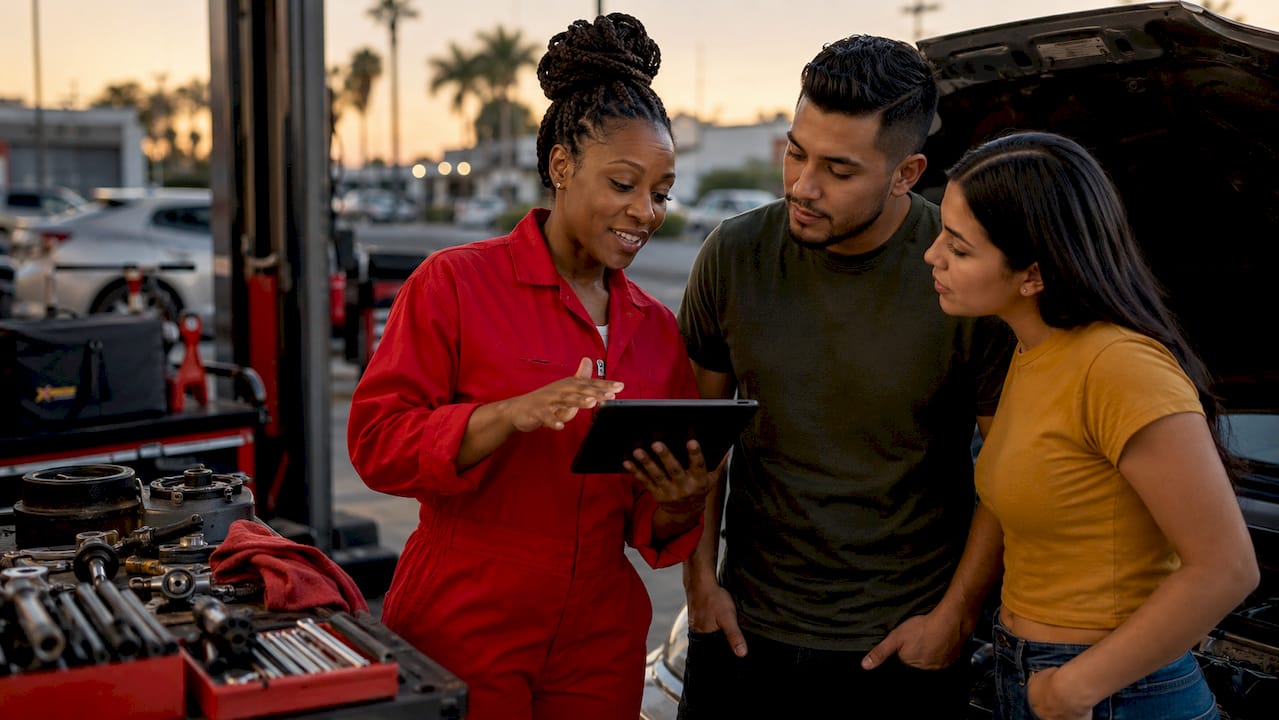
Walking into a second shop empty-handed wastes everyone’s time. Organized documentation gives the second mechanic a clear picture and produces a more accurate assessment.
Follow these steps before your car repair consultation:
- Request a written, itemized estimate from the first shop. Every part, every labor charge, and every fee should appear as a separate line item. A single lump sum tells you nothing useful.
- Ask for visual proof. Photos, videos, or a digital vehicle inspection report showing the actual problem are standard at transparent shops. If the first shop refuses, that itself is useful information.
- Write down all trouble codes and symptoms. Note when the problem started, what it sounds or feels like, and any warning lights on your dashboard.
- Record the first shop’s exact diagnosis. Get it in writing. Verbal summaries get distorted over time.
- Gather your vehicle’s service history. Prior repairs, mileage records, and maintenance logs help the second mechanic spot patterns the first shop may have missed.
| Document | Why it matters |
|---|---|
| Itemized written estimate | Lets you compare part costs and labor hours line by line |
| Photos or inspection video | Confirms the problem is real and visible |
| Trouble codes and symptoms | Gives the second mechanic a starting point without bias |
| First shop’s written diagnosis | Prevents miscommunication and keeps comparisons accurate |
| Vehicle service history | Reveals patterns and prior repairs that affect the diagnosis |
Pro Tip: Online quote review services can assess your repair estimate in as little as 10–15 minutes for about $1, giving you a non-conflicted report on whether the pricing is fair before you ever visit a second shop.
How do you find a trustworthy source for a second opinion?
Not all second opinions carry equal weight. Where you go matters as much as the fact that you go.
- Choose ASE-certified technicians. ASE certification means a mechanic has passed standardized tests in specific repair categories. It is the most recognized credential in American auto repair.
- Look for RepairPal Certified shops. RepairPal certification requires shops to meet quality and pricing standards. It adds a layer of accountability beyond basic licensing.
- Use online diagnostic services for a fast first filter. Online second opinion services often identify missing labor hours, unnecessary add-ons, or cheaper repair paths before you schedule an in-person visit. They are not a replacement for hands-on diagnosis, but they are an excellent starting point.
- Check reviews and certifications together. A shop with strong reviews and verifiable credentials is far more reliable than one with only one or the other.
- Avoid internet forums as your primary source. Forum advice lacks verified context and vehicle-specific evaluation. What fixed someone else’s car may not apply to yours.
Pro Tip: When you call a second shop, do not lead with the first shop’s diagnosis. Describe your symptoms and let the second mechanic form an independent conclusion. This removes bias and produces a cleaner comparison.
Diagnostic mistakes happen even at reputable shops. Many warning light issues can be clarified remotely, which means a quick online review can save you an unnecessary in-person visit. Use that option before you spend time driving across town.
You can also learn how repair estimates are built to spot inconsistencies before you even reach a second shop.
Step-by-step process for getting and evaluating a second opinion
A structured approach turns a potentially stressful process into a calm, informed one.
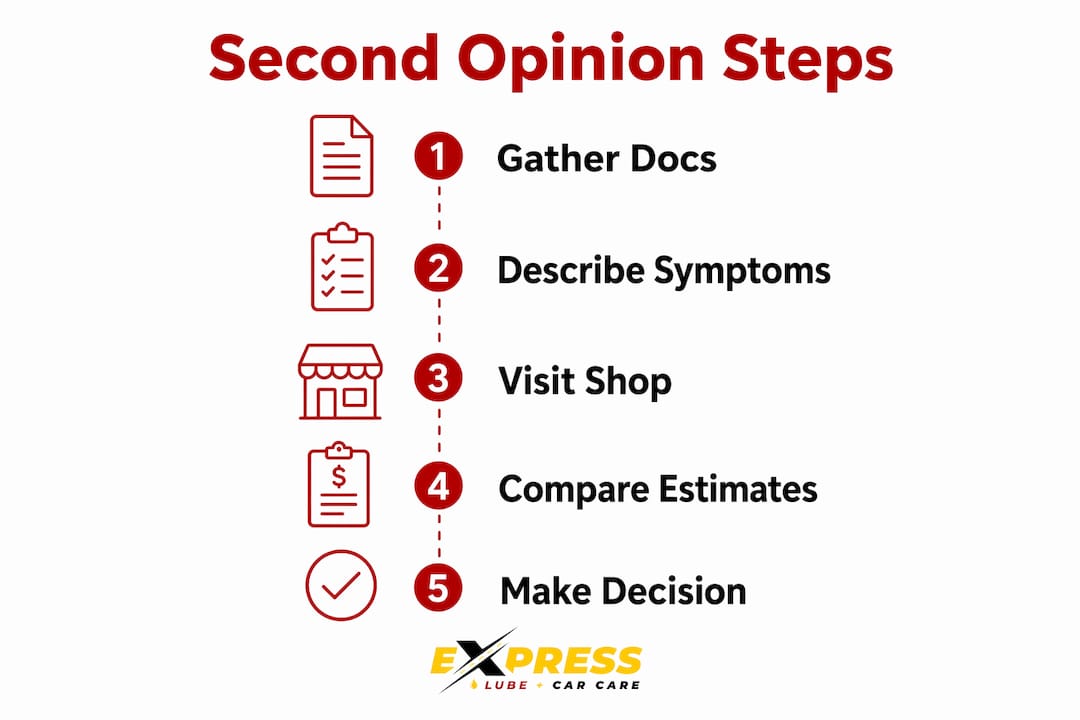
- Gather your documents first. Use the checklist from the previous section. Do not skip this step.
- Contact the second shop by phone before visiting. Confirm they handle your vehicle type and the specific repair in question. Ask about their diagnostic fee upfront.
- Describe symptoms, not the first diagnosis. Let the second mechanic work independently. Share the first estimate only after they have given you their own assessment.
- Ask specific questions during the consultation. How many labor hours does this repair require? Are OEM or aftermarket parts included? What is the warranty on parts and labor?
- Compare labor hours against industry flat-rate guides. Excessive labor hours are a major red flag for overcharging. The flat-rate guide sets the industry standard for how long a specific repair should take.
- Evaluate the findings side by side. Use this framework:
| Scenario | What it likely means | Recommended action |
|---|---|---|
| Both shops agree on diagnosis and price | The first estimate is fair | Approve the repair with confidence |
| Same diagnosis, lower price at second shop | First shop is overcharging | Negotiate or switch shops |
| Different diagnoses entirely | One shop may be wrong | Seek a third opinion or request more evidence |
| Second shop finds fewer repairs needed | First shop may be upselling | Get the second shop’s findings in writing |
- Use the second opinion to negotiate. Armed with a competing estimate, you have real leverage. Negotiating repair prices with documented evidence is far more effective than negotiating on instinct alone.
Pro Tip: Treat every repair estimate as a decision you own, not a deadline you must obey. No estimate is a demand. You have the right to take time, compare options, and decide on your terms.
Common mistakes to avoid when seeking a second opinion
Even car owners who do the right thing by seeking a second opinion can undermine the process with avoidable errors.
- Sharing the first diagnosis too early. Telling the second mechanic what the first shop found before they assess the car introduces bias. You want an independent read, not a confirmation.
- Ignoring documentation. Showing up without a written estimate or symptom notes forces the second mechanic to work blind. The result is a less accurate comparison.
- Choosing the cheapest option automatically. The lowest price is not always the right price. A quote that is suspiciously low may reflect cut corners, inferior parts, or hidden fees that appear later.
- Relying on forum advice. Internet forums are full of well-meaning but unverified opinions. They lack the vehicle-specific context a trained mechanic brings to the table.
- Rushing under pressure. Shops that push you to decide immediately are counting on urgency to override your judgment. Slow down. A legitimate safety concern will still be a safety concern tomorrow.
- Skipping follow-up documentation. After the repair is done, keep all invoices and inspection reports. These records protect you if the same issue reappears and help you spot costly repair mistakes before they compound.
Conflicting opinions between two mechanics feel confusing, but they are actually useful data. A disagreement tells you the diagnosis is not straightforward and that more evidence, or a third opinion, is warranted. Do not let the conflict paralyze you. Let it guide you toward more questions.
Key Takeaways
Getting a second opinion on car repair is the single most effective way to avoid overpaying for misdiagnosed or unnecessary vehicle work.
| Point | Details |
|---|---|
| Second opinions prevent costly errors | A misdiagnosis can cost thousands; verification protects your budget before you commit. |
| Documentation is the foundation | Gather itemized estimates, photos, and trouble codes before approaching any second shop. |
| ASE and RepairPal certification matter | Choose credentialed mechanics to get an unbiased, qualified assessment. |
| Compare labor hours, not just totals | Excessive labor time is a key overcharging signal that total price alone will not reveal. |
| Treat estimates as your decision | No repair quote is a deadline. Take time, compare findings, and approve on your terms. |
What I’ve learned from watching car owners navigate repair estimates
I have seen the same pattern repeat itself more times than I can count. A driver gets a scary estimate, feels the pressure of a shop’s urgency, and approves thousands of dollars in repairs without a second thought. Then, weeks later, they find out the actual problem was something far simpler.
The uncomfortable truth is that most car owners do not realize they have options. They walk into a shop, hear a diagnosis, and treat it like a verdict. It is not. A repair estimate is a proposal, and you are allowed to question it, verify it, and walk away from it.
What actually works is treating the second opinion process the same way you would treat any significant financial decision. You would not buy a house without an inspection. You would not accept a medical diagnosis without considering a specialist. Car repairs deserve the same level of scrutiny, especially when the bill climbs past a few hundred dollars.
The shops worth trusting are the ones that welcome your questions. They show you the problem. They hand you a detailed invoice without being asked. They do not flinch when you say you want a second look. That kind of transparency is not a bonus feature. It is the baseline standard every car owner should expect.
— Hassan
Expresslubearlington: a trusted starting point for repair decisions
When you are trying to make sense of a repair estimate, having a shop you can trust makes all the difference.
Expresslubearlington is a RepairPal Certified Shop and a CarFax Top-Rated Service Center staffed by ASE-certified technicians. That means every diagnosis comes with documented reasoning, not pressure. Whether you need a second look at a repair estimate or want to understand how to reduce repair costs without sacrificing quality, the team at Expresslubearlington gives you straight answers. Drivers across the DFW area count on that kind of honesty every day. Stop by and see what a transparent repair experience actually looks like.
FAQ
What is a second opinion in auto repair?
A second opinion in auto repair is an independent assessment of your vehicle’s problem and repair cost from a different mechanic or diagnostic service. It verifies whether the original diagnosis and estimate are accurate and fair.
Is a second opinion on car repairs worth it?
A second opinion is worth it whenever the repair cost is significant or the diagnosis feels unclear. Cases exist where misdiagnoses cost nearly $9,000 in unnecessary repairs that a second look would have prevented.
How do I get a second mechanic opinion without offending the first shop?
Simply tell the first shop you need time to review the estimate before approving. Reputable shops understand this. You are not required to explain your reasons or apologize for making a careful financial decision.
Can I get a second opinion online?
Online diagnostic and quote review services can assess repair estimates in 10–15 minutes for about $1. They work best as a first filter before an in-person visit, not as a replacement for hands-on diagnosis.
What should I compare when evaluating two repair estimates?
Compare labor hours, part costs, and the specific diagnosis. Excessive labor hours relative to industry flat-rate guides are the clearest signal of overcharging, more reliable than comparing total price alone.