

TL;DR:
- Preventive vehicle maintenance involves scheduling routine inspections and services to prevent breakdowns. It includes oil changes, tire rotations, brake checks, and fluid top-offs based on manufacturer recommendations to extend vehicle lifespan and safety. A trusted shop with certified technicians ensures proper tracking and cost-effective upkeep.
Preventive vehicle maintenance means scheduling routine inspections and services before problems develop, not after your car leaves you stranded. NHTSA defines it as tune-ups, oil changes, battery checks, and tire rotations done per the manufacturer’s recommendations to prevent breakdowns. Think of it as your car’s regular health check-up — catch the small stuff now, avoid the expensive stuff later. Here’s what that looks like in practice:
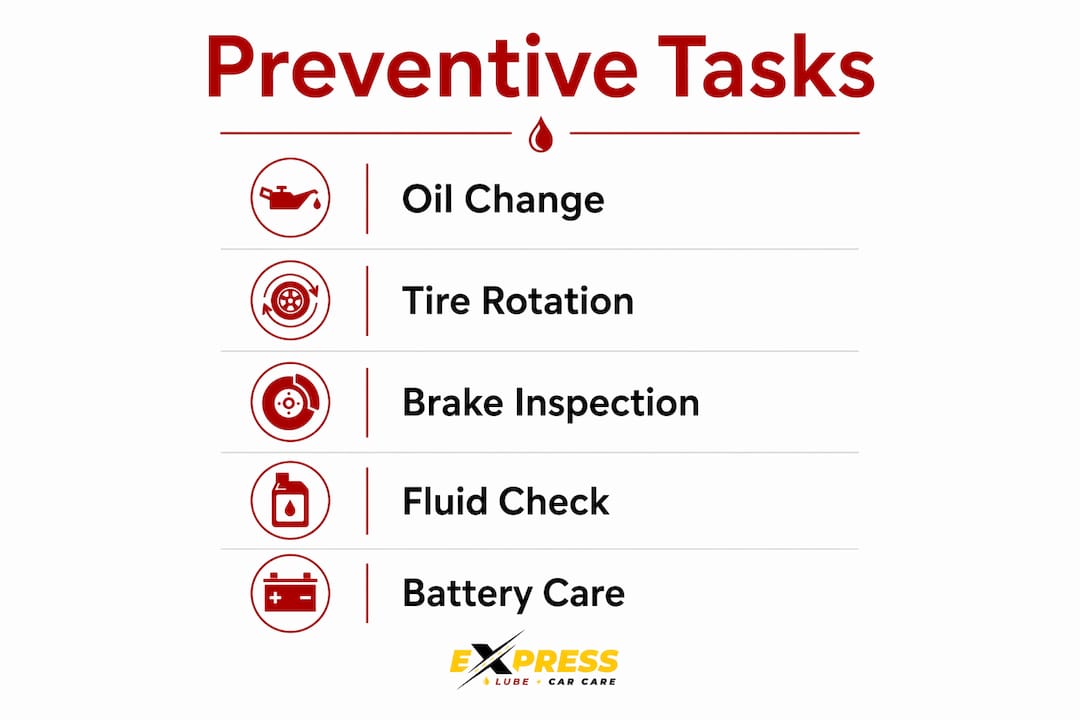
- Oil and filter change — the single most impactful service you can do
- Tire rotation and pressure check — uneven wear costs you tires and fuel
- Brake inspection — pads, rotors, and fluid all degrade over time
- Battery and terminal check — especially before summer heat or winter cold
- Fluid top-offs — coolant, transmission, brake, and power steering
- Cabin and engine air filters — dirty filters hurt performance and air quality
- Lights and wipers — safety items that are easy to overlook
Your next step: pull out your owner’s manual, find the manufacturer’s service schedule, and book your next appointment with an ASE-certified shop. Consumer Reports and RepairPal-certified shops are solid starting points for finding technicians you can trust. CarFax Top-Rated recognition adds another layer of confidence when you’re choosing where to go.
Table of Contents
- What does preventive vehicle maintenance actually mean?
- Why preventive maintenance matters more than most drivers think
- What are the most common preventive maintenance tasks?
- How often should you schedule preventive maintenance?
- Which maintenance tasks can you do yourself?
- What does preventive maintenance typically cost?
- Why shop credentials matter when choosing a service center
- Key Takeaways
- A perspective worth considering
- Expresslubearlington: your preventive maintenance partner in Arlington
- Useful sources
- FAQ
What does preventive vehicle maintenance actually mean?
Preventive car maintenance covers every scheduled inspection and service designed to keep your vehicle running before something breaks. The owner’s manual schedule is the authoritative source — not a blanket mileage rule, not a neighbor’s advice, not a shop’s upsell. Every manufacturer engineers specific intervals for their engine, transmission, and systems, and those intervals are what matter.
The scope is broader than most drivers realize. Beyond oil changes, it includes tire rotations, brake inspections, fluid services, belt and hose checks, alignment, filters, lights, wipers, HVAC checks, and exhaust inspections. For EVs, the list shifts: no oil changes, but suspension, tires, brake system health, battery state-of-charge management, and ADAS calibration still require attention.
It helps to know where preventive maintenance sits among its cousins. Reactive maintenance means fixing something after it fails — the most expensive and stressful option. Predictive maintenance uses sensor data and diagnostics to service a part only when it shows signs of imminent failure, common in fleet and commercial settings. Preventive maintenance sits in the middle: fixed intervals, scheduled in advance, no drama.
Why preventive maintenance matters more than most drivers think
Safety is the clearest reason to stay on schedule. Worn brakes, bald tires, and failing lights are direct contributors to crashes. The FMCSA found that motor carriers flagged for vehicle maintenance issues have a 65% greater future crash rate than the national average — a number that translates directly to passenger vehicles too.
The financial case is just as compelling. Shifting from reactive to planned maintenance avoids emergency premiums, towing fees, and the kind of downtime that turns a $40 belt replacement into a $2,000 engine repair. Planned work is predictable; reactive repairs are not.
The numbers back this up. According to car repair research, 28% of drivers delayed maintenance in 2023, increasing the risk of reactive repairs. The average cost per reactive repair incident exceeded $400, which is often significantly higher than the preventive service that would have avoided the problem… A timing belt that gets replaced on schedule costs a fraction of the engine damage it prevents if it snaps.
Here’s a quick list of what you actually gain from staying current:
- Longer vehicle life — well-maintained cars routinely exceed 200,000 miles
- Better resale value — a complete service record documented through CarFax is a genuine selling point
- Lower long-term costs — regular upkeep saves money compared to emergency repairs
- Reliability — fewer surprises on the road
- Safety — brakes, tires, and lights that actually work when you need them
Keeping records matters here too. ASE-certified shops and RepairPal-certified facilities document every service, which protects your warranty and builds the paper trail that supports resale value.
What are the most common preventive maintenance tasks?
Let’s walk through the services your vehicle actually needs, and why each one earns its place on the list.
Oil and filter change
Engine oil lubricates moving parts and carries heat away from the engine. Over time it breaks down and collects contaminants. Skipping changes accelerates wear on bearings, camshafts, and pistons. Modern engines with synthetic oil can often safely extend intervals well beyond traditional mileage recommendations, but your owner’s manual is the only authority on what your specific engine needs. — but your owner’s manual is the only authority on what your specific engine needs.
Tire rotation and pressure check
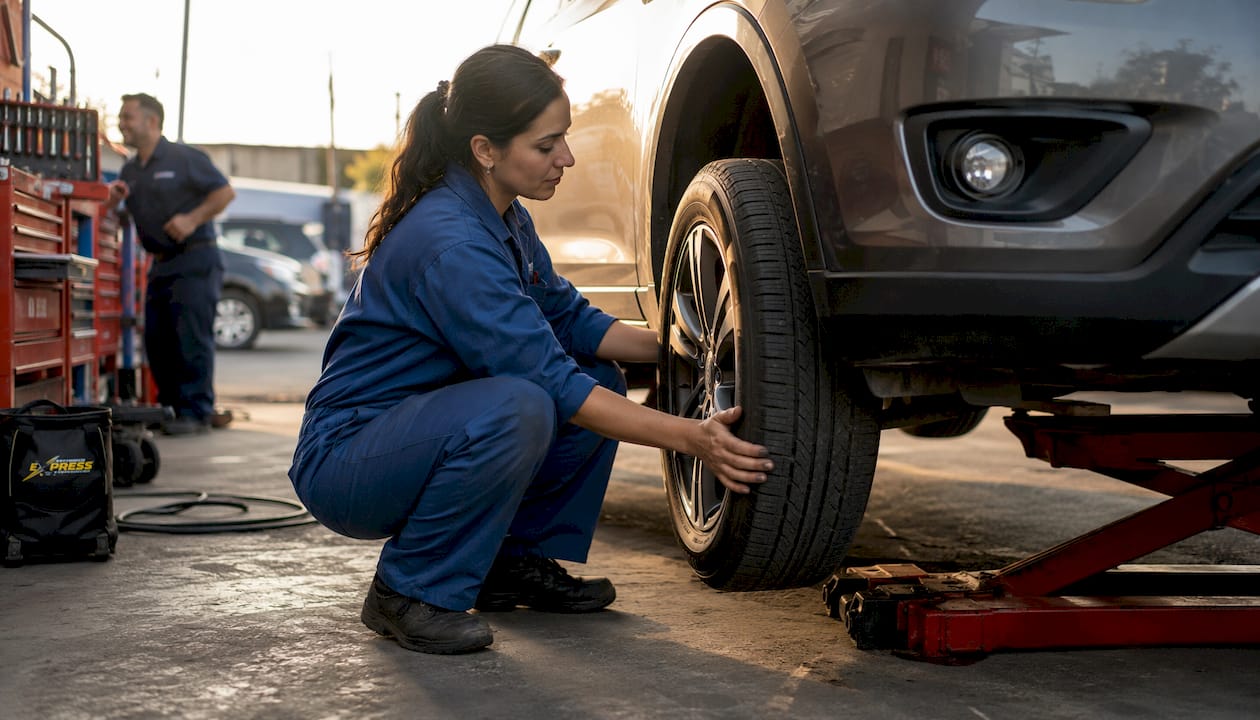
Tires wear unevenly depending on their position. Regular rotations at intervals recommended by your owner’s manual help even out wear and extend tire life. Pressure matters just as much: underinflated tires reduce fuel economy, generate heat, and increase blowout risk.
Brake inspection
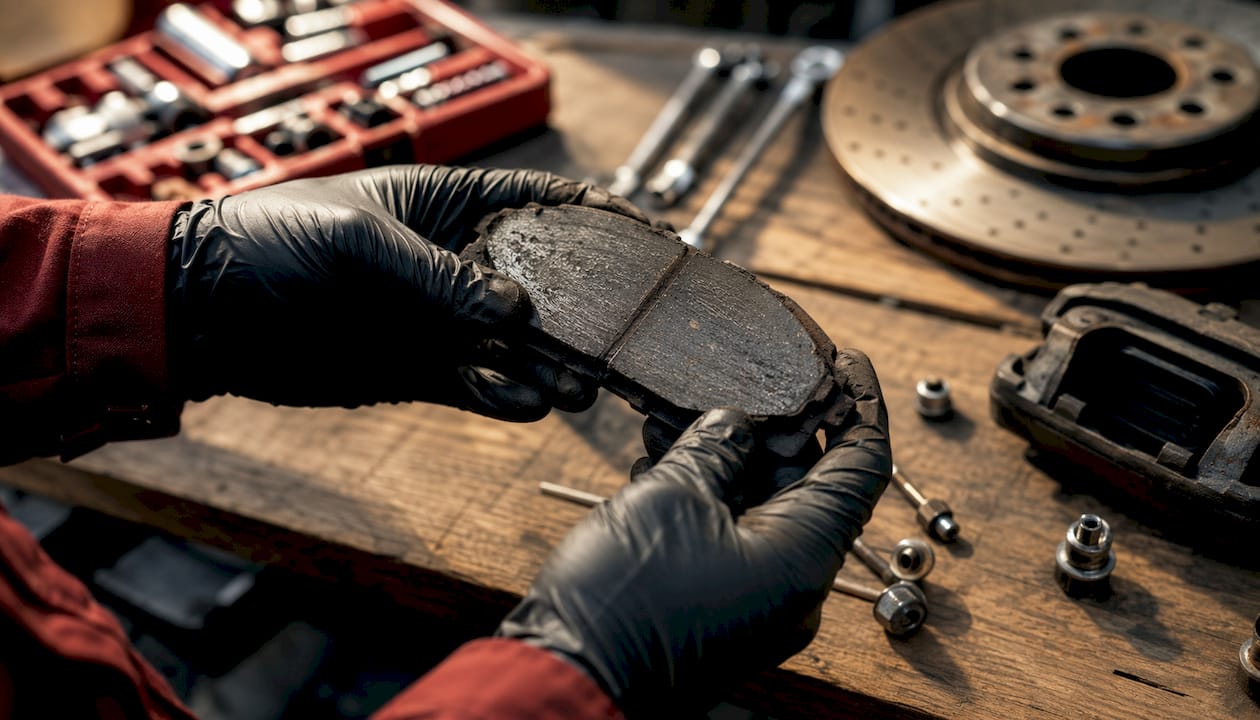
Brake pads, rotors, calipers, and fluid all wear or degrade. Catching a worn pad early costs you a pad replacement. Missing it costs you rotors, calipers, and sometimes a brake failure. If you hear a squeal or feel a pull when stopping, that’s your car sending up a flare — don’t ignore it.
Battery and terminals
Heat kills batteries in Texas summers; cold kills them everywhere else in winter. A quick terminal cleaning and voltage check can tell you whether your battery is near the end of its life before it leaves you stranded in a parking lot.
Cabin and engine air filters
A clogged engine air filter starves the engine of clean air, hurting fuel economy and performance. The cabin filter affects the air you breathe inside the car. Both are inexpensive to replace and easy to overlook.
Fluid services
Coolant, transmission fluid, brake fluid, and power steering fluid all degrade over time. Coolant prevents overheating and corrosion; old brake fluid absorbs moisture and raises the boiling point, reducing stopping power. Each fluid has its own service interval in your owner’s manual.
Belts and hoses
A serpentine belt drives your alternator, power steering pump, and AC compressor. A timing belt (or chain) keeps your engine’s valves and pistons in sync. When a timing belt fails without warning, it can destroy an engine in seconds. Hoses carry coolant and can crack or swell with age.
Wheel alignment
Misaligned wheels cause uneven tire wear and can pull the car to one side. Alignment checks are especially important after hitting a significant pothole or curb.
Lights and wipers
Dead headlights and worn wiper blades are safety issues, not cosmetic ones. Both are quick, inexpensive fixes that most drivers put off longer than they should.
EV-specific note
Electric vehicles skip oil changes entirely, but they still need tire rotations, brake inspections (regenerative braking extends pad life but doesn’t eliminate wear), suspension checks, and battery health monitoring. ADAS systems — lane-keeping assist, automatic emergency braking — require professional calibration after certain repairs or collisions.
Pro Tip: Use your owner’s manual to confirm the correct oil grade and fluid specifications for every service. Using the wrong grade can void your warranty and cause premature wear.
How often should you schedule preventive maintenance?
The honest answer: follow your owner’s manual. That said, here’s a practical framework most vehicles fit into.
Monthly or before long trips:
- Check tire pressure (including the spare)
- Inspect all exterior lights
- Check windshield washer fluid
- Look under the car for fluid leaks
- Glance at belts and hoses for visible cracking
Every 3,000–7,500 miles:
- Oil and filter change (interval depends on oil type and manufacturer spec)
- Tire rotation
- Brake inspection at the shop
Every 15,000–30,000 miles:
- Engine and cabin air filter replacement
- Fuel system inspection
- Battery load test
Every 30,000–60,000 miles:
- Coolant flush
- Transmission service (varies widely by vehicle)
- Spark plug replacement (on applicable engines)
- Belt and hose inspection or replacement
The Pennsylvania DMV’s maintenance checklist recommends weekly, monthly, and annual checks as a baseline — and explicitly points drivers to the owner’s manual for scheduled services. AAA’s time-stamped maintenance checklist follows a similar cadence and flags safety-critical items that need professional attention on a schedule.
Pro Tip: Your owner’s manual lists two schedules: “normal” and “severe duty.” If you drive in stop-and-go traffic, tow frequently, or operate in extreme heat (hello, DFW summers), you likely fall under severe duty — shorten your intervals accordingly.
Which maintenance tasks can you do yourself?
Some checks are genuinely DIY-friendly. Others need a lift, calibrated tools, or a technician’s trained eye. Knowing the difference protects your safety and your warranty.
Safe to do at home:
- Checking and inflating tire pressure
- Topping off windshield washer fluid
- Cleaning battery terminals with a wire brush and baking soda solution
- Checking all exterior lights and replacing bulbs on accessible housings
- Visual inspection of belts and hoses for obvious cracking or swelling
- Looking under the car for fluid puddles
Leave these to a professional:
- Brake system overhauls, rotor resurfacing, or caliper replacement
- Transmission fluid flushes and filter changes
- Coolant system flushes
- ADAS calibration after windshield replacement or collision repair
- Suspension and steering component replacement
- Any diagnostic work requiring an OEM-level scanner
A note on warranties: some manufacturer warranties require that certain services be performed by a certified shop and documented. Keeping records of every service, whether DIY or professional, protects you if a warranty claim ever comes up. Mobile repair professionals can handle some in-between tasks, but complex system work still belongs in a shop with a lift and proper equipment.
Pro Tip: Take a photo of your odometer every time you perform a DIY check. Date it and store it in a folder on your phone. It’s a simple habit that builds a credible maintenance record.
What does preventive maintenance typically cost?
Costs vary by vehicle, location, and parts used, but here’s a realistic range for common services in the U.S.
| Service | Typical Cost Range | Typical Time |
|---|---|---|
| Oil and filter change (conventional) | — | 30 min |
| Oil and filter change (full synthetic) | — | 30 min |
| Tire rotation | — | 30 min |
| Brake pad replacement (per axle) | — | 60 min |
| Battery replacement | — | 30–60 min |
| Cabin or engine air filter | — | 15–30 min |
| Coolant flush | — | 60 min |
| Wheel alignment | — | 45 min |
Synthetic oil, OEM parts, and higher labor rates in metro areas push costs toward the top of those ranges. Older vehicles with harder-to-source parts can go higher. The fleet maintenance research from Fleetio makes the cost argument clearly: planned maintenance carries predictable labor and parts costs, while reactive repairs add emergency premiums and towing fees on top of the repair itself.
The math is simple: According to research, 28% of drivers delayed maintenance in 2023, increasing the risk of reactive repairs. The average cost per reactive repair incident exceeded $400, which is often significantly higher than the preventive service that would have avoided the problem. — often several times the cost of the service that would have prevented it.
Fleet maintenance management data consistently shows that planned maintenance programs reduce total repair spend and maximize vehicle uptime, a principle that applies just as directly to a single family car as to a commercial fleet.
Why shop credentials matter when choosing a service center
Not every shop is equal, and the credentials on the wall tell you something real.
ASE certification means a technician has passed standardized tests administered by the National Institute for Automotive Service Excellence. It’s the industry benchmark for competence. An ASE-certified technician has demonstrated knowledge in specific areas — engine repair, brakes, electrical systems — not just logged hours on the job.
RepairPal certification signals that a shop meets standards for fair pricing, quality work, and customer satisfaction. RepairPal independently verifies shops, which gives you a layer of accountability beyond the shop’s own marketing.
CarFax Top-Rated Service Center recognition reflects customer reviews and service history documentation. When a shop records your services in a CarFax-linked system, that history follows your vehicle’s VIN — useful when you sell the car or need to verify service history for a warranty claim.
Shop warranties are another signal worth asking about. A shop that backs its work with a 24-month warranty is telling you something about its confidence in the quality of what it does.
- Ask: “Are your technicians ASE-certified?”
- Ask: “What warranty do you offer on parts and labor?”
- Ask: “Do you use OEM or aftermarket parts, and can I choose?”
- Ask: “Will this service be documented in my vehicle’s service record?”
Pro Tip: A shop’s willingness to answer those four questions clearly and without hesitation tells you more about their trustworthiness than any badge on the wall.
Key Takeaways
Preventive vehicle maintenance is the single most cost-effective thing you can do to protect your car’s safety, reliability, and long-term value.
| Point | Details |
|---|---|
| Follow the owner’s manual | Manufacturer intervals, not blanket mileage rules, are the authoritative source for your vehicle’s schedule. |
| 28% of drivers delay service | Delayed maintenance raises the risk of reactive repairs averaging over $400 per incident. |
| DIY has limits | Monthly checks are owner-friendly; brake overhauls, ADAS calibration, and fluid flushes need a certified shop. |
| Credentials protect you | ASE certification, RepairPal status, and CarFax recognition are meaningful trust signals when choosing a shop. |
| Expresslubearlington covers it all | ASE-certified technicians, a 24-month warranty, and RepairPal/CarFax recognition make it a reliable choice for DFW drivers. |
A perspective worth considering
Here’s something most maintenance guides won’t tell you: the biggest enemy of preventive maintenance isn’t laziness. It’s the illusion that your car is fine because nothing has gone wrong yet.
Engines don’t announce when oil is breaking down. Brake pads don’t send a calendar invite before they hit metal-on-metal. The whole point of scheduled maintenance is that you act before the symptom appears, not in response to it. That’s a fundamentally different mindset from how most people approach car care, and it’s the gap between drivers who spend $500 a year on maintenance and drivers who spend $3,000 on a single repair they “didn’t see coming.”
There’s also a trust problem in the industry worth naming. Plenty of shops use vague mileage rules or manufacturer-agnostic recommendations to sell services you may not need yet. The fix is simple: know your owner’s manual. When a shop recommends a service, ask which interval in your manual supports it. A good shop will show you. A shop that can’t answer that question is telling you something important.
Certification matters precisely because it creates accountability. ASE-certified technicians are tested, not just trained. RepairPal and CarFax recognition means a shop’s work is visible and documented. That transparency is what separates a shop you can trust from one you’re just hoping is honest.
Expresslubearlington: your preventive maintenance partner in Arlington
Drivers across the DFW area get a full-service preventive maintenance experience at Expresslubearlington, not just an oil change and a wave goodbye. The shop’s ASE-certified technicians handle everything on the checklist: oil and filter changes, tire rotations, brake inspections, fluid services, filter replacements, battery checks, and alignment. Every service is documented, and qualifying repairs come with a 24-month warranty that gives you real peace of mind.
Expresslubearlington holds RepairPal Certified Shop status and CarFax Top-Rated Service Center recognition — both earned through consistent, documented quality work and customer satisfaction. If cost is a concern, financing options are available so you can take care of your vehicle without putting it off. Ready to get on a schedule that actually protects your car? Book your next service at Expresslubearlington and let the ASE-certified team handle the rest.
Useful sources
| Source | What it covers |
|---|---|
| NHTSA — Summer Safety & Vehicle Tips | Official federal definition of preventive maintenance and recommended service types |
| FMCSA — Impact of Vehicle Maintenance on Safety | Research on how maintenance practices affect crash rates |
| Consumer Reports — Car Maintenance Checklist | Owner’s manual authority, service intervals, and practical checklist guidance |
| AAA — Time-Stamped Car Maintenance Checklist | Practical cadence for scheduled checks with safety-critical callouts |
| KBB — Car Maintenance Guide | Manufacturer schedule guidance, EV differences, and resale value tips |
| Pennsylvania DMV — Vehicle Maintenance Checklist | State-level weekly, monthly, and annual check recommendations |
| Fleetio — Preventive Maintenance Program Guide | Planned vs reactive maintenance cost analysis and fleet ROI data |
| Synchrony — Car Maintenance Checklist | Monthly-to-annual service cadence and record-keeping guidance |
| WiFiTalents — Car Repair Statistics | Data on delayed maintenance rates and average reactive repair costs |
| Expresslubearlington — Benefits of Preventive Car Maintenance | Shop-backed overview of preventive maintenance benefits for DFW drivers |
FAQ
What does a PM service consist of?
A preventive maintenance (PM) service typically includes an oil and filter change, tire rotation, brake inspection, battery check, fluid top-offs, and a visual inspection of belts, hoses, lights, and wipers — all performed on the intervals your owner’s manual specifies.
How often should you get preventive maintenance done?
Most vehicles need an oil change every 5,000–10,000 miles depending on oil type, a tire rotation every 5,000–7,500 miles, and a more thorough inspection at 15,000, 30,000, and 60,000-mile milestones. Your owner’s manual sets the exact schedule for your specific vehicle.
Is preventive maintenance worth the cost?
Yes. Research shows that 28% of drivers who delayed maintenance faced reactive repair costs averaging over $400 per incident, often far exceeding what the skipped service would have cost.
What’s the difference between preventive and reactive maintenance?
Preventive maintenance is scheduled in advance at fixed intervals to stop problems before they start. Reactive maintenance means repairing something after it has already failed, which typically costs more and causes unexpected downtime.
Can Expresslubearlington handle my full preventive maintenance schedule?
Yes. Expresslubearlington’s ASE-certified technicians cover the full range of scheduled services, from oil changes and tire rotations to brake inspections and fluid flushes, backed by a 24-month warranty on qualifying work.