

TL;DR:
- Scheduling preventive car maintenance helps avoid costly repairs and extends vehicle lifespan. Following manufacturer-recommended mileage intervals and adjusting for severe conditions ensures optimal performance and safety. Keeping detailed service records and booking appointments in advance supports resale value and warranty protection.
Scheduling preventive car maintenance is the practice of performing regular, manufacturer-recommended services on your vehicle before problems develop, not after they strand you on the side of the road. The industry term for this approach is preventive maintenance (PM), and it covers everything from oil changes and brake inspections to timing belt replacements and fluid flushes. Owners of gas-powered vehicles who follow a consistent PM routine spend an average of $1,300 annually, compared to $3,000–$5,000 on reactive repairs for cars that get ignored until something breaks. Your owner’s manual and tools like the YouCanic maintenance schedule lookup make it easier than ever to know exactly what your car needs and when.
What does a preventive car maintenance schedule look like by mileage?
Most drivers think of car maintenance as a single event, like an oil change once a year. The reality is that your vehicle runs on a layered schedule of services tied to both mileage and time, and missing one layer can set off a chain reaction of expensive failures.
According to Consumer Reports’ car maintenance checklist, most vehicles require routine services at specific mileage milestones. The average car on American roads is now 12.6 years old, which makes sticking to those intervals more critical than ever.
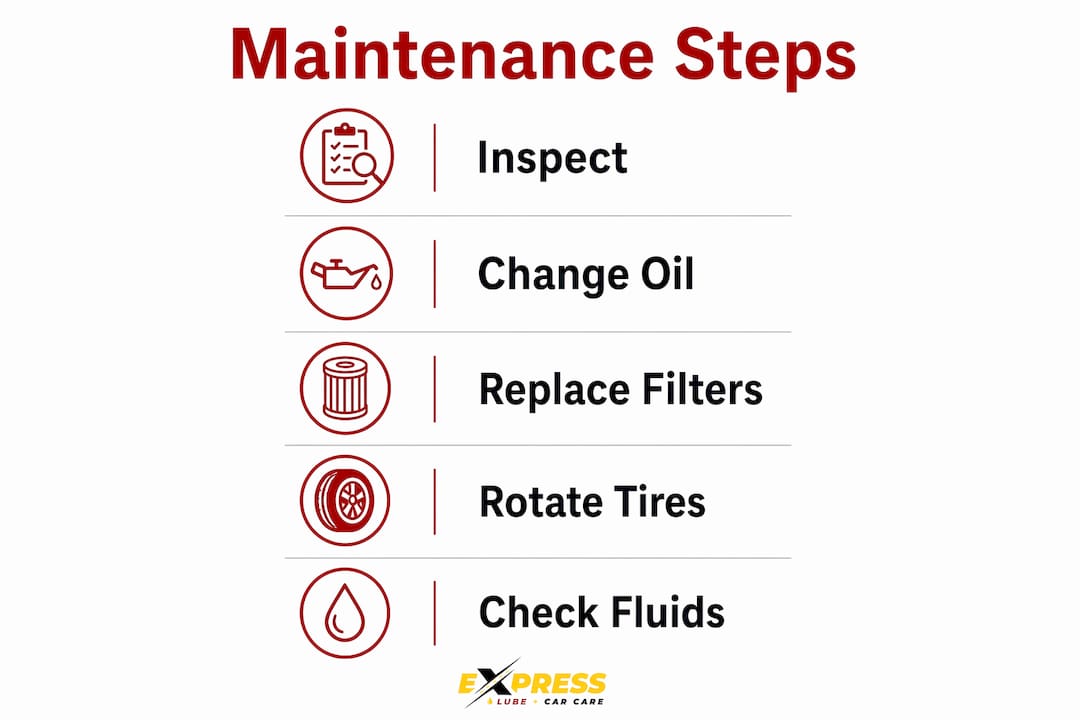
Here is a practical overview of the major service milestones:
| Service | Typical Interval | Notes |
|---|---|---|
| Oil and filter change | 5,000–10,000 miles | Depends on oil type and vehicle age |
| Tire rotation | 5,000–7,500 miles | Often bundled with oil changes |
| Brake inspection | 15,000–30,000 miles | Sooner if you notice squealing or pulling |
| Air filter replacement | 15,000–30,000 miles | More frequent in dusty climates |
| Cabin air filter | 15,000–25,000 miles | Often overlooked but affects HVAC performance |
| Transmission fluid | 30,000–60,000 miles | “Lifetime” fluid label does not mean skip it |
| Coolant flush | 30,000–50,000 miles | Critical for preventing overheating |
| Timing belt replacement | 60,000–100,000 miles | Failure here can destroy your engine |
One detail that surprises many car owners: fluids sometimes labeled “lifetime” actually need replacement by 60,000–100,000 miles. Transmission fluid, in particular, breaks down under heat and stress, and skipping the drain-and-fill can lead to a $3,000+ transmission rebuild.
Pro Tip: Always pull your owner’s manual before booking any service. Manufacturer intervals are specific to your engine, oil type, and driving conditions. Generic advice from a sticker on your windshield is a starting point, not the final word.
How do you customize your car maintenance schedule for your driving habits?
Not every driver fits the “normal” category, and your car’s wear rate reflects that honestly. The factory maintenance schedule assumes average conditions: moderate temperatures, mixed highway and city driving, and no heavy loads. If your reality looks different, your service intervals need to adjust.
Severe driving conditions can cut recommended service intervals by roughly 50%. That is not a minor adjustment. It means an oil change due at 7,500 miles under normal conditions may need to happen at 3,750 miles if you qualify as a severe-duty driver.
Conditions that qualify as severe driving include:
- Frequent short trips under 5 miles, especially in cold weather
- Stop-and-go city traffic for the majority of your commute
- Towing a trailer or hauling heavy loads regularly
- Driving in extreme heat (Texas summers count) or extreme cold
- Operating in dusty, sandy, or off-road environments
Vehicles older than 2010 or running conventional oil generally need oil changes every 5,000 miles. Newer models using full synthetic oil can safely extend that interval to 7,500–10,000 miles. Knowing which category your car falls into saves you money and protects your engine at the same time.
Tools like the BestCarAdvisor maintenance schedule generator and the YouCanic VIN-based lookup let you enter your specific vehicle and driving profile to generate a tailored service calendar. These are free and take about two minutes to use. For a deeper look at how oil type affects your intervals, the Expresslubearlington guide on synthetic vs. regular oil breaks it down clearly.
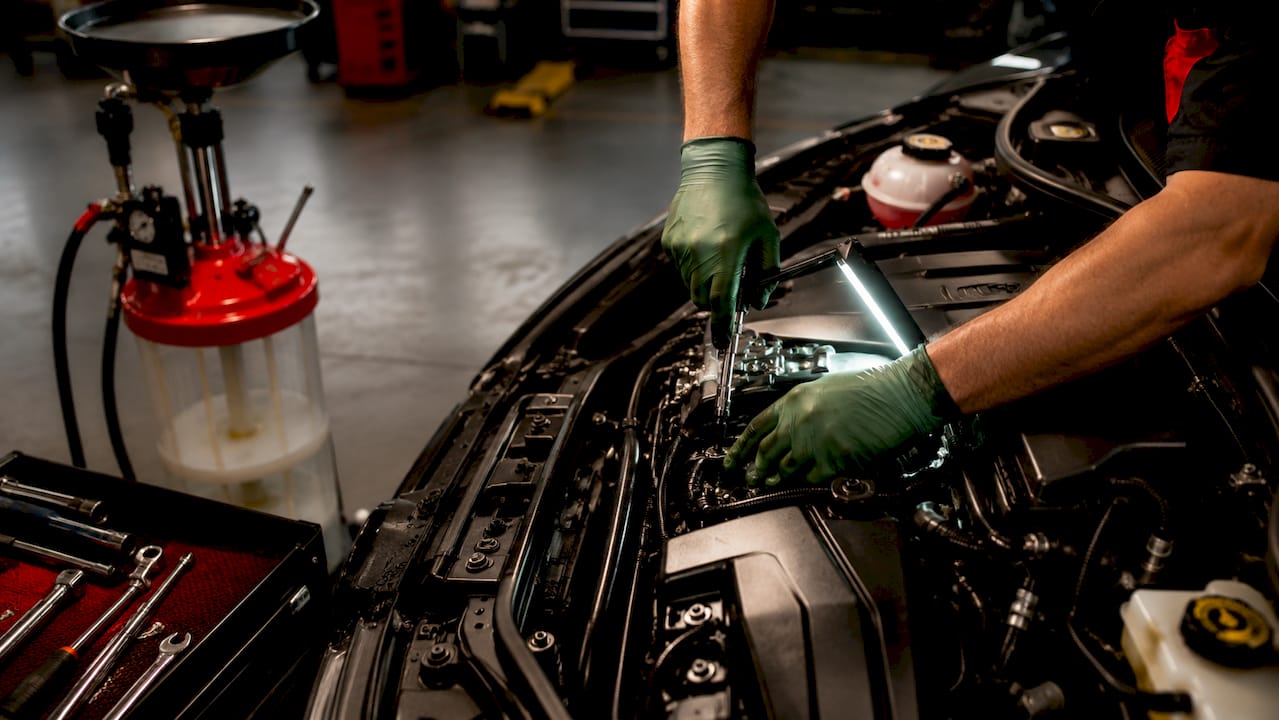
Pro Tip: Keep a simple log, either a notes app on your phone or a small notebook in your glove box, recording every service date, mileage, and what was done. This protects your warranty and gives you a clear picture of what is coming due next.
How to set up and follow a preventive maintenance routine
Setting up a routine sounds complicated, but it comes down to five straightforward steps. Do this once, and you will never wonder again whether your car is overdue for service.
-
Pull your official maintenance schedule. Find it in your owner’s manual or look it up by VIN at a resource like YouCanic. This is your source of truth, not the dealer’s service reminder sticker.
-
Record your current mileage and last known services. If you bought the car used and have no records, start fresh from today’s mileage and treat it as a reset point.
-
Classify your driving honestly. Review the severe conditions list above. If two or more apply to you, use the severe-duty intervals from your owner’s manual.
-
Schedule your next three service appointments now. Do not wait until the oil light comes on. Book your oil change, tire rotation, and brake inspection in advance. Treat them like doctor appointments.
-
File every service receipt. A meticulous maintenance log is the most effective way to protect your resale value and warranty coverage. Buyers and dealers both want to see documented proof of consistent care.
When choosing a service provider, bring your OEM schedule to the appointment. Many shops bundle routine services into flat-rate menus that include items your car does not actually need yet. Knowing your schedule protects you from paying for non-essential upsells. For a full breakdown of what to expect at each mileage milestone, the Expresslubearlington car maintenance schedule by mileage guide is a solid reference.
What mistakes do drivers make when scheduling car maintenance?
Even well-intentioned car owners fall into a few predictable traps. Knowing them ahead of time keeps your schedule accurate and your wallet intact.
“The 3,000-mile oil change is one of the most persistent myths in automotive care. Modern engines and synthetic oils have made that interval obsolete for most vehicles. Following it costs you money without adding protection.” — Consumer Reports
The most common scheduling mistakes include:
- Following the 3,000-mile oil change rule. Drivers who follow this outdated myth overpay for unnecessary services. Most modern vehicles need changes every 7,500–10,000 miles with synthetic oil.
- Skipping the timing belt. This is the single most dangerous omission on a maintenance schedule. A snapped timing belt can bend valves, destroy pistons, and total your engine. Do not treat it as optional.
- Relying on dealer stickers over manufacturer schedules. Service reminder stickers are marketing tools. Your owner’s manual is the authority.
- Ignoring “lifetime” fluid labels. Transmission fluid, coolant, and brake fluid all degrade over time regardless of what the label says.
- Doing nothing after missing a service. If you are overdue, catch up immediately. Start with the oil change, then work through the list by priority. Waiting longer compounds the damage.
If you are unsure which services are actually necessary at your next appointment, ask the technician to show you the OEM schedule item by item. A trustworthy shop will walk you through it. For more on separating necessary services from upsells, the best practices for car maintenance guide offers a useful outside perspective.
What are the real benefits of consistent preventive auto service?
The financial case for regular car upkeep is not subtle. Proactive, scheduled maintenance reduces vehicle breakdowns by 85% and cuts overall costs by 40% compared to reactive repair strategies. That is not a small margin. It is the difference between a $75 oil change and a $4,000 engine repair.
Beyond the numbers, consistent routine car care delivers four concrete advantages:
- Fewer surprise breakdowns. Catching a worn brake pad at inspection costs $150. Replacing rotors and calipers after ignoring it costs $600 or more.
- Better fuel efficiency. A clean air filter, fresh oil, and properly inflated tires can improve gas mileage by several percentage points. Over a year of driving, that adds up.
- Stronger resale value. A documented service history signals to buyers that the car was cared for. It justifies a higher asking price and speeds up the sale. The Expresslubearlington guide on boosting resale value covers this in detail.
- Improved safety. Fresh brake fluid, functional tires, and a working cooling system are not comfort features. They are safety systems. Neglecting them puts you and other drivers at risk.
Key Takeaways
Consistent preventive maintenance is the most cost-effective strategy for vehicle longevity, safety, and resale value.
| Point | Details |
|---|---|
| Follow mileage-based intervals | Use your owner’s manual, not stickers or myths, to set accurate service intervals. |
| Adjust for severe conditions | Frequent short trips, towing, or extreme heat can cut recommended intervals by 50%. |
| Never skip the timing belt | A failed timing belt can destroy your engine; replace it at 60,000–100,000 miles. |
| Keep a service log | Documented maintenance history protects your warranty and boosts resale value. |
| Proactive care cuts costs | Scheduled maintenance reduces breakdowns by 85% and total costs by 40%. |
Why I stopped guessing and started scheduling
I used to treat car maintenance the way most people treat dentist appointments: I went when something hurt. That approach cost me a transmission at 87,000 miles on a vehicle that had plenty of life left in it. The repair bill was $3,200. The transmission fluid change I skipped would have been $120.
What changed my thinking was not the bill itself. It was realizing that the failure was completely predictable and completely preventable. The manufacturer’s schedule had flagged that fluid for replacement at 60,000 miles. I just never looked.
Since then, I have kept a running log in my phone’s notes app: date, mileage, service performed, shop name. It takes 30 seconds after every appointment. That log has saved me from duplicate services, helped me catch a shop trying to sell me a coolant flush I had done six months earlier, and gave me solid documentation when I sold my last vehicle for $1,400 more than a comparable car without records.
The hardest part of building this habit is not the tracking. It is being honest about your driving conditions. Most people classify themselves as “normal” drivers when they are actually running severe-duty cycles every day. Short commutes in stop-and-go traffic, Texas heat, and occasional trailer towing all add up. Acknowledging that and adjusting your intervals accordingly is where the real protection happens.
My advice: spend 20 minutes this week pulling your owner’s manual, checking your current mileage against the schedule, and booking whatever is overdue. That 20 minutes is worth more than any extended warranty you could buy.
— Hassan
Keep your car on schedule with Expresslubearlington
If you are ready to stop guessing and start following a real maintenance plan, Expresslubearlington is set up to help you do exactly that. As a RepairPal Certified Shop and CarFax Top-Rated Service Center in the DFW area, the ASE-certified technicians there handle everything from oil changes and fluid flushes to brake inspections and timing belt replacements.
You can walk in with your OEM schedule and the team will work through it with you, no upsells, no pressure. Start with the oil change tips guide to understand what your engine actually needs, then book your next service before you leave the lot. Staying ahead of your car’s needs is always easier than catching up after something breaks.
FAQ
How often should I schedule preventive car maintenance?
Most vehicles need an oil change every 5,000–10,000 miles, with broader inspections at 15,000–30,000 mile intervals. Always follow your owner’s manual since intervals vary by oil type, vehicle age, and driving conditions.
What is the difference between normal and severe driving conditions?
Severe driving includes frequent short trips, stop-and-go traffic, towing, extreme temperatures, and dusty environments. Severe conditions can cut your recommended service intervals by roughly 50%.
Is the 3,000-mile oil change rule still accurate?
No. Most modern vehicles using synthetic oil can go 7,500–10,000 miles between changes. Following the outdated 3,000-mile rule costs money without adding protection for the majority of today’s engines.
What happens if I miss a scheduled maintenance service?
Catch up as soon as possible, starting with the oil change and working through overdue items by priority. Waiting longer compounds wear and increases the risk of a more expensive failure down the road.
How do I find my car’s official maintenance schedule?
Check your owner’s manual first. You can also look up your schedule by VIN using free tools like the YouCanic maintenance schedule lookup or the BestCarAdvisor maintenance schedule generator for a personalized service calendar.