
TL;DR:
- A red low oil pressure light signals an immediate engine emergency that requires stopping the vehicle instantly.
- Driving with low oil pressure risks severe engine damage or seizure, even after short distances.
That red low oil pressure light is not a “check it later” warning. It is a stop-the-car-right-now emergency. When oil pressure drops, your engine’s bearings and moving parts lose their protective film, and catastrophic damage can occur very quickly with continued driving. Even moving a short distance after the light appears risks permanent engine seizure.
Before you read another word, know the difference between two very different lights. A red oil warning means active low oil pressure, a genuine emergency. An amber or yellow oil light typically signals a low oil level or a routine service reminder, which is less urgent but still worth addressing promptly. If yours is red, act now.
If the red light just came on:
- Pull over to a safe spot and shut off the engine
- Do not restart until you have checked the oil level and confirmed the cause
Table of Contents
- Why does the low oil pressure light come on?
- What to do the moment the oil pressure light appears
- Other warning signs that come with dangerous oil pressure loss
- Common repairs and what they typically cost in the U.S.
- How mechanics actually diagnose low oil pressure
- Key Takeaways
- What the shop sees most often
- Express Lube & Car Care is ready when you need fast diagnostics
- Useful sources
- FAQ
Why does the low oil pressure light come on?
Several things can trigger the oil pressure warning light and they range from a quick fix to a serious mechanical failure. Understanding the likely cause helps you decide whether to add oil, call a tow, or head straight to a shop.

Low oil level is the most common culprit. Engines consume oil gradually, and older engines burn through it faster. If the level drops too low, the pump cannot maintain adequate pressure. A related issue is an oil leak, whether from a worn gasket, a loose drain plug, or a cracked seal. Burning oil through the combustion chamber produces the same result: not enough oil in the system.
Sludge and a clogged oil pickup screen are sneakier problems. When oil changes get skipped, old oil breaks down into thick sludge that blocks the pickup screen, starving the pump before it can even circulate oil. This is entirely preventable with regular service, and it is one of the reasons skipping oil changes can quietly set you up for a very expensive repair.
A failing oil pump cannot generate enough pressure regardless of how much oil is in the pan. Worn engine bearings create excessive clearance, so oil bleeds off too fast to maintain pressure. Neither of these is a roadside fix. A faulty oil-pressure sender (the sensor) is the good-news scenario: the actual pressure may be fine, but a bad sensor or damaged wiring sends a false alarm to the dash. That still requires diagnosis before you assume everything is okay.
Pro Tip: Never pour in a thicker-viscosity oil hoping it will “fix” low pressure on a modern engine. Modern engines are engineered for a specific oil weight, and the wrong viscosity can actually restrict flow to tight tolerances, making things worse. Always follow your owner’s manual.
What to do the moment the oil pressure light appears
Speed matters here. Follow these steps in order and do not skip ahead.
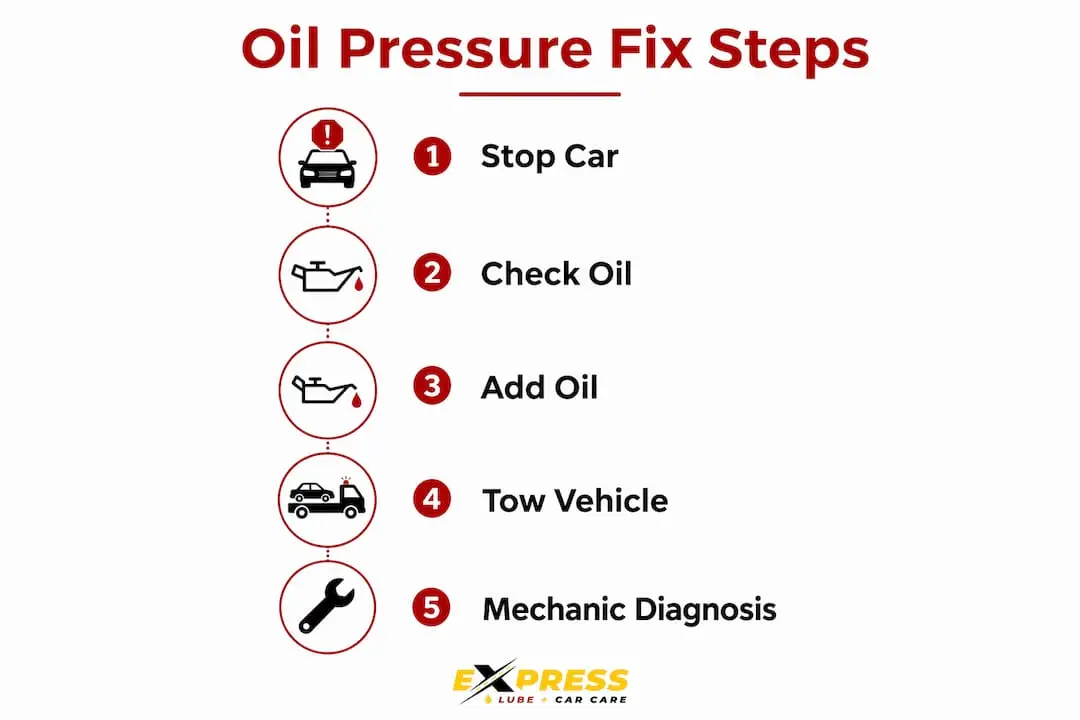
- Signal and pull over safely. Get off the road as quickly and safely as you can. Do not push through traffic to reach a parking lot if it means driving another half mile.
- Shut the engine off immediately. Every second the engine runs with low pressure adds wear.
- Wait at least 10 minutes. Let the oil drain back into the pan and let the engine cool slightly before you check anything.
- Check the dipstick on level ground. Pull the dipstick, wipe it clean, reinsert fully, pull again, and read the level. The oil should sit between the two marks.
- Add the correct oil if the level is low. Use the viscosity listed in your owner’s manual or on the oil cap. Check your oil top-up options before you add anything unfamiliar.
- Start the engine and watch the dash. If the light goes off and stays off, you can drive cautiously to a shop. If it comes back on, shut off immediately and call for a tow.
- If the dipstick reads normal, do not restart. A normal oil level with a persistent warning light points to a pump, sensor, or bearing issue. Restarting risks destroying the engine.
Pro Tip: If the dipstick reads full but the light is still on, your safest move is a tow. A shop can run a mechanical pressure test in minutes to confirm whether you have a sensor fault or a real pressure problem — and that test can save you thousands in unnecessary repairs.
Other warning signs that come with dangerous oil pressure loss
The dash light rarely shows up alone. Your engine will often send other signals, and reading them together tells you how serious the situation really is.
Engine knocking or ticking is the most alarming sound. It means that metal is contacting metal because the oil film has broken down. A persistent knock after the light appears is a sign that damage may already be underway. A burning oil smell or blue-gray smoke from the exhaust points to oil burning in the combustion chamber, which both causes and signals low oil level. These two together with the warning light mean you should not be driving at all.
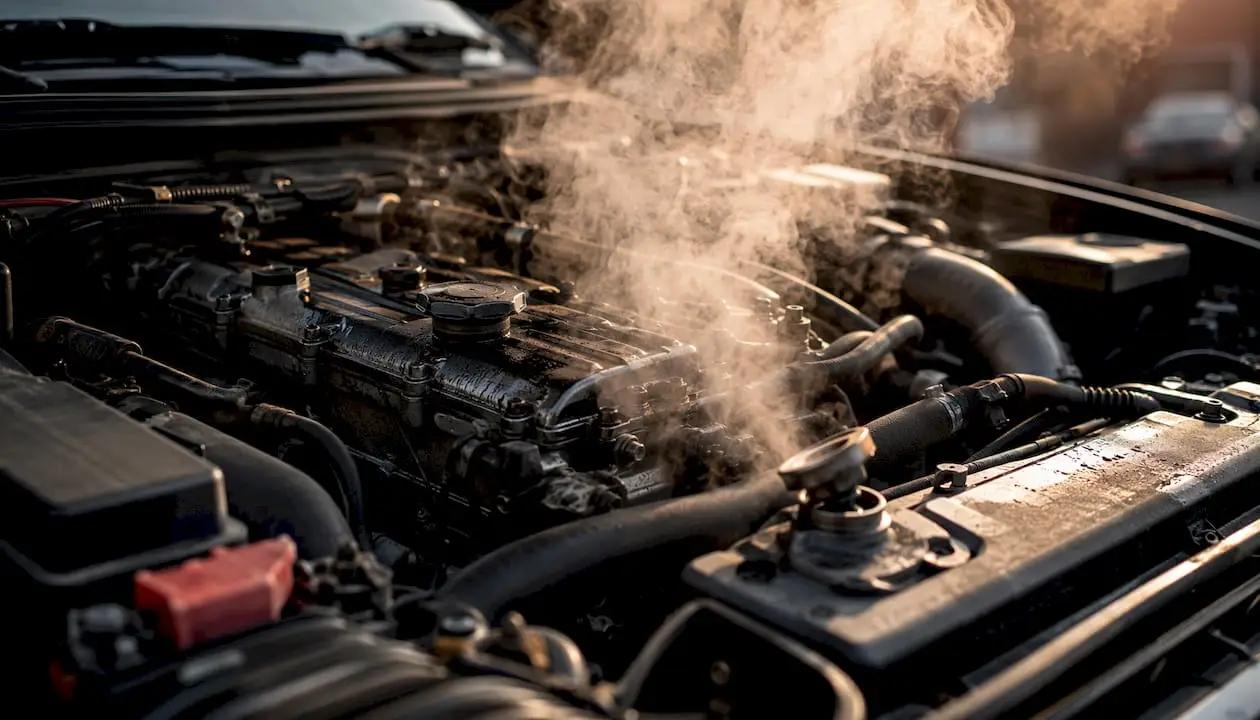
Overheating can follow low oil pressure because oil also helps carry heat away from engine components. If your temperature gauge climbs alongside the oil light, pull over immediately.
Oil pooling under the car after parking is a visual clue that a leak is the root cause. Even a slow drip adds up fast, especially on a hot Texas summer day, when oil thins out under heat.
Common repairs and what they typically cost in the U.S.
Repair costs vary by vehicle, engine type, and local labor rates, but this table gives you a realistic ballpark for the most common fixes tied to low oil pressure.
| Repair | Approximate U.S. Cost Range | Typical Time |
|---|---|---|
| Oil top-up (add oil) | $10 | 10–15 minutes |
| Oil-pressure sensor replacement | $100–$250 | 1–2 hours |
| Oil pan gasket repair | — | 2–4 hours |
| Oil pump replacement | $500–$1,500 | 4 hours |
| Engine bearing repair | $1,500–$4,000+ | 1–3 days |
| Engine replacement (worst case) | $4,000 | 3–5 days |
Adding oil is the only roadside fix. Everything else requires shop-level tools and an ASE-certified mechanic. Catching a sensor or gasket problem early keeps you in the hundreds; ignoring the light and driving on can push you into engine-replacement territory fast. Consistent preventive maintenance is genuinely the cheapest insurance against these costs.
How mechanics actually diagnose low oil pressure
A warning light alone does not tell a technician which part failed. Here is the step-by-step process a qualified shop follows.
- Pull OBD-II codes. A scan tool checks for stored fault codes related to the oil pressure circuit, sensor, or related systems.
- Inspect the sensor and wiring. A damaged connector or corroded wire can trigger a false alarm. Technicians check continuity and voltage before condemning any mechanical component.
- Install a mechanical oil-pressure gauge. A gauge is threaded into the sender port. Readings are taken at idle and again at roughly 2,000–2,500 RPM and compared against manufacturer specs. Typical target ranges for many gas engines run roughly 25–65 psi, though the exact spec varies by engine.
- Inspect the oil filter and pickup screen. A clogged filter or sludge-blocked pickup can drop pressure without any other obvious failure.
- Check for leaks and sludge. A visual inspection under the car and inside the valve cover reveals leaks, sludge buildup, or signs of oil burning.
Shop trust signals matter here. ASE-certified technicians follow this diagnostic sequence rather than guessing, and a RepairPal Certified or CarFax Top-Rated shop will document findings digitally so you can see exactly what was found and why a repair is recommended.
Key Takeaways
A red low oil pressure light is an engine emergency: stop immediately, shut off the engine, and do not restart until you know the cause.
| Point | Details |
|---|---|
| Red light = stop now | Pull over and shut off the engine; irreversible engine seizure can occur within 2–5 minutes of running with low oil pressure. |
| Check oil before restarting | Use the dipstick on level ground; add the correct viscosity only if the level is low. |
| Normal level, light still on | Do not restart. Tow to a shop for a mechanical pressure test before any expensive repair. |
| Repair costs vary widely | Sensor replacement runs $100–$250; pump or bearing repairs can reach $1,500–$4,000 or more. |
| Expresslubearlington | ASE-certified technicians at Express Lube & Car Care perform mechanical pressure tests, sensor replacements, and documented digital inspections with a 24-month/24,000-mile warranty. |
What the shop sees most often
The call we get most often goes something like this: the light came on, the driver checked the dipstick, the level looked fine, and now they are not sure whether to tow or drive in. Nine times out of ten, that scenario points to a faulty oil-pressure sender. The sensor fails, sends a false signal, and the engine is actually fine. A mechanical gauge confirms it in about 15 minutes.
But we also see the other version: the driver ignored the light for a few miles because the engine “sounded okay,” and by the time the car arrived, there was audible bearing knock. That repair went from a $150 sensor job to a multi-thousand-dollar engine repair.
Our ASE-certified technicians run the full diagnostic sequence every time, and as a RepairPal Certified Shop and CarFax Top-Rated Service Center, we document everything digitally so you know exactly what we found. All mechanical repairs are backed by our 24-month/24,000-mile warranty. For Arlington-area drivers: if the light is on and the dipstick reads normal, tow it in. Do not risk it.
Express Lube & Car Care is ready when you need fast diagnostics
When that oil pressure warning lights up your dash, you need a shop that can move fast and give you a straight answer. Expresslubearlington offers same-visit mechanical oil pressure testing, oil-pressure sensor replacement, and reliable oil top-ups, all performed by ASE-certified technicians who will show you the results on a digital inspection report.
No guesswork, no upselling parts you do not need. If the pressure is fine and it is just a sensor, we will tell you. If the pump or bearings need attention, we will walk you through the repair options and costs before anything is authorized. Repairs are backed by a 24-month/24,000-mile warranty, and financing is available for larger jobs. Arlington drivers can also take advantage of $45 off mechanical repairs on qualifying services. Call us now or schedule your diagnostic appointment online at expresslubearlington.com.
Useful sources
The guidance in this article draws from mechanic-grade technical sources and automotive safety references. For drivers who want to verify the details or read further, the most useful sources are listed below.
Key references used in this article: Steer (time-to-damage data and immediate-action guidance), OBDadvisor (mechanical gauge diagnostics and sensor fault identification), RAC (red vs. amber oil light distinction), Rick’s Free Auto Repair Advice (oil pump, bearing, and viscosity guidance), BiturboAuto (sludge and preventive maintenance), Jalopnik (typical oil pressure ranges), and Airpark Auto Pros (color-coded oil warning light interpretation).
FAQ
Can I still drive with the low oil pressure light on?
No. Driving with the light on risks irreversible engine seizure within 2–5 minutes. Pull over and shut off the engine immediately.
Will an oil change fix low oil pressure?
Sometimes. If the cause is low oil level or sludge from a long-overdue service, a fresh oil change can resolve it. If the pump, sensor, or bearings are the problem, an oil change alone will not fix the pressure.
What causes the oil pressure warning light to come on?
The most common causes are low oil level, an oil leak, a clogged pickup screen, a failing oil pump, worn engine bearings, or a faulty oil-pressure sensor. A sensor fault is common and relatively inexpensive to fix.
Is low oil pressure expensive to fix?
It depends on the cause. A sensor replacement typically runs $100–$250. An oil pump replacement ranges from $500–$1,500, and bearing or engine repairs can exceed $4,000. Catching the problem early almost always keeps costs lower.