
The e brake is a secondary braking system built to hold your parked car in place and, if everything else fails, slow you down as a last resort. You’ll hear it called the parking brake, the handbrake, the emergency brake, or (on newer cars) the electronic parking brake, or EPB. They’re the same system wearing different name tags.
Here’s the part most drivers get wrong: it’s not just a breakdown-lane tool. ASE-certified technicians and organizations like the AAA Club Alliance recommend using it every single time you park, not just when something’s gone sideways.
A few quick facts worth knowing up front:
- It usually works on the rear wheels only, separate from your main hydraulic brakes.
- Federal Motor Vehicle Safety Standards (FMVSS) govern how parking brakes must perform in the U.S., setting performance benchmarks such as holding a vehicle on an incline.
- Shops like Expresslubearlington check cable tension, EPB codes, and rear brake wear as part of routine inspections.
Key Takeaways
Using the e brake every time you park protects your transmission’s parking pawl and keeps the cable or actuator from seizing over time.
| Point | Details |
|---|---|
| Set it every time you park | Engage the e brake before shifting to Park on automatics to protect the parking pawl. |
| Apply gradually in emergencies | A sudden yank at speed can lock the rear wheels and cause a skid. |
| Skip it after slush before a freeze | Cables can lock solid overnight if moisture freezes around the linkage. |
| Watch EPB warning messages | An error code that won’t clear signals an actuator fault worth a shop visit. |
| Book service at signs of trouble | Grinding, no hold on hills, or visible cable rust call for a professional inspection at Expresslubearlington. |
Table of Contents
- How Does the E Brake Work?
- What Are the Different Types of E Brakes?
- When Should You Use the E Brake?
- How Do Electronic Parking Brakes Work?
- What Happens If You Drive With the E Brake On?
- When Should You Have Your E Brake Inspected?
- How Has the E Brake Changed Over Time?
- Are There Legal Rules About Using the E Brake?
- What Are the Biggest E Brake Mistakes to Avoid?
- Get Your E Brake Checked at Expresslubearlington
- Common Mistakes Technicians See With E Brakes
- Sources
- FAQ
How Does the E Brake Work?
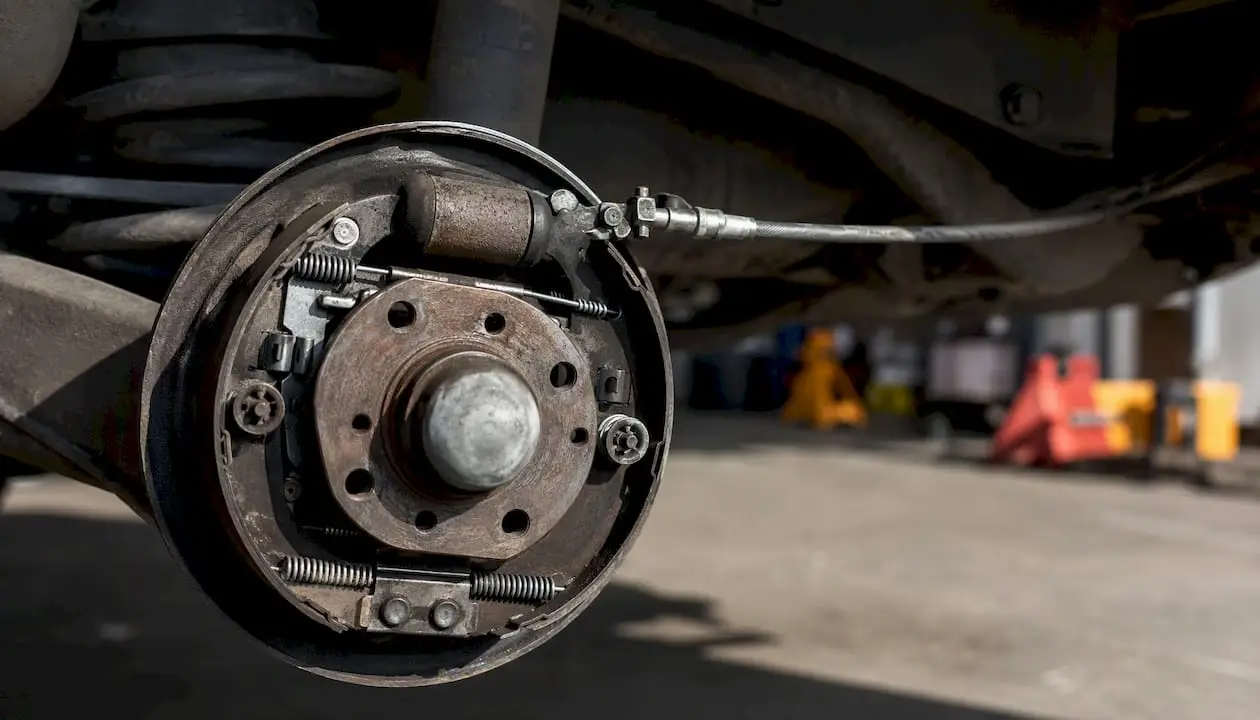
The e brake holds your car in place by clamping the rear brake components, and it does that job through a completely different mechanism than the pedal you use every day. Your foot brake runs on hydraulic fluid, pressure that squeezes all four wheels through brake lines. The e brake, on the other hand, usually relies on a steel cable or an electric actuator that pulls or clamps the rear brakes directly, with no fluid involved.
That distinction matters more than it sounds. Hydraulic systems can be modulated, meaning you can press just hard enough to slow down without locking anything up. The e brake system is closer to all-or-nothing. Pull it, and the rear wheels get clamped at whatever force you apply, with none of the fine control your foot brake pedal gives you. According to HowStuffWorks, it can stop a moving car in a pinch, but it was never engineered to modulate speed the way your primary brakes are.
On drum-brake setups, the cable pulls a lever inside the drum that spreads the shoes against the drum wall. On disc-equipped rear axles, it’s usually a small drum-in-hat design or a cable that actuates the caliper directly. Either way, only the rear wheels get involved, which is exactly why yanking it too hard at speed can cause a rear-wheel skid instead of a clean stop.
Quick reference on what makes this system unique:
- Rear-wheel only, unlike the pedal brake’s four-wheel coverage
- Mechanical cable or electric actuator, no hydraulic fluid
- All-or-nothing engagement rather than modulated pressure
- Independent of the main brake lines, so it still works if you lose hydraulic pressure
Pro Tip: If your regular brakes ever fail completely, the e brake is your backup plan. Pull it in stages, not all at once, so you don’t send the rear end into a slide.
What Are the Different Types of E Brakes?
Every e brake does the same basic job, but the control you actually touch varies by car, and knowing which one you have changes how you use it.
The hand lever sits between the front seats and is the classic setup most drivers picture. Pull it up firmly until it clicks into place; push the release button and lower it to disengage. The foot pedal version, common in older trucks and some SUVs, sits to the left of the brake pedal. Stomp it down to set, then pull a separate release handle (often under the dash) to let go. The column pull style, once common on big American sedans, is a T-shaped handle you pull out from under the steering column. Fewer cars use it today, but you’ll still find it on some older fleet vehicles.
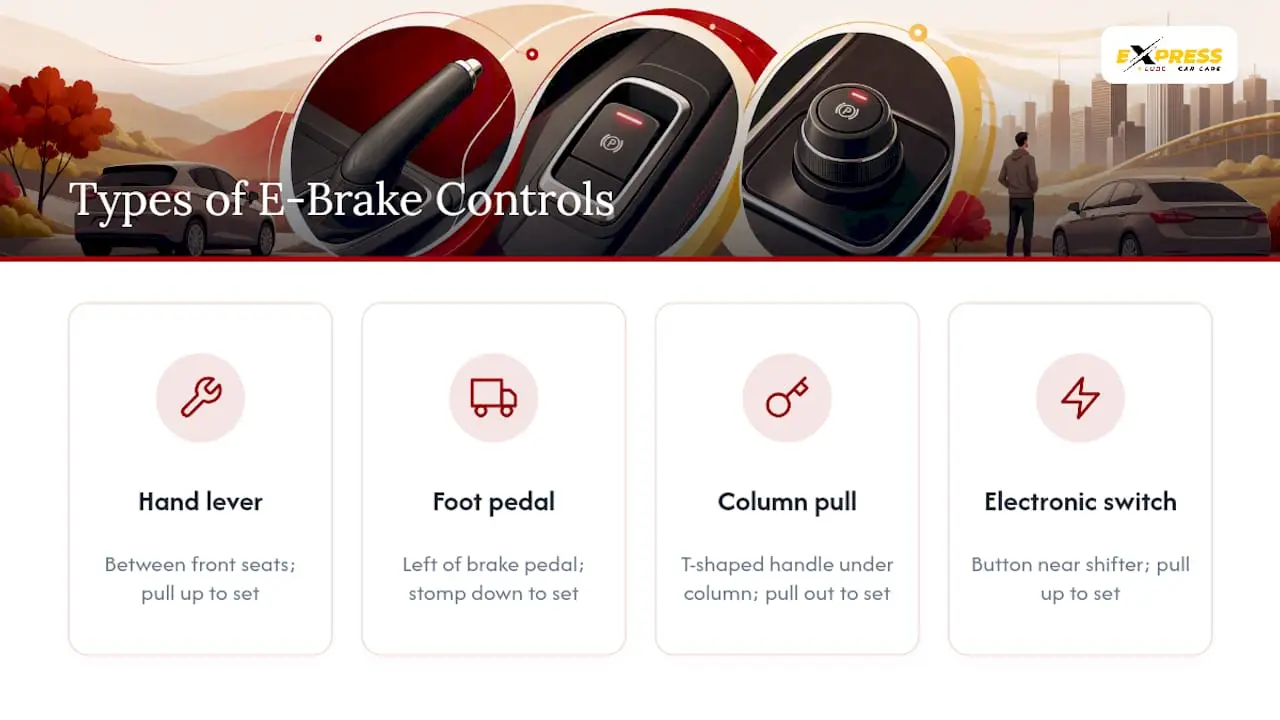
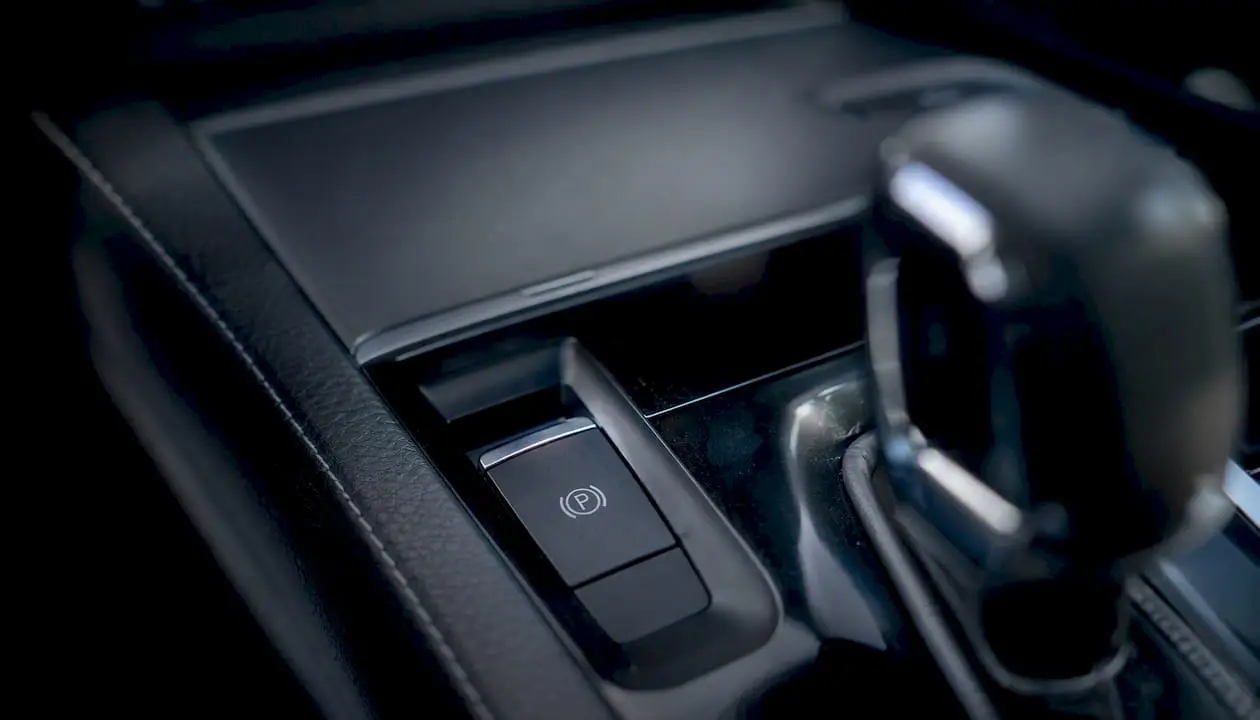
Then there’s the electronic parking brake, a button or switch, usually near the shifter, that engages and releases motors instead of a physical cable. Pull up on the switch to set it, and either push it down or simply press the gas pedal to release, depending on the car.
Pro Tip: Cable-based systems tend to show wear through stiffness or a lever that pulls up too far before catching. That’s usually stretched or partially seized cable, and it’s worth having checked before it fails completely in cold weather.
When Should You Use the E Brake?
Set the e brake every time you park, and apply it gradually rather than yanking it if you’re using it to stop a moving car.
For automatic transmissions, the sequence matters more than people realize. Bring the car to a full stop, apply the e brake first, then shift into Park. Doing it in that order takes the load off the transmission’s parking pawl, a small metal tooth that’s only meant to keep the car from rolling, not hold its full weight indefinitely. Family Handyman’s guidance from ASE technicians backs this up directly: engaging the parking brake before shifting into Park protects that pawl from long-term stress and reduces damage risk if the car gets bumped while parked.
Manual transmission drivers should set it every time, full stop, since there’s no Park gear to lean on at all.
Parking on a hill:
- Turn your wheels toward the curb if facing downhill, away from the curb if facing uphill (with no curb, angle wheels toward the shoulder).
- Apply the e brake firmly before shifting to Park or engaging first/reverse gear.
- Let the car settle against the curb or gear resistance before releasing your foot brake.
- Double-check the e brake is fully engaged, not just partially caught, before walking away.
In a genuine emergency where your main brakes fail, apply the e brake gradually and steadily rather than yanking it to full force. A hard, sudden pull can lock the rear wheels and send the car into a skid, especially on wet or loose surfaces.
- Changing a tire or working underneath the car? Set the e brake and use wheel chocks on the opposite end of the vehicle, every time, no exceptions.
- Avoid setting the manual e brake right after driving through slush or heavy snow if a freeze is coming. Cables and linkages can lock in place overnight, a headache Family Handyman specifically warns drivers about.
How Do Electronic Parking Brakes Work?
The EPB replaces the manual cable with a motor and actuator controlled by the car’s computer, so instead of pulling a lever, you’re flipping a switch that tells the system how much clamping force to apply.
There are two common designs. Cable-puller EPBs use small electric motors to pull the same kind of cable a hand lever would, just automated. Motor-on-caliper systems skip the cable entirely and mount the actuator directly onto the rear caliper. According to Auto Express, both designs cut down on the classic cable failures, fraying, rust, stretching, but they introduce a different kind of complexity.
Most EPBs come with automatic features cable systems never had. Auto-release disengages the brake the moment you press the gas pedal, and hill-hold briefly keeps the car from rolling back while you transition from brake to gas on an incline. But these systems also build in safety locks: some EPBs won’t release unless your seatbelt is buckled, the door is closed, and the car is in gear. That’s a feature, not a bug, but it trips people up when the brake seems “stuck” and it’s actually just waiting on one of those conditions.
Actuator replacement on an EPB can run well beyond the cost of adjusting or replacing a traditional cable, since you’re dealing with a motor, a control module, and sometimes a caliper assembly rather than a length of steel cable.
Electronic parking brake designs also fall under evolving FMVSS and ECE regulatory frameworks, which shape how these systems are tested and integrated with stability control.
What Happens If You Drive With the E Brake On?
Driving with the e brake engaged creates drag on the rear wheels that builds heat fast, and if it goes on long enough, you’re looking at glazed pads, warped rotors, and a burning smell that gets your attention quickly.
You’ll usually notice it before real damage sets in, if you’re paying attention. A grinding or screeching sound from the rear, a car that feels sluggish or reluctant to accelerate, a dashboard warning light staying lit, or a genuine burning odor drifting into the cabin are all early red flags. Modern EPB systems often auto-disengage once you start driving, which is one advantage over the manual lever, but a mechanical hand brake will keep clamping the rear wheels for as long as it’s engaged.
Left unaddressed, that constant friction glazes the brake pads, essentially cooking their surface until they lose effective grip. Rotors can warp from the uneven heat. In extended cases, the heat transfers into the brake fluid itself, which can degrade its performance right when you need it most. None of this happens instantly, but a few miles of driving with it engaged is enough to shorten the life of your rear brake components. If you’ve noticed unusual wear, our guide on brake pad replacement walks through what to expect next.
When Should You Have Your E Brake Inspected?
Using the e brake regularly and having it checked annually keeps the cables moving freely and catches small problems before they turn into a stuck lever or a failed EPB actuator.
A basic inspection checklist looks like this:
- Lever or pedal engages with a firm, consistent click, not a mushy or overly loose feel
- Cables show no visible rust, fraying, or kinks where they route under the car
- EPB switch engages and releases without error messages or warning lights
- Rear pads and rotors show even wear, without EPB, and no built-up glaze
- Car holds firmly on a moderate incline without creeping
Pro Tip: If your EPB throws a warning code, write down exactly what the dashboard message says before you call a shop. Digital vehicle inspections can pull that code directly and pair it with a visual check of the actuator, cutting diagnostic time significantly.
Book a visit if you notice grinding when engaging the brake, the car fails to hold on a hill, visible rust or fraying on a cable, or any EPB error message that won’t clear. Our page on brake problem symptoms covers more of these warning signs in detail, and why inspection frequency matters explains how often you should really be checking.
How Has the E Brake Changed Over Time?
Early cars relied on purely mechanical hand levers connected by steel cables directly to the rear wheels, a design that stuck around largely unchanged for decades because it was simple and cheap to build. Column-mounted pull handles became popular on American sedans through the mid-1900s, giving drivers a hands-free spot to stash the control away from the front seats.
The real shift came with the arrival of the electronic parking brake in the early 2000s, when automakers started swapping cables for motors and actuators tied into the car’s onboard computer, as explained in detail on the Automotive Archives – HVAC Prime site. That single change opened the door to automatic features like hill-hold and auto-release, conveniences no cable system could offer. It also connected the parking brake, for the first time, to the same electronic stability systems managing traction and skid control, turning what used to be a purely mechanical afterthought into an integrated part of the car’s safety net.
Are There Legal Rules About Using the E Brake?
Regulatory standards like FMVSS in the U.S. require every passenger vehicle to have a functioning parking brake system independent of the main hydraulic brakes, precisely so a car can still be secured if the primary system fails. These standards set performance benchmarks, things like how well the system must hold a vehicle on a grade, rather than dictating how often you personally use it day to day.
There’s no law mandating you engage it every time you park on flat ground, but skipping it habitually shifts unnecessary strain onto your transmission’s parking pawl, a design detail vehicle manufacturers never intended to bear that load alone. Local vehicle inspection programs, where they exist, typically check that the parking brake holds the car and that warning lights function correctly, since a non-functioning e brake can be a pass/fail item during state inspections in many areas.
What Are the Biggest E Brake Mistakes to Avoid?
The single riskiest habit is yanking the e brake at speed during a real emergency, since a hard, sudden pull on the rear wheels only can throw the car into a spin, particularly on wet, icy, or loose surfaces. Gradual, steady pressure gives you a controlled stop instead of a slide.
A close second is letting the brake sit unused for months at a time. Cables seize up from lack of movement just as easily as from rust, and a lever that hasn’t moved in half a year is far more likely to stick the next time you need it. Setting it regularly, even on flat ground in your own driveway, keeps the mechanism working the way it should.
Avoid setting a manual e brake right after driving through slush or standing water if temperatures are about to drop below freezing; that moisture can freeze solid around the cable overnight and leave you stuck. And never assume an EPB’s hill-hold feature replaces good judgment on a steep grade. It’s a brief assist, not a substitute for wheel positioning and a firm brake application while you’re stopped.
Local shop perspective: what technicians see most
Customers often come in describing a lever that “won’t budge anymore,” and nine times out of ten, the cause traces back to months, sometimes years, of never engaging the parking brake at all. Cables corrode and seize from disuse just as often as from age.
The recurring culprits our technicians run into:
- Stretched cables that need re-adjustment, most common on older cable-lever systems
- Fully seized cables from long stretches of inactivity, often worse in humid climates
- Frozen linkages after winter driving without regular use
- Misadjusted or faulted EPB actuators throwing intermittent warning codes
Pro Tip: When you bring your car in, tell the technician exactly what you noticed, whether it’s a loose-feeling lever, a warning light, or a grinding sound, and when it started. A digital vehicle inspection pairs that description with a direct look at cable tension and actuator function, which usually gets you a diagnosis in minutes rather than guesswork.
Get Your E Brake Checked at Expresslubearlington
A seized cable or a faulted EPB actuator doesn’t announce itself until you’re stuck on a hill or staring at a dashboard warning you don’t understand. Expresslubearlington’s ASE-certified technicians run full brake and EPB diagnostics as part of every digital vehicle inspection, catching stretched cables and actuator faults before they turn into a tow bill.

We’re a RepairPal Certified Shop and a CarFax Top-Rated Service Center, and every repair we perform is backed by a 24-month/24,000-mile warranty. If your parking brake feels loose, won’t hold on an incline, or your EPB has thrown a code you don’t recognize, bring the car in and mention exactly what you’re seeing. If cost is a concern on something like an EPB actuator replacement, ask about our financing options before you decide to put it off. You can also grab our $45 off mechanical repair coupon and schedule a brake inspection with our ASE and RepairPal certified team this week.
Common Mistakes Technicians See With E Brakes
Customers who avoid using the parking brake because they think it’s only for emergencies end up with the exact problem they were trying to prevent: a lever or cable that seizes from disuse. It’s one of the more frustrating repair visits, because a five-second habit could have prevented the entire issue.
The lesson holds across nearly every case: mechanical systems need regular movement to stay reliable. A cable that’s pulled and released weekly stays lubricated by its own motion and rarely surprises anyone. One that sits untouched for a year, especially in a humid or coastal climate, is far more likely to rust or bind at the worst possible moment.
Sources
- How Emergency Brakes Work — HowStuffWorks
- Do you know when to use your emergency brake? | AAA Club Alliance
- Electronic parking brake explained: What is an electric handbrake? | Auto Express
- Do you really have to use the emergency brake? | Family Handyman
FAQ
Is the E Brake the Same as the Handbrake?
Yes. The e brake, parking brake, handbrake, and emergency brake all refer to the same secondary braking system, just with different names depending on the region or the type of control in the car.
What Does an E Brake Do?
It holds a parked car in place by clamping the rear wheels, and it can also serve as a last-resort way to slow the car if the main hydraulic brakes fail.
Is It Okay to Drive With the E Brake On?
No. Driving with it engaged causes drag, overheating, glazed pads, and warped rotors, and it can trigger a burning smell or dashboard warning within a short distance.
How Do You Use an E Brake While Driving in an Emergency?
Apply it gradually rather than yanking it to full force, since a hard pull on the rear wheels alone can lock them and send the car into a skid, especially on wet or loose pavement.