
TL;DR:
- Brake fluid transfers force from the brake pedal to the wheels, making it essential for vehicle stopping power. Regularly checking and replacing it prevents brake failure caused by moisture absorption, contamination, or component damage. Proper maintenance ensures consistent braking performance and protects critical brake system parts.
Brake fluid is defined as a specialized hydraulic liquid that transfers the force from your brake pedal to the brakes at each wheel, making it the backbone of your vehicle’s stopping power. Without it, pressing the pedal would do nothing. The fluid works because it is nearly incompressible, meaning pressure applied at one end travels instantly through the brake lines to the calipers or drum brakes. NHTSA FMVSS 116 sets the minimum boiling point requirements for DOT 3, DOT 4, and DOT 5/5.1 fluids, which tells you just how seriously federal safety regulators treat this liquid. Knowing what brake fluid is and what it does puts you in control of one of the most critical safety systems on your car.
What does brake fluid do in your braking system?
Brake fluid transmits pedal force through sealed hydraulic lines to the brake calipers or wheel cylinders. When you press the pedal, a master cylinder pushes the fluid through those lines, and the pressure squeezes the brake pads against the rotors or the brake shoes against the drums. The result is friction that slows your car. You can read more about how brake calipers respond to that hydraulic pressure if you want a deeper look at the mechanical side.
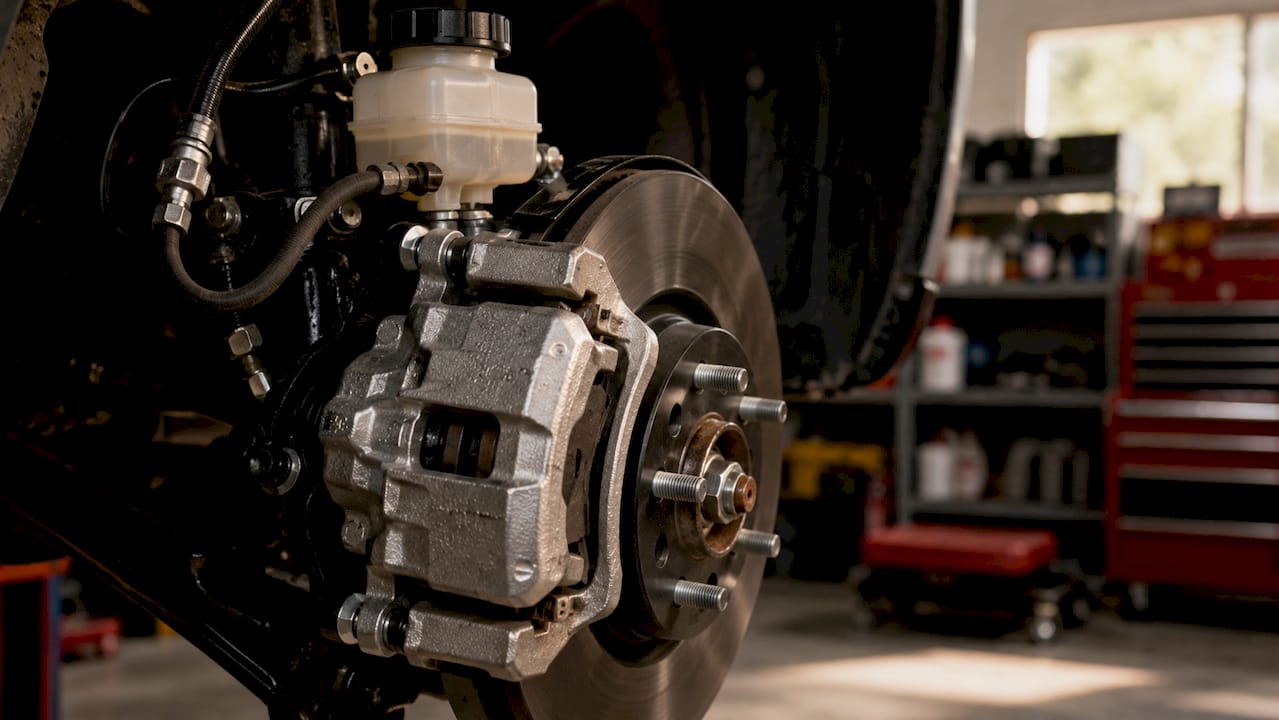
The incompressibility of brake fluid is what makes the whole system reliable. If the fluid compressed like air, your pedal would feel spongy and your stopping distance would increase unpredictably. That firm, consistent pedal feel you count on every day exists because the fluid holds its volume under pressure.
Brake fluid also does two jobs most drivers never think about:
- Lubrication. It keeps the rubber seals, pistons, and internal components of the master cylinder and calipers moving freely without wear.
- Corrosion protection. It contains additives that prevent rust and oxidation inside the metal brake lines and cylinders.
Pro Tip: Check your brake fluid reservoir every time you check your oil. The reservoir is usually a small translucent plastic container near the firewall. Fresh fluid is light amber or nearly clear. Dark, murky fluid is a signal to act.
What are the different types of brake fluid?
The four main types are DOT 3, DOT 4, DOT 5, and DOT 5.1. The DOT number comes from the U.S. Department of Transportation classification system, and each grade has different boiling points and chemical bases.
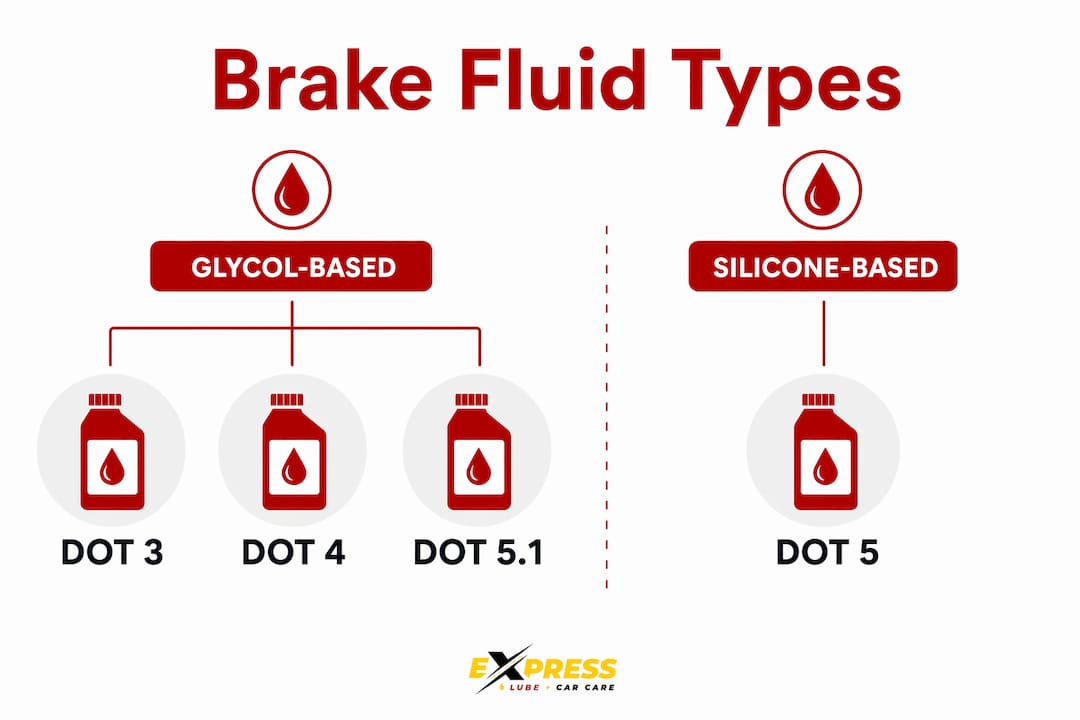
DOT 3, DOT 4, and DOT 5.1 are all glycol-based fluids. They are hygroscopic, meaning they absorb moisture from the air over time. DOT 5 is the outlier. It is silicone-based and does not absorb moisture. That sounds like an advantage, but mixing DOT 5 with glycol-based systems causes rubber seal swelling and potential brake failure. Never mix them.
The confusion around DOT 5.1 trips up a lot of drivers. The “5” in DOT 5.1 does not mean it is related to DOT 5. DOT 5.1 is glycol-based and fully compatible with DOT 3 and DOT 4. Mixing up DOT 5 and DOT 5.1 is a dangerous mistake that has damaged more than a few brake systems.
| Type | Base Chemistry | Dry Boiling Point | Wet Boiling Point | Compatible With | Typical Use |
|---|---|---|---|---|---|
| DOT 3 | Glycol | 401°F (205°C) | 284°F (140°C) | DOT 3, DOT 4 | Most passenger cars |
| DOT 4 | Glycol | 446°F (230°C) | 311°F (155°C) | DOT 3, DOT 4 | Performance and modern vehicles |
| DOT 5 | Silicone | 500°F (260°C) | 356°F (180°C) | DOT 5 only | Specialty and classic vehicles |
| DOT 5.1 | Glycol | 500°F (260°C) | 356°F (180°C) | DOT 3, DOT 4, DOT 5.1 | High-performance vehicles |
Pro Tip: Always check the cap on your master cylinder reservoir. The manufacturer stamps the required DOT rating right there. Higher DOT numbers do not always mean better for your specific vehicle. Use what the manufacturer specifies.
How do you recognize signs of brake fluid problems?
Your brakes send up clear warning signals when the fluid is degraded or low. Catching them early keeps a small maintenance task from becoming a costly repair. Watch for these symptoms:
- Spongy or soft brake pedal. Air or moisture in the lines reduces hydraulic pressure. The pedal compresses without the usual firm resistance.
- Pedal sinking toward the floor. This points to a leak or a failing master cylinder seal.
- Dark or murky fluid. Fresh brake fluid is light amber. Dark fluid signals degradation and moisture contamination.
- Burning smell after hard braking. Overheated fluid that has absorbed too much moisture can boil, creating vapor pockets that compress and cause brake fade.
- Brake warning light. Low fluid level triggers the warning light on most modern vehicles.
Moisture is the real enemy here. Brake fluid is hygroscopic, so it absorbs moisture through permeable hoses and the reservoir cap even when the car sits in your garage. That absorbed water lowers the boiling point significantly. A fresh DOT 4 fluid boils at 446°F. After a few years of use, the boiling point can drop to 270–300°F, which is dangerously close to the temperatures generated during heavy braking.
Here is how to inspect your brake fluid properly:
- Park on a level surface and let the engine cool.
- Locate the brake fluid reservoir under the hood, usually near the firewall on the driver’s side.
- Check the fluid level against the MIN and MAX markings on the translucent reservoir without opening it.
- If the level is low, inspect brake pad thickness and look for leaks before adding fluid. Low fluid often means worn pads, not just a need for a top-up.
- If you open the cap, check the color. Dark brown or black fluid needs a flush, not just a refill.
- For the most accurate reading, use a digital moisture tester. Moisture levels above 3% indicate the fluid needs immediate replacement.
You can find a full breakdown of related brake problem symptoms that go beyond fluid issues if you want to check the whole system.
What is the proper maintenance routine for brake fluid?
Brake fluid maintenance follows two tracks: mileage and time. Both matter because the fluid absorbs moisture whether you drive or not.
- Follow the replacement interval. Manufacturers typically recommend replacing brake fluid every 2–3 years or every 30,000–45,000 miles. Check your owner’s manual for your vehicle’s specific schedule.
- Choose a full flush, not a top-up. Topping off adds fresh fluid on top of degraded fluid. A complete flush removes all the old fluid and replaces it with fresh fluid throughout the entire system. A professional flush typically takes 30–60 minutes.
- Bleed the brakes after a flush. Bleeding removes air bubbles from the lines. Air compresses, which causes that spongy pedal feel. Proper bleeding restores firm pedal response.
- Never mix incompatible fluid types. Confirm the DOT rating on your master cylinder cap before adding any fluid. Mixing silicone-based DOT 5 with glycol-based fluid destroys rubber seals.
- Inspect related components during service. A brake fluid flush is the right time to check pad thickness, rotor condition, and caliper function. Worn pads push caliper pistons back, which lowers the fluid level and can introduce air into the system.
- Protect the fluid during service. Minimize the time the reservoir sits open during a fluid change. Exposure to air accelerates moisture absorption.
For drivers with older or high-mileage vehicles, brake fluid care is especially critical. Aging rubber hoses become more permeable, which speeds up moisture absorption and increases the risk of brake fade.
Pro Tip: If you are preparing for a long road trip, add a brake fluid check to your pre-trip list. Degraded fluid under sustained highway braking conditions is a real safety risk. Pre-trip brake inspections take minutes and can prevent serious problems.
Brake fluid flushes also protect your ABS module. Moisture-contaminated fluid corrodes the sensitive internal valves inside ABS units, and ABS module repairs are expensive. A routine flush is far cheaper than replacing a damaged ABS module.
Key Takeaways
Brake fluid is a hydraulic liquid that transfers pedal force to the wheels, and its condition directly determines whether your brakes perform safely or fail under pressure.
| Point | Details |
|---|---|
| Brake fluid definition | It is a hydraulic liquid that transfers pedal force through brake lines to stop the vehicle. |
| Types and compatibility | DOT 3, 4, and 5.1 are glycol-based; DOT 5 is silicone-based and must never be mixed with the others. |
| Warning signs | Spongy pedal, dark fluid, burning smell, and a sinking pedal all signal degraded or contaminated fluid. |
| Replacement interval | Replace brake fluid every 2–3 years or every 30,000–45,000 miles, whichever comes first. |
| Flush over top-up | A full flush removes all degraded fluid; topping off leaves contaminated fluid in the system. |
What I’ve learned after years of watching drivers skip this service
Most drivers check their oil religiously and forget brake fluid exists. That gap in attention is where brake problems quietly develop. I have seen vehicles come in with fluid so dark it looked like used motor oil, and the drivers had no idea their stopping distance had been creeping up for months.
The misconception I hear most often is that brake fluid only needs attention when something feels wrong. By the time you feel a spongy pedal, the fluid has already been degraded long enough to start corroding internal components. The damage is happening before the symptom appears.
The other mistake is treating a low fluid level as a simple top-up situation. Low fluid is a diagnostic clue, not just a maintenance task. It almost always points to worn brake pads or a leak somewhere in the system. Adding fluid without investigating the cause is like putting a bandage over a problem that needs a real fix.
My honest recommendation is to treat brake fluid on a time-based schedule, not just a mileage-based one. A car that sits in a garage for two years still has fluid that has been absorbing moisture the entire time. Time matters just as much as miles driven.
— Hassan
Brake fluid service at Expresslubearlington
Your brake fluid works hard every single time you slow down, and it deserves the same attention you give your oil or tires.
At Expresslubearlington, our ASE-certified technicians perform complete brake fluid flushes that protect your entire brake system, including your ABS module, calipers, and brake lines. We check fluid condition, moisture levels, and related components in one visit. As a RepairPal Certified Shop and CarFax Top-Rated Service Center, we do not cut corners on safety services. Skipping brake fluid maintenance is one of the common car repair mistakes that costs drivers the most over time. Stop by our Arlington location and let us make sure your brakes are ready for whatever the road throws at you.
FAQ
What is brake fluid, exactly?
Brake fluid is a hydraulic liquid that transfers the force from your brake pedal through sealed lines to the brake calipers or wheel cylinders at each wheel. It must be nearly incompressible and heat-resistant to deliver consistent stopping power.
How often should you change brake fluid?
Most manufacturers recommend replacing brake fluid every 2–3 years or every 30,000–45,000 miles. Time matters as much as mileage because the fluid absorbs moisture even when the vehicle is not being driven.
Is brake fluid toxic?
Brake fluid is harmful if swallowed or absorbed through the skin and should be handled with care. Keep it away from children, avoid skin contact, and dispose of used fluid at a certified recycling or auto parts facility.
Can you mix different types of brake fluid?
You can mix DOT 3, DOT 4, and DOT 5.1 because they share a glycol base, though mixing lowers the overall boiling point. Never mix DOT 5 silicone fluid with any glycol-based fluid, as it causes seal swelling and brake system damage.
What happens if you ignore brake fluid maintenance?
Degraded brake fluid absorbs moisture, which lowers its boiling point and increases the risk of brake fade during hard stops. Over time, moisture also corrodes brake lines, calipers, and ABS module components, leading to expensive repairs.