

TL;DR:
- A illuminated battery warning light indicates a fault in the charging system, not necessarily a dead battery.
- Drivers should avoid ignoring it, turn off nonessential electronics, and drive safely to a repair shop for diagnosis.
That little red battery symbol just lit up on your dashboard. Take a breath — but don’t ignore it. A lit car battery warning light means your charging system isn’t maintaining proper voltage, and your car is essentially running on borrowed time. Turn off every nonessential electrical accessory right now, keep the engine running, and drive directly to a shop or a safe location. Do not shut the engine off until you get there.
Here’s the critical distinction most drivers miss: the battery indicator being on doesn’t mean your battery is simply dead. It means the charging circuit — alternator, voltage regulator, wiring, or some combination — isn’t doing its job. AAA confirms that a brief 1–2 second illumination at startup is a normal bulb check; a light that stays on or flickers while driving signals an active fault that needs inspection.
- Turn off the A/C, rear defroster, seat heaters, and any other nonessential loads immediately.
- Drive calmly and directly to a repair shop or a safe stopping point.
- Get a diagnostic voltage and charging test from an ASE-certified technician as soon as possible.
Pro Tip: A healthy charging system typically reads a voltage within a certain normal range when the engine is running; deviations outside this range indicate a fault
Table of Contents
- What does the battery warning light actually mean?
- What causes the battery light to come on?
- Can you keep driving with the battery light on?
- What to do the moment the battery light comes on while driving
- Safe DIY checks you can do before calling a shop
- What a professional shop tests — and why it matters
- What does charging-system repair typically cost in the U.S.?
- Why replacing the battery alone often doesn’t fix the battery light
- Key Takeaways
- What technicians actually look at first
- Get a proper charging-system diagnosis at Express Lube & Car Care
- Useful sources and further reading
- FAQ
What does the battery warning light actually mean?
The dashboard battery light isn’t monitoring your battery’s charge level the way a fuel gauge tracks gas. It’s watching the entire charging circuit. When the system detects that running voltage has dropped outside the normal range, the light comes on — and the battery itself may be perfectly fine.
Think of the charging system as a three-part team. The alternator generates electricity while the engine runs. The voltage regulator controls how much output the alternator produces. The battery stores energy for starting and covers short-term electrical demands when the alternator can’t keep up. When any one of those three fails, the whole team falls apart.
A healthy charging system should measure voltage within a specific normal range when the engine is running. Lower readings usually indicate undercharging, while higher readings suggest overcharging, typically caused by a faulty voltage regulator.
According to CarMechanic, those voltage thresholds are the clearest early signal of where the fault lies. Undercharging usually points to the alternator, belt, or wiring. Overcharging points to the regulator. Neither is a “battery problem” in the traditional sense, which is exactly why swapping the battery first is so often the wrong move.
AAA also notes that a flickering battery light often signals intermittent wiring or belt-slip issues, while a steady, solid light more commonly points to sustained charging failure like a failed alternator or regulator.
What causes the battery light to come on?
The charging system has several components that can fail independently, and each one can trigger the same warning light. Here’s what’s usually behind it:
- Alternator failure. Worn brushes, bad diodes, or an internal regulator failure can all cause the alternator to stop producing adequate voltage. This is the most common cause of a persistent battery light, and it’s a system-level fix — not a battery swap.
- Loose, corroded, or damaged battery terminals and cables. Resistance at a corroded terminal or a bad ground connection can prevent the charging current from reaching the battery properly. The light comes on even though the alternator may be working fine.
- Serpentine or alternator belt problems. If the belt that drives the alternator slips, wears thin, or breaks entirely, the alternator stops spinning. No spin, no charge. A squealing noise from under the hood alongside the battery light is a strong clue.
- Voltage regulator faults. A failing regulator can cause overcharging (above 15V) or undercharging (below 13V). Overcharging can actually damage the battery and electronics, so this one needs prompt attention.
- Wiring, fuse, or fusible link problems. A blown fuse in the charging circuit, a shorted wire, or a failed fusible link can cut power flow entirely. These are easy to overlook and often require a technician with the right tools to trace.
- Battery internal failure. A shorted cell inside the battery can mimic a charging problem. Less common than the causes above, but worth ruling out with a proper load test.
Carista’s guide covers all of these root causes and reinforces that the warning light is a symptom of a system problem, not a single-component failure.
Can you keep driving with the battery light on?
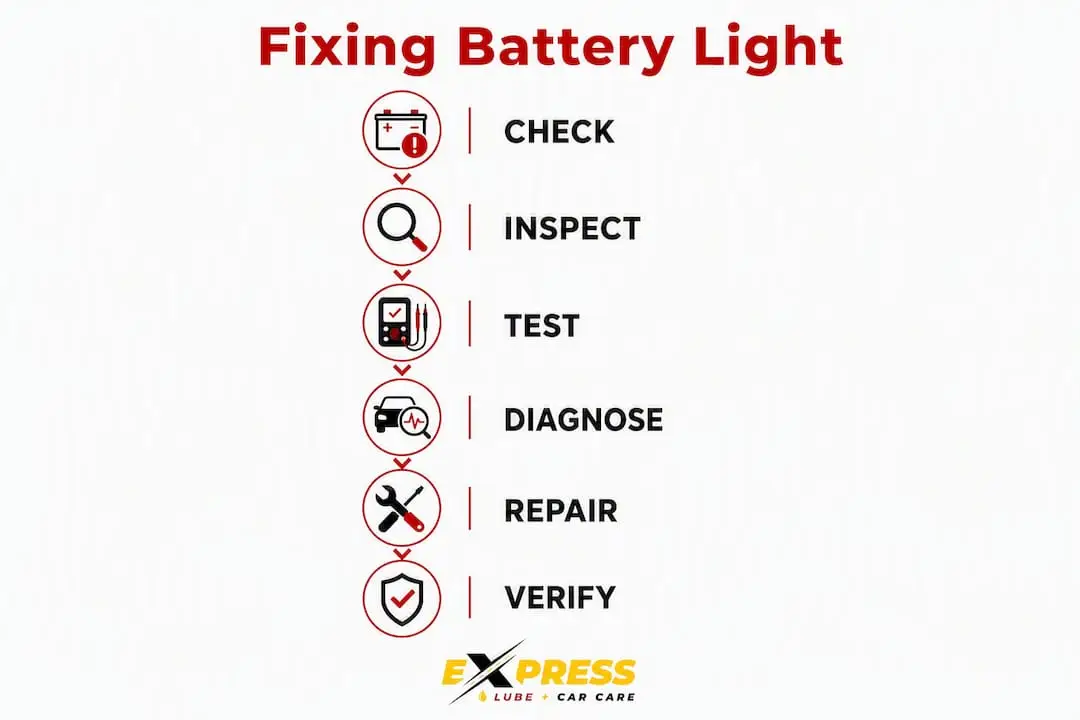
Short answer: yes, but treat it like a countdown clock. Steer’s research indicates that the typical driving window with the battery light on varies significantly depending on electrical load and battery health — and that range matters a lot.
Under heavy electrical load (headlights on, A/C running, blower fan at full speed), the driving window shortens considerably; with minimal electrical load during the day, it can last longer. The difference is significant if you’re deciding whether to push through to a shop or pull over now.
A few factors tighten that window fast:
- Driving at night forces you to keep headlights on, which drains the reserve quickly.
- A battery that was already weak before the light came on has less stored energy to draw from.
- Additional symptoms like dimming headlights, a rough idle, or warning beeps mean the system is already deep into reserve power.
One thing most drivers don’t realize: do not turn the engine off until you’ve reached a safe place. Many modern cars won’t restart once the battery lacks enough cranking amperage, even if the engine was running moments before. You might have enough stored power to keep the engine going but not enough to fire it back up from a cold start.
What to do the moment the battery light comes on while driving
Stay calm. You have a plan.
- Turn off nonessential electrical accessories immediately. That means A/C, rear defroster, seat heaters, and any phone chargers plugged in. Every watt you conserve extends your driving window.
- Keep the engine running and drive directly to a repair shop or a safe location. Don’t detour, don’t stop for gas, don’t run errands. Straight there.
- Avoid high electrical loads. Keep the blower fan on low or off. If it’s daytime and safe, skip the headlights until you actually need them.
- Watch for escalating symptoms. If the headlights dim noticeably, the engine starts to misfire, or steering or braking feels off, pull over safely and call for roadside assistance. Don’t gamble on extra distance.
- Once stopped safely, turn the engine off. Then call a shop. Don’t attempt to restart repeatedly — each crank attempt drains the remaining reserve.
If it’s dark or you’re in heavy traffic, prioritize safe driving over squeezing out extra miles. Visibility and control come first.
Safe DIY checks you can do before calling a shop
You don’t need to be a mechanic to gather useful diagnostic information. A few simple checks can tell you and your technician a lot — just do them safely.
Safety first: let the engine cool before opening the hood. Wear gloves and eye protection, especially near the battery. And never disconnect the battery while the engine is running to “test” the alternator. CarMechanic warns that this older trick can cause damaging voltage spikes to your car’s electronics. Use a multimeter instead.
Visual inspection
Look for white or bluish powder (corrosion) on the battery terminals, loose cable clamps, frayed or cracked wiring near the battery, obvious belt damage or a belt that’s missing entirely, and blown fuses in the fuse box related to the charging circuit. Any of these is worth telling your technician about before they even start their own inspection.

Multimeter voltage test
A basic multimeter costs around $20 at any auto parts store and gives you real data.
Place the red probe on the positive battery terminal and the black probe on the negative terminal. With the engine off, a healthy battery reads around 12.6V. Start the engine and check again — a healthy charging system reads 13.8–14.4V at idle. Rev the engine to about 1,500 RPM and recheck; the reading should hold steady in that range or climb slightly.
CarMechanic’s voltage guide confirms that a running reading below 13.0V suggests undercharging from the alternator, belt, or wiring. Above 15V points to a regulator fault. Flickering or wildly inconsistent readings during the test often indicate a wiring or connection problem rather than a straightforward alternator failure.
Stop and call a pro if: the belt is visibly broken or missing, corrosion is heavy and won’t clean off with a wire brush, or your voltage readings swing erratically. Those situations need shop-grade tools to diagnose safely.
What a professional shop tests — and why it matters
A multimeter at home gives you a snapshot. A proper shop diagnosis gives you the full picture. AAA’s guidance is clear: measuring only resting voltage without a load test or alternator output test frequently misses intermittent charging faults — the kind that leave you stranded a week after a battery swap.
Here’s what a thorough charging-system diagnosis covers:
- Charging system voltage test at idle and under load to confirm alternator output.
- Alternator output and diode test to catch internal alternator faults that a voltage reading alone won’t reveal.
- Battery load test to measure true cranking capacity, not just resting voltage.
- Belt and tensioner inspection for wear, slippage, or misalignment.
- Cable resistance checks to find high-resistance connections that rob charging current.
- Fuse and fusible link inspection in the charging circuit.
- ECM scan for stored fault codes if the car’s computer has logged related electrical issues.
Steer also notes that consumer-grade code scanners without live-voltage reading often miss intermittent charging failures entirely — another reason a professional diagnostic is worth the fee.
At Expresslubearlington (Express Lube & Car Care in Arlington), ASE-certified technicians run this full charging-circuit workflow on every battery-light diagnosis. The shop carries RepairPal Certified Shop status and CarFax Top-Rated Service Center recognition, both of which reflect consistent, documented repair quality. Every repair comes backed by a 24-month / 24,000-mile warranty — so if the same fault resurfaces within that window, you’re covered. That warranty matters most when the root cause turns out to be something intermittent, like a wiring fault that only shows up under load.
What does charging-system repair typically cost in the U.S.?
Costs vary by vehicle make, model, and how accessible the components are. Here are realistic U.S. ranges for the most common repairs:
| Repair | Typical U.S. Cost Range | Typical Labor Time |
|---|---|---|
| Diagnostic fee | — | 30 minutes |
| Battery replacement | — | 30–45 minutes |
| Alternator replacement | — | 1–3 hours |
| Serpentine belt replacement | — | 30 minutes |
| Voltage regulator (external) | — | 1–2 hours |
| Wiring/cable repair | — | 1–4 hours |
A few things push costs toward the higher end: luxury or European vehicles with harder-to-access alternators, trucks with additional belt routing complexity, and cases where the alternator is mounted low and requires partial engine disassembly to reach. The diagnostic fee is usually the best money you spend — it tells you exactly which repair you actually need, rather than guessing.
If the light just came on and the car is otherwise running normally, a diagnostic is the right first step. Skipping it to save $100 and replacing the battery outright often costs $300 more when the alternator turns out to be the real problem.
Why replacing the battery alone often doesn’t fix the battery light
This is the most common and expensive mistake drivers make. You get a new battery, the shop clears the light, and two days later it’s back. Sound familiar?
AAA is direct about this: the battery warning light is a symptom of a system-level problem. Replacing the battery fixes only battery-health issues. If the alternator, voltage regulator, or wiring is the root cause, the new battery will simply drain down again and the light will return.
Here are three scenarios where a brand-new battery still leaves the light on:
- Failed alternator. The new battery starts the car fine, but the alternator isn’t charging it. Within a day or two, the battery drains back down and the light reappears.
- Corroded alternator output cable. High resistance in the cable between the alternator and battery prevents charging current from flowing, even when the alternator is working perfectly.
- Blown charging fuse or fusible link. The charging circuit is broken upstream of the battery. A new battery doesn’t fix a broken circuit.
Before authorizing a battery replacement, ask your shop for documented alternator output readings, a wiring resistance check, and a proper battery load test — both before and after any parts are replaced. Those three data points tell you whether the battery is actually the problem or just the victim. Avoiding common car repair mistakes like premature part replacement starts with insisting on a complete diagnosis.
Key Takeaways
The battery warning light signals a charging-system fault — not just a dead battery — and requires a full diagnostic of the alternator, regulator, wiring, and battery before any parts are replaced.
| Point | Details |
|---|---|
| It’s a charging fault, not just a battery | The light flags the charging circuit (alternator, regulator, wiring) — the battery may be fine. |
| Driving window is limited | With heavy electrical load, you have about 15–30 minutes; with minimal load during the day, up to 45–90 minutes. |
| Healthy voltage range | A running engine should show 13.8–14.4V; below 13.0V means undercharging, above 15V means overcharging. |
| Battery replacement alone often fails | If the alternator or wiring is the root cause, a new battery will drain again and the light returns. |
| Expresslubearlington offers full diagnostics | ASE-certified technicians run a complete charging-circuit test, backed by a 24-month / 24,000-mile warranty. |
What technicians actually look at first
When a car rolls in with the battery light on, the first thing any experienced tech does is grab a multimeter — not a parts catalog. The voltage reading at idle tells you more in 30 seconds than a customer’s description of symptoms tells you in five minutes. If it’s reading 12.1V with the engine running, the alternator isn’t charging. If it’s reading 15.8V, the regulator has lost control. The number points you directly at the system.
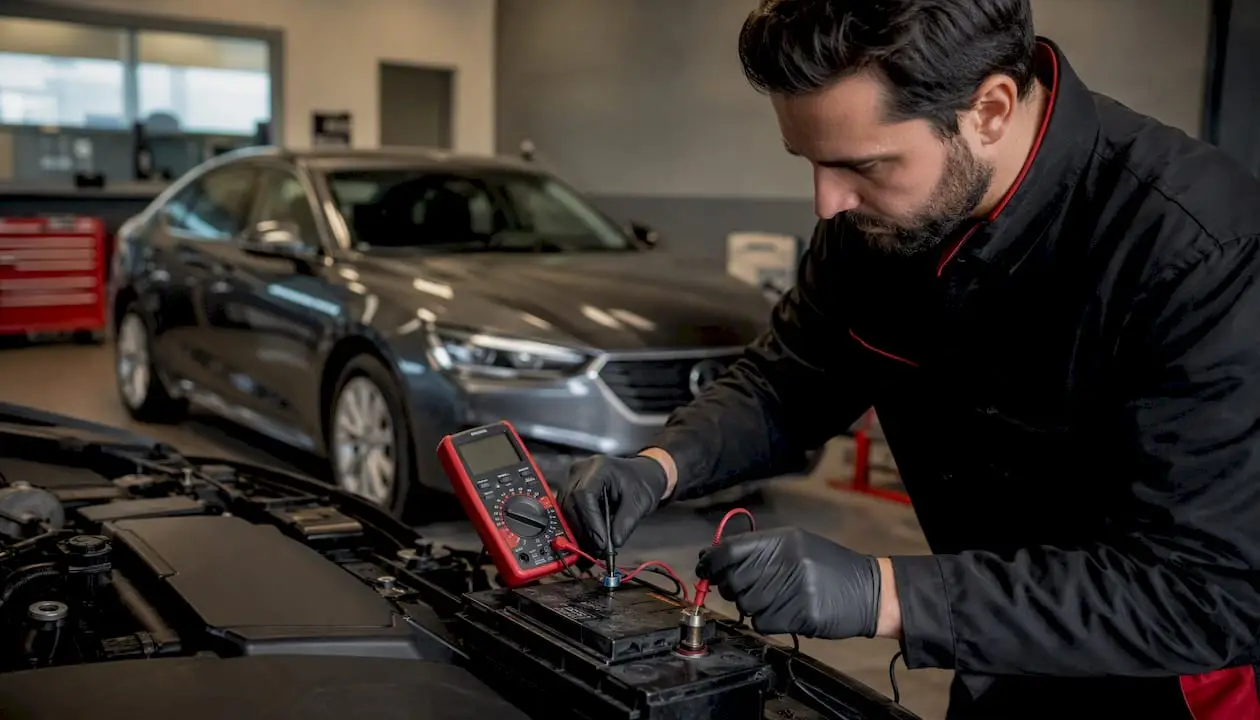
What I see most often is owners who’ve already replaced the battery before coming in. They spent $200 on a new battery, the light came back in 48 hours, and now they’re frustrated and out of pocket. The alternator was failing the whole time, slowly draining every battery put in front of it. A $100 diagnostic at the start would have saved them the battery cost entirely.
The other thing worth knowing: tell your technician everything. When did the light first appear? Has the car been jump-started recently? Any recent work done near the battery or alternator? That timeline cuts diagnostic time significantly. A jump-start history, for example, tells a tech the battery was already marginal — which changes the order of tests. The more context you bring, the faster and more accurately the problem gets solved. Most charging-system faults are straightforward once the right tests are run. You’ll typically know the answer within an hour.
Get a proper charging-system diagnosis at Express Lube & Car Care
When the battery light comes on, the worst move is waiting. The second-worst is replacing parts without a diagnosis. Expresslubearlington gives you a better path: a complete, documented charging-system evaluation performed by ASE-certified technicians who know exactly what to test and in what order.

On arrival, the team runs a full voltage and alternator output test, a battery load test, and a visual inspection of the belt, cables, and fuses. You get a clear written report of what’s failing and what it will cost to fix — no guesswork, no pressure to replace parts that don’t need replacing. As a RepairPal Certified Shop and CarFax Top-Rated Service Center, Expresslubearlington backs every repair with a 24-month / 24,000-mile warranty. If repair costs are a concern, auto repair financing is available so an unexpected alternator replacement doesn’t derail your budget. Stop by or call to book your diagnostic today — the sooner the charging system gets checked, the more options you have.
Useful sources and further reading
The following sources informed the voltage thresholds, safe-driving guidance, and diagnostic steps in this article:
“The battery or charging system light indicates that the charging system is not functioning properly and the battery may not be receiving a charge. If this light comes on while driving, turn off all non-essential electrical accessories and drive to the nearest repair facility.”
What’s Wrong if Battery or Charging Light Comes On | AAA
- Battery Warning Light: What It Means and How to Fix It (Carista) — useful overview of root causes and common fixes.
- What Does the Battery Light On Your Car’s Dash Mean? (AutoZone) — practical DIY context for battery-light troubleshooting.
- Express Lube & Car Care — Electrical System Repair in Arlington — for booking a charging-system diagnostic and reviewing warranty details.
FAQ
Can I still drive with the battery light on?
Yes, but only briefly. Steer estimates you have about 15–30 minutes under heavy electrical load and up to 45–90 minutes with minimal load during the day — turn off nonessentials and drive directly to a shop.
What causes the battery light to come on?
The most common causes are alternator failure, loose or corroded battery cables, a worn serpentine belt, a faulty voltage regulator, or a wiring/fuse problem in the charging circuit.
Does the battery light mean the alternator is bad?
Not always, but alternator failure is the most frequent culprit. A proper charging-system test (voltage, load, and alternator output) is the only reliable way to confirm whether the alternator, regulator, wiring, or battery itself is the root cause.
Why is my battery light on but my car is running fine?
The charging system may be failing gradually — the battery still has enough stored charge to run the car, but the alternator isn’t replenishing it. The light is the early warning before the battery drains completely, so treat it as urgent even when the car feels normal.