
What every Texas driver needs to do before the cold hits
Texas winters are sneaky. One day it’s 70°F, and three days later you’re staring at a frozen windshield and roads that look like a hockey rink. That’s the reality of cold weather vehicle prep in the Lone Star State, and it catches a lot of drivers completely off guard. The good news? A handful of targeted checks can keep your car running safely through whatever the season throws at you.
Here’s your quick-reference checklist before we dig into the details:
- Test your battery if it’s more than 3 years old. Cold snaps expose weak batteries fast.
- Check tire pressure and tread. Cold air drops tire pressure by roughly 1 psi for every 10°F drop in temperature.
- Top off coolant and antifreeze to manufacturer specs before temperatures fall.
- Lift your windshield wipers off the glass when parked overnight to prevent freezing.
- Switch to winter-rated washer fluid so your lines don’t freeze mid-drive.
- Keep your gas tank at least half full to prevent fuel line freeze and keep the heater running.
- Stay off the road during ice storms. Texas roads are rarely treated, and overpasses freeze first.
- Build a winter emergency kit with blankets, jumper cables, a flashlight, water, and snacks.
How Texas winters quietly destroy your car battery
Your battery is the first thing that fails when temperatures drop, and Texas makes the problem worse in a sneaky way. The brutal summer heat here actually damages battery electrolyte before winter even arrives, weakening capacity before the first cold snap hits. So by the time December rolls around, a battery that “seems fine” may already be running on borrowed time.
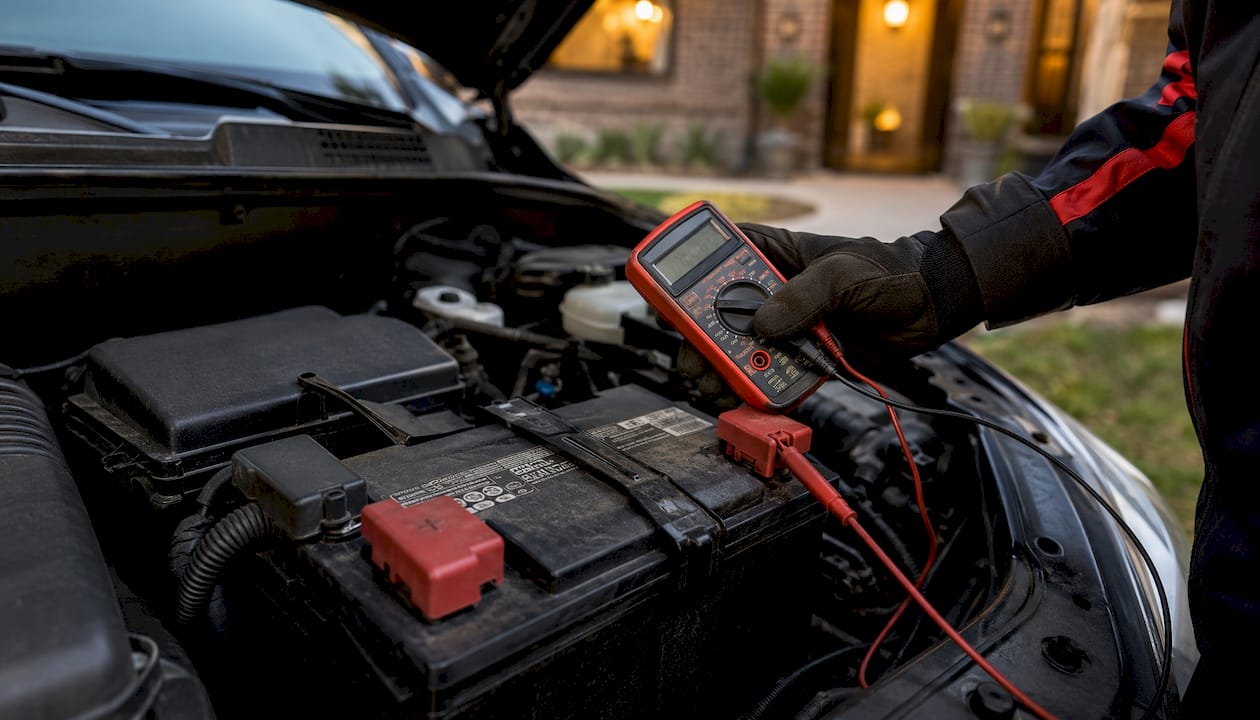
The numbers are sobering. At 32°F, a car battery loses about 35% of its strength. At 0°F, that loss climbs significantly. Meanwhile, cold thickens your motor oil, which means the battery has to work even harder to turn the engine over. Add in the heater blasting, headlights running longer in shorter winter days, and a phone charger plugged in, and you’ve got a recipe for a dead battery on a freezing morning.
Batteries over 3 years old should be tested before winter, not after the first failed start. Many auto parts stores will test yours for free. If it’s borderline, replace it proactively. Jumping a car on an icy road is not a fun experience.
- Clean any corrosion from terminals using a baking soda and water solution.
- Make sure the battery is tightly fastened, especially if you drive on rough roads.
- Park in a garage when possible to shield the battery from overnight cold.
Pro Tip: Consider a Battery Blanket, an insulating wrap that fits around your battery to retain heat overnight. It’s a low-cost fix that can make a real difference during a hard freeze.
Are your tires actually ready for Texas winter roads?
Tire pressure is one of those things that quietly goes wrong without any warning light. Cold weather lowers tire pressure by roughly 1 psi for every 10-degree Fahrenheit drop, and in Texas where temperatures can swing 40 degrees in a single day, that adds up fast. Underinflated tires reduce traction and increase wear, exactly what you don’t want when you hit a patch of ice on a Dallas overpass.
Tread depth matters just as much. The NHTSA recommends at least 2/32 of an inch of tread on all tires, but worn tires on wet or frozen pavement are genuinely dangerous. A quick test: insert a penny into the tread groove with Lincoln’s head pointing down. If you can see the top of his head, it’s time for new tires.
- Check pressure when tires are cold, meaning the car hasn’t been driven for at least 3 hours.
- Inflate to the pressure listed on the driver’s door frame sticker, not the number on the tire sidewall.
- Inspect tread and sidewalls for cuts, bulges, or cracks before cold weather arrives.
- Adjust your driving style on slick roads: slow, smooth inputs only.
A winterize car checklist that includes a tire inspection is one of the simplest ways to catch problems before they become emergencies.
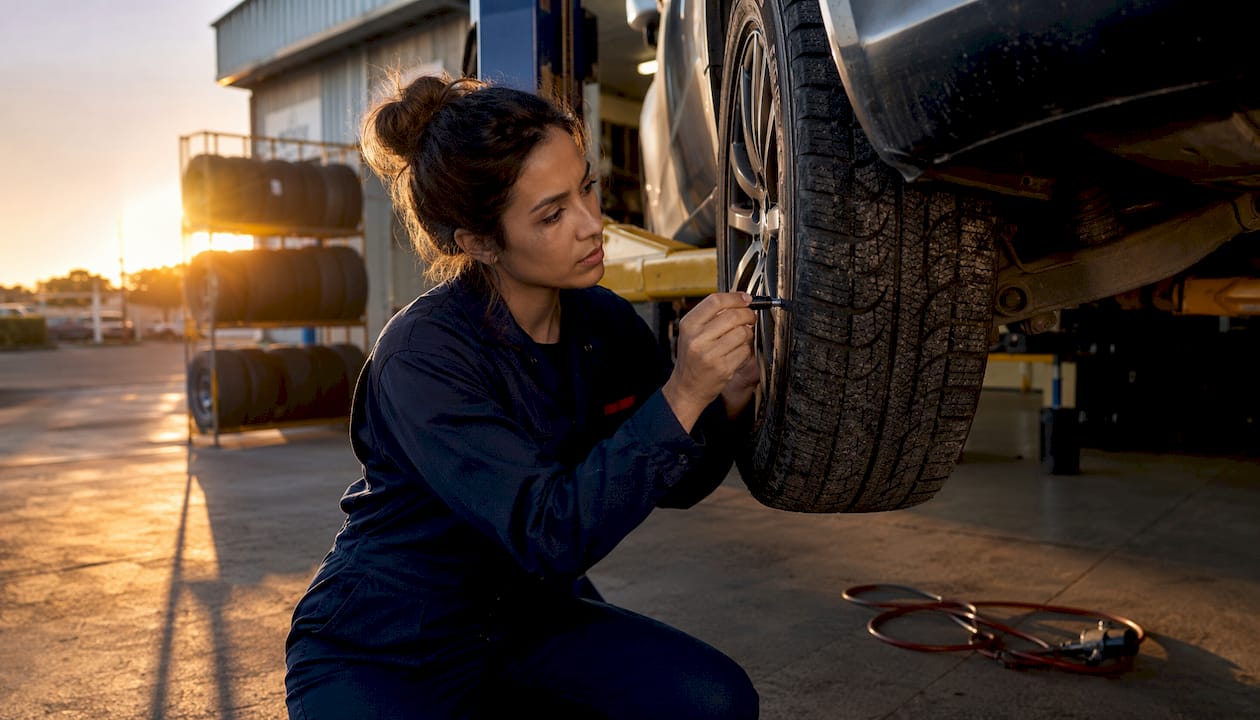
Coolant, antifreeze, and the fluids your engine depends on
Coolant is your engine’s first line of defense against a hard freeze. If the mixture is off or the level is low, you’re looking at potential engine damage that can cost thousands to repair. Check the coolant reservoir (never open the radiator cap on a hot engine) and confirm the level sits between the MIN and MAX marks.
Here’s a simple fluid check sequence to run before winter:
- Coolant/antifreeze: Confirm level and verify the mix meets your manufacturer’s specs. Most vehicles use a 50/50 blend of antifreeze and distilled water.
- Engine oil: Cold thickens oil. Check your owner’s manual for the recommended viscosity for winter driving.
- Brake fluid: Low or contaminated brake fluid affects stopping power, especially on wet roads.
- Windshield washer fluid: Replace standard fluid with a winter-rated formula that won’t freeze in the lines or crack the reservoir.
The NHTSA advises drivers to check the cooling system for leaks, test the coolant, and replace old coolant before winter weather hits. If you’re not sure when yours was last changed, that’s your answer right there.
How to protect door seals and vulnerable parts from freezing
Door seals are one of the most overlooked parts of cold weather vehicle prep. When temperatures drop below freezing, moisture gets into the rubber seal and freezes it to the door frame. You pull the handle, and either the seal tears or you’re standing in the cold wondering why your door won’t open.
The fix is simple: apply a silicone-based lubricant or a dedicated rubber conditioner to your door seals before a freeze. It keeps the rubber pliable and prevents ice from bonding to it. While you’re at it, treat the trunk seal and any sunroof seals the same way.
- Lift windshield wipers off the glass when parking overnight. Frozen wipers can tear the rubber blade or burn out the wiper motor when you try to use them.
- Park away from trees and power lines. Ice accumulation on branches causes them to snap, and a falling limb can do serious damage to your car.
- Test your front and rear defrosters before you need them. A fogged or iced windshield during freezing rain is a serious hazard, and a broken defroster is a problem you want to discover in your driveway, not on the highway.
Your heating system deserves a check too. If the cabin takes forever to warm up or the defroster blows cold air, have it inspected before the next freeze. A functioning heater is not just for comfort; it’s a safety system.
Safety and emergency preparedness for Texas winter driving
Texas lacks the specialized winter road infrastructure that northern states rely on. That’s not a criticism; it’s just reality. Staying off the road during ice storms is genuinely the safest option, and when officials issue travel advisories, they mean it. Overpasses and bridges freeze before surface roads, and even experienced drivers lose control on black ice.
When you do have to drive, the rules change. Increase your following distance dramatically. Brake early and gently. Avoid sudden lane changes. Cruise control has no place on icy roads; it can actually accelerate wheel spin when traction breaks loose.
Pro Tip: If you drive a hybrid or electric vehicle, precondition it while it’s still plugged in. Cold weather reduces EV battery efficiency and raises fuel needs in hybrids, but preconditioning while connected to power preserves your driving range.
Every Texas driver should keep a winter emergency kit in the car from november through march. Stock it with:
- Heavy blankets or a sleeping bag
- Flashlight with fresh batteries
- Jumper cables
- Phone charger
- Bottled water and non-perishable snacks
- First aid kit
Why your brakes need a seasonal check before Texas winters
Brakes don’t announce problems until the moment you need them most. Before winter arrives, have your brake pads, rotors, and brake fluid inspected by an ASE-certified technician. Worn pads on wet or icy roads dramatically extend stopping distances, and Texas drivers often underestimate how quickly a light drizzle can turn a road surface treacherous.
If you hear grinding, squealing, or feel a pulsing sensation when you brake, don’t wait. Those are your brakes sending up a flare. Cold weather also causes brake calipers to stick more readily, especially on vehicles that sit for extended periods. A quick seasonal inspection catches these issues before they become dangerous. The NHTSA recommends knowing whether your vehicle has an antilock brake system and understanding how to use it properly: firm, continuous pressure, not pumping.
How to protect your undercarriage from moisture and corrosion
Texas doesn’t use road salt as heavily as northern states, but it does happen, particularly on major highways during ice events. Salt and moisture together attack the metal components under your vehicle, including brake lines, exhaust components, and the frame itself. The damage is slow and invisible until it becomes expensive.
A thorough undercarriage wash after any winter weather event removes salt and road grime before it has time to work. Many car washes offer undercarriage rinse options, and it’s worth using them. If your vehicle is older or you live near coastal areas of Texas where humidity is already high, consider a professional undercoating treatment. Catching early rust on brake lines is a repair that costs far less than replacing them after they fail.
Fuel system care when temperatures drop in Texas
Keeping your gas tank at least half full during a Texas freeze does two things: it prevents moisture from building up in the fuel system, and it keeps the heater running if you get stuck in traffic during a road closure. For hybrid drivers, this is especially important since hybrids still rely on gasoline to generate cabin heat.
Modern engines don’t need long warm-up periods. Fuel-injected vehicles typically need only 30–60 seconds before driving, and extended idling actually wastes fuel and can drain the battery. Drive gently for the first few miles instead, which warms the engine oil and fluids far more effectively than sitting in the driveway with the engine running.
How to make sure your heating and defrost systems are ready
Your heater and defroster are the two systems you’ll rely on most during a Texas freeze, so test them before the weather turns. Turn the heater to full heat and confirm warm air comes out within a few minutes of driving. Switch on the front defroster and watch for the windshield to clear evenly. If there are cold spots or the defroster grid on the rear window has visible breaks, those need attention.
Wiper blades are part of this system too. Streaking or chattering blades in normal weather become completely useless in sleet or freezing rain. Replace them if they’re worn, and fill the washer reservoir with winter-rated fluid rated for freezing temperatures. Visibility is everything when Texas roads turn icy, and a clear windshield is your first defense.
Key Takeaways
Texas winter car maintenance comes down to one principle: address vulnerabilities before the freeze arrives, not during it.
| Point | Details |
|---|---|
| Battery testing is urgent | Batteries over 3 years old should be tested before winter; heat and cold together accelerate failure. |
| Tire pressure drops with temperature | Cold weather lowers pressure by roughly 1 psi per 10°F drop, reducing traction on icy roads. |
| Keep the tank half full | A half-full tank prevents fuel line freeze and keeps the heater running during road closures. |
| Stay off icy roads | Texas lacks winter road infrastructure; avoiding travel during ice storms is the safest choice. |
| Fluids and seals need attention | Coolant, washer fluid, and door seal lubrication prevent freeze damage and costly repairs. |
FAQ
How does Texas winter weather affect car batteries?
Texas summer heat damages battery electrolyte before winter arrives, and cold temperatures then reduce battery power by up to 35% at 32°F. Batteries over 3 years old should be tested or replaced before the first cold snap.
What should I keep in a Texas winter emergency car kit?
Stock your kit with warm blankets, a flashlight, jumper cables, a phone charger, bottled water, and non-perishable snacks. These supplies prepare you for sudden road closures or power outages during a Texas ice storm.
Do I need to warm up my car before driving in cold Texas weather?
Modern fuel-injected vehicles need only 30–60 seconds of idle time before driving. Drive gently for the first few miles to warm engine oil and fluids gradually rather than idling for extended periods.
How do I protect my car’s door seals from freezing in Texas?
Apply a silicone-based lubricant or rubber conditioner to door seals before a freeze to prevent ice from bonding to the frame. Lift windshield wipers off the glass overnight to avoid tearing the blades.
Where can I get a full winter vehicle inspection in the DFW area?
Expresslubearlington is a RepairPal Certified Shop and a CarFax Top-Rated Service Center with ASE-certified technicians ready to handle seasonal car checks for batteries, tires, brakes, fluids, and more. Stop by before the next Texas freeze and leave knowing your vehicle is ready.