
A flashing check engine light means an active engine misfire, and it’s not something to shrug off until your next oil change. Pull over when it’s safe, shift into Park, and shut the engine off. Driving on a misfire lets unburned fuel dump straight into your exhaust system, and that raw fuel can cook your catalytic converter within minutes. Here’s your first move:
- Ease off the gas the moment you notice the flash
- Pull into a safe spot, shift to Park, and kill the engine
- Don’t restart and drive normally, even if the light stops flashing
Pro Tip: That misfire event gets logged in your car’s computer as a diagnostic trouble code, even if the light calms down after you restart. A scan tool is the only way to know for sure what triggered it.
Key Takeaways
A flashing check engine light signals an active misfire that can damage your catalytic converter within minutes, so the correct response is to stop driving, not push through to your destination.
| Point | Details |
|---|---|
| Stop immediately | Pull over, shift to Park, and shut off the engine as soon as it’s safe to do so. |
| Try the restart test | Wait 30 seconds before restarting; if flashing returns, arrange a tow instead of driving. |
| Watch for red-flag symptoms | Heavy shaking, fuel odor, or visible smoke means tow, not a short drive. |
| Get codes read fast | An OBD-II scan and P0300 series codes point technicians to the affected cylinder. |
| Trust ASE-certified diagnosis | Expresslubearlington scans, tests, and repairs misfires with a 24-month/24,000-mile warranty backing the work. |
Table of Contents
- Why a Flashing Check Engine Light Is Worse Than a Steady One
- What’s Really Causing That Flashing Light
- Your Roadside Checklist for a Flashing Check Engine Light
- How Shops Diagnose a Flashing Check Engine Light
- When to Keep Driving and When to Call a Tow
- Maintenance That Keeps This From Happening Again
- How Expresslubearlington Diagnoses and Repairs a Flashing Light
- Does Your Car’s Make or Model Change How Urgent This Is?
- Can Weather or Bad Fuel Cause a Flashing Light?
- What This Editor Thinks You Should Actually Prioritize
- Get Your Flashing Check Engine Light Diagnosed Today
- Sources
- FAQ
Why a Flashing Check Engine Light Is Worse Than a Steady One
A steady check engine light usually means “get this looked at soon.” A flashing one means “stop what you’re doing.” Your engine control module tracks how often each cylinder fires correctly, and once misfires happen too frequently, the module knows raw fuel is hitting the catalytic converter and pushing temperatures dangerously high. That’s the trigger for the flash. It’s less a warning and more of an alarm.
You’ll often notice more than just the light. Watch for:
- A rough shake or pulsing feeling through the pedals or steering wheel
- A smell of raw or unburned fuel, sometimes sulfur-like
- A sudden drop in power or acceleration
Manufacturers build this threshold into every modern ECM as a safeguard, not a suggestion, and it’s tuned specifically to protect that expensive converter downstream.
What’s Really Causing That Flashing Light
Most flashing check engine lights trace back to a handful of usual suspects, and figuring out which one applies determines how serious your repair bill gets.
- Ignition failures. Worn spark plugs or a failing ignition coil are the most common triggers of sudden misfires. A coil that’s breaking down delivers a weak or inconsistent spark, and the cylinder it’s supposed to fire either skips entirely or fires late.
- Fuel system faults. A clogged or leaking injector, a weak fuel pump, or low fuel pressure can starve or flood a cylinder. Leaking injectors are especially rough on your converter because they dump extra raw fuel straight into the exhaust stream.
- Sensor and wiring issues. A bad crankshaft position sensor or a chafed wiring harness can throw off ignition timing enough to mimic a mechanical misfire, even when the parts underneath are fine.
- Internal engine trouble. Low cylinder compression or a burnt exhaust valve is the least common cause but the most expensive to fix. These usually need a shop’s compression tester or leak-down test to confirm, not a quick parts swap.
Pro Tip: If your fuel gauge is riding near empty when the light starts flashing, top off the tank before assuming the worst. Running low can starve a cylinder just enough to trigger a misfire code that has nothing to do with a failing part.
Your Roadside Checklist for a Flashing Check Engine Light
- Back off the throttle right away. Stop accelerating, cancel any towing plans, and reduce the load on the engine as much as traffic allows.
- Get off the road safely. Find a shoulder, parking lot, or side street, shift to Park, and shut the engine down completely.
- Check your surroundings before you touch anything. If you smell fuel or see smoke, stay out from under the hood and back away from the vehicle.
- Try a restart after 30 seconds. Waiting briefly sometimes clears a one-off misfire. If the light comes back on and flashes again, don’t keep driving. Call for a tow.
If the restart holds and nothing feels or smells wrong, you may be able to creep to a shop at low speed. If not, you’re in tow territory, and that’s the safer call every time.
How Shops Diagnose a Flashing Check Engine Light
Every diagnosis starts the same way: with a scan tool plugged into your OBD-II port. That pulls stored trouble codes and freeze-frame data showing exactly what the engine was doing the moment it misfired. Many parts stores and shops can read these codes for free or cheap, which makes it one of the fastest ways to learn whether you’re dealing with something minor or something towable.
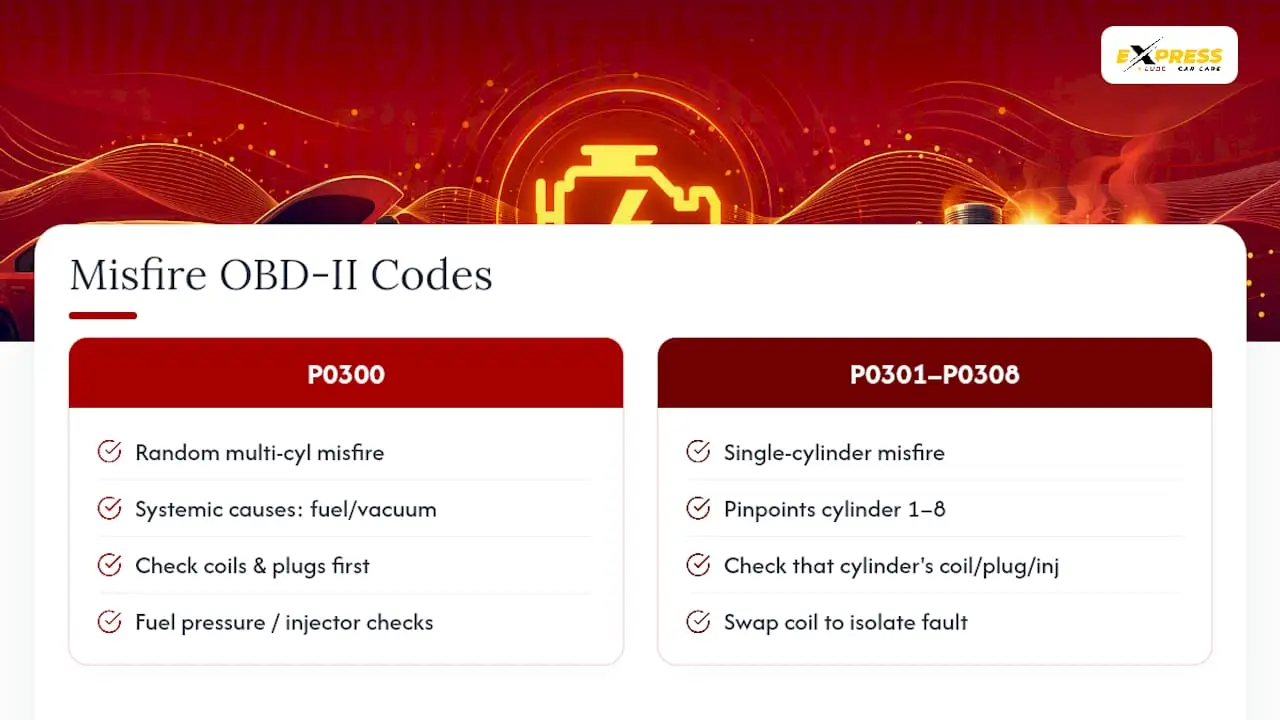
Misfire codes follow a pattern worth knowing. A P0300 means a random, multi-cylinder misfire, which often points to something systemic like fuel pressure or a vacuum leak. Codes P0301 through P0308 pinpoint a specific cylinder, which usually narrows the search to that cylinder’s coil, plug, or injector.
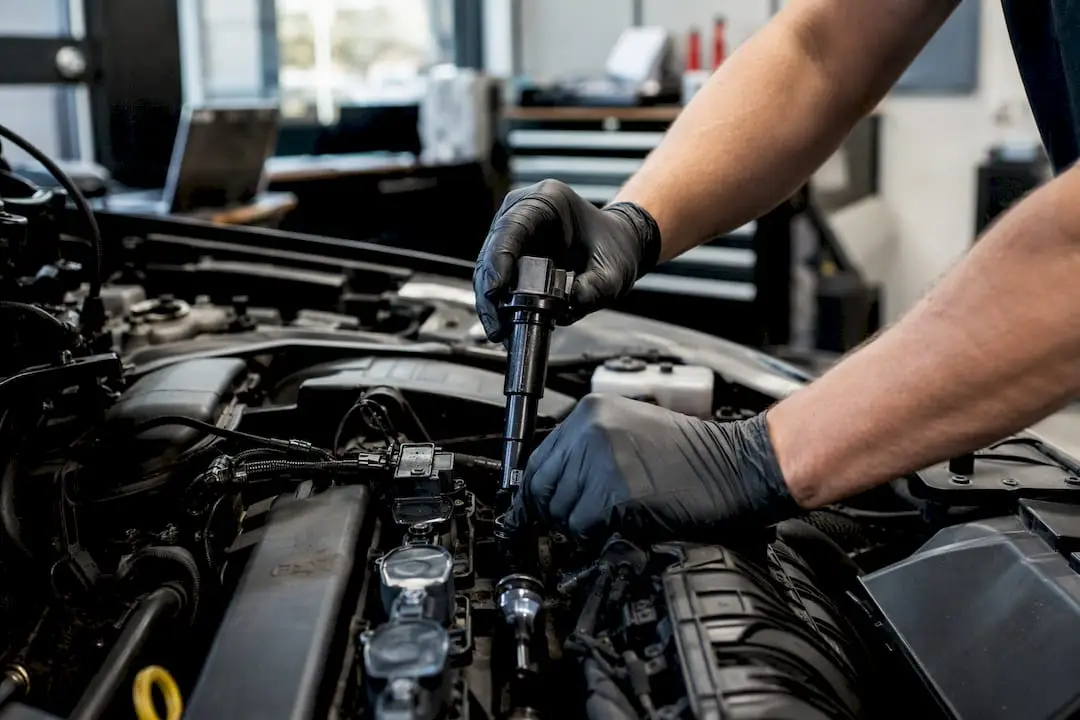
From there, a technician typically works through spark plugs and coils first, since they’re quick to inspect and often the culprit. Swapping a coil to a different cylinder is a fast way to isolate whether the coil itself is bad. Fuel pressure testing and injector pulse checks come next if ignition parts check out fine. Compression or leak-down testing only enters the picture when everything else points toward the engine’s internals, since those tests take longer and usually mean a bigger repair ahead.
When to Keep Driving and When to Call a Tow
A flashing check engine light doesn’t always mean the exact same emergency, but a few signs mean you should stop, full stop, and call for a tow:
- Heavy shaking or vibration you can feel through the seat or wheel
- A strong fuel odor inside or outside the cabin
- Visible smoke from under the hood or the tailpipe
- The light flashes again after your restart attempt
If none of those apply and the flashing cleared after your restart, a short, slow drive at speeds under 25 mph straight to a shop is a reasonable risk. Unburned fuel can damage a catalytic converter in a matter of minutes, and a converter replacement runs several thousand dollars. A tow bill looks a lot more reasonable next to that number.
Maintenance That Keeps This From Happening Again
Most flashing check engine lights are preventable, and the fix usually costs a fraction of what an emergency repair does. Spark plugs and ignition coils wear out gradually, so replacing them on your manufacturer’s recommended schedule, rather than waiting for a misfire, keeps you ahead of the problem.
A few habits go a long way:
- Replace fuel filters and use quality fuel to keep injectors clean
- Don’t ignore a steady check engine light. It’s often an early warning before things escalate to flashing
- Follow your maintenance schedule and keep service records so a shop can spot patterns faster
- Treat routine inspections as cheap insurance against a converter replacement
A relatively inexpensive coil and plug repair beats a costly converter replacement every time.
How Expresslubearlington Diagnoses and Repairs a Flashing Light
When you bring a flashing check engine light to Expresslubearlington, our ASE-certified technicians start with an OBD-II scan and freeze-frame review, then move into coil swaps, fuel pressure testing, or compression checks depending on what the codes point toward. We’re a RepairPal Certified Shop and a CarFax Top-Rated Service Center, and every qualifying repair carries a 24-month/24,000-mile warranty.
Before your visit, jot down your VIN, what the symptoms felt like, and roughly how long the light flashed. That detail alone can shave real time off diagnosis. For bigger jobs like a converter replacement, we also offer financing options so the repair doesn’t have to wait on your next paycheck.
Does Your Car’s Make or Model Change How Urgent This Is?
The flashing light means the same thing across every brand: an active misfire threatening your converter. But how quickly that damage happens, and how the vehicle behaves, can vary.
Turbocharged engines tend to be less forgiving. A misfire that sends unburned fuel toward a turbo’s exhaust housing can damage the turbo itself in addition to the converter, since exhaust temperatures in a turbo system already run hotter than a naturally aspirated engine. Direct-injection engines, common on many newer American, German, and Japanese models, are also more prone to injector fouling over time, which shows up as multi-cylinder misfire codes more often than single-cylinder ones.
Older vehicles with simpler port-injection systems sometimes tolerate a brief misfire with less immediate drama, but “less immediate” doesn’t mean “safe to ignore.” Some German and European models are tuned with more conservative misfire thresholds, meaning the light can start flashing at a lower misfire rate than a comparable American-market vehicle.
The bottom line doesn’t change by brand: if it’s flashing, treat it as urgent. The specific mechanical risk underneath might differ slightly, but the response, pull over, shut off, get it scanned, stays identical whether you’re driving a domestic truck or an imported sedan. If you’re ever unsure how your specific engine layout responds, a quick call to a shop familiar with your make can save guesswork.
Can Weather or Bad Fuel Cause a Flashing Light?
Cold weather makes misfires more likely, especially in vehicles with aging ignition components. Cold air is denser, which means your engine needs a stronger spark to ignite the air-fuel mixture properly. A spark plug or coil that’s already borderline can fail that test on a frigid morning even though it worked fine all summer. That’s why flashing lights spike a little in early winter, right as temperatures drop for the first time.
Fuel quality matters just as much. Water-contaminated fuel, common after storms or from a station with poorly maintained tanks, disrupts combustion enough to trigger cylinder misfires. Low-octane fuel in an engine tuned for premium can cause knock and misfire under load, particularly during acceleration or highway merging.
Humid climates carry their own risk: moisture can work its way into spark plug wells or distributor caps over time, creating a path for the spark to arc somewhere other than where it’s supposed to. If your flashing light started right after filling up at a new station, or right after the season’s first cold snap, that timing is worth mentioning to your technician. It often narrows the diagnosis faster than starting from scratch.
What This Editor Thinks You Should Actually Prioritize
Most advice about a flashing check engine light spends too much time on causes and not enough on sequencing. Readers want to know what broke, but the order of operations matters more than the diagnosis in the first ten minutes. Pull over. Shut off. Then worry about ignition coils.
Here’s what conventional advice tends to underplay: the restart test. People treat it like a gimmick, but it’s a genuinely useful filter. A cleared light after a 30 second wait doesn’t mean you’re in the clear forever, but it does mean you’ve likely bought yourself a slow, careful drive instead of a tow truck bill. Too many guides skip straight to “call a tow” without acknowledging that a short, cautious drive is sometimes the smarter move.
What’s underrated is the value of catching a steady light before it ever gets to flashing. By the time you’re on the shoulder watching that light blink, you’ve already lost the cheap-fix window. The real opportunity was three months earlier, at the last “check engine light on” moment nobody scanned. That’s the habit worth building, not just the emergency response.
Get Your Flashing Check Engine Light Diagnosed Today
A tow truck and a guessing game isn’t a repair plan, and that’s exactly where Expresslubearlington fits in for drivers dealing with a flashing check engine light in the DFW area. Instead of chasing parts one at a time, our ASE-certified technicians run a full OBD-II scan, isolate the misfire with coil swaps and fuel pressure testing, and give you a straight answer on what’s actually wrong before any parts get replaced.
Every qualifying repair is backed by our 24-month/24,000-mile warranty, so you’re not stuck wondering if the fix will hold. If the diagnosis points to a bigger job, like a converter or injector replacement, our financing options make it manageable without draining your savings in one shot. If a flatbed isn’t in the cards right now, a mobile mechanic service can get eyes on your vehicle before it moves at all. Call or book online today, and get that flashing light diagnosed before a small misfire turns into a converter replacement.
Sources
- What Does the Check Engine Light Mean? – Consumer Reports
- Blinking Check Engine Light (What It Means, Common Causes & What to Do) – GearFixes
- Check Engine Light Flashing? What It Means & What to Do (2026)
FAQ
Can I drive with the check engine light blinking?
You shouldn’t. A blinking light means an active misfire that can quickly damage your catalytic converter, so pull over, shut off the engine, and arrange diagnostics or a tow rather than continuing to drive.
What’s the most common cause of a flashing check engine light?
Ignition system failures, particularly worn spark plugs or a failing ignition coil, are the most frequent triggers behind sudden misfires that cause the light to flash.
How do I fix a flashing check engine light?
A shop starts with an OBD-II scan to pull misfire codes like P0300 through P0308, then inspects spark plugs and coils, tests fuel pressure, and checks compression if needed before making the repair.
Is a blinking check engine light worse than a solid one?
Yes. A steady light usually means a non-urgent issue worth scheduling service for soon, while a flashing light signals an active misfire that risks catalytic converter damage right now.
Should I worry about my ABS light staying on at the same time?
An ABS light staying on points to a separate issue, often a wheel speed sensor fault or an ABS module problem, and while you can typically still drive short distances, you lose anti-lock braking assistance, so get it inspected soon rather than ignoring it alongside a flashing check engine light.