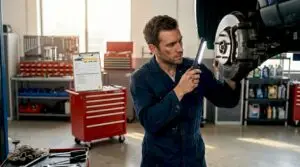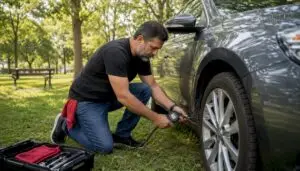

Clunking over bumps can point to a suspension issue, but a loose exhaust pipe can also cause a clunk. A technician can inspect the vehicle to identify the source. AAA lists clunking over bumps as a sign your suspension needs attention. If the noise sticks around or your steering feels different, get a professional suspension inspection.
TL;DR:
- Clunks can come from sway bar links, ball joints, bushings, struts, loose hardware, or exhaust hangers, so the sound alone cannot identify the cause.
- Note whether the clunk comes from the front or rear, which side it favors, and whether turning, speed, or load changes the noise.
- Use a flashlight to check for torn boots, leaking shocks, damaged exhaust hangers, uneven tire wear, or incorrect pressure, but never get under the car.
- Stop driving if handling feels unsafe, and shut off the engine if it clunks rhythmically at idle, a possible sign of serious engine damage.
- After suspension parts are replaced, ask whether the vehicle needs a wheel alignment, because changed wheel angles can cause pulling and uneven tire wear.
Table of Contents
- Which suspension parts cause clunking over bumps?
- How do the location and timing of the clunk narrow it down?
- What simple checks can you do at home?
- When is clunking a sign to stop driving and see a mechanic?
- What will a shop do, and how long will it take?
- Why we inspect clunking noises early
- Book a suspension inspection with us
- FAQ
- Sources
Which suspension parts cause clunking over bumps?
Think of your suspension as a team of moving joints, rubber cushions, and bolted brackets. When one of them wears out, the metal parts around it start knocking. Here are the usual suspects, with the reason each one clunks:
- Sway bar end links: A technician can check whether a sway bar link is contributing to the noise. A loose or damaged link may be one possible source of a clunk over bumps.
- Ball joints: A technician can check a ball joint for wear when investigating a clunk. Our page on ball joint failure symptoms shows what else to watch for.
- Control arm bushings: A technician can inspect control arm bushings as part of diagnosing the noise.
- Strut mounts and bearings: A technician can inspect the strut mount when diagnosing a clunk over bumps.
- Worn shocks and struts: A technician can inspect shocks and struts for wear or loose mounting.
- Loose hardware or broken brackets: A technician can check for loose hardware or damaged brackets.
- Loose exhaust hangers and underbody parts: AAA notes that a heavy clunk over rough surfaces can come from a loose shock absorber or a loose exhaust pipe. A technician can inspect the vehicle to help determine the source.
A clunk can come from the suspension or another source, such as a loose exhaust pipe. The next step is figuring out where and when the sound happens.
How do the location and timing of the clunk narrow it down?
You don’t need a lift to play detective. The pattern of the noise tells a technician a lot, and a clear description can save diagnostic time. Work through these questions in order:
- Does it happen over every bump at the front? The location can help a technician investigate the noise, but it does not identify the cause on its own.
- Is it on one side only? Tell the technician which side the sound seems to come from so they can inspect the vehicle. If you can tell which corner it comes from, say so when you book.
- Does it happen when turning or with the wheel off-center? Note whether the noise occurs while turning, since that detail may help a technician diagnose it. If the noise only appears in a tight parking-lot turn, mention that detail.
- Is it coming from the rear? Tell the technician if the sound seems to come from the rear, so they can inspect the vehicle and determine its source.
- Can someone help you localize it? Do not stand near a moving vehicle to locate the noise. Have a technician inspect it instead. The goal isn’t to be a hero, just to find out whether the sound is front or back, left or right.
- Does it change with speed or load? Note whether the noise changes with speed or load, and share that information with a technician.
Write down what you notice. A note like “front right, only over sharp bumps, louder when turning left” is gold to a technician. It won’t replace a proper inspection, but it points us in the right direction before the car even goes up on the lift.
What simple checks can you do at home?
A few low-risk checks can turn a vague noise into useful evidence. Keep the car on level ground, and stay safe while you do them.
- Look it over. With a flashlight, scan each wheel area for torn rubber boots, oily or wet shocks, cracked mounts, loose-looking bolts, and exhaust hangers that have come apart.
- Run a bounce test. Press down hard on one corner of the car, release, and watch it settle. A bounce test cannot confirm the cause of a noise. Have a technician inspect the suspension.
- Do a wheel-turn listen. Avoid trying to locate the sound near the wheels while the vehicle is running. Ask a technician to inspect it.
- Check your tires. Look for uneven tread wear and make sure the pressure matches the sticker on the driver’s door jamb. AAA suggests inspecting tires for proper inflation and tread, and having a technician look at the suspension after hard impacts. Tire condition is worth mentioning during an inspection, but it does not by itself identify the source of a clunk.
- Skip the under-car prying unless you’re set up for it. Do not get under the vehicle to check a sway bar link. Have a technician inspect it.
Pro Tip: Record a short phone video from outside the car while a friend drives slowly over the bump that triggers the noise. A clear clip of the sound helps us find the source faster.
A few safety rules matter more than any check. Do not get under the vehicle or conduct road tests with it to investigate the noise. Have a qualified technician inspect it. If you want a broader walk-around routine, our car inspection checklist covers the basics.
When is clunking a sign to stop driving and see a mechanic?
A clunk that keeps coming back should be checked by a technician. AAA’s guidance says ignoring suspension noises can speed up wear, compromise vehicle control, and raise repair costs down the road.
Treat the situation as more urgent if you notice any of these:
- The car pulls to one side or the steering wheel sits off-center
- Tires wear unevenly, especially along the inner or outer edges
- The car bounces or floats after a bump instead of settling
- The clunk gets louder or more frequent
- Steering feels loose, vague, or heavier than normal
Per AAA, a clunk over bumps is a primary sign the suspension needs a professional inspection, and the symptoms above are the ones that raise concern.
It also helps to separate suspension clunks from engine trouble. AAA explains that heavy, dull clunks over bumps usually point to suspension or exhaust issues, while a rhythmic clunk or tap with the engine idling can signal serious engine damage. If you hear that, shut the engine off.
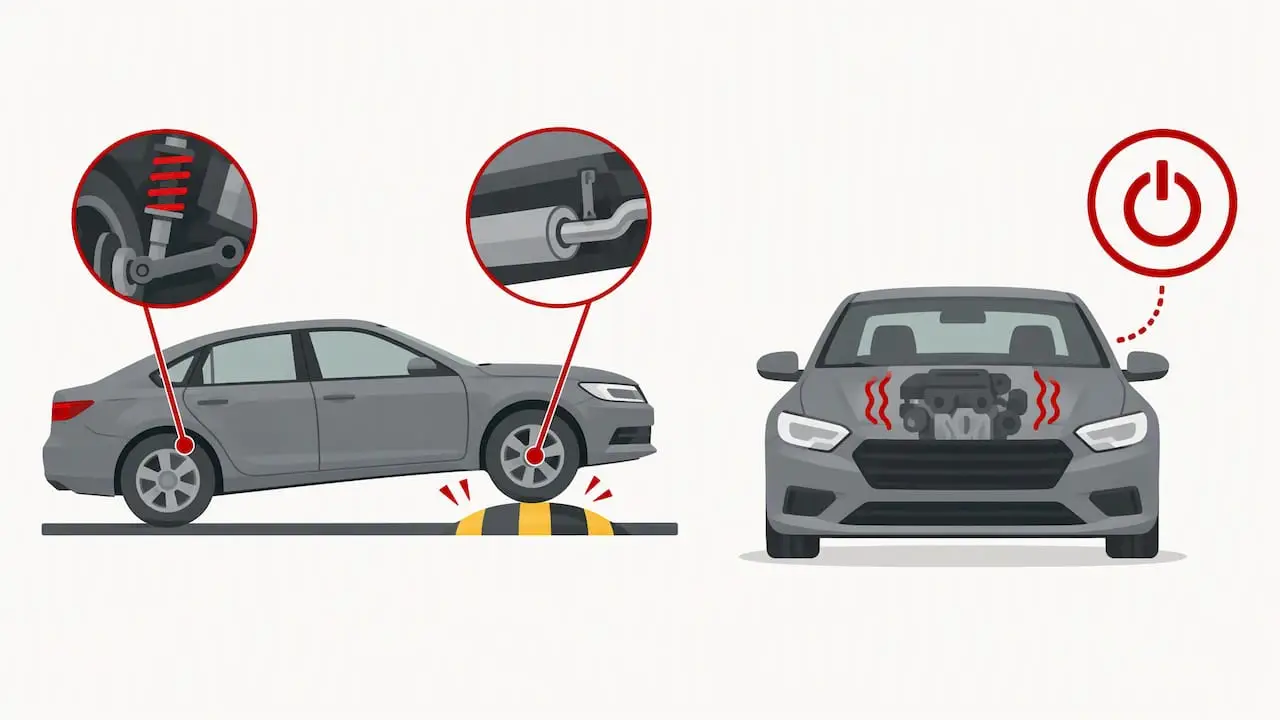
If steering or control feels impaired, or handling suddenly feels unsafe, stop driving and seek professional help. If your steering wheel also shakes at highway speeds, our steering wheel vibration guide explains what that points to.
What will a shop do, and how long will it take?
When you bring in a car with a clunk, the process is straightforward. We start with a road test to hear the noise the way you do. Then the car goes up on a lift, and a technician checks ball joints, sway bar links, and control arms for play, and looks over shocks and struts for leaks or breaks. Mounts, bushings, hardware, and exhaust hangers get a look too.
Repairs that commonly follow include:
- Sway bar link replacement
- Control arm bushing replacement
- Shock or strut replacement, including shocks and struts service
- Strut mount service
- Tightening or replacing loose hardware and exhaust hangers
The time needed for an inspection or repair depends on the vehicle and what the technician finds. Ask the shop for an estimate after diagnosis.
Once suspension parts are replaced, the angles that keep your wheels pointing true can change. AAA’s guide explains that alignment adjusts camber, caster, and toe, and that it is commonly recommended after suspension work to prevent pulling and uneven tire wear. We’ll tell you if your repair calls for a follow-up.
Why we inspect clunking noises early
A clunk can have several possible causes, so an inspection is needed to identify the source. A clunk can also be the kind of problem that tends to grow quietly. A technician can explain whether the issue needs attention and what repairs may be involved.
That’s why we like to look early. Ask the shop what its inspection includes and whether it can share documentation of its findings. You get a clear picture of what’s urgent, what can wait, and what’s just normal wear.
A technician can inspect the vehicle and explain the available repair options. The trick is not letting a small noise turn into a big bill.
— Express Lube & Car Care
Book a suspension inspection with us
If your car is clunking over bumps, we can find out why. Contact us to ask about an inspection for clunking over bumps and the services available for your vehicle.
- Steering and suspension repair for ball joints, links, bushings, and mounts
- Shocks and struts replacement
- Maintenance inspections to catch wear before it turns into a noise

At your appointment, we inspect the car, share photos and video of any problem, recommend repairs, and give you a timeline. Browse everything we offer on our services page, then call or book an inspection today.
FAQ
Can I drive with clunking suspension?
If your car is clunking over bumps, arrange a professional inspection. If steering or handling feels unsafe, stop driving and seek professional help. AAA warns that ignoring the noise can speed up wear and compromise control. If the car pulls, bounces, or steers oddly, stop driving and get it inspected.
What sound does a bad ball joint make on bumps?
A ball joint is one possible cause of a clunk, but similar noises can come from other parts. A technician can inspect the vehicle. Because other parts sound similar, a technician needs to check a ball joint for play.
What does failing suspension sound like?
Clunks, thuds, or rattles over bumps can have several causes. A technician can inspect the vehicle to determine the source. You may also notice extra bouncing, pulling, or uneven tire wear. AAA lists these symptoms as signs the suspension needs professional attention.
Does clunking always mean suspension?
No. A clunk can come from the suspension or another source, such as a loose exhaust pipe. An inspection can help identify the cause. A rhythmic clunk with the engine idling is different and can signal serious engine trouble, so shut the engine off if you hear it.
Sources
- Vehicle Noises You Should Never Ignore | AAA Club Alliance
- Guide to Vehicle Wheel Alignment and Suspension
- Ask a Mechanic: Signs Your Car Needs Maintenance – Your AAA Network