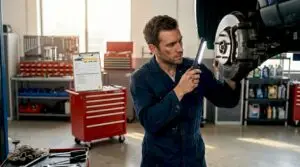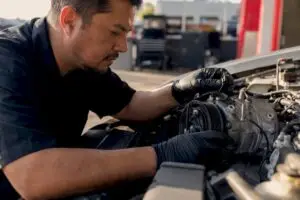

Steering wheel vibration usually points to one of three culprits: an out-of-balance tire, a warped brake rotor, or worn suspension parts. If the shake shows up only at highway speeds, think tires. If it kicks in when you brake, think rotors. Either way, ease off the gas, avoid hard braking, and get it checked before a minor annoyance turns into a bigger repair.
TL;DR:
- Tire imbalance is the most common cause of steering wheel vibration at highway speeds and can be fixed with a proper wheel balancing service.
- Vibration only when braking typically indicates warped rotors or sticking calipers, requiring brake system inspection and repair.
- Worn suspension parts, such as ball joints, tie rods, or wheel bearings, cause constant or low-speed shake and need regular suspension checks.
- Before visiting a shop, check tire pressure, examine for visible damage, and note when and where the vibrations occur to aid rapid diagnosis.
- Immediate stopping is necessary for sudden strong vibrations, tire visible damage, or loss of steering control to prevent tire failure or accidents.
Table of Contents
- Common mechanical causes and how each produces vibration
- Match what you feel to the likely cause
- Quick, safe checks you can do before visiting a shop
- When to stop driving and how to pull over safely
- Prevention: maintenance habits that head off vibration
- Technician-verified diagnostic steps: what a professional checks
- Shop perspective: common misdiagnoses and why prompt inspection matters
- How Express Lube & Car Care handles steering wheel vibration
- Sources
- FAQ
Common mechanical causes and how each produces vibration
Think of your tires as a set of spinning tops. When the weight around a wheel is not distributed evenly, that wheel wobbles as it spins, and the wobble travels straight up the steering column into your hands. That is wheel imbalance, and it is one of the most common reasons drivers feel a shimmy at certain speeds.
Tire damage tells a similar story with a different cause. A hard pothole hit, months of sitting parked in one spot, or internal cord damage can create a flat spot or a bulge. Instead of rolling perfectly round, the tire rolls slightly egg-shaped, and you feel it as a rhythmic pulse.
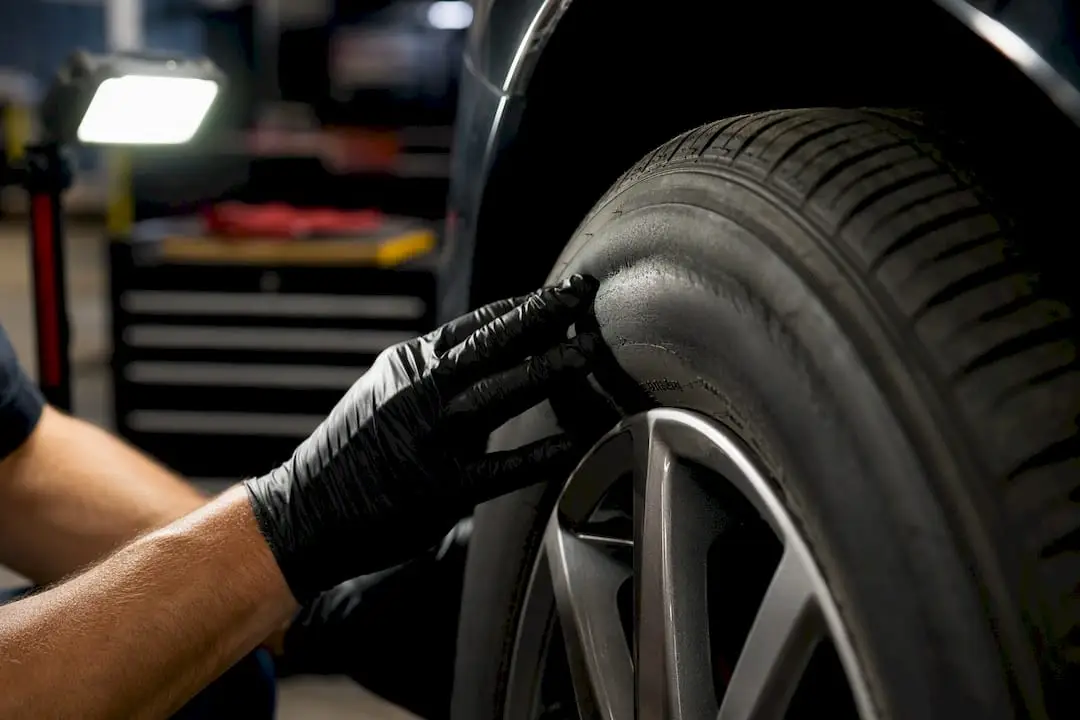
Brakes cause vibration a different way. Warped rotors or a caliper that is sticking instead of releasing cleanly create uneven friction every time the pads clamp down, and that unevenness shows up as pulsation through the pedal and the wheel. This kind of shake almost always happens only when you brake, which is a useful clue.
Then there is suspension and steering wear: ball joints, tie rods, bushings, and wheel bearings. These parts keep your wheels locked into a precise, controlled position. When they wear out and develop play, the wheel is no longer held steady, and that looseness translates into a wobble you feel at the wheel, often worse at lower speeds or over rough pavement.
- Wheel imbalance: uneven weight distribution causes a wobble that often appears in a narrow speed range.
- Tire damage: flat spots, bulges, or internal cord issues create a rhythmic pulse as the tire rotates.
- Brake problems: warped rotors or sticking calipers cause pulsation, usually only during braking.
- Suspension wear: loose ball joints, tie rods, bushings, or bearings let the wheel move more than it should.
Uneven weight distribution across a wheel and tire is a common source of steering shake at higher speeds, and it is typically corrected with a tire balancing service.
Match what you feel to the likely cause
Your steering wheel is basically sending you a message. The trick is learning to translate it.
- Vibration only when you brake: this points to brake rotor runout or a caliper that is not releasing properly. Note whether you also hear grinding or feel the brake pedal pulsing, since that detail helps a technician narrow things down fast.
- Vibration in a narrow highway speed window, say around 55 to 65 mph, but calm elsewhere: this usually signals a wheel balance problem or a tire defect like a flat spot. If the shake fades when you speed up or slow down, that pattern is a strong tell.
- A constant low-speed shimmy or a steering wheel that feels loose or wandering: this often means worn suspension or steering components, or sometimes a failing wheel bearing.
Whatever you feel, jot down which wheel seems worst, what the road surface was like, and whether you hit a pothole or had recent tire or brake work done. Those notes turn a vague complaint into a fast diagnosis.
Quick, safe checks you can do before visiting a shop
Before you book an appointment, a few minutes of your own detective work can save time on the lift.
- Check tire pressure cold, matching the number on your door placard. If you have already been driving, set the pressure 4 psi above the cold spec and recheck once the tires cool down.
- Walk around each tire looking for bulges, cuts, or a flat-spotted section where the tread looks worn unevenly.
- Check for uneven tread wear, which can hint at a tire or suspension issue before it ever reaches your hands on the wheel.
- Give each wheel a gentle push and pull if it is safely accessible, feeling for looseness, but leave anything involving lug nuts or wheel removal to a professional.
Pro Tip: Keep a quick note on your phone of the exact speed, road type, and whether braking triggers the shake. That single note often cuts diagnostic time in half.
When to stop driving and how to pull over safely
Some vibration is a nuisance. Some is a warning you cannot afford to ignore.
- Sudden, strong vibration that appears out of nowhere.
- Visible tire damage, like a bulge, deep cut, or a chunk missing from the tread.
- Loss of steering control or a vehicle that pulls hard to one side.
If any of these happen, ease off the accelerator, keep the steering wheel steady, brake gently once you have slowed down, and pull off the road somewhere safe. Vibration, bumps, bulges, or irregular wear can precede tire failure, so treat a sudden or worsening shake as a signal to stop and have the tire checked rather than something to wait out.
Prevention: maintenance habits that head off vibration
Most vibration complaints trace back to skipped maintenance rather than bad luck. A few habits keep the odds in your favor.
- Check tire pressure once a month against your vehicle’s cold PSI placard rating.
- Rotate and balance your tires on schedule, and have your tire alignment checked roughly every 6,000 miles or after hitting a significant pothole or curb.
- Make sure wheels are torqued to spec whenever they come off, since improper tightening can distort rotors and cause vibration down the road.
- Book periodic brake and suspension inspections so worn components get caught before they start shaking the wheel in your hands.
Technician-verified diagnostic steps: what a professional checks
A shop visit is not guesswork. Here is what actually happens on the lift.
- A test drive to confirm the speed range and conditions where the vibration shows up.
- Static and dynamic wheel-balance checks using a balancing machine to correct uneven weight.
- Brake inspection, including pad thickness and rotor runout measured with a dial indicator, plus a check of caliper operation.
- Suspension checks for ball-joint and tie-rod play, bushing wear, and wheel-bearing looseness.
From there, the fix matches the finding: rebalancing a wheel, resurfacing or replacing a rotor, or swapping out worn suspension components.
Pro Tip: Ask to see the rotor runout reading or the balance results. A shop that walks you through the numbers is one that wants you to understand the fix, not just pay for it.
Shop perspective: common misdiagnoses and why prompt inspection matters
We often see vibration blamed on tires when the real culprit is a wheel that was never torqued correctly during a past repair, which slowly distorts a rotor over time. Catching that early saves you from replacing parts that were never the problem. Bring us your notes on speed, braking, and road conditions. That detail is often the difference between one visit and three.
— Express Lube & Car Care
How Express Lube & Car Care handles steering wheel vibration
You already know the likely causes. What you need next is someone to confirm which one applies to your car and fix it right the first time. Our team handles the full range, from tire balancing and wheel mounting torqued to spec, to brake pulsation diagnostics and suspension and steering repair.

- Skilled, certified technicians handle every diagnostic and repair.
- Industry certifications reflect quality workmanship and consistent service.
- A warranty applies on qualifying repairs.
If your steering wheel has been shaking, do not keep guessing. Schedule an inspection and let us pin down the cause before it turns into a bigger repair bill.
Sources
This article draws on tire pressure and alignment guidance from Bridgestone, cause and diagnostic explanations from AAA, torque guidance from AAA’s Car Doctor, and safety warnings from Bridgestone’s tire maintenance manual. Preventive brake-care tips also reference Diamond Brite.
- How to Check Tire Pressure With a Tire Pressure Gauge
- Why Your Steering Wheel Shakes: 6 Possible Causes | AAA Club Alliance
FAQ
What would cause a steering wheel to vibrate?
The most common causes are wheel or tire imbalance, warped brake rotors, sticking calipers, flat-spotted tires, or worn suspension parts like ball joints and tie rods. The pattern of when it happens, at speed, while braking, or all the time, usually points to which one applies.
Why does my steering wheel vibrate at 70 mph?
Vibration that only shows up at higher speeds is most often caused by wheel imbalance or a tire defect such as a flat spot. A tire balancing service typically resolves imbalance-related shaking.
Is it okay to drive if my steering wheel is shaking?
Mild, occasional vibration may not be an emergency, but sudden or worsening shaking should not be ignored. Vibration can precede tire failure, so treat a strong or sudden shake as a reason to slow down and get it inspected soon.
How can I fix a vibrating steering wheel?
The fix depends on the cause: rebalancing or replacing a damaged tire, resurfacing or replacing a warped rotor, or repairing worn suspension components like tie rods or ball joints. A technician can confirm the cause with a rotor runout check and balance test before recommending a repair.