
If your steering whines or feels heavy at low speeds, power steering fluid low is a likely cause. Top off the fluid only as a temporary step to get you safely to a shop, and don’t ignore it. Left unchecked, low fluid starves the pump, damages internal seals, and turns a cheap fix into an expensive repair.
TL;DR:
- Most power steering leaks originate from aging hoses, worn pump seals, or cracked reservoir fittings, which are typically affordable and straightforward repairs.
- Continuously driving with low or contaminated fluid risks pump damage, seizure, or more costly component replacements, so a prompt top-off is only a temporary safety measure.
- Visual and auditory signs such as whining noises, heavier steering effort, or fluid spots under the vehicle help pinpoint the leak source before inspection.
- Routine checks of fluid level and hose conditions, along with early leak detection techniques like UV dye testing, can prevent systemic damage and unnecessary repairs.
- A professional diagnostic involves a dye test and lock-to-lock steering cycle to accurately identify leak points, usually completed within the same day.
Table of Contents
- What Does Low Power Steering Fluid Feel and Sound Like?
- Where Does Power Steering Fluid Actually Leak From?
- Is It Safe to Keep Driving With Low Power Steering Fluid?
- How to Check and Top Off Power Steering Fluid
- When Do You Need a Fluid Flush vs. a Full Repair?
- How Do You Prevent Power Steering Fluid From Running Low?
- What Does a Professional Steering Diagnostic Actually Involve?
- A Shop’s Honest Take on Steering Fluid Trade-Offs
- Book a Steering Fluid Diagnostic in Arlington
- Sources
- FAQ
What Does Low Power Steering Fluid Feel and Sound Like?
Low fluid rarely shows up as one clean symptom. It’s usually a combination of noise, feel, and a mess you find later.
The most telling sign is a whine or groan when you turn the wheel, especially at low speeds like parking lot maneuvers or tight turns. Some drivers describe a squeal on startup that fades once the engine warms. This happens because the power steering pump is drawing in air along with fluid, and that low steering fluid symptom gets louder the lower the reservoir drops.
Steering feel changes are the second clue. Watch for these:
- Heavier steering effort at low speed, especially during parking or U-turns
- Intermittent loss of power assist, where the wheel briefly feels normal then stiffens
- A slight pull to one side that wasn’t there before
- Steering that feels fine at highway speed but fights you in the driveway
Visual clues confirm what your ears and hands are already telling you. Check for reddish or amber spots under the front of the vehicle, wet residue around the pump pulley, or a damp sheen along hoses near the engine bay. Fresh fluid usually looks pink to red and smells faintly like petroleum. Dark, black, or foamy fluid points to contamination or age, not just a low level. Whining, groaning, or grinding noises when turning, paired with heavier steering effort, are classic symptoms of low or dirty power steering fluid.
A slow leak gives you warning over weeks. A sudden hose blowout gives you none. If the noise and stiffness appeared overnight, suspect a fast failure rather than gradual seepage.
Where Does Power Steering Fluid Actually Leak From?
Power steering fluid doesn’t just disappear. It escapes from one of a small handful of predictable spots, and knowing which one narrows down your repair before you even open the hood.
- High-pressure hoses fail dramatically. A cracked hose sprays fluid under pressure rather than dripping, and you’ll often see a fine mist on the inside of the hood.
- Pump shaft seals leak slowly, leaving fluid pooled or slung around the pulley area, often mistaken for oil.
- Rack-and-pinion inner seals weep quietly. Fluid migrates into the rubber bellows on each end of the rack, so a quick glance underneath shows nothing while the leak keeps draining the reservoir. Squeezing the boot by hand can reveal fluid that a casual inspection would miss entirely.
- Reservoir cracks or loose caps show up as steady drips right below the reservoir itself, sometimes worsened by age or a fitting that was overtightened during a past repair.
Hoses and reservoirs are usually straightforward, affordable fixes. Pump seals and rack seals mean more labor and, in the rack’s case, sometimes a full component replacement.
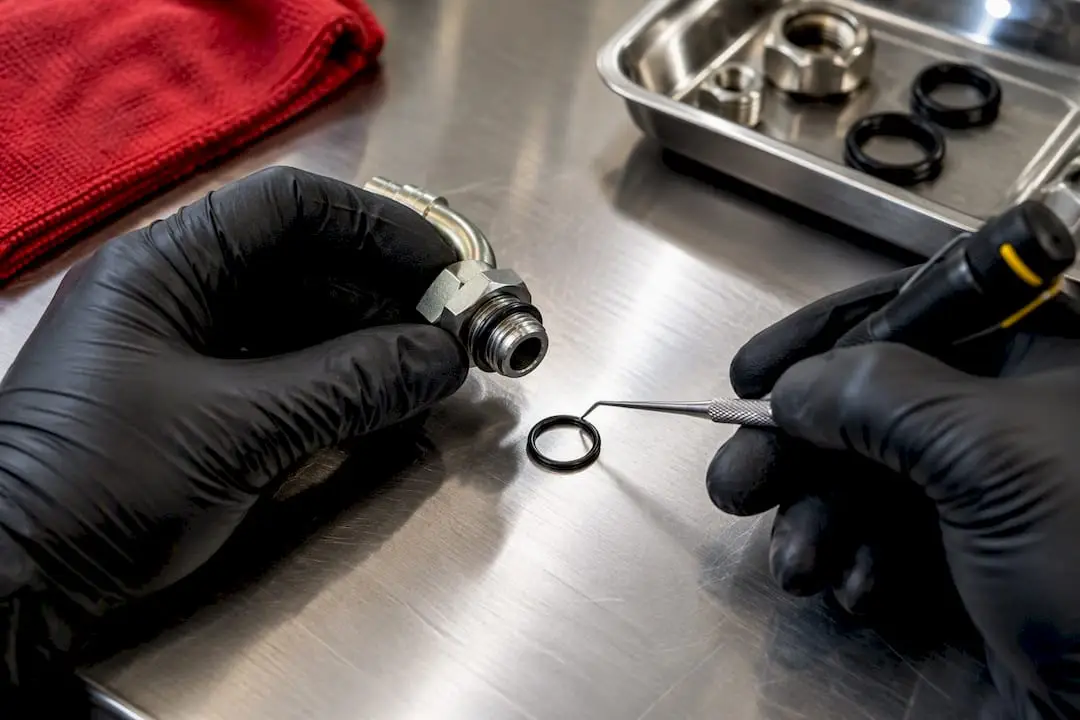
Pro Tip: If you’ve had any DIY work done on your power steering system, check the fitting O-rings first. Many of these seals need less than 15 foot-pounds of torque, and overtightening during a repair can split the seal and create a brand-new leak that wasn’t there before.
Is It Safe to Keep Driving With Low Power Steering Fluid?
Treat this as a short countdown, not a long-term plan. Here’s the order of operations:
- Pull over somewhere safe and pop the hood. Check the reservoir level against the MIN and MAX marks, and scan the pump, hoses, and reservoir for fresh wetness.
- If the level is low but you have fluid on hand, add it slowly until it reaches the MIN or MED line. Don’t go higher. This buys you time, it doesn’t fix anything.
- Call for roadside help instead of driving if fluid is actively spraying, if the steering wheel feels like it’s fighting you at any speed, or if you’ve lost assist entirely. A vehicle that’s hard to steer is a vehicle you shouldn’t be driving in traffic.
- If you do drive to a shop, keep the trip short, stick to slower roads, and skip anything requiring quick or repeated full-lock turns.
A slow leak gradually starves the pump of pressure, and running the pump dry can seize it within a short distance, turning a fluid top-off into a pump replacement. Limiting how far you drive on low fluid and getting repairs promptly protects the pump from that kind of damage.
How to Check and Top Off Power Steering Fluid
Confirming a low steering fluid sign takes five minutes and a flashlight. Here’s the process most shops walk customers through over the phone:
- Find the reservoir. It’s usually a small plastic tank near the front of the engine bay, sometimes with a dipstick built into the cap, sometimes just a translucent MIN/MAX window.
- Check it at the right temperature. Most reservoirs list separate cold and hot marks. Check cold if the car has sat overnight; check hot if you just drove it. Mixing these up gives you a false reading.
- Look at the fluid itself. Clear to pink or light red fluid is healthy. Dark brown, black, or foamy fluid signals contamination, oxidation, or air in the system, not just a low level.
- Confirm the correct fluid type in your owner’s manual before adding anything. Some vehicles use dedicated power steering fluid, others call for automatic transmission fluid, and using the wrong one can swell seals or cause sludging.
- Add fluid slowly, a little at a time, checking the level as you go. Overfilling forces fluid out through the cap when the system heats up and expands.
- Start the engine and turn the wheel lock-to-lock a few times while idling, then recheck the level once more and top off if needed.
- Wipe up any spills and note whether fluid reappears in the same spot within a day. That reappearance tells you the leak is still active.
Pro Tip: Never assume ATF and OEM power steering fluid are interchangeable just because both are red. Some rack seals are only rated for one or the other, and the wrong fluid can cause seals to swell and fail months later.
Topping off isn’t a repair. It’s a bridge to one, and mixing incompatible fluid types can accelerate seal wear and system damage rather than solve it.
When Do You Need a Fluid Flush vs. a Full Repair?
Not every low-fluid situation ends the same way. A fluid flush and refill handles cases where the fluid itself has simply aged or picked up contamination, with no active leak. A worn hose or a leaking reservoir fitting is a targeted, contained repair. A failing pump seal or a worn rack seal is a bigger job, sometimes involving component replacement rather than a simple seal swap.
- Fluid service alone: addresses dark or foamy fluid with no visible leak points
- Hose or reservoir repair: contained, predictable labor scope
- Pump or rack seal replacement: more involved, and cost varies significantly by vehicle and labor time
Delaying any of these lets a slow leak become pump cavitation, and a cavitating pump can seize. A weeping rack seal left alone tends to worsen with time and mileage, since rubber seals don’t heal themselves.
Stop-leak additives deserve a caution of their own. They can offer short-term relief from a small weep, but they risk clogging pump passages and can accelerate the very failure they’re meant to prevent. If you’ve used one, mention it when you book a diagnostic. It changes what a technician should look for.
How Do You Prevent Power Steering Fluid From Running Low?
Most steering fluid problems are preventable with a few habits built into your normal service routine.
- Check the reservoir level every time you’re in for an oil change, or at minimum every six months
- Replace hoses at the first sign of cracking, bulging, or a crimp fitting that looks stressed
- Inspect hose routing and mounting brackets so nothing is rubbing against a bracket or the frame
- Avoid holding the wheel at full lock for extended periods, which spikes pressure on seals unnecessarily
- Follow your vehicle’s fluid service interval rather than assuming the system never needs attention
Routine inspection is what catches a small seal weep before it becomes a roadside call, and following a manufacturer’s fluid service interval catches degradation early. Rolling fluid checks into your existing schedule (see our fluid replacement guide for typical intervals) keeps this from becoming a surprise.
Pro Tip: For a leak you can’t pinpoint by eye, lay a clean piece of cardboard under the vehicle overnight. A UV dye added to the fluid, checked under a black light, will show exactly where fluid is escaping, even from a hidden rack seal.
What Does a Professional Steering Diagnostic Actually Involve?
A proper diagnostic goes well beyond a visual glance. Technicians typically clean the suspected area, top off the fluid, add UV dye, run the vehicle through a lock-to-lock steering test, and then inspect under UV light to pinpoint the exact source rather than guessing.
- Clean and inspect the pump, hoses, rack boots, and reservoir fittings
- Add fluid and UV dye, then cycle the steering to force fluid to the leak point
- Document findings with a digital vehicle inspection, including photos, so you see exactly what’s happening
- Recommend fluid service, a targeted hose or fitting repair, or a component replacement based on what the dye reveals
If you’ve already checked the reservoir, added fluid, and the noise or stiffness returns within days, that’s your signal to stop DIY troubleshooting and book a diagnostic instead.
A Shop’s Honest Take on Steering Fluid Trade-Offs
Don’t drive far once assist feels compromised, that’s how pumps get ruined. A quick top-off buys you a trip to the shop, nothing more. Snap a photo of any leak or fluid spot you find. It helps a technician diagnose faster and gives you a record if the repair falls under warranty.
— Express Lube & Car Care
Book a Steering Fluid Diagnostic in Arlington
A proper diagnostic includes a clean, dye, and lock-to-lock protocol, performed by certified technicians who document every finding with photos and videos through a digital vehicle inspection, not just a verbal guess.

When you call or book online, have your vehicle’s year, make, model, the noise or symptom you’re noticing, and any photos of fluid spots ready. It speeds up the visit and helps the technician know what to check first. Most steering fluid diagnostics and repairs turn around the same day. Current details on certifications, warranties, and service quality are available on the official website. Schedule your steering diagnostic today, or visit the main service page for directions and hours.
Sources
For more on fluid checks and hose inspection, see AutoZone’s leak causes guide, AAA’s warning signs breakdown, and our car inspection checklist.
- What causes a steering fluid leak | AutoZone DIY
- Warning signs of a power steering leak | AAA Club Alliance
- Power Steering Failure: Can You Still Drive Safely And How Far Can You Go? | Xerodrive
- How to identify and fix a power steering fluid leak | HowStuffWorks
FAQ
Can I just add more power steering fluid?
Adding fluid is fine as a short-term step to reach a mark on the reservoir, but it doesn’t fix the underlying leak. Topping off should be treated as a temporary safety measure, not a repair. Plan on a diagnostic soon after.
How much does it cost to fix low power steering fluid?
Cost depends entirely on the cause. A fluid flush is a smaller service than replacing a hose, and a pump or rack seal repair involves more labor and parts, so current pricing is listed on the Express Lube & Car Care services page rather than a flat number.
Can you change power steering fluid yourself?
Checking the level and topping off with the correct fluid is a reasonable DIY task if you follow your owner’s manual. Tracing a hidden leak, however, often needs UV dye tracing and a lock-to-lock test that most driveways aren’t equipped for.
How long does power steering fluid last?
Power steering fluid doesn’t have a universal mileage limit, but it degrades over time and with heat exposure, turning dark or foamy when contaminated. Following your vehicle’s recommended service interval, and checking it during routine visits using our fluid replacement schedule, catches degradation before it causes symptoms.