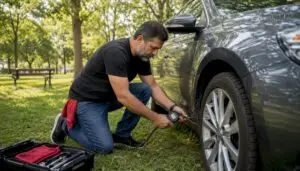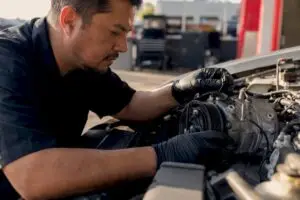

A transmission fluid leak is never a “wait and see” problem. Left unchecked, it starves internal components of lubrication and cooling, and that path leads straight to slipping gears and transmission failure. Check your fluid level, avoid long drives if you notice slipping or a burning smell, and only top off as a short-term measure. The real fix starts with a professional diagnostic that confirms exactly where the fluid is coming from.
TL;DR:
- Most transmission fluid leaks originate from pan gaskets, cooler lines, or seals, and early diagnosis can significantly reduce repair costs.
- A leak that causes slipping, burning smells, or a large puddle should prompt immediate stops and professional inspection to prevent transmission failure.
- Confirming a leak involves visual checks, dipstick level monitoring, and the cardboard test, with UV dye testing offering precise leak pinpointing.
- Repair costs range from simple gasket or line fixes to costly internal seal replacements or transmissions, making timely diagnosis crucial.
- Using ASE-certified shops ensures accurate leak identification, proper repairs, warranty coverage, and can avoid unnecessary parts replacement.
Table of Contents
- How to Tell a Transmission Fluid Leak From Other Fluid Leaks
- Common Causes and Leak Points Behind a Transmission Fluid Leak
- What Happens if You Keep Driving on a Transmission Fluid Leak
- How to Confirm and Trace a Transmission Fluid Leak
- Transmission Fluid Leak Repair Options and What They Typically Cost
- Preventing a Transmission Fluid Leak Before It Starts
- Why an ASE-Certified Shop Matters for Transmission Diagnostics
- A Quick Note From Express Lube & Car Care
- Get Your Transmission Fluid Leak Diagnosed the Right Way
- Sources
- FAQ
How to Tell a Transmission Fluid Leak From Other Fluid Leaks
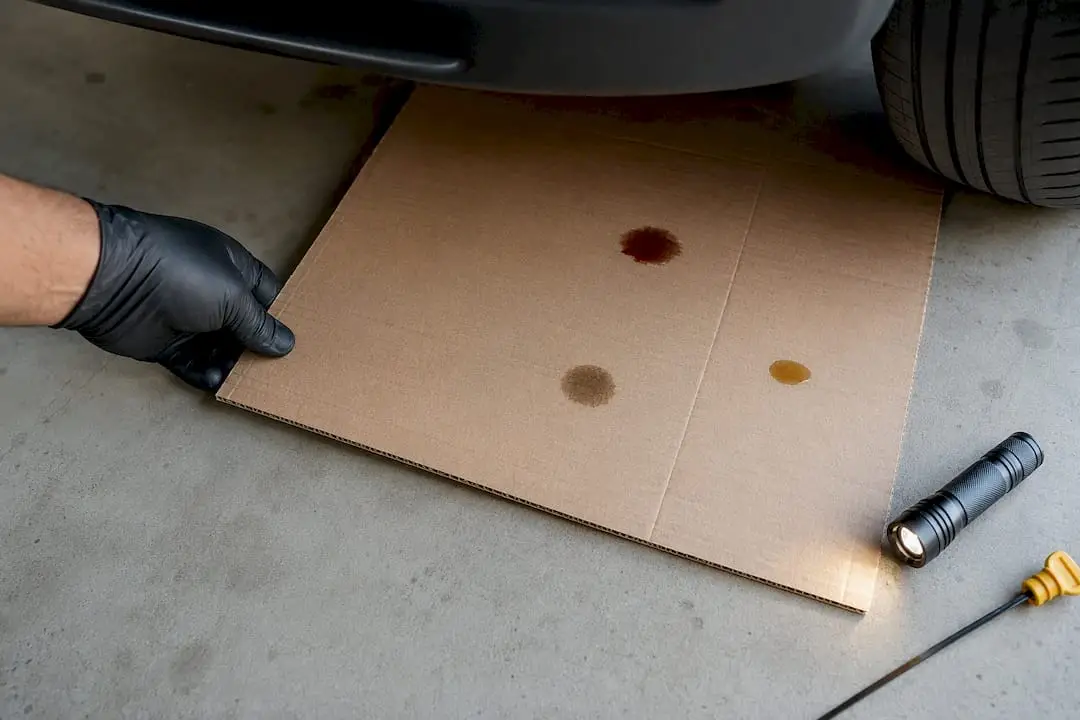
Fresh automatic transmission fluid (ATF) starts out bright red or pink, almost like cherry Kool-Aid. That’s the easy case. The tricky part is that ATF darkens with age and heat, turning brownish or even black over time, which is exactly why so many drivers mistake an old transmission leak for an engine oil drip.
Location gives you a second clue. Transmission fluid puddles tend to show up toward the center or rear-center of the vehicle, under the transmission housing, while engine oil pools closer to the front. Coolant, by contrast, is usually sweet-smelling and green, orange, or pink.
Your driving experience matters just as much as what’s on the ground:
- Delayed or hesitant engagement when shifting into drive or reverse
- Slipping between gears, especially under acceleration
- A whining or humming noise that changes with engine speed
- A sharp, burning smell after highway driving or extended idling
Pro Tip: Snap a photo of any puddle the moment you see it, and jot down when it appeared, after a long drive, during hot idling, or first thing in the morning. That detail speeds up diagnosis dramatically.
Common Causes and Leak Points Behind a Transmission Fluid Leak
Most transmission fluid leaks trace back to a short list of usual suspects. Knowing where to look helps you describe the problem accurately when you call for help, even if you’re not doing the repair yourself.
- Pan gasket: The most frequent culprit. Look for wetness around the flange where the pan bolts to the transmission housing.
- Cooler lines: These metal or rubber lines run to the radiator up front. A drip or fine spray near the front of the vehicle often points here.
- Seals: Input shaft, output shaft, and selector shaft seals wear out over time. Leaks near the axles or the front of the transmission often come from these.
- Dipstick tube and overfill: A cracked tube seal, or fluid pushed out from overfilling, can look like a leak but isn’t a component failure.
- Torque converter and front seal: These leaks often run forward along the bottom of the transmission and can pool in a spot that looks deceptively like a pan gasket leak.
Most of these fixes are straightforward. A cracked transmission case or housing is the exception. That kind of damage usually means a costly repair, and it’s worth ruling out early rather than guessing.
What Happens if You Keep Driving on a Transmission Fluid Leak
Transmission fluid does three jobs at once: it lubricates moving parts, carries heat away from friction points, and builds the hydraulic pressure that shifts gears. Lose enough fluid, and all three functions degrade together. Gears start slipping first, then internal components overheat, then wear accelerates fast.
Even a small leak can escalate into slipping, overheating, and full transmission failure if it’s ignored long enough.
Stop driving and call for a tow if you notice:
- Pronounced slipping or the transmission refusing to engage a gear
- A strong burning smell from under the vehicle
- Sudden loss of drive power at a stop light
- A large puddle forming after just a short trip
Pro Tip: A quick top-off can buy you a trip to the shop, but it’s not a fix. If you’re topping off more than once a week, treat that as a red flag, not a routine.
How to Confirm and Trace a Transmission Fluid Leak
Before you assume the worst, a few simple checks can narrow things down:
- Run the cardboard test. Park overnight on flattened cardboard and check the color, size, and location of any spot the next morning.
- Check the dipstick on level ground, if your vehicle has one, and note whether the level has dropped since your last check.
- Inspect visually around the pan flange, cooler lines, axle seals, and the radiator area for wetness or grime buildup.
- Call the shop if fluid is actively dripping, you can’t tell coolant from transmission fluid, or symptoms show up while driving.
Shops go a step further with tools you don’t have in your driveway. A UV dye test combined with a pressure or pressure-drop check reliably pinpoints leaks that mimic a pan gasket problem but actually originate somewhere else, like a torque converter seal or an electrical connector boss.
Pro Tip: Bring your cardboard-test photos and dipstick notes to the shop. It cuts diagnostic time and often lowers your labor bill.
Transmission Fluid Leak Repair Options and What They Typically Cost
Repair costs scale with how far the problem has progressed, and that’s exactly why early diagnosis pays off.
- Minor repairs: A gasket replacement or a cracked cooler line repair sits at the lower end of the cost range. These are quick jobs with widely available parts.
- Mid-level repairs: Pan replacement, cooler unit repair, or seal replacement takes more labor time and a few more parts, pushing the cost higher.
- Major repairs: Internal seal failure that’s gone unaddressed, or damage severe enough to require a rebuild or full transmission replacement, sits at the top of the range. Labor hours, part availability, and your specific make and model all factor in.
Stop-leak additives can slow seepage temporarily when the cause is aging rubber seals, but they don’t reliably address mechanical damage or corrosion. Treat them as a stopgap, never a substitute for the real repair. If you’re weighing a full transmission fluid change against a leak repair, a technician can tell you which one actually solves your problem.
Preventing a Transmission Fluid Leak Before It Starts
Most transmission fluid leaks are preventable with a few habits built into your regular maintenance routine.
- Check fluid levels regularly and follow your manufacturer’s fluid change interval rather than guessing.
- Ask your shop to inspect cooler lines and seals during routine service visits, not just when something’s already wrong.
- Use the fluid type your manufacturer specifies, and never overfill; too much fluid pushes seals and creates pressure that causes leaks.
- Keep a simple record of fluid checks and any leak symptoms, and bring that record with you to appointments.
| Habit | Why It Matters |
|---|---|
| Regular dipstick checks | Catches a slow drop in fluid level before it causes slipping |
| Scheduled fluid service | Keeps seals conditioned and reduces gasket stress |
| Correct fluid type | Prevents pressure buildup that stresses seals and gaskets |
| Written leak records | Speeds up shop diagnosis and avoids repeat guesswork |
For a full breakdown of when other fluids need attention too, our fluid replacement schedule guide covers timing across your whole vehicle.
Why an ASE-Certified Shop Matters for Transmission Diagnostics
Transmission diagnostics reward experience. ASE-certified technicians train specifically to trace fluid leaks to their true source instead of guessing at the nearest visible drip. Express Lube & Car Care holds status as a RepairPal Certified Shop and has been recognized as a CarFax Top-Rated Service Center, both independent signals that point to consistent, trustworthy work.
A proper shop visit for a transmission fluid leak typically includes:
- Diagnostic findings tied to the actual leak source, not just the closest guess
- Photos documenting the leak location before repair begins
- A written estimate before any work starts
- Warranty coverage on the completed repair
A Quick Note From Express Lube & Car Care
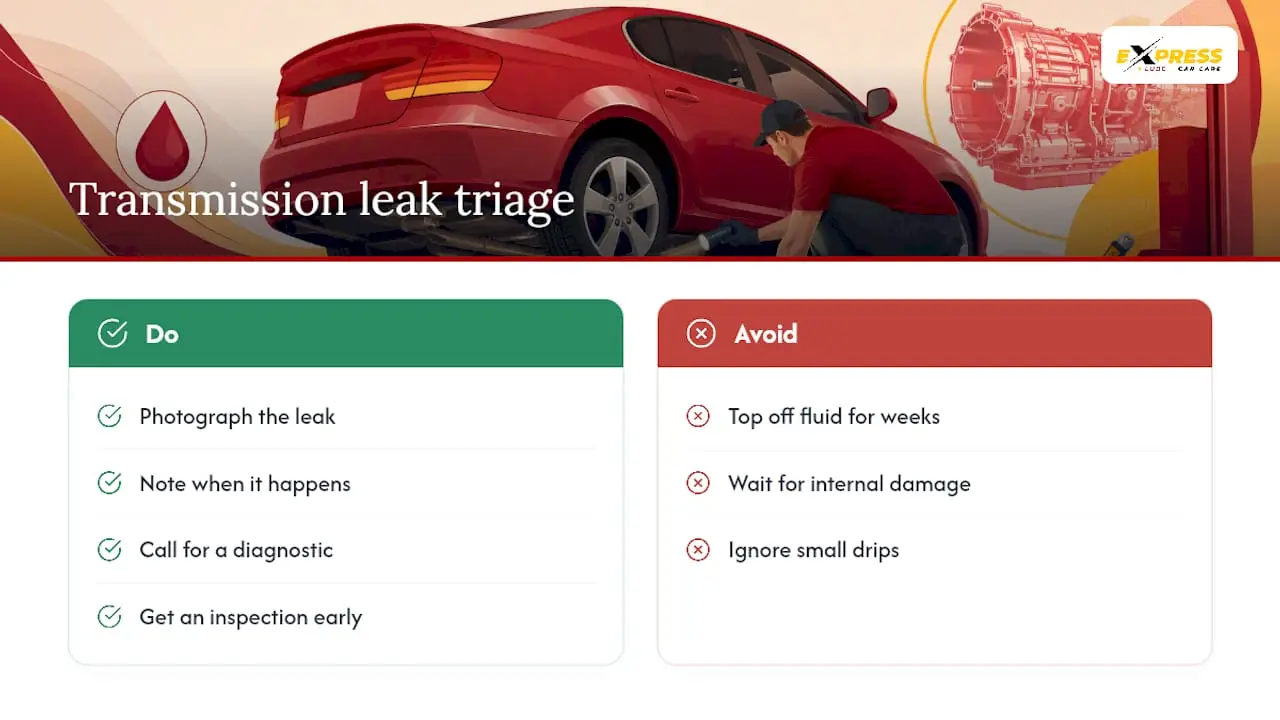
The biggest mistake we see is drivers topping off fluid for weeks instead of getting the leak checked. Early inspection almost always costs less than waiting for internal damage. Photograph the leak, note when it happens, and call for a diagnostic before a small drip becomes a rebuild.
Get Your Transmission Fluid Leak Diagnosed the Right Way
A transmission fluid leak doesn’t need to turn into a guessing game or a repair bill that spirals out of control. Express Lube & Car Care’s ASE-certified technicians use the same UV dye and pressure-testing methods described above to find the real source of a leak before recommending any repair, so you’re not paying to replace parts that were never the problem.

If the diagnostic points to a bigger repair than you expected, our financing options can make the cost manageable, and every completed repair is backed by our 24-month/24,000-mile warranty so you’re covered after you drive off the lot. Visit our transmission repair page to see how we approach diagnostics, or call our Arlington shop today to schedule a leak diagnostic before that drip under your car becomes a much bigger repair.
Sources
- Technician bulletin describing leak sources and diagnostic methods (OEM/NHTSA PDF)
- Is Your Transmission Fluid Leaking? (Common Causes and Repair Costs) | Autotrends
FAQ
Can You Still Drive a Car With a Transmission Leak?
You can drive short distances if the leak is minor and there’s no slipping, but doing so risks low fluid levels that cause overheating and internal damage. If you notice slipping, a burning smell, or a large puddle, stop driving and arrange a tow instead.
How Much Does It Cost to Fix a Transmission Fluid Leak?
Cost depends heavily on the source and severity: a gasket or cooler line repair sits at the lower end, while seal replacement or a transmission rebuild costs significantly more. A professional diagnostic is the only reliable way to know which category your repair falls into.
Is a Transmission Fluid Leak Easy to Fix?
Some leaks, like a worn pan gasket or a cracked cooler line, are relatively straightforward repairs for a qualified technician. Others, involving internal seals or a damaged case, require far more labor and are not simple fixes.
How Do You Tell if a Transmission Is Leaking Fluid?
Check for reddish to brown fluid pooling near the center of the vehicle, watch your dipstick level over time, and note any slipping, whining, or burning smell while driving. A cardboard test overnight and a shop’s UV dye or pressure test give the most reliable confirmation.