
How do brake pads actually stop your car?
Brake pads are the friction components that convert your vehicle’s kinetic energy into heat, slowing or stopping the car every time you press the pedal. It’s a deceptively simple idea with some serious physics behind it. When you push the brake pedal, hydraulic pressure travels from the master cylinder through brake fluid to the calipers, which squeeze the pads against the spinning rotors. That contact creates friction, and friction bleeds off speed.
What makes this remarkable is the intensity involved. During a hard stop, power dissipation on a single brake pad can be very high, with clamping pressures reaching significant values. That’s a tremendous amount of energy being shed in a fraction of a second. The materials in your brake pads have to handle that punishment repeatedly without fading, cracking, or glazing over.
Here’s the part most people don’t realize: the contact between pad and rotor doesn’t happen across the entire pad surface. Research shows that friction is transmitted through microscopic contact plateaus covering only a small fraction of the pad face. Those tiny plateaus carry the full braking load, which is why material composition and surface condition matter so much.
Key principles behind brake pad function:
- Hydraulic activation: Pedal force is multiplied by the master cylinder and transmitted as fluid pressure to the calipers.
- Caliper clamping: The caliper pistons push the pads against both faces of the rotor simultaneously.
- Friction and heat: Kinetic energy converts to thermal energy at the pad-rotor interface.
- Energy dissipation: Heat radiates from the rotor into the surrounding air; ventilated rotors accelerate this process.
- Micro-plateau contact: Real friction occurs on a small fraction of the pad surface, making material density and hardness critical.
What types of brake pads should you know about?
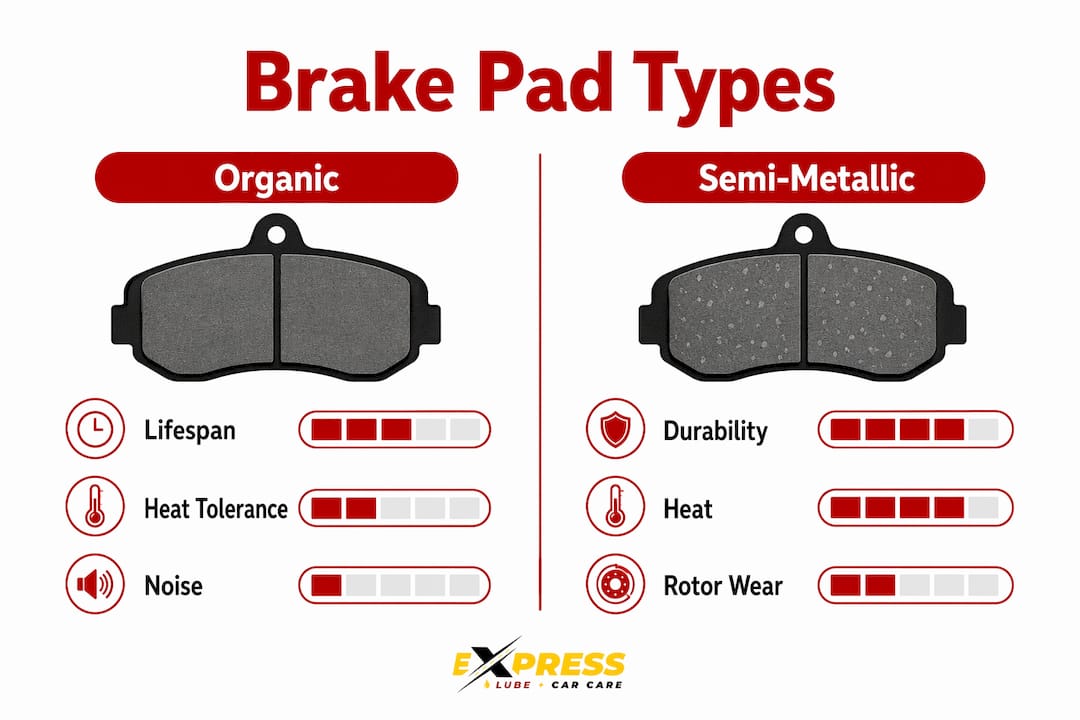
Not all brake pads are built the same, and the differences go well beyond price. The three main categories are organic, semi-metallic, and ceramic, each with a distinct material formula and performance profile.
Brake pads are multi-layer assemblies built from a powder-coated steel backing plate, an adhesive underlayer that damps vibration and prevents cracking, and the friction material on top. That friction material is where the real engineering happens. A typical formula uses roughly 25 raw materials, including binders, fillers, abrasives, and solid lubricants like graphite for heat management.
- Organic pads use non-metallic fibers (glass, rubber, carbon) bound with resin. They’re quiet and gentle on rotors but wear faster and lose effectiveness at high temperatures.
- Semi-metallic pads blend steel wool, copper, and other metal powders with friction modifiers. They handle heat better and last longer, though they can be noisier and harder on rotor surfaces.
- Ceramic pads use dense ceramic fibers and nonferrous fillers. They run cool, produce fine dust that doesn’t darken your wheels, and are the quietest option, though they cost more upfront.
| Pad Type | Typical Lifespan | Heat Tolerance | Noise Level | Rotor Wear |
|---|---|---|---|---|
| Organic | 20,000–40,000 miles | Low | Low | Low |
| Semi-metallic | 30,000–50,000 miles | High | Moderate | Moderate |
| Ceramic | 40,000–70,000 miles | Moderate-High | Very Low | Low |
Balancing high friction for stopping power with thermal stability and minimal rotor wear is a genuinely complex engineering challenge. The exact formulas manufacturers use are closely guarded. For most daily drivers, ceramic pads offer the best combination of longevity and low noise. Semi-metallic pads make more sense for trucks, SUVs, or anyone who tows regularly.
Pro Tip: If you drive a heavier vehicle or frequently brake hard in traffic, step up to semi-metallic or performance ceramic pads. The extra upfront cost pays off in longer service intervals.
How the rest of your brake system works with the pads
Brake pads don’t operate in isolation. They’re one piece of a tightly integrated hydraulic and mechanical system, and understanding the other components helps you see why pad condition affects everything downstream.
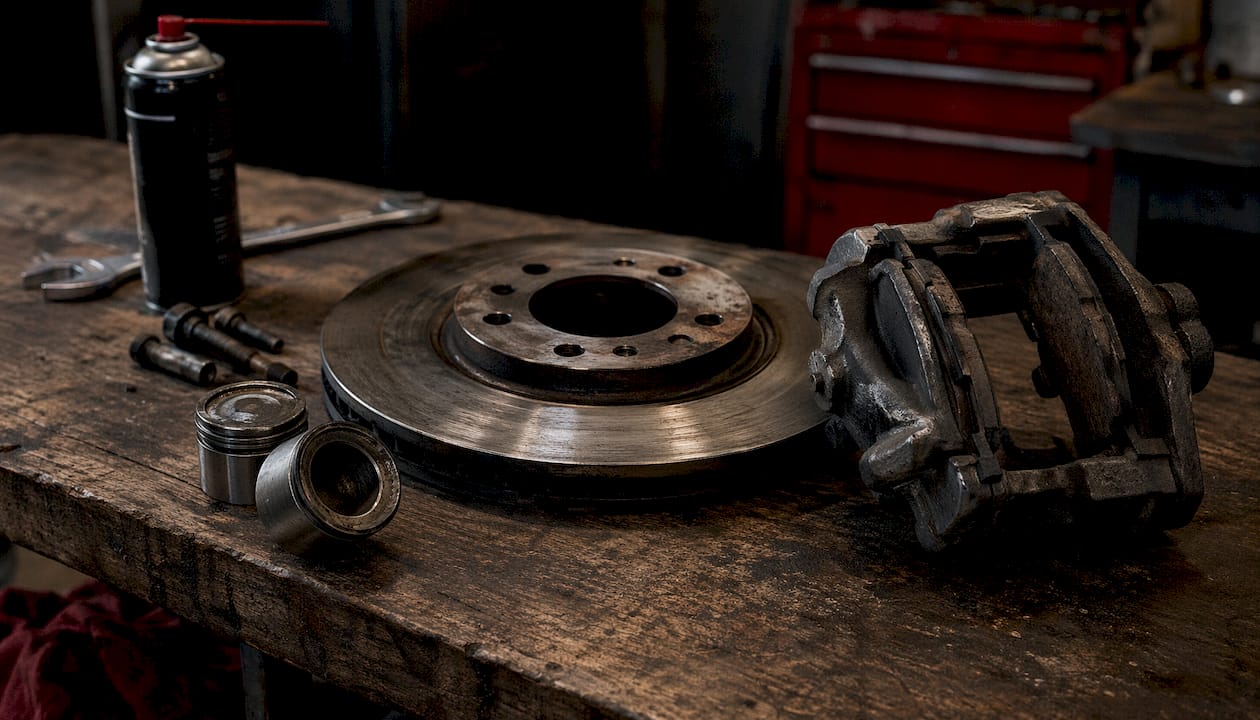
- Brake rotors (discs): The spinning iron discs that pads clamp against. Most are gray cast iron; performance applications use carbon-ceramic composites. Ventilated rotors with internal fins dissipate heat faster, which is why front rotors on most cars are ventilated while rears may be solid.
- Brake calipers: The hydraulic clamps that house the pistons and hold the pads. A floating caliper slides on guide pins and uses a single piston; a fixed caliper has pistons on both sides for more even clamping force. Learn more about how calipers function in the full braking circuit.
- Master cylinder: The pump that converts pedal force into hydraulic pressure. When you press the pedal, a piston inside the master cylinder pushes brake fluid through the lines to each caliper.
- Brake fluid: The incompressible medium that transmits pressure. It also absorbs moisture over time, which lowers its boiling point and can cause fade under heavy braking.
The pad-rotor interface is where all that hydraulic effort becomes actual stopping force. When the caliper squeezes, the pad’s friction material bites into the rotor surface, and the resulting drag slows the wheel. Rotor condition directly affects how well pads perform: a warped or deeply grooved rotor reduces contact area and can cause pedal pulsation.
Signs of brake pad wear and what to do about them
Your brakes will tell you when something’s wrong. You just have to know how to listen. The most common signs of worn brake pads include a high-pitched squeal, a grinding metal-on-metal sound, vibration through the pedal, and a noticeably longer stopping distance.
That squeal isn’t random. Most pads include a thin metal wear indicator tab that contacts the rotor when the friction material gets too thin, sending up exactly that kind of audible flare. A grinding sound, though, means the pad material is gone and the steel backing plate is cutting into the rotor. At that point, you’re looking at rotor replacement on top of new pads.
Brake pads generally last between 25,000 and 70,000 miles, depending on driving conditions, vehicle weight, and pad material. Aggressive driving or heavy vehicles can cut that range significantly.
Key warning signs to watch for:
- Squealing or squeaking that persists beyond the first few stops (temporary noise after rain is normal as pads clean surface rust off the rotor)
- Grinding or growling during braking, indicating metal-on-metal contact
- Pedal vibration or pulsation, often a sign of uneven pad wear or rotor warping
- Pulling to one side when braking, which can point to a stuck caliper or uneven pad wear
- Brake warning light illuminated on the dashboard
Driving without functional pads causes catastrophic damage quickly. Metal-on-metal contact destroys rotors, overheats calipers, and can lead to complete brake failure. Regular brake inspection frequency is the simplest way to catch wear before it becomes a safety issue.
What causes brake pads to fail or wear unevenly?
Uneven or premature wear is one of the most common brake complaints, and it rarely has a single cause. Vehicle weight plays a big role: heavier SUVs and trucks put more mechanical and thermal stress on pads, wearing them down faster than the same pads on a compact car. Driving style amplifies this further. Frequent hard stops from highway speeds generate far more heat than gentle city braking.
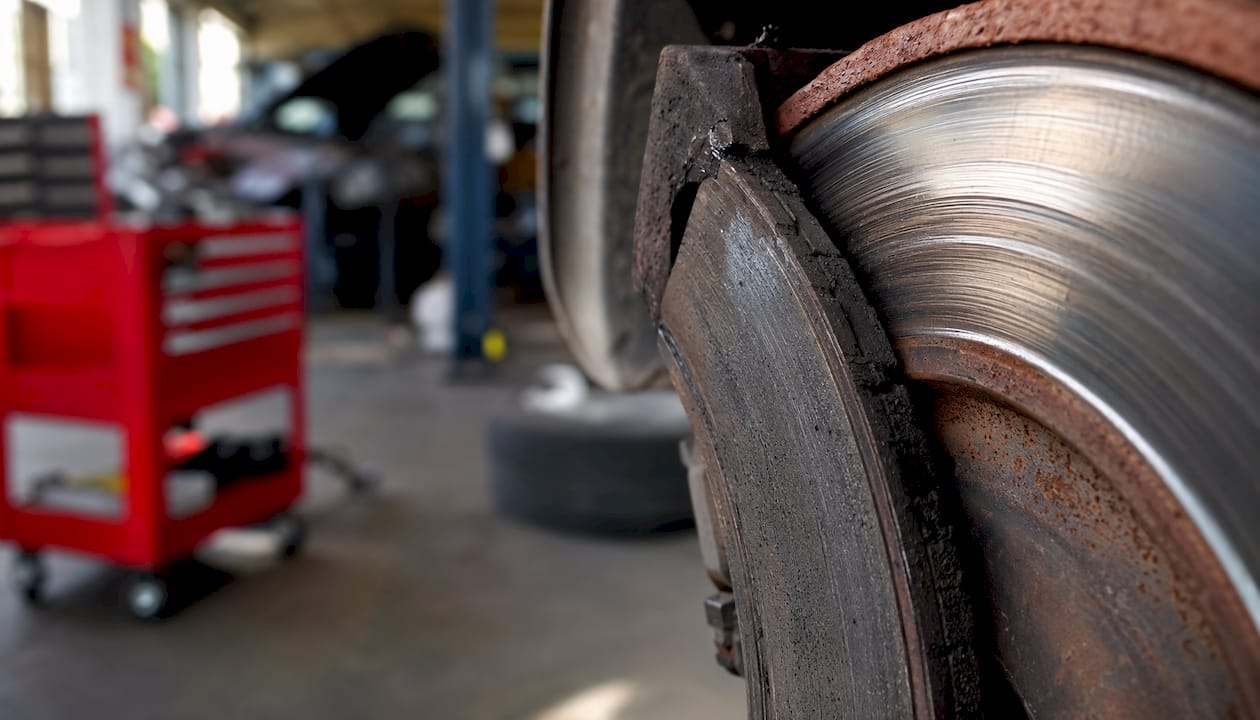
A phenomenon called thermo-elastic instability (TEI) makes things more complicated. During intensive braking, uneven heating creates hotspots on the rotor surface, which causes localized friction and wear variations. This is why two pads on the same axle can wear at different rates even under identical conditions. Brake wear patterns involve adhesive, abrasive, thermal, and partial wear occurring at the same time, all influenced by driver behavior and environment.
Common causes of failure and uneven wear include:
- Stuck or seized calipers that keep one pad pressed against the rotor even when you’re not braking
- Worn or corroded caliper guide pins that prevent the caliper from floating properly, causing one pad to carry more load
- Contaminated friction material from oil, brake fluid leaks, or road debris, which reduces friction and accelerates wear
- Overheating from extended downhill braking, which glazes the pad surface and reduces stopping power
- Mismatched pad compounds on the same axle, leading to uneven bite and pull
- Infrequent use, which allows surface rust to build up on rotors and abrade pads unevenly
Driving conditions matter too. Stop-and-go city traffic wears pads faster than highway miles because of the constant low-speed braking cycles. Understanding go-kart brake dynamics illustrates the same principle at a smaller scale: vehicle weight and braking frequency are the two biggest variables in pad longevity, regardless of the platform.
When you notice any of the warning signs covered earlier, getting a professional inspection quickly prevents a straightforward pad replacement from turning into a full brake overhaul. The ASE-certified technicians at Expresslubearlington can diagnose uneven wear, identify the root cause, and get your braking system back to spec. Expresslubearlington is a RepairPal Certified Shop and a CarFax Top-Rated Service Center, so you know the diagnosis is honest and the work is done right. Check out regular car maintenance savings to see how staying ahead of brake wear fits into a broader maintenance strategy.
Key Takeaways
Brake pads stop your vehicle by converting kinetic energy into heat through friction, and the material, condition, and type of pad you run directly determine how safely and how long your brakes perform.
| Point | Details |
|---|---|
| Core friction mechanism | Pads clamp against rotors under hydraulic pressure, converting kinetic energy to heat at micro-plateau contact points. |
| Power during hard stops | — |
| Lifespan by pad type | Ceramic pads last 40,000–70,000 miles; semi-metallic 30,000–50,000 miles; organic 20,000–40,000 miles. |
| Key wear warning signs | Squealing, grinding, pedal vibration, and longer stopping distances all signal it’s time for an inspection. |
| Top causes of uneven wear | Seized calipers, contaminated pads, thermo-elastic hotspots, and aggressive driving habits accelerate uneven wear. |
FAQ
What are the signs of bad brake pads?
The clearest signs are a persistent squealing or grinding noise during braking, vibration through the brake pedal, pulling to one side, and a longer stopping distance. A grinding sound specifically means the friction material is gone and the steel backing is contacting the rotor.
How do brake pads work?
Brake pads work by pressing against the spinning brake rotor when the caliper is activated by hydraulic pressure from the master cylinder. The resulting friction converts the vehicle’s kinetic energy into heat, slowing the wheel.
Brake pads generally last between 25,000 and 70,000 miles depending on driving conditions and pad type. Ceramic pads last 40,000–70,000 miles; semi-metallic pads last 30,000–50,000 miles; organic pads last 20,000–40,000 miles.
Can a car run without brake pads?
Technically a car will move without brake pads, but it cannot stop safely. Metal-on-metal contact between the caliper and rotor causes catastrophic damage quickly and can lead to complete brake failure, making it a serious safety hazard.