
Try the ignition on, then rock gently between Drive and Reverse while pulling the release. Do not drive the car if you smell burning, see smoke, or feel it dragging hard to one side. If the wheels doesn’t turn freely by hand after that quick test, stop working on it yourself and get it towed.
TL;DR:
- Most stuck parking brakes are caused by ice, rust, or seized components, making manual release difficult or impossible and often requiring professional repair.
- A frozen cable or caliper piston usually shows visible resistance or resistance to turning, while electrical faults involve fuse or battery issues and may reset with simple resets.
- Attempting to drive with a locked parking brake risks significant damage to rotors, pads, and brake fluid, and warrants towing if symptoms like smoke or wheel lock are present.
- Regular lubrication, avoiding setting the brake after exposure to moisture, and routine inspections can prevent parking brake freezing or sticking problems.
- Repairs vary from adjustment under $150 to replacement costs exceeding $400, with most issues needing professional diagnosis and maintenance to ensure safe vehicle operation.
Table of Contents
- What To Do When Your Parking Brake Is Stuck
- What’s Causing Your Handbrake To Stick?
- How Do You Manually Release a Stuck Cable Brake?
- How Do You Fix an Electronic Parking Brake That Won’t Release?
- Is It Safe to Drive With the Parking Brake Stuck?
- How Do You Prevent a Parking Brake From Sticking Again?
- What Happens During a Professional Parking Brake Inspection?
- Technician Perspective: What We See Most Often
- Book a Brake Inspection Before Small Problems Get Expensive
- Sources
- FAQ
What To Do When Your Parking Brake Is Stuck
Freeing a stuck parking brake usually comes down to trying a handful of low-risk moves before you reach for tools. Here’s the order that tends to work, starting with the least invasive.
- Turn the ignition on and try the release. For a manual lever, pull up slightly and press the release button again. For an electronic parking brake (EPB), cycle the ignition off and on, then press the EPB button firmly.
- Rock the car between Drive and Reverse. With your foot lightly on the throttle, shift back and forth a few times. This flexes frozen or rust-bound pads and shoes just enough to break them loose.
- Warm the suspect area. If you suspect ice, a hair dryer or heat gun aimed at the cable housing or caliper can thaw frozen moisture. Never use an open flame near brake lines or fuel components.
- Cycle the brake a few times. Set and release it repeatedly, and apply penetrating oil to any exposed cable housing you can reach.
- Stop immediately if you notice burning smells, visible smoke, heavy resistance, or one wheel locked while the others spin free. Those are tow signs, not DIY signs.
Pro Tip: Keep a can of penetrating oil in your trunk during winter. A quick spray on exposed cable ends before your drive can prevent a frozen parking brake won’t release situation before it starts.
What’s Causing Your Handbrake To Stick?
Matching the symptom to the cause saves you time and, often, money. A lever that offers zero resistance and pulls up with nothing holding it back usually means a snapped cable, and that calls for a tow, not more tugging. A lever that won’t budge at all, on the other hand, points to rust, corrosion, or ice locking the mechanism in place.
- Loose or no-resistance lever: likely a snapped or disconnected cable.
- Lever won’t move: frozen moisture, rust, or a seized mechanism.
- Car drags or pulls after release: stuck brake shoe or seized caliper piston.
- EPB button does nothing, or the dash light flashes: electrical fault, often low battery voltage or a blown fuse.
Two quick confirmation tests help before you spend a dime. Count how many clicks the lever makes when you pull it; most manufacturers expect somewhere around 3 to 8 clicks, and a much higher count signals cable stretch. On level ground, or with the car safely on jack stands, try rotating each wheel by hand to see which one resists.
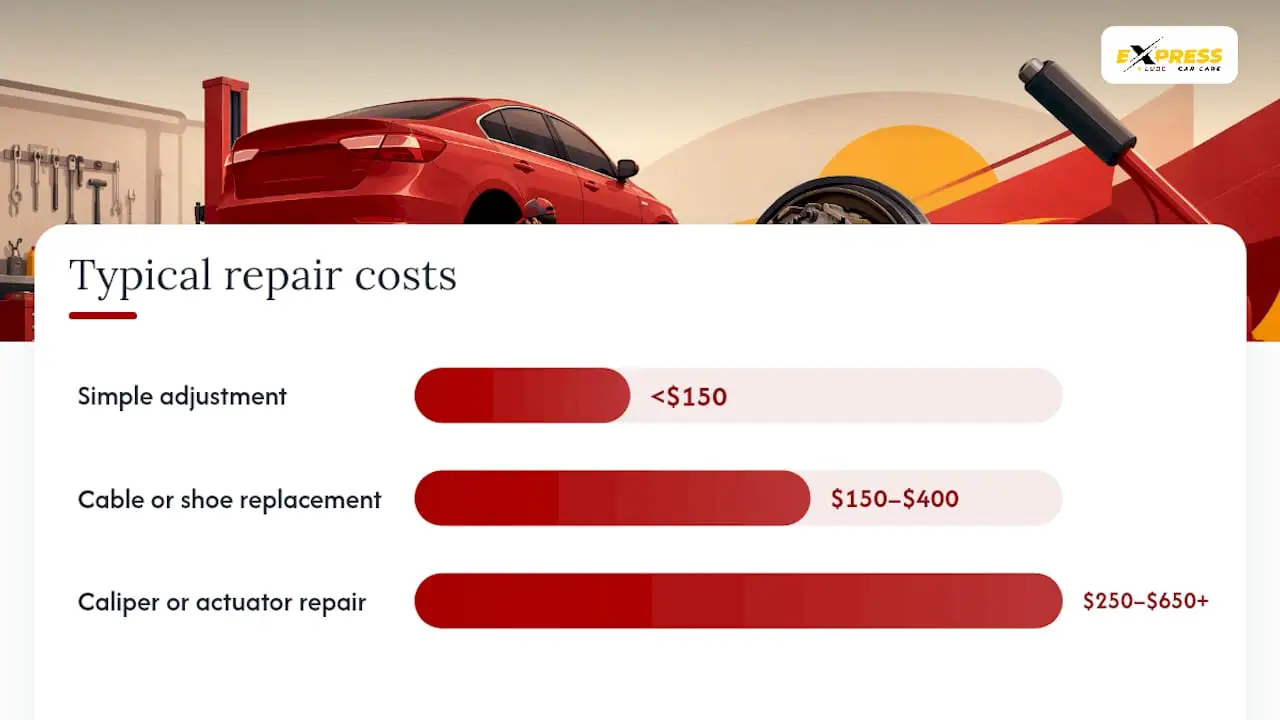
Repair costs vary by what’s actually broken. Simple adjustments often run under $150, cable or shoe replacement typically falls between $150 and $400, and caliper or actuator repairs can run $250 to $650 or more depending on your vehicle and local labor rates. Treat these as rough planning numbers, not quotes.
How Do You Manually Release a Stuck Cable Brake?
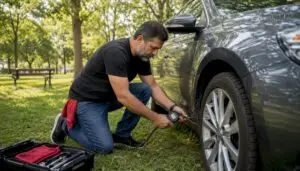
Before touching anything underneath the car, chock the wheels that aren’t being lifted and use proper jack stands, never a jack alone, to support the vehicle. Safety glasses and gloves matter here too, since rusted cable ends can shred skin.
- Locate the cable equalizer, usually found under the center console or along the undercarriage near the rear axle, depending on your vehicle.
- Exercise the brake by setting and releasing it a few times to see if it frees on its own.
- Spray penetrating oil onto the cable housing and pivot points, giving it a few minutes to soak in.
- Gently tap the drum or caliper with a rubber mallet to help dislodge rust or a stuck piston. Never strike glass, sensors, or brake lines.
- Try a gentle manual pull at the equalizer with pliers, only if the cable is clearly accessible and you can see what you’re grabbing.
- Adjust cable slack at the equalizer nut if the lever clicks too many times, indicating stretch rather than a full seizure.
Stop the moment you feel the cable start to fray or kink under tension. That resistance means you’re about to snap it, not free it. And never let lubricant touch the brake pads, shoes, or rotor surface; it belongs only on housings and pivots, since contaminated friction material has to be cleaned or replaced.
Pro Tip: If the brakes stay locked after two or three honest attempts, walk away. Forcing it usually turns a $150 cable job into a $400 caliper replacement.
How Do You Fix an Electronic Parking Brake That Won’t Release?
Electronic parking brakes fail differently than cable systems, and that changes your troubleshooting path entirely. Instead of rust and ice, you’re usually chasing electrical gremlins.
- Check for a completely silent motor. No whir, no click when you press the button, usually points to low battery voltage or a blown EPB fuse.
- Inspect the fuse box for the specific EPB circuit fuse listed in your owner’s manual, and swap it if it’s blown.
- Test battery voltage with a simple multimeter; anything noticeably below 12 volts at rest can prevent the actuator motor from engaging.
- Cycle the ignition off, wait ten seconds, and restart, which sometimes resets a confused control module.
- Check your owner’s manual for a manual-release procedure, since many EPB-equipped vehicles include an emergency mechanical release near the console.
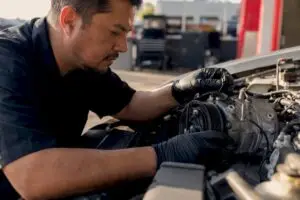
Electronic parking brake faults often trace back to low voltage, a blown fuse, or a failing actuator motor, and a battery swap or fuse replacement sometimes clears the problem on the spot. If the motor runs but the calipers stay locked, or the fault keeps coming back after a reset, that’s your cue to bring it to a shop with a proper scan tool rather than keep guessing under the dash.
Is It Safe to Drive With the Parking Brake Stuck?
No. Driving even a short distance on a locked parking brake generates heat fast enough to warp rotors, glaze pads, and in extreme cases boil the brake fluid, which compromises your actual stopping power, not just the parking function. That’s a safety issue, not an inconvenience.
Call for a tow instead of driving if you notice any of the following:
- A burning smell coming from a wheel or the undercarriage
- Visible smoke, even faint wisps
- The car pulling hard to one side or barely moving under normal throttle
- One wheel completely locked while the others spin freely by hand
- The brake stays engaged after two or three honest release attempts
When you call for help, mention the symptoms you noticed, what you already tried, and whether any dashboard warning lights came on. That saves the shop diagnostic time and gets you back on the road faster.
How Do You Prevent a Parking Brake From Sticking Again?
A little routine attention keeps this from becoming a repeat problem. Set and release the parking brake regularly, even on short trips, so cables and linkages don’t sit stationary long enough to rust.
- Avoid setting the brake right after driving through slush or a car wash in freezing weather, since trapped moisture is what turns into ice inside the cable housing overnight.
- Lubricate exposed pivot points and cable ends during routine service, keeping lubricant well away from friction surfaces.
- Ask your technician to count lever clicks at your next inspection; a rising click count over time flags cable stretch before it becomes a full failure.
- Replace cables showing heavy corrosion or fraying rather than waiting for them to seize completely.
Bundling this check into a routine maintenance visit is far cheaper than an emergency tow.
What Happens During a Professional Parking Brake Inspection?
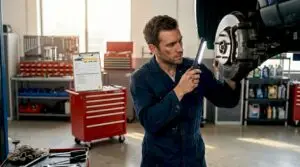
A proper inspection starts with getting the car safely on a lift, then pulling the wheels to get eyes directly on the cables, shoes, and calipers. Express Lube & Car Care’s ASE-certified technicians check for corrosion, cable stretch, and seized components on manual systems, and run an electrical scan on EPB-equipped vehicles to catch fuse, voltage, or actuator faults.
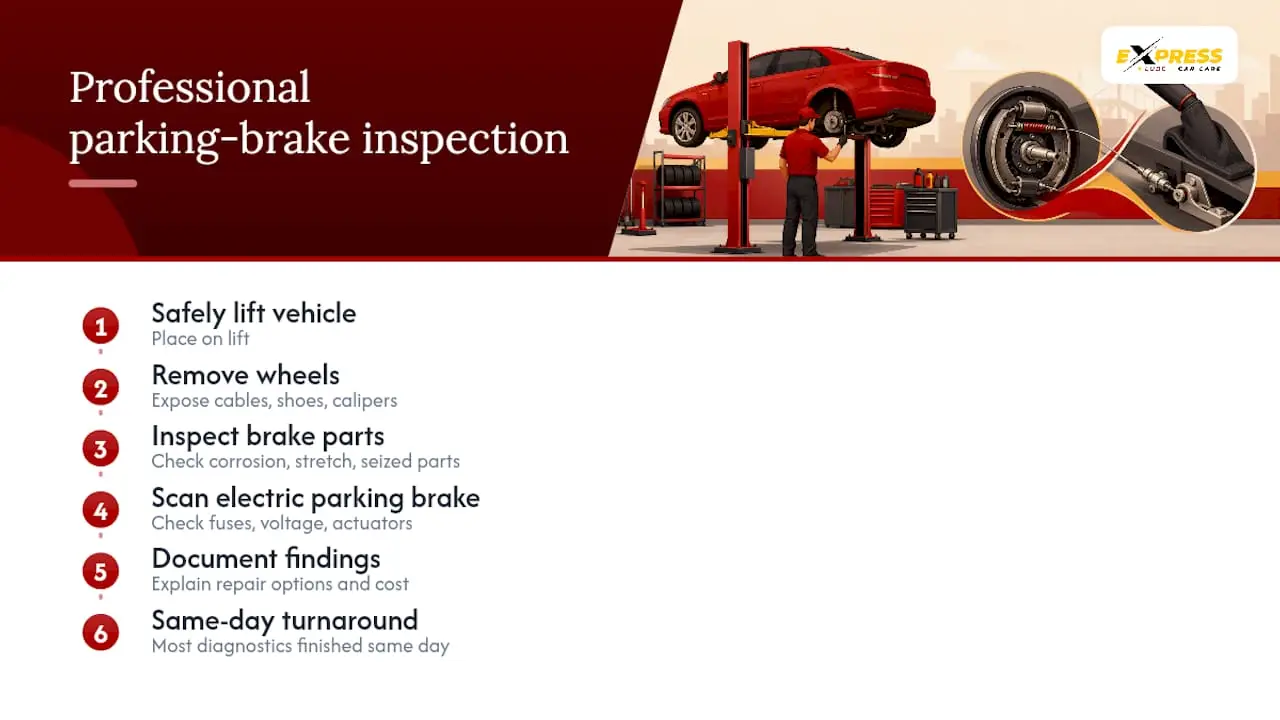
As a RepairPal Certified shop and a CarFax Top-Rated Service Center, the team documents what they find and walks you through the repair options and cost before any work begins. Bring a note of what you tried and any warning lights you saw. Most brake diagnostics can be turned around the same day.
Technician Perspective: What We See Most Often
The most common calls come in three flavors: cables frozen solid after a cold front, stretched cables on higher-mileage vehicles that finally give out, and calipers seized after a car sat unused for weeks. In most of those cases, a temporary “free” buys you days, not months. Replacing the worn part outright, rather than repeatedly forcing a stuck one loose, is usually the more reliable long-term fix and often takes less shop time than owners expect.
Book a Brake Inspection Before Small Problems Get Expensive
If you’ve tried the safe DIY steps and the brake is still locked, or you’re seeing any red flags like smoke or a burning smell, it’s time to bring in a shop instead of pushing your luck. Express Lube & Car Care handles parking brake diagnostics and repairs with ASE-certified technicians, backed by a 24-month/24,000-mile warranty on qualifying repairs, so a fix stays a fix.

Booking is simple: schedule online or call the shop directly, and mention what symptoms you noticed and what you already tried. If your vehicle shows any of the red flags covered above, arrange a tow rather than attempting to drive it in. Current customers can also take advantage of the $45 off mechanical repairs coupon toward your brake service, and pairing the visit with a look at your vehicle maintenance schedule helps catch small issues like this before they turn into bigger repairs.
Sources
- Carparts
- My Parking Brake is Stuck – AutoZone DIY
- Common parking brake problems: Symptoms, causes, and how to fix them – TheCarBuzz
- 5 Reasons Your Parking Brake is Stuck (and How to Manually Disengage) – CarTreatments
FAQ
What Causes Parking Brakes To Lock Up?
Rust and corrosion on cables and linkages are the most common culprits, followed by frozen moisture in the cable housing, seized caliper pistons, and, on newer vehicles, failed actuator motors in electronic parking brakes.
How Much Does It Cost to Fix a Stuck Brake?
Simple adjustments often run under $150, cable or shoe replacement typically costs $150 to $400, and caliper or actuator repairs can range from $250 to $650 or more depending on the vehicle and labor rates.
Is It Safe to Drive With the Parking Brake Stuck?
No. Driving on a locked parking brake generates enough heat to warp rotors, glaze pads, and potentially boil brake fluid, which weakens your overall braking performance.
How Do I Manually Release the Parking Brake?
Try the ignition-on release first, then rock the car gently between Drive and Reverse; if that fails, apply penetrating oil to the exposed cable housing and try a gentle manual pull at the equalizer, but stop if the cable feels like it’s about to fray or if it offers zero resistance, which usually means it has already snapped.
Should I Call a Tow Instead of Driving to a Shop?
Yes, if you smell burning, see smoke, feel the car dragging hard, or one wheel stays locked while the others spin freely. Those signs mean the brake system needs professional attention before the car moves again.