

TL;DR:
- A car care savings plan is a self-managed fund that helps cover routine and unexpected vehicle repairs without debt.
- It offers flexible coverage at any shop, with funds that roll over each month, protecting your budget from costly surprises.
What a car care savings plan actually means
A car care savings plan is a personal, self-managed fund where you set aside money each month specifically for vehicle maintenance and repairs. Think of it as a financial cushion you build on your own terms, rather than a contract you sign at a dealership. The goal is simple: when your brakes wear out or your battery dies, the money is already waiting, and you never have to reach for a credit card.
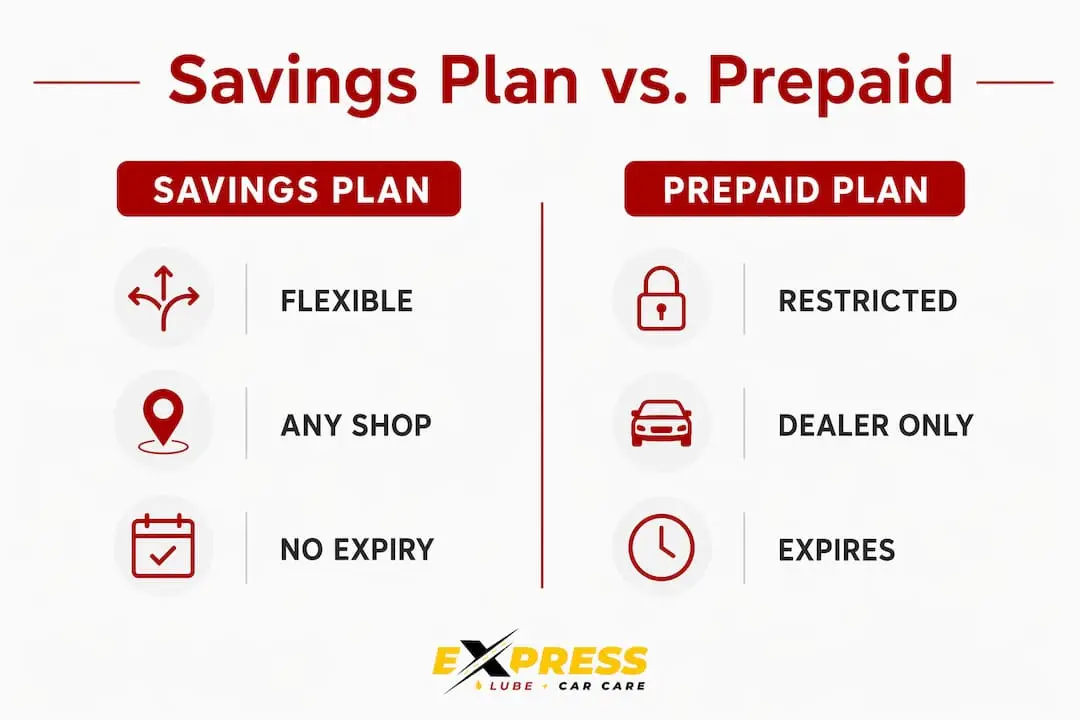
This is different from a prepaid maintenance contract. Prepaid plans are sold by dealers and lock you into specific services at specific locations. A personal car maintenance savings plan gives you full control over where you go, what gets fixed, and how much you keep in reserve.
Key characteristics of a car care savings plan:
- Self-directed: You decide the monthly contribution and where the money sits.
- Flexible coverage: Covers routine services and surprise repairs equally.
- No expiration: Funds roll over month to month with no use-it-or-lose-it pressure.
- Debt prevention: Replaces credit card borrowing when unexpected costs hit.
- Portable: Works at any shop, including independent mechanics.
Why a savings plan protects your wallet better than you think
According to AAA, treating car maintenance as an expected, recurring expense, rather than a surprise, reduces the likelihood of costly emergency repairs. That shift in mindset is where the real financial benefit lives. When you plan for maintenance, you catch small problems before they become expensive ones.
The benefits of car care savings go beyond just having cash on hand:
- No interest charges: Paying from savings beats financing a repair at credit card rates.
- Budget predictability: A fixed monthly transfer is easier to manage than random, large bills.
- Shop freedom: You can choose an ASE-certified mechanic rather than whoever the prepaid plan dictates.
- Compounding protection: A separate savings fund cushions your monthly budget from surprise expenses.
AAA estimates that a significant portion of American car owners would have to borrow money to cover a repair bill averaging several hundred dollars. A dedicated savings plan puts you in the other group.
Personal savings plan vs. prepaid maintenance plan: which fits you?
Prepaid maintenance plans are often pitched as dealer upsells and may not deliver value if you prefer independent shops or drive fewer miles than average. A personal savings plan flips the equation, giving you flexibility and coverage scope that no prepaid contract can match.
| Feature | Personal savings plan | Prepaid maintenance plan |
|---|---|---|
| Flexibility | Full, use any shop | Restricted to dealer or network |
| Coverage scope | Routine and unexpected repairs | Scheduled services only, usually |
| Cost savings potential | High, no markup or interest | Varies, often no better than à la carte |
| Expiration policy | None, funds roll over | Expires with plan term or mileage |
| Where repairs are done | Any RepairPal or independent shop | Typically dealership only |
Expert tips for setting up your plan the right way
Automating monthly transfers to a dedicated savings account is the single most effective habit for keeping your car fund intact. When the transfer happens automatically on payday, the money never competes with groceries or streaming subscriptions.

Pro Tip: Open a high-yield savings account specifically labeled “car fund.” The label alone reduces the temptation to dip into it for non-vehicle spending.
A few more practices that experienced owners swear by, as detailed in Auto Care Tips & Advice — OB’s Auto Services Blog, include:
- Start with the 1% rule: Save roughly 1% of your vehicle’s value per year, adjusting amounts depending on the vehicle’s worth.
- Double contributions for older cars: As vehicles age past warranty, repair frequency rises sharply, so experienced owners increase their monthly savings accordingly.
- Handle basic maintenance yourself: DIY tasks can cut costs by 40–70%, freeing more of your fund for larger repairs.
- Keep the fund car-only: Discipline here is everything. Non-vehicle withdrawals defeat the purpose entirely.
- Schedule regular inspections: ASE-certified technicians catch issues early, which is exactly how you avoid costly repair mistakes.
How much should you actually contribute each month?
AAA’s annual Your Driving Costs study found that maintenance, repair, and tires on a new car averaged 11.04 cents per mile. At 15,000 miles per year, that works out to roughly $103 per month, and that figure climbs for older vehicles or above-average drivers.
A practical starting range looks like this:
- $100/month for most newer vehicles in average condition
- $150–$200/month for older or high-mileage cars, where costs tend to triple once the factory warranty expires
- a meaningful emergency buffer kept separate from your monthly contribution, for truly unplanned repairs
For a quick calculation, Experian recommends budgeting about 11 cents per mile and dividing the annual total by 12 to set your monthly savings goal.
Terms and conditions to read before choosing a prepaid plan
If you ever consider a prepaid plan alongside your personal savings, the fine print matters. Consumer Reports notes that some prepaid plans restrict where work can be performed, cover only services listed in the owner’s manual, and can be bundled into your auto loan, meaning you pay interest on the plan itself. Always compare the plan’s total cost against paying for each service individually before signing.
Watch for these terms in any prepaid agreement:
- Mileage and time caps: Coverage ends at whichever limit you hit first.
- Service location restrictions: Many plans require a dealership or approved network.
- Deductibles per visit: These add up and reduce the plan’s apparent savings.
- Transferability: Some plans do not transfer if you sell the vehicle.
Honest drawbacks of a personal car care savings plan
No approach is perfect. A personal savings plan has real limitations worth knowing upfront.
The biggest one: it takes time to build. If your transmission fails in month two, your fund probably won’t cover it yet. That gap is why financial experts recommend maintaining a separate emergency fund alongside your car fund, not instead of it.
Other drawbacks to keep in mind:
- Requires self-discipline. Without automation, contributions slip.
- No guaranteed coverage. A catastrophic repair can exceed even a well-funded account.
- No bundled convenience. You manage scheduling, payments, and records yourself.
- Inflation risk. Repair costs rise over time, so contributions need periodic adjustment.
For high-mileage vehicle owners, the risk of underfunding is real. Revisit your monthly target at least once a year.
Expresslubearlington keeps your savings working harder
Your savings plan is only as strong as the shop you trust with your car. Expresslubearlington, a RepairPal Certified Shop and CarFax Top-Rated Service Center in the DFW area, gives you the professional backup your fund deserves. ASE-certified technicians handle everything from routine oil changes to complex repairs, so your money goes toward actual fixes, not guesswork. When a repair exceeds what your fund covers, auto repair financing is available to bridge the gap without derailing your budget. A 24-month repair warranty on qualifying work protects every dollar you spend. Stop by and let us help you get the most out of every contribution you’ve made.
FAQ
What does a car care savings plan mean?
A car care savings plan is a personal fund where you set aside money monthly to cover both routine vehicle maintenance and unexpected repairs, avoiding credit card debt when costs arise.
How much should I save each month for car maintenance?
AAA recommends about $100 per month for most vehicles; older or high-mileage cars typically need $150–$200 per month.
How is a savings plan different from a prepaid maintenance plan?
A personal savings plan covers any repair at any shop with no expiration, while a prepaid plan typically covers only scheduled services at specific locations and expires with the contract term.
Where should I keep my car care savings?
A high-yield savings account kept separate from your checking account works best. It earns interest, stays accessible for repairs, and reduces the temptation to spend the funds elsewhere.
Can Expresslubearlington help me use my car care savings effectively?
Yes. As an ASE-certified, RepairPal Certified shop, Expresslubearlington provides transparent, warranted repairs that stretch your savings further, with financing available when a repair exceeds your current fund balance.
Key Takeaways
A car care savings plan is the most flexible and debt-free way to manage vehicle maintenance costs, giving you full control over where repairs happen and how funds are used.
| Point | Details |
|---|---|
| Core definition | A self-managed monthly fund covering routine maintenance and unexpected repairs, with no expiration. |
| Recommended contribution | AAA data points to roughly $100/month for most vehicles, rising to $150–$200/month for older cars. |
| DIY savings boost | Handling basic maintenance yourself can cut costs by 40–70%, stretching your fund further. |
| Prepaid plan trade-off | Prepaid plans restrict shop choice and cover only scheduled services; personal savings plans do not. |
| Expresslubearlington | An ASE-certified, RepairPal Certified shop in DFW offering warranted repairs and financing to complement your savings plan. |