

TL;DR:
- A family car maintenance plan is a proactive schedule of routine vehicle care that ensures safety and reliability. It includes regular self-checks, scheduled services based on manufacturer guidelines, and a dedicated savings fund to cover costs. Proper maintenance reduces repair expenses and extends the vehicle’s lifespan, safeguarding your family’s transportation needs.
A family car maintenance plan is a structured schedule of routine vehicle care designed to keep your car safe, reliable, and cost-efficient throughout its lifespan. Think of it as a health plan for your vehicle. Instead of waiting for something to break, you stay ahead of problems with regular checkups and scheduled services. The importance of car maintenance becomes crystal clear when you realize that repair costs rose 44% between january 2019 and january 2025. For families hauling kids to school, sports practice, and weekend trips, a reliable car is not optional.
What is a family car maintenance plan, and what does it include?
A family car maintenance plan is a proactive automobile service plan built around your vehicle’s manufacturer schedule, your driving habits, and your family’s safety needs. The industry term for this approach is a “preventive maintenance program,” and it covers everything from monthly self-checks to annual professional inspections. The goal is simple: catch small problems before they become expensive ones.
Regular maintenance protects long-term resale value and supports fuel efficiency, extending the life of critical components. That means every oil change and tire rotation you do today is money back in your pocket when you eventually sell or trade in the vehicle.
Monthly self-checks every family should do
These five checks take about five minutes and prevent costly repairs before they start:
- Tire pressure: Check cold, before driving. Underinflated tires wear faster and reduce fuel economy.
- Oil level: Pull the dipstick. Low oil is an engine’s worst enemy.
- Coolant level: A quick look at the reservoir. Overheating is a roadside emergency waiting to happen.
- Battery terminals: Look for white or blue corrosion buildup. Clean terminals mean reliable starts.
- Engine air filter: Hold it up to light. If you can’t see through it, it needs replacing.
Scheduled service intervals
| Maintenance Task | Recommended Interval | Estimated Cost |
|---|---|---|
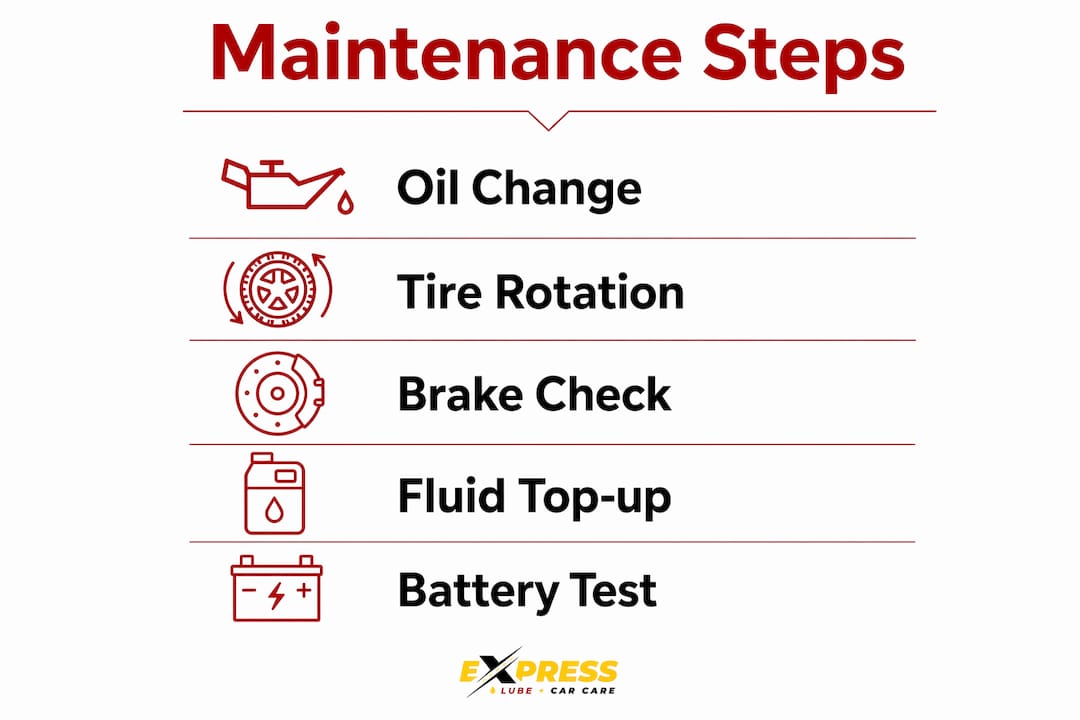
| Oil change | Every 5,000–7,500 miles | $60–$275 |
| Tire rotation | Every 5,000–7,500 miles | $20–$50 |
| Brake inspection | Every 12,000 miles or annually | Included in most service visits |
| Brake pad replacement | As needed (typically 30,000–70,000 miles) | ~$340 per wheel |
| Battery replacement | Every 3–5 years | ~$410 |
| Full tire set replacement | Every ~50,000 miles | ~$900 |
| Fluid replacements (transmission, coolant) | Per manufacturer schedule | Varies |
Pro Tip: Your owner’s manual lists two schedules: normal and severe duty. Pull it out and check which one actually applies to your driving before your next service visit.
How much does maintaining a family car typically cost?
The average annual cost to repair and maintain a car runs approximately $900, and that number has climbed sharply in recent years. Families who budget for this upfront avoid the gut-punch of a $1,500 surprise repair bill.
Consumer Reports recommends setting aside $50–$100 monthly during your vehicle loan period, then increasing that contribution after the loan is paid off. The logic is sound. Once your monthly car payment disappears, redirect part of it into a dedicated vehicle fund. That fund covers tires, brakes, and batteries without touching your emergency savings.
Here is a realistic breakdown of what families typically spend:
- Oil changes: $60–$275 per visit, depending on oil type and shop
- Brake pads: Around $340 per wheel when replacement is needed
- Battery: Approximately $410, needed every 3–5 years
- Full tire set: Around $900, lasting roughly 50,000 miles
- Fluid services (transmission, coolant, power steering): $80–$200 each, per manufacturer schedule
| Service Type | Routine Cost Range | Emergency/Neglect Cost Range |
|---|---|---|
| Oil change | $60–$275 | Engine replacement: $3,000–$10,000+ |
| Brake pads | $340 per wheel | Rotor and caliper damage: $800–$1,500 |
| Battery | ~$410 | Tow + after-hours service: $200–$400 extra |
| Tires | ~$900 per set | Blowout damage or accident costs: unpredictable |
Neglecting maintenance can lower a vehicle’s market value by up to 30%. That is a significant financial hit for families who plan to sell or trade in their car.
Pro Tip: Open a separate savings account labeled “car fund” and set up an automatic transfer the day after payday. You will not miss what you never see.
How do you customize a plan to fit your family’s vehicle and driving habits?
Not every family drives the same way, and a one-size-fits-all car maintenance schedule does not exist. Manufacturers publish two schedules: normal and severe duty. Many urban and suburban families qualify for severe duty without realizing it.

Frequent short trips, heavy loads, or extreme temperatures may qualify a vehicle for severe duty service intervals that are 40–50% shorter than normal. If you drive mostly short trips under five miles, tow a trailer, or live somewhere with brutal summers or winters, severe duty likely applies to you.
Here is how to tailor your family car service guide to your actual situation:
- Short-trip city driving: Engine oil does not fully warm up, causing moisture buildup. Change oil more frequently.
- Highway commuters: Normal schedule usually applies. Fewer cold starts mean less wear per mile.
- Large families with heavy loads: Check tire pressure weekly. Extra weight accelerates tire and brake wear.
- Older or high-mileage vehicles: Follow the high-mileage vehicle care approach, which includes more frequent fluid checks and seal inspections.
- Extreme Texas heat (DFW families): Coolant and battery health need closer attention. Heat kills batteries faster than cold.
Consulting your owner’s manual is the starting point. If your mechanic recommends a service interval that is shorter than what the manual says, ask for a clear explanation. A good technician welcomes that question. A preventive maintenance guide can also help you understand which services are truly time-sensitive versus optional add-ons.
How do you start and stick to a family car maintenance plan?
Starting a plan is easier than most families expect. The hard part is building the habit. Here is a practical process that works:
- Pull out your owner’s manual. Find the maintenance schedule section. Identify whether normal or severe duty applies to your driving. This is your master reference.
- Create a mileage log. Write down your current odometer reading. Note when each service is due based on mileage or time, whichever comes first.
- Set digital reminders. Use your phone’s calendar app to set recurring alerts for monthly self-checks and upcoming service milestones. Simple and free.
- Keep a maintenance record. A basic spreadsheet or a notes app works fine. Log the date, mileage, service performed, and cost. This record protects you when selling the vehicle and helps you spot patterns.
- Choose a trusted shop. Look for ASE-certified technicians and shops with verified reviews. Certification means the technician has passed standardized competency tests. Avoid common repair mistakes by knowing what your car actually needs before you walk in.
- Stick to the manufacturer’s schedule. Dealership service packages sometimes bundle required and optional services together. Use your owner’s manual as the true source of what your car needs, not a service menu upsell.
Pro Tip: Take a photo of your odometer every time you fill up with gas. It takes two seconds and gives you an accurate mileage log without any extra effort.
The philosophy behind a good automobile service plan is simple. As Consumer Reports mechanic John Ibbotson puts it, proactive maintenance is the most effective way to avoid costly failures. Pay now or pay more later. That mindset, applied consistently, is what separates families who drive worry-free from those who dread every warning light.
Key Takeaways
A family car maintenance plan built around your manufacturer’s schedule, your driving habits, and a dedicated savings fund is the most reliable way to protect your family’s safety and your vehicle investment.
| Point | Details |
|---|---|
| Define your plan type | Use your owner’s manual to determine normal or severe duty service intervals. |
| Budget proactively | Set aside $50–$100 monthly in a dedicated vehicle fund to cover routine and unexpected costs. |
| Do monthly self-checks | Five-minute checks of oil, tires, coolant, battery, and air filter prevent major failures. |
| Customize for your family | Short trips, heavy loads, and extreme heat all shorten service intervals significantly. |
| Track everything | A simple mileage log and service record protects resale value and keeps you on schedule. |
Why I think most families underestimate this until it’s too late
I have seen the same pattern repeat itself more times than I can count. A family drives a perfectly good vehicle for three or four years, skips a few oil changes, ignores a soft brake pedal, and then faces a $2,800 repair bill that could have been a $275 service visit. The car did not fail them. The plan did.
What surprises most people is how little time a solid maintenance routine actually takes. We are talking about five minutes a month for self-checks and one or two shop visits a year for scheduled services. That is a small investment compared to the alternative.
The other thing families consistently get wrong is treating maintenance as optional during tight months. I understand the instinct. When money is short, the car that seems to be running fine gets pushed to the back of the priority list. But that is exactly when deferred maintenance becomes a financial trap. A $60 oil change skipped twice becomes a $400 engine flush or worse.
The families who get this right treat their car fund like a utility bill. It is not negotiable. It goes out automatically, every month, before they have a chance to spend it elsewhere. That one habit, more than any specific service interval or tool, is what keeps their vehicles running for 150,000 miles and beyond. Protecting your family on the road starts with reducing repair costs through consistency, not luck.
— Hassan
How Expresslubearlington helps families stay on schedule
Keeping up with a family car maintenance plan is much easier when you have a shop you actually trust. Expresslubearlington is a RepairPal Certified and CarFax Top-Rated Service Center in the DFW area, staffed by ASE-certified technicians who handle everything from routine oil changes to complex repairs.
Families across Arlington rely on Expresslubearlington for transparent pricing, fast turnaround, and honest recommendations grounded in what your vehicle actually needs. Whether you are starting fresh with a car maintenance schedule by mileage or catching up on overdue services, the team at Expresslubearlington will help you build a plan that fits your vehicle, your budget, and your family’s schedule. Stop by today and let’s get your car on the right track.
FAQ
What is a family car maintenance plan?
A family car maintenance plan is a scheduled, proactive routine of vehicle inspections and services designed to keep a family’s car safe, reliable, and cost-efficient. It follows the manufacturer’s recommended intervals for oil changes, tire rotations, brake inspections, and fluid replacements.
How often should a family car be serviced?
Most vehicles follow a service interval of every 5,000–7,500 miles for oil changes and tire rotations, with annual inspections for brakes and fluids. Families with severe driving conditions, such as frequent short trips or extreme heat, may need service 40–50% more often.
How much should a family budget for car maintenance annually?
The average annual cost for car maintenance and repairs runs approximately $900, though this varies by vehicle age and driving habits. Consumer Reports recommends saving $50–$100 per month in a dedicated vehicle fund to cover both routine and unexpected expenses.
Does skipping maintenance really affect resale value?
Neglecting maintenance can lower a vehicle’s market value by up to 30%, according to AAA. A complete service record is one of the strongest selling points when trading in or selling a family vehicle.
How do I know if my car needs a severe duty maintenance schedule?
Check your owner’s manual for the severe duty criteria. If you regularly make trips under five miles, drive in extreme temperatures, carry heavy loads, or tow a trailer, your vehicle likely qualifies for more frequent service intervals than the standard schedule.