
TL;DR:
- Vehicle repair timelines range from one day for minor fixes to several weeks for major collision work. The overall process depends on damage severity, parts availability, insurance approvals, and owner responsiveness. Effective communication and proactive shop practices help reduce delays and improve repair satisfaction.
A vehicle repair timeline is defined as the structured process from initial damage assessment to the moment you drive your car home, spanning anywhere from one business day for minor fixes to four or more weeks for major collision work. Understanding how vehicle repair timeline works puts you in control. You stop guessing and start planning. The average cycle time for repairable vehicles in the U.S. was 19.3 days in 2025, down from 22.3 days in 2024. That improvement is real, but 19 days is still nearly three weeks without your car. Knowing what drives that number helps you set realistic expectations and ask the right questions at the shop.
How does the vehicle repair timeline work by repair type?
Not every repair takes the same amount of time, and the gap between minor and major work is wider than most car owners expect. The industry breaks repair duration into three broad categories based on damage severity.
| Repair type | Typical duration | Common examples |
|---|---|---|
| Minor | 1–3 business days | Windshield replacement, small dents, scratch repair |
| Moderate | 3–7 business days | Bumper replacement, single-panel bodywork |
| Major | 2–4+ weeks | Structural frame repair, airbag replacement, full collision rebuild |
Major collision repairs generally take 2 to 4 weeks, while minor repairs often wrap up in 1 to 2 business days. That range exists because major work involves multiple overlapping phases, each with its own waiting period. A windshield swap is a single task with a single part. A structural repair after a serious crash involves frame straightening, multiple panel replacements, paint matching, and safety system recalibration. These are not comparable jobs, and treating them as if they are leads to frustration.
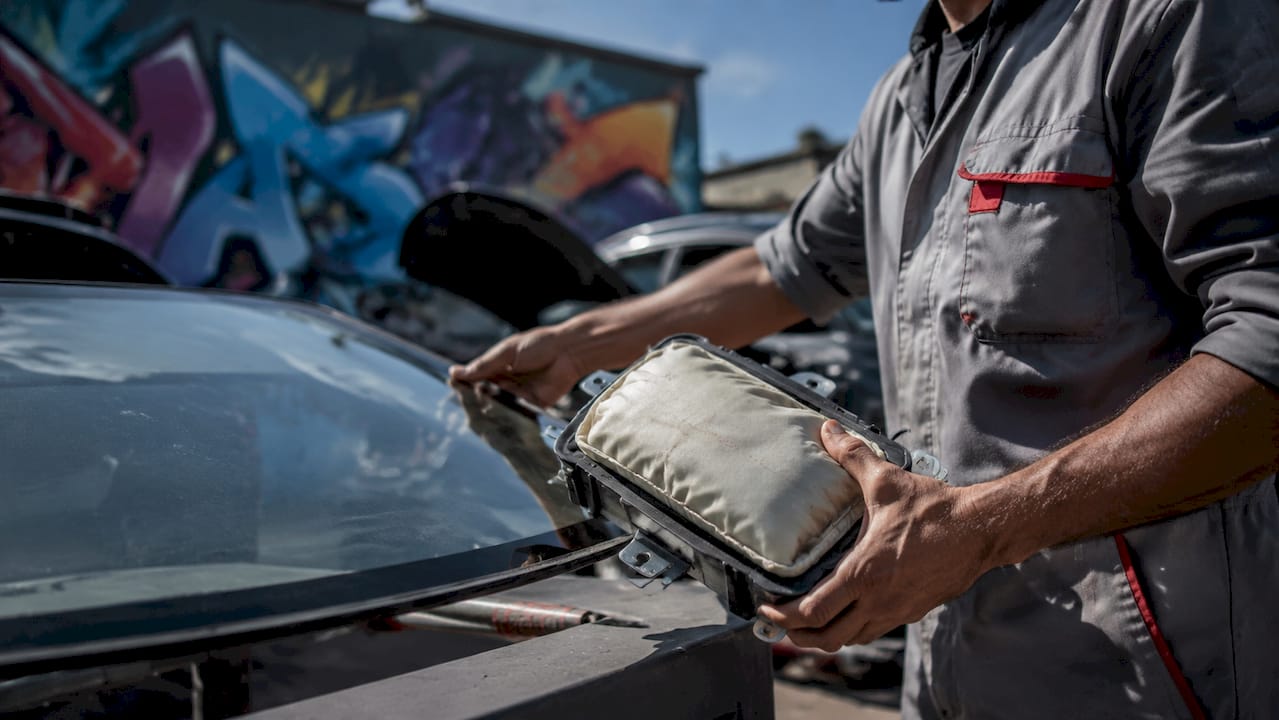
One detail that surprises many car owners: airbag replacement alone can add several days to a repair. Airbag modules are safety-critical parts that require precise installation and post-deployment inspection. Shops cannot rush that process without risking liability and, more importantly, your safety.
What are the core stages in the vehicle repair process?
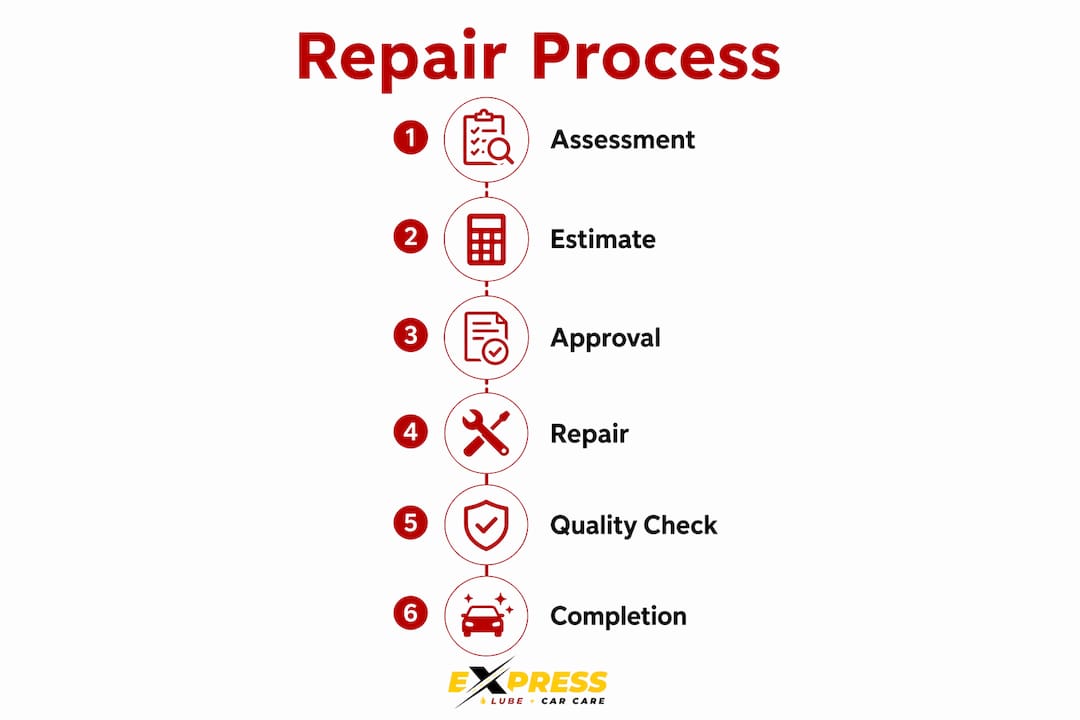
The car repair timeline is not one continuous block of work. It is a sequence of distinct phases, and each one has its own clock. Understanding the steps in vehicle repair helps you see where time actually goes.
-
Intake and diagnostic assessment (1–2 days). The shop documents visible damage, photographs the vehicle, and writes an initial estimate. This phase sets the foundation for everything that follows.
-
Teardown and hidden damage discovery. Technicians disassemble damaged areas to inspect what the initial estimate could not see. This is where surprises happen. Supplemental estimates are standard after teardown, not a trick. Hidden damage surfaces and requires a revised insurance approval before work can continue.
-
Insurance approval for supplemental damage (1–3 days). The shop submits updated documentation to your insurer. The insurer reviews, asks questions, and eventually signs off. This step alone can add 24 to 72 hours to your total timeline, and it is largely outside the shop’s control.
-
Parts ordering and delivery (variable). Once approved, the shop orders parts. Domestic parts may arrive in one to two days. Specialty or imported components can take a week or longer. This phase is one of the biggest wild cards in the entire automotive repair schedule.
-
Repair execution. This covers structural work, bodywork, paint application, and reassembly. Paint alone requires primer coats, color coats, clear coat, and cure time. Rushing paint causes peeling and color mismatch, so reputable shops do not cut corners here.
-
Quality inspection and final check. Before your car leaves the shop, a technician verifies fit, finish, and function. Safety systems like sensors and cameras get recalibrated. This step typically adds half a day to a full day.
Each phase feeds into the next. A delay at step three pushes everything downstream. That is why understanding auto repair duration requires looking at the whole chain, not just the hands-on repair hours.
What factors cause delays in a car repair timeline?
Several forces can stretch a repair timeline well beyond the initial estimate. Knowing them helps you have smarter conversations with your shop and set realistic expectations from day one.
-
Parts availability and supply chain pressure. Parts and labor shortages remain key operational challenges in 2026. When a specific sensor or body panel is backordered, the shop cannot proceed. No amount of technician skill fixes an empty parts shelf.
-
Labor availability. Technician shortages affect shops across the country. A shop with a full schedule may not start your repair immediately after the estimate is approved. You may sit in a queue for several days before hands touch your vehicle.
-
Insurance approval complexity. Insurers sometimes dispute line items on supplemental estimates. Back-and-forth negotiations between the shop and adjuster can add days to the process. Shops that document damage thoroughly from the start tend to resolve these disputes faster.
-
Hidden damage discovered mid-repair. Even experienced technicians cannot see everything before teardown. A bent subframe hiding behind a crumpled bumper is not visible until the bumper comes off. Hidden damage requiring supplemental insurance approval adds 24 to 72 hours each time it surfaces.
-
Shop workload and scheduling. A busy shop is often a good shop. High-quality repair centers stay booked. If you drop your car off during a peak period, your vehicle may wait in line before active work begins.
-
Customer response time. This one catches car owners off guard. Approval loops and pickup lag can account for 60–70% of total turnaround time. When a shop calls for your approval on a supplemental estimate and you take two days to respond, those two days count against your total timeline.
Pro Tip: Save your shop’s direct contact number and respond to calls or texts within a few hours. Your response speed is one of the few timeline variables you fully control.
Proactive communication during parts delays and repair updates improves customer satisfaction even when timelines extend. A shop that calls you with a heads-up before a delay hits is worth more than one that stays silent until the problem is unavoidable. You can also read more about industry-wide repair challenges to understand what shops are managing behind the scenes.
How can car owners navigate the repair process smoothly?
Your behavior during the repair process directly affects how long it takes. A significant portion of total repair time is not actual mechanical work. It is administrative time, waiting for approvals, and pickup lag. Here is how to shrink that portion.
-
Choose a shop that communicates proactively. Shops that provide specific completion windows and pre-source parts before drop-off deliver better turnaround times and higher customer satisfaction. Ask the shop upfront: “Will you call me before any delays, or after?” The answer tells you a lot.
-
Understand the estimate before you sign. Ask whether the estimate is based on visible damage only. If it is, expect a supplemental estimate after teardown. Knowing this in advance removes the shock when it happens.
-
Respond to approvals immediately. When your shop or insurer needs a decision, treat it as urgent. Every hour you delay is an hour added to your repair timeline.
-
Separate urgent repairs from recommended future work. Distinguishing urgent repairs from scheduled maintenance helps you budget and plan without feeling blindsided. A good shop will tell you what needs fixing now versus what can wait until your next visit.
-
Arrange alternative transportation before drop-off. Do not wait until your car is in the shop to figure out how you will get to work. Rental cars, rideshare apps, and loaner vehicles all take time to arrange. Plan this the day before drop-off.
-
Schedule pickup promptly. Once the shop calls to say your vehicle is ready, pick it up quickly. Vehicles sitting in a completed state still occupy a bay or parking spot, and some shops charge storage fees after a grace period.
For a deeper look at how the accident repair process unfolds from start to finish, Expresslubearlington has a full walkthrough that covers each stage in plain language. You can also review how repair estimates work before your first shop visit to avoid surprises. For complex component repairs, a practical resource on reducing repair turnaround time offers useful perspective on how shops manage specialized work efficiently.
Key Takeaways
The vehicle repair timeline is driven as much by administrative delays and parts availability as by actual repair hours, making owner responsiveness and shop communication the two most controllable factors.
| Point | Details |
|---|---|
| Average repair cycle | The U.S. average was 19.3 days in 2025, covering all repair severities. |
| Repair severity matters | Minor repairs finish in 1–3 days; major collision work takes 2–4+ weeks. |
| Hidden damage adds time | Supplemental estimates after teardown add 24–72 hours per insurance approval cycle. |
| Owner response is critical | Approval loops and pickup lag account for 60–70% of total turnaround time. |
| Communication is the differentiator | Shops that pre-source parts and give specific timelines deliver faster, more satisfying repairs. |
What I’ve learned about repair timelines after years in the shop
Most car owners walk into a repair situation expecting the shop to be the only variable. That assumption causes a lot of unnecessary frustration. What I have seen, time and again, is that the shop’s actual repair hours are often the smallest slice of the total timeline pie.
The real time sinks are the gaps: waiting for an adjuster to respond, waiting for a customer to approve a supplemental estimate, waiting for a backordered part that nobody thought to pre-source. The best shops treat these gaps as a system problem and attack them with process. They pre-order common parts before the vehicle even arrives. They send text updates so customers do not have to call and ask. They document damage so thoroughly that insurance disputes resolve in hours instead of days.
The misconception I hear most often is that a long repair timeline means the shop is slow or incompetent. Sometimes that is true. But more often, a long timeline reflects a complex repair, a supply chain hiccup, or an insurance approval that took four days instead of one. The shop you want is not necessarily the one that promises the fastest turnaround. It is the one that gives you an honest window, calls you before problems arise, and delivers quality work when the job is done.
My advice: ask your shop two questions before you hand over your keys. First, “What is your process when hidden damage changes the estimate?” Second, “How will you keep me updated if the timeline shifts?” The answers will tell you whether you are dealing with a shop that manages timelines or one that just reacts to them.
— Hassan
Expresslubearlington: transparent timelines and certified repairs in Arlington
Expresslubearlington is a RepairPal Certified Shop and a CarFax Top-Rated Service Center, which means the standards that govern your repair timeline are not self-reported. They are verified. Our ASE-certified technicians handle everything from routine oil changes to complex mechanical repairs, and we communicate proactively at every stage so you are never left wondering where your vehicle stands.

Whether you need a quick service visit or a more involved repair, we give you a specific completion window, not a vague estimate. You can also take advantage of our repair cost savings guide to plan smarter before your next visit. Drivers across the DFW area trust Expresslubearlington because we treat your time as seriously as we treat your vehicle. Stop by or contact us today to schedule your service.
FAQ
What is the average car repair timeline in 2025?
The average cycle time for repairable vehicles in the U.S. was 19.3 days in 2025, down from 22.3 days the year before. That figure covers all repair severities, from minor bodywork to full collision rebuilds.
How long does a minor car repair take?
Minor repairs typically complete in 1 to 3 business days. Examples include windshield replacement, small dent removal, and scratch repair, where parts are readily available and labor hours are limited.
Why does my car repair take longer than the shop estimated?
Hidden damage discovered during teardown is the most common cause. Supplemental estimates require additional insurance approval, which adds 24 to 72 hours each time. Parts delays and customer approval lag also extend the total timeline.
What can I do to speed up my vehicle repair timeline?
Respond to shop and insurance calls within a few hours, arrange alternative transportation before drop-off, and choose a shop that pre-sources parts and communicates proactively. Your response speed directly controls a large share of total turnaround time.
Does routine maintenance follow the same timeline as repairs?
No. Routine maintenance, such as oil changes and scheduled inspections, follows a predictable schedule with known parts and labor times. Repairs address worn or damaged components and involve more variables, including hidden damage and insurance approvals, making their timelines less predictable.