
Texas vehicle inspection requirements changed significantly in 2025, and those changes continue to affect Arlington drivers in 2026. Most non-commercial vehicles no longer need an annual Texas safety inspection, but qualifying vehicles in emissions counties such as Tarrant County still require emissions testing.
That distinction is important. A personal vehicle may no longer need the traditional state safety inspection, while a qualifying gasoline-powered vehicle can still need an emissions test. Commercial vehicles also remain subject to applicable Texas safety inspection requirements.
This 2026 Texas vehicle inspection checklist explains what Arlington drivers need to know, what is actually checked during an emissions inspection, which vehicles may be exempt, and how to prepare before visiting an inspection station.
TL;DR:
- Most non-commercial Texas vehicles have not required an annual safety inspection since January 1, 2025.
- Commercial vehicles continue to be subject to applicable Texas safety inspection requirements.
- Arlington is in Tarrant County, where qualifying vehicles continue to require emissions testing.
- Gasoline-powered vehicles generally fall under the emissions program when they are 2 through 24 years old and meet the program’s other requirements.
- Emissions testing focuses on the vehicle’s emissions-control and OBDII systems, not the former passenger-vehicle safety checklist.
- A Check Engine light, emissions-related trouble codes, or incomplete readiness monitors can affect your ability to pass an emissions inspection.
Table of Contents
- Do You Still Need a Texas Vehicle Inspection?
- Which Vehicles Need Emissions Testing in Arlington?
- 2026 Texas Emissions Inspection Checklist
- What Gets Checked During a Texas Emissions Inspection?
- Why Do Vehicles Fail Emissions Testing?
- What Should You Do Before Your Emissions Test?
- Do Commercial Vehicles Still Need Safety Inspections?
- What About Brakes, Tires, Lights and Other Safety Items?
- Inspection Fees and Registration
- Get Your Vehicle Inspection-Ready in Arlington
- Official Texas Inspection Resources
- FAQ
Do You Still Need a Texas Vehicle Inspection?
For most Texas drivers, the answer changed on January 1, 2025.
Texas eliminated the annual safety inspection requirement for most non-commercial vehicles. Personal vehicles generally no longer have to pass the traditional state safety inspection as a condition of registration.
That does not mean every type of vehicle inspection disappeared.
Emissions inspections remain required for qualifying vehicles in designated Texas emissions counties. Arlington is located in Tarrant County, so qualifying vehicles in the area continue to be subject to emissions-testing requirements.
Commercial vehicles are treated differently and continue to be subject to applicable Texas safety inspection requirements.
Which Vehicles Need Emissions Testing in Arlington?
Because Arlington is in Tarrant County, emissions testing remains relevant to local drivers.
Under the Texas emissions program, gasoline-powered vehicles generally require emissions testing when they are 2 through 24 years old and meet the program’s other applicable requirements.
Certain vehicle categories are exempt from emissions testing. Depending on current state requirements, exemptions include vehicle types such as:
- Electric-only vehicles
- Diesel-powered vehicles
- Motorcycles
- Mopeds
- Vehicles outside the applicable model-year range
Requirements can depend on the vehicle’s model year, fuel type, registration, where it is primarily operated, and other factors established by the state.
If you are unsure whether your specific vehicle requires testing, check the current Texas Department of Public Safety or Texas Commission on Environmental Quality requirements before visiting an inspection station.
2026 Texas Emissions Inspection Checklist
If your vehicle requires emissions testing in Arlington, use this checklist before your appointment:
- Check your Check Engine light. An illuminated malfunction indicator lamp can indicate an emissions-related fault that needs diagnosis.
- Do not clear trouble codes immediately before testing. Clearing codes can reset the vehicle’s OBDII readiness monitors.
- Make sure readiness monitors have completed. Recent battery disconnection, code clearing, or repairs can leave monitors in a “not ready” condition.
- Check your gas cap. A loose, damaged, or missing gas cap can contribute to an EVAP-system fault.
- Address known emissions problems. If the vehicle has an emissions-related diagnostic trouble code, diagnose the underlying problem rather than simply clearing the code.
- Bring the required documentation. Have the vehicle and any documentation required for the inspection process available.
- Confirm that your vehicle actually requires testing. Vehicle age, fuel type, registration and location can affect the requirement.
Important: Lights, windshield wipers, horn, mirrors, tires and seat belts are important vehicle-safety items, but they should not be presented as part of the emissions checklist for an ordinary non-commercial vehicle. The former annual passenger-vehicle safety inspection was eliminated in Texas beginning January 1, 2025.
What Gets Checked During a Texas Emissions Inspection?
For qualifying modern gasoline-powered vehicles, emissions testing generally involves the vehicle’s OBDII system.
The inspection equipment communicates with the vehicle’s onboard computer and evaluates information related to emissions controls and system readiness.
Depending on the vehicle and applicable testing procedure, emissions-related systems can include:
- Catalytic converter system
- Evaporative emissions control system
- Oxygen sensors
- Exhaust gas recirculation system
- Fuel and air monitoring systems
- Other emissions-related components monitored by the vehicle’s computer
The system can also identify whether required OBDII readiness monitors have completed their self-tests.
This is different from the former Texas passenger safety inspection. An emissions inspection is focused on emissions compliance rather than functioning as a general mechanical inspection of the vehicle.
Why Do Vehicles Fail Emissions Testing?
Several common problems can interfere with a successful emissions inspection.
Check Engine Light
An illuminated Check Engine light can indicate an emissions-related problem detected by the vehicle’s computer.
Instead of clearing the code and immediately attempting an inspection, diagnose the underlying problem first.
Readiness Monitors Not Ready
OBDII readiness monitors can reset when:
- The battery is disconnected
- The battery loses power
- Diagnostic trouble codes are cleared
- Certain emissions-related repairs are performed
The vehicle may need normal driving before the onboard computer completes the required self-tests again.
Our readiness monitor troubleshooting guide explains this issue in more detail.
Emissions-Related Trouble Codes
Problems involving oxygen sensors, catalytic converters, EVAP systems and other emissions components can trigger diagnostic trouble codes.
A trouble code identifies the system where the computer detected a problem, but it does not always identify the exact failed part. Proper diagnosis is important before replacing components.
EVAP System Problems
A loose or damaged gas cap or another leak in the evaporative emissions system can trigger an EVAP-related fault.
Check the gas cap, but remember that EVAP faults can also originate elsewhere in the system.
What Should You Do Before Your Emissions Test?
The day before your inspection, focus on the systems that can actually affect emissions-test readiness.
- Look at the dashboard. Do not ignore an illuminated Check Engine light.
- Do not disconnect the battery just before testing. This can reset readiness monitors.
- Do not clear diagnostic codes simply to turn off the warning light. The underlying problem may remain, while the readiness monitors can reset.
- Check the gas cap. Make sure it is properly installed and not obviously damaged.
- Confirm OBDII readiness after recent repairs. If emissions-related repairs were recently performed, the vehicle may need additional driving before testing.
- Have an unresolved warning diagnosed. Proper diagnosis can save you from making an unnecessary inspection trip.
If your Check Engine light is flashing rather than simply staying illuminated, see our Check Engine light guide for more information.
Pro Tip: If your vehicle’s readiness monitors remain “not ready,” repeatedly clearing codes will usually make the situation worse rather than better. Determine why the monitors are not completing before attempting the emissions test.
Do Commercial Vehicles Still Need Safety Inspections?
Yes.
Texas eliminated the annual safety inspection requirement for most non-commercial vehicles, but commercial vehicles continue to be subject to applicable state safety inspection requirements.
A commercial safety inspection is different from an emissions inspection.
Commercial inspection requirements can involve safety-related vehicle systems and components based on the vehicle’s classification and applicable Texas requirements.
A commercial vehicle may also have emissions requirements depending on the vehicle, fuel type, location and other applicable criteria.
Fleet operators should verify the requirements for each commercial vehicle rather than applying passenger-vehicle rules across the entire fleet.
What About Brakes, Tires, Lights and Other Safety Items?
The end of the annual passenger-vehicle safety inspection does not mean these systems stopped being important.
Regularly checking the following remains an important part of responsible vehicle maintenance:
- Brakes
- Tires and tire pressure
- Exterior lights
- Steering
- Suspension
- Windshield wipers
- Fluid levels
- Battery and charging system
- Belts and hoses
The important distinction is that these are vehicle maintenance and safety items. For most non-commercial Texas vehicles, they are no longer part of an annual state-mandated passenger safety inspection.
A professional Digital Vehicle Inspection can still help identify developing maintenance and safety concerns before they turn into larger repairs.
Inspection Fees and Registration
Texas changed how inspection-related fees are handled when the passenger safety inspection requirement was eliminated.
Non-commercial vehicle owners may see an inspection program replacement fee associated with registration even though the vehicle no longer receives the former annual safety inspection.
Emissions inspection fees and registration-related charges can depend on the applicable program and current state requirements.
Because fees can change, verify current amounts through the Texas Department of Public Safety and Texas Department of Motor Vehicles rather than relying on an older article or checklist.
Get Your Vehicle Inspection-Ready in Arlington
If your vehicle requires emissions testing, preparation should focus on its emissions system and OBDII readiness rather than the discontinued passenger safety-inspection checklist.
Express Lube & Car Care can help Arlington drivers diagnose Check Engine lights, emissions-related trouble codes, readiness-monitor problems and other vehicle concerns before testing.
Our team also provides comprehensive automotive maintenance and repair services, helping you address both emissions-related problems and general vehicle maintenance needs.
For inspection-specific information, visit our Texas Emissions & Commercial Inspections in Arlington page.
You can also review our vehicle maintenance schedule guide to help keep up with routine maintenance throughout the year.
Official Texas Inspection Resources
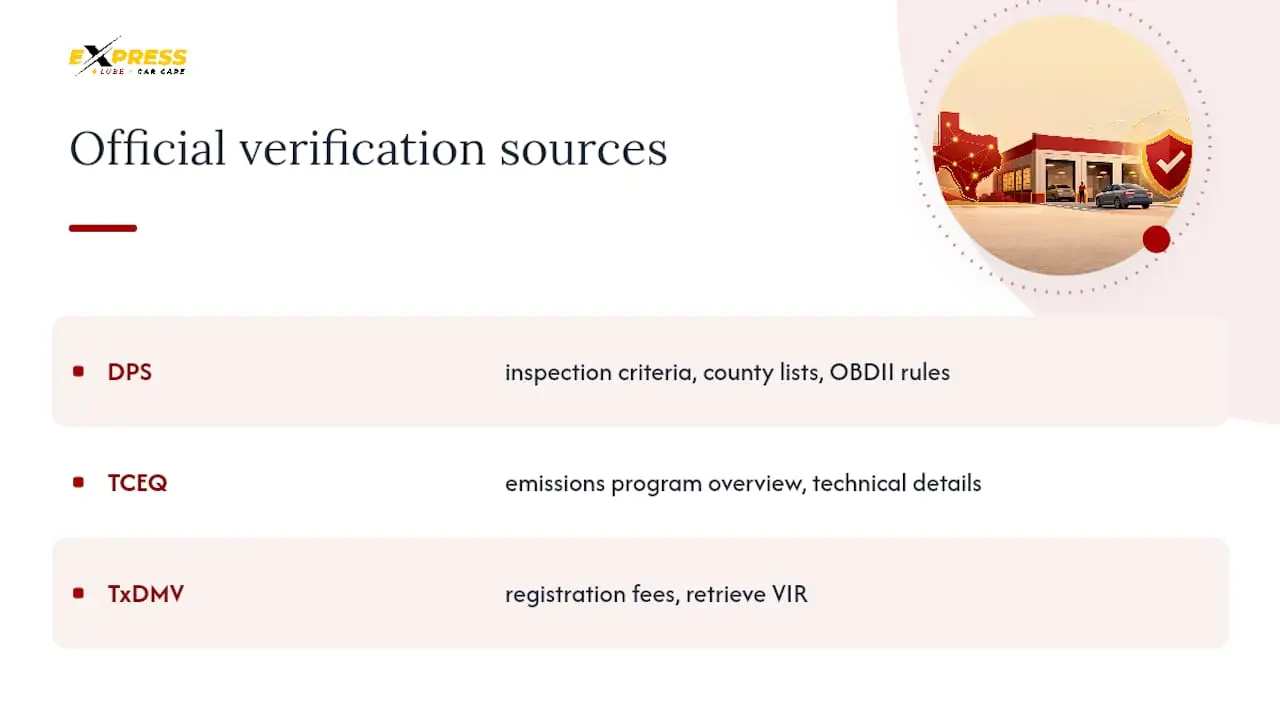
Vehicle inspection and emissions requirements can change. Use official Texas resources to verify the rules that apply to your specific vehicle.
- Texas Department of Public Safety — vehicle inspection requirements
- Texas Commission on Environmental Quality — vehicle emissions inspection program
- Texas Department of Motor Vehicles — registration requirements
FAQ
Is a vehicle inspection still required in Texas in 2026?
Most non-commercial vehicles no longer require an annual Texas safety inspection. However, qualifying vehicles in designated emissions counties still require emissions testing, and commercial vehicles continue to be subject to applicable safety inspection requirements.
Does Arlington still require emissions testing?
Arlington is located in Tarrant County, which participates in the Texas emissions inspection program. Qualifying vehicles must continue to meet applicable emissions-testing requirements.
What is on the Texas emissions inspection checklist?
Before testing, check whether the Check Engine light is illuminated, avoid clearing diagnostic codes immediately before the test, make sure required OBDII readiness monitors have completed, check the gas cap, address known emissions-related problems and bring any required documentation.
Do lights, tires and windshield wipers get checked during an emissions inspection?
These remain important vehicle-safety and maintenance items, but they should not be confused with the emissions-testing requirements for an ordinary non-commercial vehicle. Texas eliminated the annual safety inspection requirement for most non-commercial vehicles beginning January 1, 2025.
Can I pass an emissions test with the Check Engine light on?
An illuminated Check Engine light can indicate an emissions-related fault that can prevent a qualifying vehicle from successfully completing its emissions inspection. The underlying problem should be properly diagnosed.
Why does my vehicle say the readiness monitors are not ready?
Readiness monitors can reset after a battery disconnection, loss of battery power, diagnostic-code clearing or certain repairs. The vehicle may need additional normal driving before its onboard computer completes the required self-tests.
Do commercial vehicles still require Texas safety inspections?
Yes. Commercial vehicles continue to be subject to applicable Texas safety inspection requirements even though the annual safety inspection requirement ended for most non-commercial vehicles.
Does Express Lube & Car Care offer vehicle inspections in Arlington?
Yes. Express Lube & Car Care provides applicable Texas emissions and commercial inspection services in Arlington. Inspection requirements can vary by vehicle type, model year, fuel type, registration and other factors, so contact our team if you are unsure which inspection applies to your vehicle.
What should I do if my Check Engine light is on before an emissions test?
Have the underlying problem properly diagnosed before attempting the emissions inspection. Simply clearing the diagnostic trouble code can reset the vehicle’s OBDII readiness monitors without correcting the problem that caused the warning light.
What vehicles are exempt from Texas emissions testing?
Certain vehicles are exempt from emissions testing based on factors such as fuel type, vehicle type and model year. Examples include electric-only vehicles, diesel-powered vehicles, motorcycles, mopeds and vehicles outside the applicable model-year range. Always verify the current requirements for your specific vehicle through official Texas resources.
Sources
- Texas Department of Public Safety — Vehicle Inspection Program
- Texas Department of Public Safety — Vehicle Safety Inspection Program Changes
- Texas Commission on Environmental Quality — Vehicle Emissions Inspections in Texas
- Texas Department of Motor Vehicles — Vehicle Registration