
Most brake squeal comes from one of four things: worn pads hitting their built-in wear indicator, moisture or light surface rust on the rotors, glazed pads or rotors from heat, or sticky hardware like slide pins and clips. If the noise clears after a few normal stops, it’s probably harmless. If you also feel grinding, a soft pedal, or pulling to one side, stop driving on it and get the brakes inspected before you go any farther.
TL;DR:
- Squealing caused by moisture or light rust disappears after a few stops, but persistent squeal with grinding or soft pedal indicates a safety concern.
- Worn pads generate warning squeal through metal contact, and waiting too long risks rotor damage that could require costly repairs.
- Hardware issues like seized slide pins and corroded brackets often cause noise and can be fixed by cleaning and lubricating, not just replacing pads.
- Surface rust, glazing, or debris on rotors are common causes of temporary squeal, which typically resolve after a few stops or proper cleaning.
- A professional brake inspection is necessary when symptoms include grinding, a sinking pedal, or vehicle pulling during braking, to prevent unsafe driving conditions.
Table of Contents
- Quick Diagnostic Checklist: What to Check in Minutes
- Detailed Causes: Worn Pads, Wear Indicators, and Pad Material
- Hardware, Fitment, and Rotor Issues
- Why Do Brakes Squeal After Rain or Sitting Overnight?
- Safe DIY Fixes You Can Try (and What to Avoid)
- When Should You Get a Professional Brake Inspection?
- ASE Technician Tips and Common Shop Fixes
- What Actually Fixes Squeaky Brakes Long-Term
- Book a Brake Inspection in Arlington
- Sources
- FAQ
Quick Diagnostic Checklist: What to Check in Minutes
Before you assume the worst, run through a few quick observations. Where the noise happens tells you almost as much as what it sounds like.
Listen and feel first:
- Does it squeal only when braking, or also while just rolling or turning?
- Does it happen at low speed, high speed, or both?
- Can you tell if it’s coming from the front or rear, driver side or passenger side?
- Do you feel any pulsing or vibration through the brake pedal?
Then look, if you’re comfortable pulling a wheel:
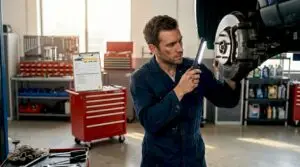
- Check pad thickness through the caliper opening. Friction material that is noticeably thin deserves a closer look.
- Inspect the rotor surface for rust, grooves, or a shiny, glazed look.
- Check for missing anti-rattle clips or shims, which sit between the pad and caliper.
- Look for debris, like a rock or road grit, wedged between the pad and rotor.
If the squeal disappears after five or six stops in dry conditions, it’s likely moisture or light rust, not a mechanical problem.
Detailed Causes: Worn Pads, Wear Indicators, and Pad Material
That ear-splitting squeal when you brake is often not a malfunction. It’s a design feature. Many brake pads include a small metal tab called a wear indicator, and when the friction material wears down far enough, that tab contacts the rotor and produces a high-pitched squeal as a deliberate warning that you’re due for new pads. It’s your brakes sending up a flare before things get expensive.
Pro Tip: Wear-indicator squeal usually happens only during braking and tends to get louder or more constant week over week. Grinding, on the other hand, sounds like metal on metal and often shows up whether you’re braking or just rolling. That’s the sound of a backing plate scraping bare rotor because the pad material is gone.
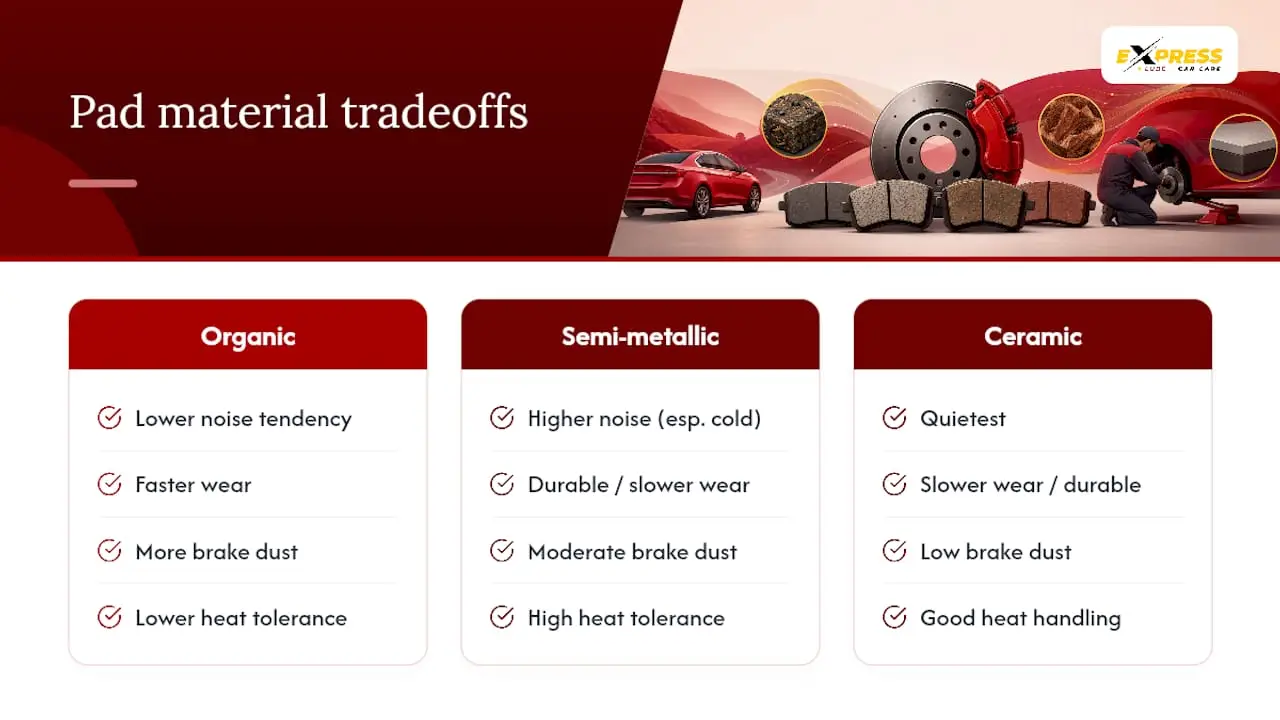
Pad material matters here too. Organic pads tend to squeal less but wear faster and produce more dust. Semi-metallic pads are durable and handle heat well, but they’re more prone to noise, especially when cold. Ceramic pads generally run quietest and cleanest, though no compound is completely immune to squeal.
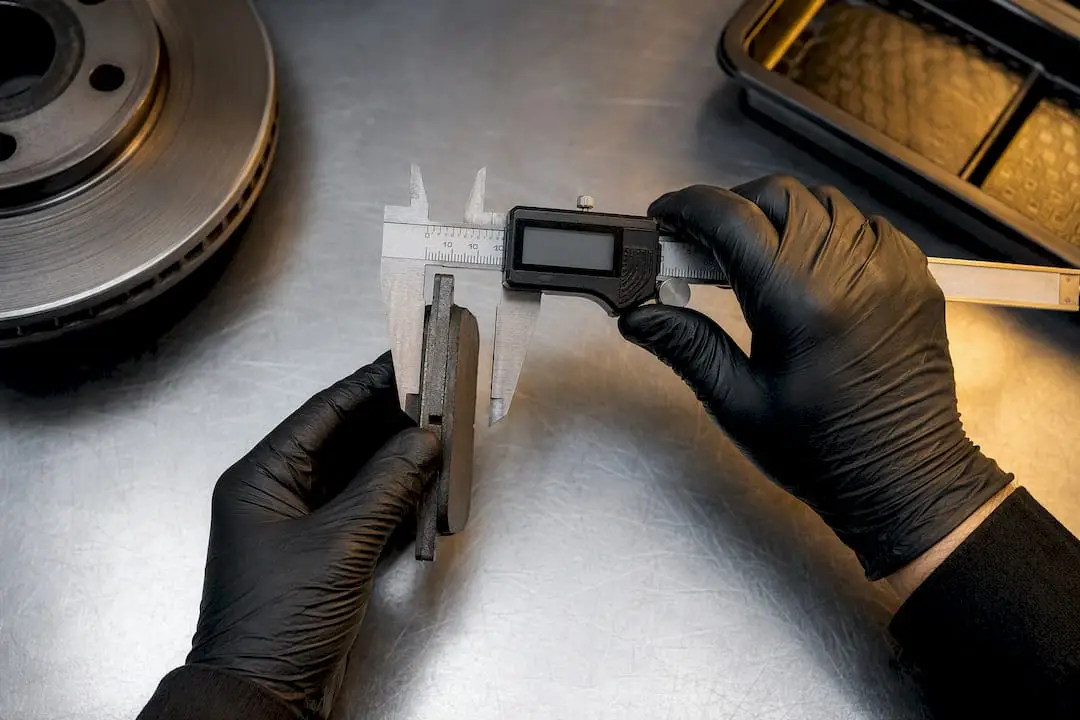
Waiting too long after you first hear that warning squeal risks turning a simple pad swap into a rotor replacement, since metal-on-metal contact gouges the rotor surface. Technicians measure remaining pad thickness and rotor condition during inspection to catch this before it escalates.
Hardware, Fitment, and Rotor Issues
Not every squeal comes from the pads themselves. A lot of noise traces back to hardware that’s supposed to let the caliper move freely and doesn’t anymore.
- Seized slide pins stop the caliper from retracting evenly, which drags one pad against the rotor and creates friction-based vibration.
- Corroded bracket rails can grip the pad ears and prevent smooth sliding, causing squeal even with brand-new pads installed.
- Missing or damaged shims and anti-rattle clips remove the buffer that normally dampens vibration between pad and caliper, turning small movements into audible chirps.
- Warped or unevenly worn rotors, sometimes measured as runout or disc thickness variation, can also generate noise and pedal pulsation together.
Manufacturer guidance is consistent on this front: microscopic vibrations from sticky caliper movement typically fall in the 300 to 5,000 Hz range, which is exactly the pitch range most drivers describe as an annoying squeal or chirp. Fixing it usually means cleaning and lubricating the slide pins, dressing the bracket rails, and replacing worn shims, not just swapping pads. If a rotor has runout beyond spec, a shop will machine it or replace it outright rather than bolt new pads onto a warped surface. Uneven rotor wear and DTV are also common culprits behind pedal pulsation that shows up alongside the noise.
Why Do Brakes Squeal After Rain or Sitting Overnight?
Temporary noise is one of the most common reasons drivers panic over nothing. A light film of surface rust forms on rotors almost every time a car sits overnight, especially in humid weather. That thin layer creates squeal for the first several stops each morning. This is normal, and it’s one of the most common causes behind “brakes squeaking when stopping” complaints that turn out to be nothing.
- Moisture and light rust: clears up within a few stops as the pads scrub the rust off the rotor surface.
- Glazing: happens when pads overheat repeatedly, often from riding the brakes downhill or in heavy traffic, and leaves a hard, shiny layer that resists proper friction and squeals persistently.
- Towing or heavy loads: force the brakes to work harder and hotter than normal, accelerating both wear and glazing.
- Aggressive stop-and-go driving: builds heat cycles faster than gentle braking, shortening pad life and increasing the odds of noise.
If squeal shows up right after a wash or a rainy commute and fades within a mile, that’s typically harmless surface rust, not a repair. If it lingers regardless of weather, something else is going on.
Safe DIY Fixes You Can Try (and What to Avoid)
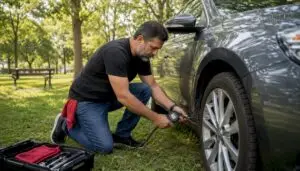
A surprising amount of nuisance squeal responds to a careful cleaning session, no parts required. Here’s a safe sequence to follow:
- Park on level ground, engage the parking brake alternately on wheels you’re not working on, and use jack stands, never a jack alone, to support the car.
- Remove the wheel and inspect the pad and rotor surfaces for glazing, debris, or rust buildup.
- Wipe the rotor face with brake cleaner to remove dust and light surface contamination.
- Apply a small amount of high-temperature brake lubricant to the slide pins and the metal pad contact points, never the friction surface itself.
- Reassemble, torque the wheel properly, and test brake at low speed in a safe area before driving normally.
If you’ve just installed new pads or rotors, bed them in gently: multiple moderate stops at moderate speed without coming to a complete stop or overheating the brakes, letting them cool between applications. Mild squeal during this break-in period is normal and often fades once the surfaces mate properly.
Pro Tip: Never spray WD-40 or similar household lubricants anywhere near the pads or rotors. These products contaminate the friction material and can seriously reduce stopping power, turning a noise problem into a safety problem. For safe cleaning products designed for brake dust specifically, this guide on removing brake dust walks through the dwell times that actually work without harming components. For a fuller walkthrough of do-it-yourself diagnostics, this DIY brake noise guide covers additional troubleshooting steps.
When Should You Get a Professional Brake Inspection?
Certain symptoms mean it’s time to stop experimenting and get a technician to look at the car. Grinding noise, a spongy or sinking pedal, the vehicle pulling to one side under braking, a dashboard brake warning light, or any smell of hot metal or smoke are all signals to schedule service immediately rather than wait.
- Grinding or scraping metal sounds, even briefly
- Soft, low, or sinking brake pedal
- Vehicle pulls left or right when braking
- Brake warning light illuminated
- Burning smell or visible smoke near a wheel
Bridgestone’s guidance on brake wear notes that persistent squealing paired with grinding almost always points to pads or rotors needing professional attention, not a quick fix. During a proper inspection, a technician measures remaining pad thickness, checks rotor runout and thickness variation, tests caliper movement, and inspects hardware like slide pins and shims. Depending on what they find, the service path could range from a hardware cleaning and lubrication to full pad replacement or rotor resurfacing. Ask for a written estimate before any work begins so you know exactly what’s being recommended and why. If you’re unsure whether a symptom qualifies as urgent, this breakdown of brake problem symptoms can help you sort noise from a genuine warning sign.
ASE Technician Tips and Common Shop Fixes
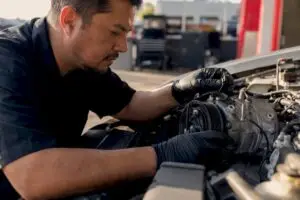
A proper shop diagnosis follows a sequence: visual inspection first, then measurement, then a dynamic test drive if the cause still isn’t obvious. Technicians check pad thickness and wear indicator position, measure rotor runout, and test caliper slide action by hand before ever touching a wrench to remove anything unnecessary.
Bracket-rail and slide-pin service gets skipped more often than it should, and that’s usually why squeal comes right back after a pad job. Cleaning corrosion off the rails and lubricating the pins properly lets the caliper float and clamp evenly, which is often the actual fix, not new pads. When pads are already new and hardware checks out clean, some shops will re-examine shim seating or switch to a different pad compound before assuming the parts are defective, since squeal is a vibration phenomenon with multiple possible mechanisms rather than a single failure point.
At Express Lube & Car Care, every brake inspection includes a digital vehicle inspection with photos and videos, so you can see exactly what a technician is looking at rather than taking a verbal word for it. ASE-certified technicians handle the diagnosis, and qualifying repairs carry a 24-month/24,000-mile warranty.
What Actually Fixes Squeaky Brakes Long-Term
Here’s the honest truth about brake squeal: most drivers overcorrect in one direction or another. Either they ignore a warning squeal for months because “it’s just noise,” or they panic and replace pads that had years of life left because a single rainy morning made things loud. Neither instinct serves you well.
The better approach is triage, not guesswork. A five-minute visual check tells you more than any forum thread ever will. Quick cleaning and hardware lubrication resolve a surprising share of nuisance squeal, and that’s often overlooked because pad replacement feels like the “obvious” fix. Persistent noise paired with grinding, pulling, or a soft pedal is different. That’s not a maintenance item anymore, it’s a safety item, and it belongs in a shop the same week you notice it.
Express Lube & Car Care is a RepairPal Certified Shop and recognized by CARFAX as a Top-Rated Service Center, and that recognition exists because of consistent, transparent diagnostic work, not guesswork on noisy brakes.
Book a Brake Inspection in Arlington
If that squeal has stuck around longer than a few rainy mornings, it’s time to get eyes on it rather than keep guessing. Express Lube & Car Care runs every brake inspection through a digital vehicle inspection, complete with photos and videos, so you see the actual pad thickness, rotor condition, and hardware wear our ASE-certified technicians find, not just a verbal summary.

A brake inspection appointment typically covers pad thickness measurement, rotor condition and runout, caliper and slide pin function, and a check of shims and hardware, the same checklist covered above. If you’re weighing DIY pad replacement against having a professional handle it, our pad replacement guide breaks down when each option makes sense. Qualifying repairs come with a warranty, and you’ll get a written estimate before any work starts, no surprises. Ready to stop guessing what that noise means? Book your brake service or browse current brake specials to get started.
Sources
- When to Replace Your Car’s Brake Pads — Car and Driver
- Brake noise technical tip — Ferodo
- Worn Out Brake Pads: Signs of Bad Brake Pads & What to do Next — AutoZone
- What Causes Brake Squeal and How To Solve It — PowerStop
- When to Replace Brake Pads — Bridgestone
FAQ
How do I get my brakes to stop squealing?
Clean the rotor surface, lubricate the slide pins and pad contact points with high-temperature brake lubricant, and check for worn shims or clips. If the squeal persists after that, it likely needs a professional inspection for pad wear, hardware seizure, or rotor issues.
Is it okay to drive with squealing brakes?
Light, occasional squeal that clears after a few stops is usually safe to drive on short term, but persistent squeal paired with grinding, a soft pedal, or pulling means you should stop driving and get the brakes inspected right away.
How much will it cost to fix squeaky brakes?
Cost depends on whether the fix is hardware cleaning and lubrication, pad replacement, or rotor service, so current pricing and specials are available on the Express Lube & Car Care services page.
Can you spray WD-40 on brakes to stop squeaking?
No. Spraying WD-40 or similar lubricants on brake pads or rotors contaminates the friction material and can seriously reduce stopping power, turning a noise annoyance into a genuine safety risk.
Why do new brakes squeal after installation?
New pads and rotors often squeal briefly during the bedding-in period as the surfaces mate together, which typically fades after multiple moderate stops. Squeal that continues well beyond that break-in period usually points to a hardware or fitment issue worth checking.