
If your car heater isn’t working, the usual suspects are low coolant, a stuck thermostat, a clogged or leaking heater core, a failed blower motor or resistor, or a blend door that won’t open. Never remove a hot radiator cap, and if you smell coolant or see wet carpet, skip the troubleshooting and get it towed. Otherwise, run the quick checks below, before you call a shop.
TL;DR:
- A leaking heater core is indicated by dampness on the passenger floor, a sweet coolant smell, and foggy windows, requiring prompt repair.
- Weak heat or constant high blower noise often results from low coolant, a stuck thermostat, or a failed blower motor resistor, which are simpler to diagnose.
- Checking coolant levels, heater hose temperatures, and fan operation can quickly narrow down the cause and help avoid unnecessary shop visits.
- Replacing a blower resistor or cabin air filter is a quick fix, while heater core replacement can cost hundreds to over a thousand dollars due to intensive labor.
- Routine maintenance such as coolant flushes, air filter changes, and hose inspections help prevent heater issues and extend component lifespan.
Table of Contents
- Common Causes and the Symptoms That Point to Each One
- Quick Checks You Can Do Safely Right Now
- DIY Fixes You Can Try and When to Call a Pro
- Typical Repair Types, Time, and What Drives the Cost
- What Happens During a Professional Diagnostic
- Preventive Maintenance That Keeps Your Heater Working
- Our Take on Diagnosing Heater Problems the Right Way
- Book Heater Diagnosis and Repair at Express Lube & Car Care
- Sources
- FAQ
Common Causes and the Symptoms That Point to Each One
Think of your symptoms as clues. Each one points toward a different part under the hood, and knowing which clue you’re dealing with helps a technician skip straight to the fix.
A sweet smell inside the cabin, foggy windows, or a damp spot on the passenger floor usually means a leaking heater core. Coolant is escaping into the cabin instead of staying in the loop, and that’s not something to ignore.
If the engine never seems to warm up, or the heat is weak and stays weak no matter how long you drive, low coolant or a stuck thermostat is a strong possibility. Hot coolant simply isn’t reaching the heater core the way it should.
A weak or silent blower, or one that only works on the highest fan setting, often traces back to a failed blower motor resistor. This part controls fan speed, and when it fails, low and medium settings go quiet.
Other signs to watch for:
- Warm engine but cold vents, sometimes with a clicking or knocking sound behind the dash, which points to a stuck blend door or actuator.
- A visible coolant leak, a hose that stays cold while its partner hose runs hot, or a hissing sound near the firewall.
- An automatic climate system that cycles oddly or won’t respond to settings, which usually calls for a code scan of the climate-control module.
Quick Checks You Can Do Safely Right Now
Before you assume the worst, a few minutes of hands-on checking can narrow things down and give a shop useful information to start with.
- Confirm your fan setting, temperature dial, and vent selection are actually set to heat and not defrost-only or recirculate.
- Let the engine reach normal operating temperature, roughly 10 to 15 minutes of driving, before judging whether the heat is weak.
- With the engine cold, check the coolant reservoir and top it off to the “cold” line if it’s low. Only do this when the engine is cool.
- Carefully touch (don’t grip) the upper radiator hose and the two heater hoses at the firewall. Both heater hoses should feel similarly warm; a cold one suggests a circulation problem.
- Check the cabin air filter for clogging, inspect the HVAC fuses in the panel, and listen for any grinding or rattling from the blower.
- Sniff for a sweet coolant odor and check under the passenger floor mat for dampness.
Pro Tip: Write down exactly what you feel, smell, and hear, including which fan speeds work. That short list saves diagnostic time and often saves you money.
Stop driving and call for a tow if you see steam, a visible coolant puddle, or the temperature gauge climbing toward overheating. Driving on an overheating engine risks real damage, and it’s not worth the gamble.
DIY Fixes You Can Try and When to Call a Pro
Some heater problems are simple enough to tackle yourself. Others need a lift, a scan tool, and hands that know their way around a dashboard.
Safe to try on your own:
- Replace a dirty or clogged cabin air filter, which is often a five-minute job.
- Check and swap any blown HVAC fuses using your owner’s manual fuse diagram.
- Top off low coolant when the engine is cold, using the correct type for your vehicle.
- Treat a musty vent smell by disinfecting the plenum and replacing the cabin air filter, a fix Consumer Reports recommends for odors caused by evaporator condensation.
Hand it to a professional when you notice a coolant smell, wet carpet, coolant that keeps disappearing, a blend door or actuator that clicks but won’t move air, or any heater core replacement. Heater core and blend door repairs are labor-intensive because many vehicles require partial dashboard removal just to reach the part, a job Cars.com notes can be time-consuming and vary widely by model.
Pro Tip: Never work behind the dash without training. You’re dealing with hot coolant lines and airbag wiring, and both deserve respect.
Typical Repair Types, Time, and What Drives the Cost
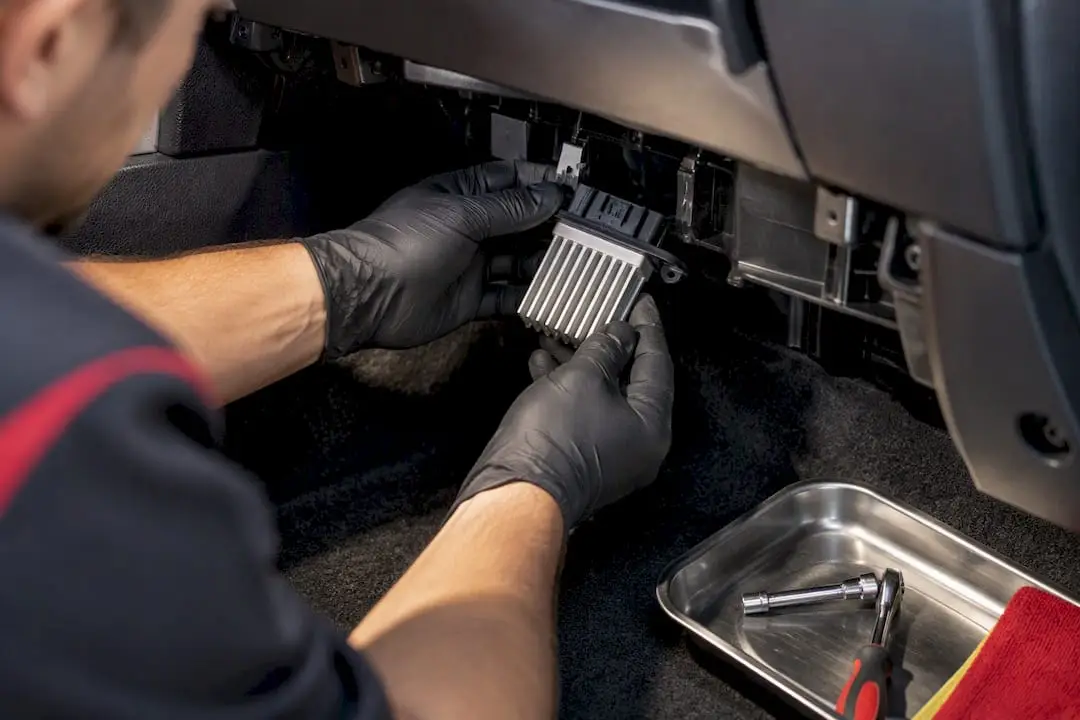
Not every heater fix costs the same, and knowing why helps you make sense of an estimate. A blown fuse or failed blower resistor is usually a quick, inexpensive fix since the part sits behind the glove box and doesn’t require dashboard removal. A stuck thermostat falls in the middle: moderate parts cost, moderate labor.
Heater core replacement is the expensive end of the spectrum. RepairPal’s cost estimator shows that heater core jobs can run from several hundred to well over a thousand dollars depending on the vehicle, with labor as the main driver because so many dashboards have to come apart to reach the part.
What actually moves the price:
- Whether the dashboard needs partial or full removal to access the core.
- Total labor hours, which vary widely by make and model.
- Parts pricing, since heater cores and actuators differ in cost across vehicles.
Ask any shop for a written, line-item estimate before work begins, and ask what the warranty covers on both parts and labor. Estimates vary by vehicle, so treat any number you find online as a starting point, not a quote.
What Happens During a Professional Diagnostic
A good diagnostic follows a pattern, and knowing the steps helps you understand what you’re paying for and how long it should take.
- A technician starts by asking what you noticed, confirming your symptoms match what the vehicle is doing right now.
- Next comes a coolant system pressure test and a check of heater hose temperatures to see if hot coolant is reaching the core.
- The blower motor and resistor get tested for proper function across all fan speeds.
- An OBD-II scan checks for HVAC-related trouble codes, especially on vehicles with automatic climate control.
Some repairs, like heater core replacement, require partially draining the coolant system and removing dash components, which adds real time to the job. Ask for photos or video documentation of the findings, a detailed estimate broken down by part and labor, and clarity on what the warranty covers. If there’s an active leak or the engine is running hot, a shop will usually recommend towing rather than driving in.
Preventive Maintenance That Keeps Your Heater Working
A little upkeep goes a long way toward avoiding a cold cabin next winter.
- Follow your vehicle’s coolant flush schedule and use the correct coolant mix for your engine.
- Replace the cabin air filter on schedule and have HVAC hoses inspected during regular service visits.
- Get belts and hoses checked periodically, and mention any new dash noises to your technician.
- Add a heater and HVAC check to your fall or winter maintenance visit, not just an afterthought when it’s already cold.
Pro Tip: Routine coolant flushes and cabin air filter changes reduce the odds of heater core blockage and blower strain building up over time.
Our Take on Diagnosing Heater Problems the Right Way
Our technicians are ASE-certified, and our shop is recognized for trusted workmanship, fast turnaround, and customer service. Every heater diagnosis includes digital photos and video so you can see exactly what we found and why we recommend a specific fix. Bring the notes from your own quick checks. It genuinely speeds up the visit.
— Express Lube & Car Care
Book Heater Diagnosis and Repair at Express Lube & Car Care
Cold air where warm air should be is frustrating, and we diagnose and repair heater and cooling system problems start to finish, from a simple blower fix to a full heater core replacement.

- Schedule a diagnostic through our A/C & heating service page.
- Browse our full list of services if you’re not sure what’s causing the problem.
- Smell coolant or see steam? Call us and ask about towing before you drive any farther.
Sources
FAQ
How Much Does It Cost to Fix a Car Heater?
Cost depends entirely on what’s wrong. A blown fuse or resistor is typically a lower-cost fix, while heater core replacement runs from several hundred to well over a thousand dollars depending on the vehicle, mostly because of labor. Ask your shop for a written, line-item estimate before any work starts.
How Do I Fix My Car Heater Not Blowing Hot Air?
Start by confirming the engine reaches normal operating temperature and that your coolant level is topped off when cold. If both check out and heat is still weak, either coolant isn’t reaching the heater core or air isn’t being routed through it, which usually means a shop visit for the thermostat, blend door, or heater core.
Can I Drive My Car if the Heater Is Not Working?
A weak heater alone usually isn’t dangerous to drive with, though it’s uncomfortable in cold weather. If you notice a coolant smell, wet carpet, or the temperature gauge climbing, stop driving and have the vehicle towed, since a leaking heater core can lead to engine overheating.
Why Is My Car Blowing Cold Air but Not Heating It?
This points to either a circulation problem, like low coolant or a stuck thermostat, or an airflow problem, like a stuck blend door or failed blower resistor. Checking whether both heater hoses feel warm at the firewall is a good first clue, and a shop can pinpoint it from there with a pressure test and hose temperature check.