
If you’re seeing oil around the top of your engine or smelling something burning after a drive, a valve cover gasket leak is the most likely culprit. A faint film with a stable oil level is safe to drive on short trips while you schedule a look. Smoke, a strong burning odor, or oil dripping fast means stop and get it inspected now. Check your dipstick first, then look at the valve cover seam and spark plug wells for wetness.
TL;DR:
- A leak from the valve cover gasket often shows as oil around the top of the engine, with burning oil odors or smoke indicating urgency.
- Confirm the leak source by checking and recording oil levels over days, inspecting for wetness, and using wipe-and-wait methods with proper tools.
- DIY replacement is feasible for simple four-cylinder engines but challenging in tight spaces or with warped covers, requiring precise torque and careful reassembly.
- Parts cost between $15 and $75, but labor varies from $150 to $400 depending on engine complexity and accessibility.
- Immediate stop is necessary if there is smoke, burning smell, or rapid oil loss; light seepage and stable levels can usually wait for scheduled repairs.
Table of Contents
- What Are the Symptoms of a Valve Cover Gasket Leak?
- How Do You Confirm the Leak Source?
- Should You Fix It Yourself or Call a Shop?
- How Is a Valve Cover Gasket Actually Replaced?
- How Much Does a Valve Cover Gasket Leak Cost to Fix?
- When Should You Stop Driving?
- Why Professional Diagnosis Beats Guessing on Valve Cover Leaks
- Get Your Valve Cover Gasket Leak Diagnosed at Express Lube & Car Care
- Sources
- FAQ
What Are the Symptoms of a Valve Cover Gasket Leak?
The gasket seals the valve cover to the top of the cylinder head, and once it hardens or shrinks, oil finds a way out. Here’s what to watch for and how urgent each one is.
- Wet, oily film along the valve cover seam — inspect soon, not an emergency by itself.
- Burning oil smell after driving — oil has reached a hot component like the exhaust manifold; get it checked promptly.
- Light blue or gray smoke from the engine bay — oil burning on hot metal creates real fire risk; don’t ignore this.
- Oil pooled in spark plug wells — can foul plugs and cause a rough idle or misfire; needs attention before it spreads.
- Falling dipstick level over days or weeks — points to a leak that’s been building longer than you think.
- Misfires or a check-engine light — often the result of oil-soaked plugs or coils, not a separate problem.
One useful trick for narrowing things down: valve cover leaks show up on top of the engine, near the head. Oil pan or rear-main seal leaks show up underneath, closer to the transmission or toward the back of the block. If you’re seeing drips on your driveway but nothing wet up top, check what’s actually leaking underneath before assuming it’s the valve cover.
How Do You Confirm the Leak Source?
Guessing wastes money. Buying a $40 gasket kit only to find the real leak is your oil pan gasket is a frustrating, avoidable mistake. Work through this in order before you touch a wrench for real repairs.
- Check and record your oil level. Top off if it’s low, then check again daily for a few days to see how fast it’s dropping.
- Grab a flashlight and look closely. Inspect the entire valve cover perimeter and the spark plug wells for fresh, wet oil. Let the engine cool first. Hot exhaust manifolds and hot valve covers will burn you.
- Try the wipe-and-wait method. Clean the suspected area with brake cleaner, drive the car normally, then re-inspect. If oil reappears at the same seam, you’ve found your source. For tighter spots, a telescoping mirror or UV dye trick works well.
If you’re removing coils or sensors to get a better look, disconnect the battery first on most vehicles. Never work under a hot engine without gloves, and keep your hands away from the exhaust manifold.
Pro Tip: If oil keeps showing up but you can’t pin down exactly where it’s coming from, stop guessing. A leak that’s actually coming from the intake gasket or a cracked valve cover can look identical to a simple gasket seep, and misdiagnosis means paying twice.
Call a shop if the leak source stays unclear, if oil is reaching the exhaust or anywhere near brake lines, or if the valve cover itself looks warped or cracked.
Should You Fix It Yourself or Call a Shop?
A valve cover gasket swap on an accessible four-cylinder engine is a reasonable weekend project if you’ve done basic engine work before. You’ll need a socket set, a torque wrench, a gasket kit with tube seals, a plastic scraper (never metal), and a couple of hours.
Several factors push this job toward a shop instead:
- Tight engine bays with limited hand clearance around the cover bolts.
- Turbocharged engines with extra plumbing and heat shields in the way.
- Multiple valve covers, as on most V6 and V8 layouts, which doubles the disassembly.
- A warped cover that needs machining or replacement rather than a simple gasket swap.
- Oil already sitting in spark plug wells, which usually means fouled plugs or coils that need inspection too.
The most common DIY mistakes are over-torquing the cover bolts, which crushes the new gasket or cracks an aluminum cover, and dropping hardware into the engine bay where you can’t find it again. If oil reached your spark plug tubes, replace the tube seals while you’re in there and check the plugs themselves for fouling.
Pro Tip: A torque wrench isn’t optional here. “Snug” by feel is exactly how people end up buying a second gasket kit a week later.
How Is a Valve Cover Gasket Actually Replaced?
The job follows a predictable sequence, and skipping steps is how leaks come right back.
- Let the engine cool completely before touching anything.
- Remove obstructing components like PCV hoses, ignition coils, or wiring harnesses that sit on top of the cover.
- Unbolt and lift the valve cover straight up, avoiding twisting that can crack an aluminum cover.
- Clean both mating surfaces with a plastic scraper. Never use a metal scraper on aluminum; it gouges the surface and creates a new leak path.
- Install the new gasket and tube seals, seating them fully in their channel.
- Apply RTV silicone only where the service manual specifies, usually at corner joints, not around the whole perimeter.
- Torque the bolts in the correct sequence to the manufacturer’s spec. Over-torquing warps covers and crushes gaskets just as easily as under-torquing lets them leak.
- Reassemble everything you removed, then test-drive and recheck.
That torque spec matters more than most people expect. A gasket compressed unevenly because one bolt was tightened harder than its neighbor will seep again within weeks, and you’ll be back under the hood redoing work you just finished.
After the repair, three things confirm success: no wet sheen at the seam after a 20 to 50 mile drive, no burning-oil smell, and a steady oil level on the dipstick over the following week. If a misfire code triggered the original diagnosis, confirm it’s cleared too.
How Much Does a Valve Cover Gasket Leak Cost to Fix?
Parts are cheap. Labor is where the range widens. Quality gasket and tube-seal kits typically run $15 to $75 depending on your vehicle’s make.
- Accessible four-cylinder engines: shop labor commonly falls between $150 and $400.
- V6 or V8 engines, or tight engine bays: expect higher labor costs since more components have to come off to reach the cover.
- Added costs to watch for: a warped valve cover that needs replacing or machining, spark plugs or coils that got soaked in oil, and diagnostic time if the leak source wasn’t obvious going in.
- Time on the vehicle: usually 1 to 3 hours for an accessible engine, longer if intake components or multiple covers are involved.
If a shop quote comes back higher than you expected, ask what drove it. A cracked cover or fouled coils are legitimate reasons; unexplained padding is not.
When Should You Stop Driving?
Some leaks can wait a few days. Others can’t wait an hour.
- Stop and arrange a tow if: you see visible smoke from under the hood, oil is actively burning on the exhaust manifold, you’re losing more than a quart of oil in a matter of days, oil is contaminating brake or steering components, or a misfire is affecting how the engine runs.
- Short-term driving is fine if: the leak is a light seep, your oil level has stayed stable for several days of checking, and you’re avoiding long highway trips or hard acceleration until it’s repaired.
Oil that reaches the exhaust manifold doesn’t just smell bad. It creates a real fire risk, and a persistent misfire can overheat the catalytic converter over time, turning a $200 gasket job into a much bigger repair bill.
Why Professional Diagnosis Beats Guessing on Valve Cover Leaks
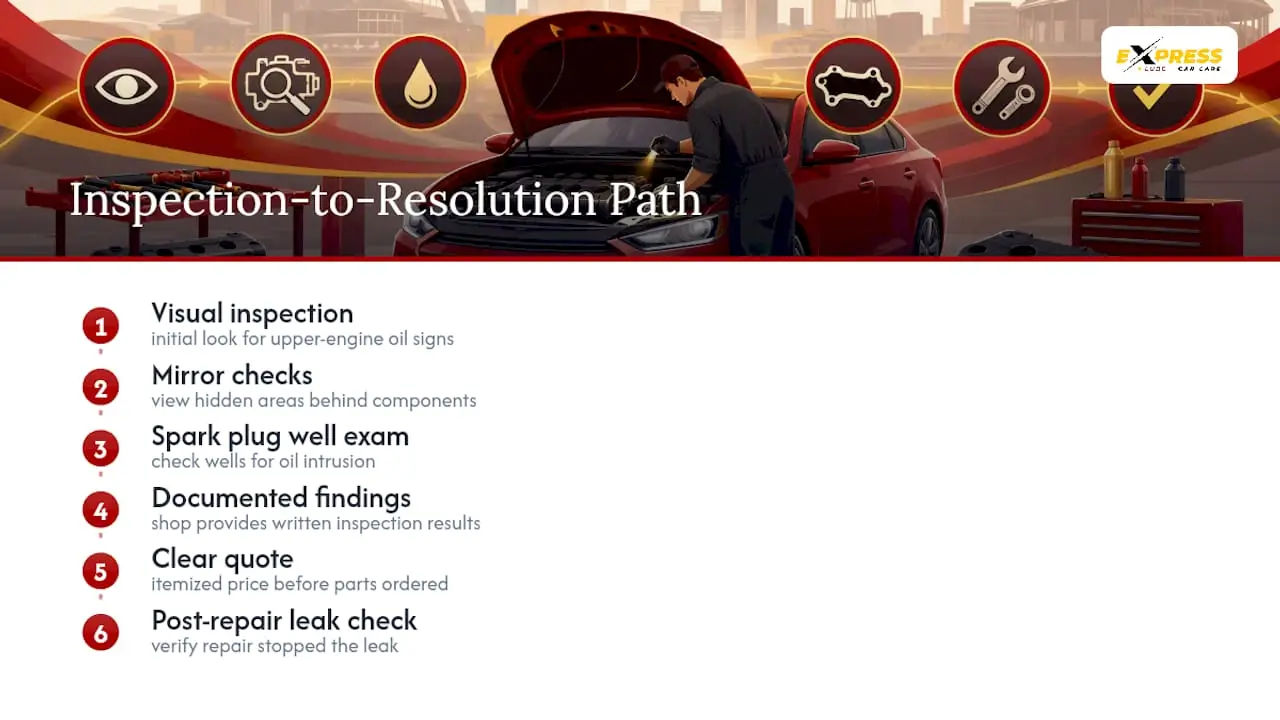
Valve cover leaks look a lot like other upper-engine oil problems, and telling them apart from the driveway isn’t always straightforward. That’s exactly why ASE-certified technicians run through visual inspection, mirror checks, and spark plug well examination before recommending a single part. A proper inspection catches whether you’re actually dealing with a valve cover gasket or something else entirely, which prevents paying for parts you didn’t need. A trustworthy shop hands you documented findings, a clear quote, and a post-repair leak check, not a vague guess and a bigger bill.
Get Your Valve Cover Gasket Leak Diagnosed at Express Lube & Car Care
You could spend your Saturday under the hood chasing a leak that turns out to be somewhere else entirely, or you could have it confirmed in one visit. That’s the real advantage Express Lube & Car Care offers Arlington drivers dealing with a valve cover gasket leak: our ASE-certified technicians run a full digital vehicle inspection to pinpoint the exact source before recommending any repair, so you’re not paying for guesswork.

When you call, mention what you’re seeing: oil at the top of the engine, a burning smell, smoke, or a rough idle. That helps us prepare the right diagnostic approach before your car even arrives. Every valve cover gasket replacement we perform is backed by our 24-month, 24,000-mile warranty, and we document the leak check after the repair so you have a clear record of what was fixed. If the cost catches you off guard, ask about our auto repair financing options before you decide to put the repair off. Schedule your inspection with Express Lube & Car Care and get a straight answer on what’s actually leaking under your hood.
Sources
- How to replace a valve cover gasket | Mobil™
- Engine Valve Cover Gasket Leak: Symptoms & Fixes
- Valve Cover Gasket Oil Leak: Causes, Symptoms, and Fixes
- Valve Cover Gasket Explained: Leaks, Symptoms, Replacement – Wheels Greed-All About Cars
FAQ
How much does it cost to fix a valve cover gasket leak?
Parts typically run $15 to $75, and labor for an accessible four-cylinder engine commonly falls between $150 and $400. V6 and V8 engines with harder access usually cost more.
Can I drive a car with a valve cover leak?
Short trips are usually fine if you have a light seep and a stable oil level that you’re monitoring daily. Stop driving immediately if you see smoke, smell burning oil strongly, or notice rapid oil loss.
Is it worth fixing a leaking valve cover gasket?
Yes. The parts are inexpensive and the labor is moderate, especially compared to the cost of a fouled catalytic converter or damaged spark plugs and coils from prolonged oil exposure.
How long can you drive with a leaky valve cover gasket?
There’s no fixed timeline. A stable, minor seep can often wait for a scheduled appointment, but rising oil loss, smoke, or a burning smell means the repair needs to happen right away.