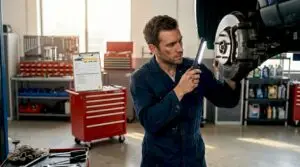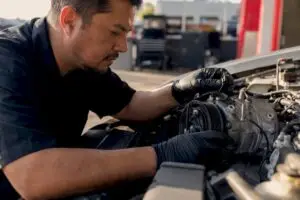

The most common signs of a worn control arm bushing are a clunk or knock over bumps, a clunk when you brake, loose or wandering steering, a vibration through the wheel or floor, and tires that wear on one edge. The rubber bushing is what keeps the control arm snug against the frame. When it cracks, tears or separates, the arm moves where it shouldn’t, and your car tells you in noise and feel.
Below, we walk through each symptom, what else can cause the same thing, how a technician confirms it, and when it’s time to stop driving and get it checked. We’re a full-service shop on Brown Blvd in North Arlington, so we’ll also talk about what our local roads do to suspension parts.
TL;DR
- A clunk over bumps, a clunk when braking or turning, loose steering and uneven tire wear are the classic signs of bad control arm bushings.
- Ball joints, tie rods, sway bar links and shocks or struts can make similar noises, so diagnose before you buy parts.
- Worn bushings put extra stress on other suspension parts, and a failed arm can compromise steering control.
- Confirmation takes a hands-on inspection of the front end, not just a quick look at the rubber.
- If you notice a new clunk, book an inspection. Call us at (682) 248-3416.
Table of Contents
- What a control arm bushing does
- Control arm bushing symptoms to watch for
- What else can cause the same noises?
- How a technician confirms a bad bushing
- Can you keep driving on bad control arm bushings?
- What wears out control arm bushings
- Bushing or the whole control arm?
- Alignment after a control arm repair
- Our perspective: diagnose first, then replace
- When to have your suspension inspected
- Suspension repair at Express Lube & Car Care
- FAQ
- Book your suspension inspection in Arlington
- Sources
What a control arm bushing does
A control arm connects your wheel assembly to the vehicle’s frame. According to MOOG’s overview of control arm symptoms, a control arm is made up of a body, a ball joint and a bushing, and the bushing is the piece that attaches the arm to the frame.
Think of the bushing as a rubber shock absorber for the joint. It lets the arm pivot up and down with the road while keeping it firmly located front to back and side to side. It also keeps metal from touching metal, which is why you hear a bad one.
Your car has several of them. Depending on the design, there may be upper and lower arms on each front wheel, and some vehicles have control arms at the rear as well. Any of them can wear.
Control arm bushing symptoms to watch for
No single sign proves a bushing is bad. But these show up again and again, and several together point strongly in that direction.
A clunk or knock over bumps
This is the big one. Industry guidance from MOOG lists a clunking or knocking noise over bumps or during sharp turns as a leading symptom, caused by the bushing no longer isolating the frame from suspension movement. If you want a closer look at that one noise, our guide to clunking over bumps lists the first clues to check.
Here’s a practical example. You pull into a parking lot off Brown Blvd, roll over a speed bump at 5 mph, and hear a dull thud from the front corner. Nothing rattles on the highway, but the thud repeats every time. That low-speed, bump-triggered clunk is typical of a bushing with too much play.
A clunk when braking
If you’re searching for a clunk when braking, the control arm bushing is a prime suspect. When you brake, weight shifts forward and the wheel is pushed rearward. A worn bushing lets the control arm shift in its mount, and you feel and hear it as a thunk or a lurch as you press the pedal, and sometimes again as you release it.
The same movement can show up as a pull when braking or accelerating. MOOG’s technical team notes that symptoms often get worse during acceleration, deceleration and steering. A brake clunk isn’t always the suspension, though. Loose brake hardware or a worn caliper bracket can sound similar, which is why a proper inspection matters. If the noise is a squeal or grinding rather than a clunk, that points more toward the pads and rotors, and you can read about brake repair and pad replacement instead.
Loose, wandering or vague steering
When the bushing lets the arm move, the wheel can shift its angle slightly as you drive. You may feel the car drift in its lane, need small constant corrections, or sense a delay between turning the wheel and the car responding. The car may also feel unsettled over uneven pavement.
Slow-speed maneuvers can reveal this earlier than highway driving. Backing out of a driveway or making a tight turn in a parking space is where many owners first notice a knock.
Steering wheel or floor vibration
Excessive vibration in the steering wheel, floor or seat can come from bad control arm components. AAA notes that worn suspension parts such as ball joints, tie rods and bushings are among the most common reasons for a shaking wheel. They also point out that worn or damaged tires usually cause a consistent, repeatable shake, which helps separate the two.
If your vibration shows up at a specific speed range, our steering wheel vibration diagnostic guide maps out the possibilities.
Uneven tire wear
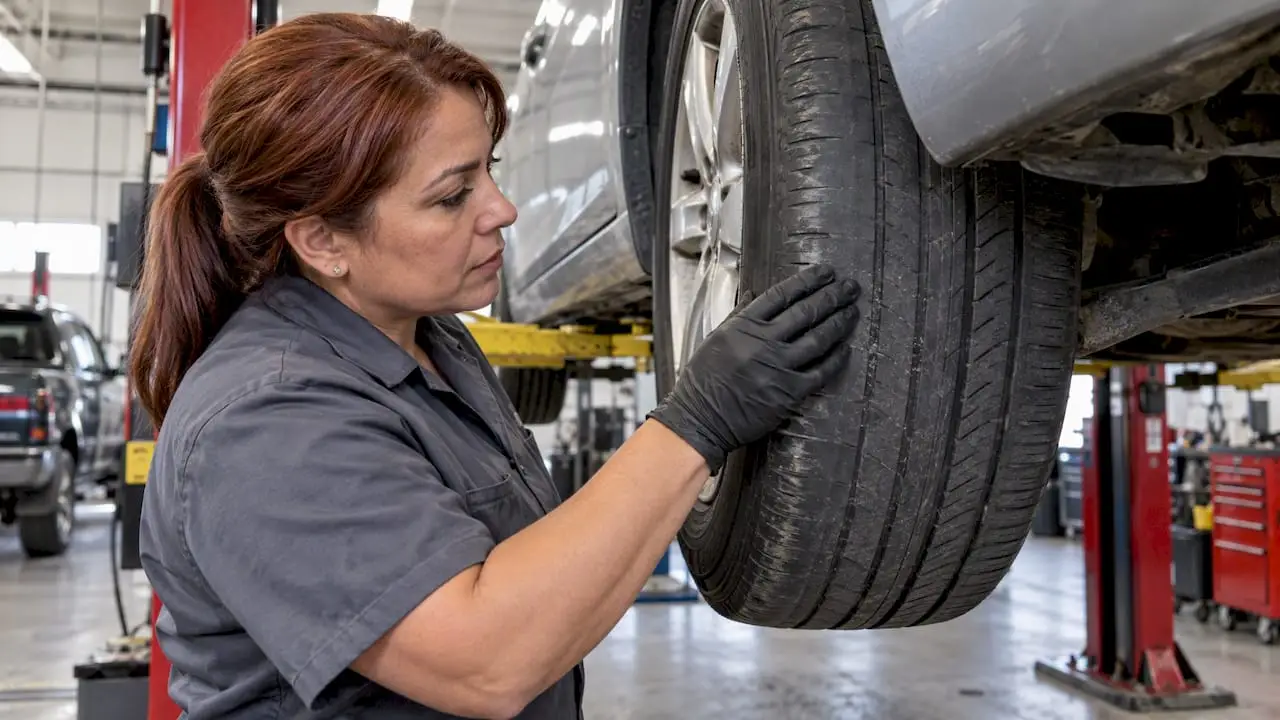
A bushing that lets the wheel tilt or toe out of position wears tires unevenly. MOOG says this appears on the inner or outer edges of the tread. Run your hand across the tread, and look at the inside shoulder in particular. A smooth edge on one side and a sharp, feathered edge on the other is worth a look.
A rougher, harsher ride
Bushings absorb energy. When they fail, the rest of the suspension takes the hits. AAA’s experts say the suspension works as one unit, and a worn component pushes shocks, struts and ball joints to absorb forces they weren’t built for, which can turn one repair into several.
Quick symptom chart
| What you notice | Most likely when | Other suspects |
|---|---|---|
| Clunk over bumps | Low to moderate speeds, rough pavement | Ball joints, sway bar links, struts, strut mounts |
| Clunk when braking | Pedal press or release | Brake hardware, caliper bracket, ball joints |
| Wandering or loose steering | Highway lane holding, slow turns | Tie rods, steering rack, tires |
| Vibration in wheel or floor | Often worse at speed | Tire balance, bent wheel, worn tires |
| Uneven edge tire wear | Builds over time | Alignment out of spec, worn ball joints, worn struts |
What else can cause the same noises?
This is where guessing gets expensive. A clunk is a clunk, but the part making it can vary. Common look-alikes include:
- Ball joints. These sit at the outer end of the same control arm. Worn ball joints cause clunks and loose steering too. See our guide to ball joint failure symptoms.
- Tie rod ends. These cause looseness and a knock when turning. Our tie rod end symptoms page covers the signs.
- Sway bar links and bushings. They typically rattle over small, uneven bumps.
- Shocks, struts and strut mounts. These can clunk and also affect ride quality, as covered on our shocks and struts page.
- Worn tires or wheel problems. These cause a consistent vibration rather than a clunk.
Often it’s more than one worn part. Because everything in the front end is connected, a loose bushing can accelerate wear on a ball joint next to it.
How a technician confirms a bad bushing
A quick glance won’t settle it. A cracked, torn or oil-soaked bushing is obvious, but practitioners point out that bushings can fail from the inside out: the rubber can separate from its metal housing even when it looks fairly intact.
A good inspection combines several steps:
- Road test and listening. The tech notes when the noise happens: bumps, braking, turning or acceleration.
- Lift inspection. With the vehicle raised, the tech looks for cracked, torn or distorted rubber, and for signs of other worn parts.
- Physical play checks. MOOG’s front end guidance describes a dry park test and grab-and-shake checks at the 12 and 6 o’clock and 3 and 9 o’clock positions to find movement in specific components.
- Noise isolation. In the dry park method, one person turns the steering wheel while another watches and listens underneath to separate bushings, ball joints and tie rods, and to tell a bushing from a steering rack problem.
- Check for secondary damage. A good tech looks at ball joints, sway bar links and tires, since one worn part stresses its neighbors.
Our technicians are ASE-certified, and we use digital vehicle inspections that include photos and videos, so you can see what we see instead of taking our word for it.
Can you keep driving on bad control arm bushings?
For a short, careful trip to a shop, often yes, if the car still steers normally. For weeks of commuting, we wouldn’t.
Here’s the reasoning. Worn bushings change how well the wheel stays in position. Industry guidance warns that in severe cases, ignoring these signs can lead to component fracture, which compromises handling and steering control, a real risk in an emergency stop. Even before that, degraded bushings can make the car handle unpredictably in sudden maneuvers, something AAA’s Car Doctor notes drivers often overlook until a stressful moment.
Stop driving and call a tow or a shop right away if:
- The steering suddenly feels very loose or the car pulls hard to one side.
- You hear a loud bang followed by a change in how the car steers.
- You see a wheel leaning at an odd angle or a part hanging below the car.
That’s not a wait-and-see situation. A sudden change after a hard pothole hit deserves the same treatment.
What wears out control arm bushings
Age and mileage are the main factors. Rubber hardens and cracks with heat and time, and Texas summers are rough on it. Beyond age:
- Potholes and hard impacts. AAA’s pothole guidance notes that severe impacts can damage suspension components, and low-profile tires and low ride heights make that more likely.
- Road salt and contamination. Less of an issue in North Texas than up north, but it matters if your car came from a salted state.
- Vehicle design. Some models have bushings that fatigue early. MOOG has written about vertical control arm bushing failure on certain late-model vehicles, where hard OE-style rubber can fail.
- Alignment problems. AAA notes that when alignment is off, control arms, ball joints and bushings must work harder to compensate, leading to early wear.
If you drive stretches of I-30 or Highway 360 daily, or cut through construction zones, you take more hits than a weekend driver does. If you spot a bad pothole, you can report it to the City of Arlington, which helps your neighbors too.
Bushing or the whole control arm?
This comes up in nearly every repair conversation. Sometimes only the bushing is replaceable, sometimes the arm is sold as a complete assembly with the bushing and ball joint. Practitioners note that pressing in a new bushing can be harder than replacing the entire arm, and a full arm can make alignment and bolt installation easier and may save labor time.
What decides it:
- Is the ball joint worn too? If so, a complete arm often makes more sense.
- Is the bushing available separately for your vehicle? Not every design allows it.
- How much corrosion or damage is there? Seized hardware changes the labor.
- What’s in your budget and timeline? We’ll lay out the options after inspection.
We don’t publish a price for this repair because it varies by vehicle, which arm is involved and what else is worn. We’ll give you the estimate after we look at your car.
Alignment after a control arm repair
When control arm parts are replaced, wheel angles can change. That’s why many repair plans include a check of alignment afterward, and why your tires will tell the truth later. If you want to understand the difference between the two services, this breakdown of alignment versus balancing checks is a clear starting point. Ask us at your appointment how alignment fits into your repair plan.
Our perspective: diagnose first, then replace
We see a pattern in the front-end work that comes through our bays. A driver arrives sure it’s a particular part, often because a forum post matched their noise. Sometimes they’re right. Often the clunk turns out to be a different part, or more than one.
So our approach is simple. We find the source before we recommend a repair, we show you the evidence with photos and video from the digital inspection, and we don’t suggest parts the inspection doesn’t support. The fix should match the finding, not the guess.
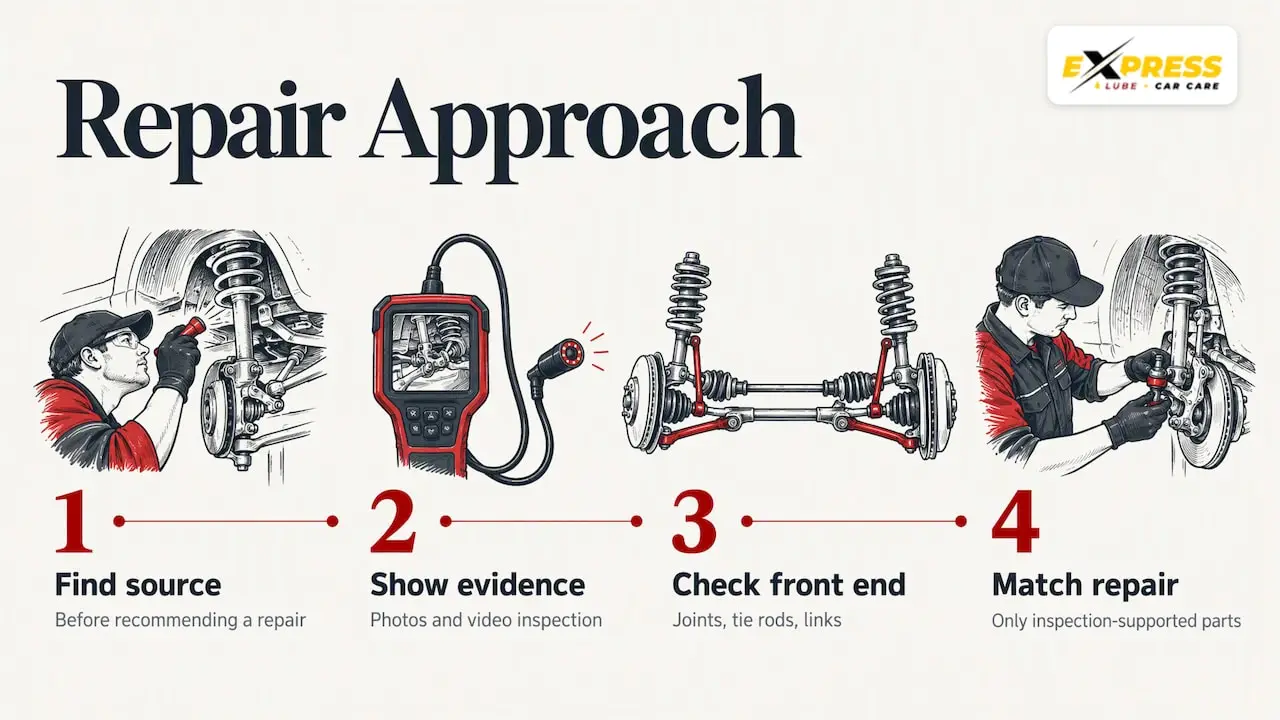
We also try to look at the whole front end together. If a bushing is worn, we check the ball joints, tie rods and sway bar links next to it, because they share the load. That way you hear about the full picture once, instead of coming back every few months for the next part.
Our repairs are done by ASE-certified technicians, and qualifying repairs are covered by a 24-month/24,000-mile warranty. That’s not a reason to put off a noise, though. The best repair is the one you do before the part fails.
— Express Lube & Car Care
When to have your suspension inspected
Don’t wait for a clunk. MOOG suggests having steering and suspension checked at regular intervals such as every 50,000 miles, as part of annual service, and any time the car is in for related repairs. Your owner’s manual and the vehicle manufacturer are the right place to confirm what’s recommended for your car.
Good moments for a check:
- You’ve just hit a deep pothole or curb.
- You’re noticing a new noise, even a faint one.
- Your tires show uneven wear.
- You’re buying a used car, or your car is getting older. Our article on how vehicle age affects repair needs explains what to expect.
Suspension repair at Express Lube & Car Care
We’re more than an oil change stop. Our shop handles steering and suspension diagnosis and repair, along with brakes, check engine diagnostics, electrical work and more. See our steering and suspension repair page, or browse everything on our services page. Most jobs are same-day, and you can learn more about us at expresslubearlington.com.
FAQ
What happens if I drive with bad control arm bushings?
You’ll likely get louder clunks, looser steering and faster tire wear, and neighboring parts such as ball joints take extra stress. In the worst case, a component can fail and compromise steering control. If your car clunks or wanders, get it inspected soon instead of waiting.
Which control arm goes bad first?
There’s no universal answer. It depends on the vehicle design, the loads on each arm and your road conditions. A lift inspection can show which one has play, and technicians usually check all of them while they’re there.
Can a bad bushing cause a clunk when braking?
Yes. Braking shifts the wheel rearward, and a worn bushing allows the arm to move, which you hear as a clunk. Loose brake hardware and worn ball joints can do the same, so the source should be confirmed with an inspection.
How much does it cost to fix control arm bushings?
It depends on your vehicle, which arm is affected, whether the bushing or whole arm is replaced, and whether other parts are worn. We don’t quote a price until we’ve inspected the car. Call us and we’ll set up a diagnosis.
Can I just replace the bushing myself?
That’s not a casual job. Pressing bushings requires the right tools, and a bad install can affect alignment and handling. Because this is a safety component, we recommend a professional diagnosis and repair.
Book your suspension inspection in Arlington
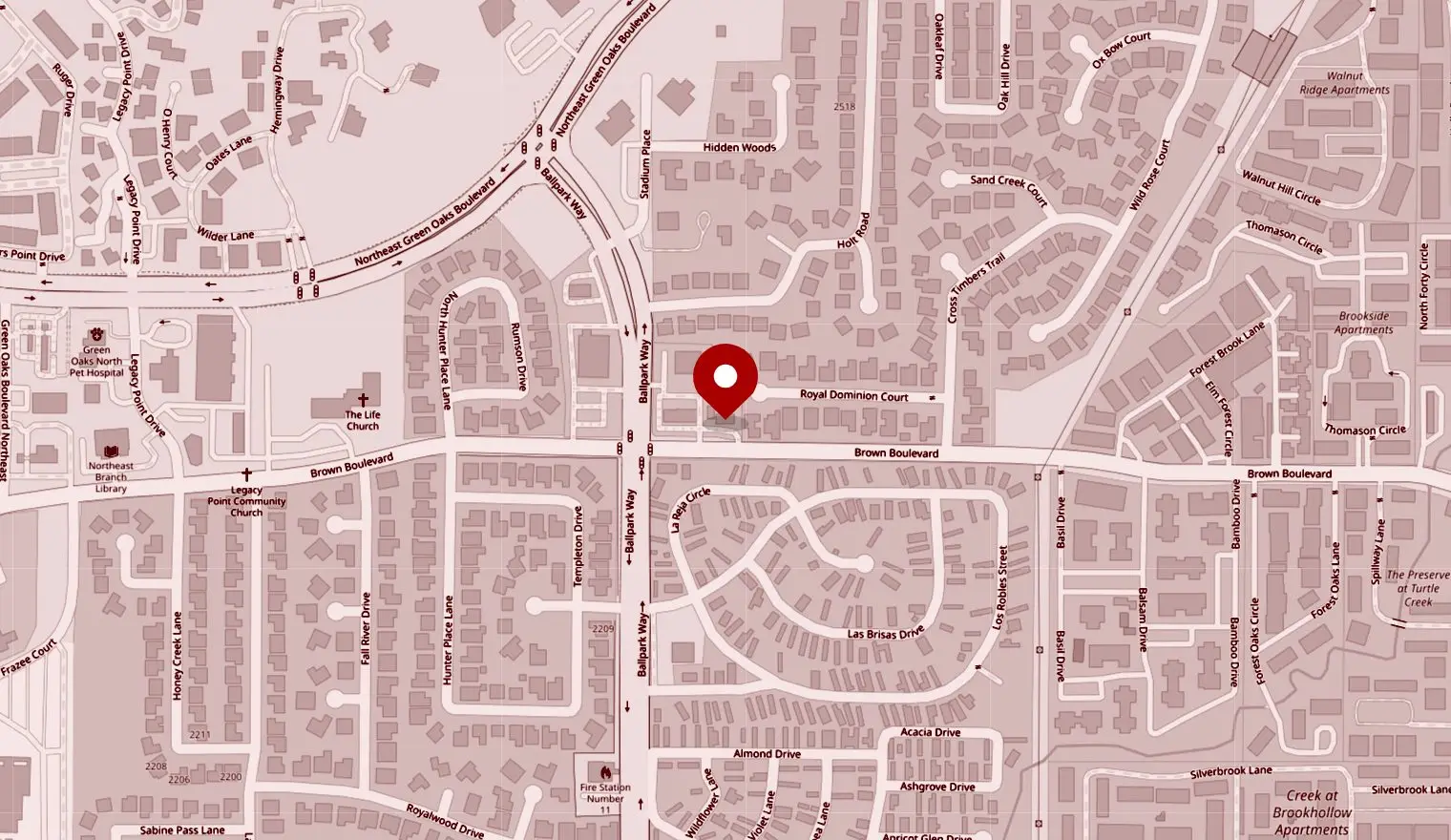
Hearing a clunk when you brake or hit a bump? Let us find out what’s causing it before you spend money on parts. Schedule your appointment online, call us at (682) 248-3416, or stop by 2105 Brown Blvd, Arlington, TX 76006.
Sources
- Bad Control Arm Symptoms, MOOG Parts
- Vehicle check: front end assembly, MOOG
- How to Isolate Suspension Noises, MOOG
- Troubleshooting Vertical Control Arm Bushing Failure, MOOG
- When to inspect your steering and suspension system, MOOG
- Why Your Steering Wheel Shakes, AAA Club Alliance
- The Cause Of Potholes And How To Handle Damage, AAA Club Alliance
- Q&A With AAA’s Car Doctor: April 2026
- Guide to Vehicle Wheel Alignment and Suspension, AAA
- Report a Street Problem, City of Arlington