
A transmission cooler leak means automatic transmission fluid (ATF) is escaping from the cooler, its lines or their fittings, or leaking into your radiator coolant. Stop driving it far or hard, because low fluid can overheat the transmission and wear out its clutches. The fix is often a line, fitting or seal, but only a proper inspection tells you which. Here is how to spot it, what causes it, and what a shop checks before replacing anything.
TL;DR
- ATF can leak from the cooler lines, their fittings, or the cooler built into the radiator. Pink, milky or slimy coolant points to the radiator cooler.
- Fluid under the car, slipping or harsh shifts, and a check engine light are the common warning signs.
- Don’t keep driving on a real leak. Low fluid hurts the transmission, and fluid on hot exhaust parts can be a fire risk.
- Get it diagnosed before parts are replaced. A wet fitting isn’t always a bad O-ring, and a “pan leak” is sometimes a cooler connection.
- Cost depends on the vehicle, where the cooler sits and what else is worn, so it needs a look first.
Table of Contents
- What is a transmission cooler, and where does it leak?
- Where do cooler lines commonly leak?
- How do you know it’s the transmission cooler and not something else?
- Is it safe to drive with a transmission cooler leak?
- How a shop diagnoses a cooler leak
- What does repair involve, and what affects the cost?
- Our perspective: fix the leak before it becomes the repair you really dread
- Can we look at it for you?
- How to keep cooler lines from leaking in the first place
- FAQ
- Schedule a transmission cooler inspection in Arlington
- Sources
What is a transmission cooler, and where does it leak?
Automatic transmissions make a lot of heat. To keep fluid from cooking, hot ATF is sent out of the transmission through metal and rubber lines to a cooler, then returned. On many vehicles that cooler sits inside the radiator. Federal regulators describe the in-radiator type as a tank submerged in engine coolant that works as a heat exchanger: hot fluid flows through it, cools down and goes back to the transmission, according to NHTSA’s analysis in the Federal Register. Many trucks and SUVs also have an add-on auxiliary cooler mounted in front of the radiator.
So “transmission cooler leak” can mean three different things:
- A leaking line or fitting. This is the most common version: fluid drips from the tubes between the transmission and the cooler.
- A leaking external cooler. An auxiliary cooler can be punctured by road debris or corroded.
- A leak inside the radiator. A breach in the internal cooler lets ATF and coolant mix. This is the one people mean when they search for transmission fluid at the radiator.
Where do cooler lines commonly leak?
If you’re staring at a drip, these are the usual suspects:
- Steel-to-rubber crimps. Many lines are steel tube with a rubber hose section held by a crimped collar. Over years of heat, the rubber hardens and the crimp weeps.
- Radiator fittings. Where the line threads or snaps into the radiator, a dried-out O-ring or a weakened clip lets fluid seep.
- Quick-connect couplers. These push-on fittings depend on a seal and a retaining clip, and either can fail.
- Transmission case fittings. The lines thread into the case, and a loose or damaged fitting leaks right at the source.
- Rusted or rubbed-through tubing. Salt, moisture and a line that vibrates against a bracket can wear a pinhole.
Texas drivers get some help here: we don’t deal with road salt. But heat cycles in an Arlington summer, stop-and-go traffic on I-30 and towing on Highway 360 all load the cooling circuit, and rubber sections age with that heat.
A few leaks aren’t in the lines at all. Ford documented a case where fluid leaked between the radiator’s transmission cooler and its fitting, not between the line and the fitting, because of inadequate sealing. The bulletin notes the condition can leave fluid residue on the radiator tank. You can read it in Ford TSB 00-9-1. A separate manufacturer service bulletin warns that technicians should inspect the transmission oil cooler connections before replacing a pan or gasket, since leaks from other areas can be mistaken for pan leaks. That same bulletin notes that in rare cases fluid seeps through porous transmission case metal near the line connections, and the transmission may need replacing.
How do you know it’s the transmission cooler and not something else?
Start with the fluid itself. Color and smell narrow it down fast.
| What you see | Likely source |
|---|---|
| Red or pink, oily, thin | ATF (transmission or cooler) |
| Dark brown or black, oily | Engine oil |
| Yellow-green, pastel blue or orange, sweet smell | Engine coolant |
| Milky pink or tan, slimy in the radiator or overflow tank | ATF and coolant mixing |
The FTC’s consumer guide notes that engine oil is dark brown or black and oily, while coolant can be yellowish green, pastel blue or fluorescent orange with a sweet, steamy odor. ATF is typically red or pink when fresh and darkens with age, so check your owner’s manual for your fluid’s specification.
Then match the symptoms:
- Puddle or drips near the front of the car, the middle, or along the lines.
- Shifts that feel off: delayed engagement, slipping, shudder or harsh shifts. If that’s what you’re feeling, our guide to a car transmission that’s slipping covers the other causes.
- Whining or grinding from a transmission that is low on fluid.
- Check engine light. A Ford recall notice says a transmission oil cooler line leak can cause erratic or missed shifts, vibration, shudder and a check engine light, per the recall document filed with NHTSA.
- Strange coolant. A pink, slimy film in the radiator cap area or coolant reservoir.
Why pink coolant is a bigger deal
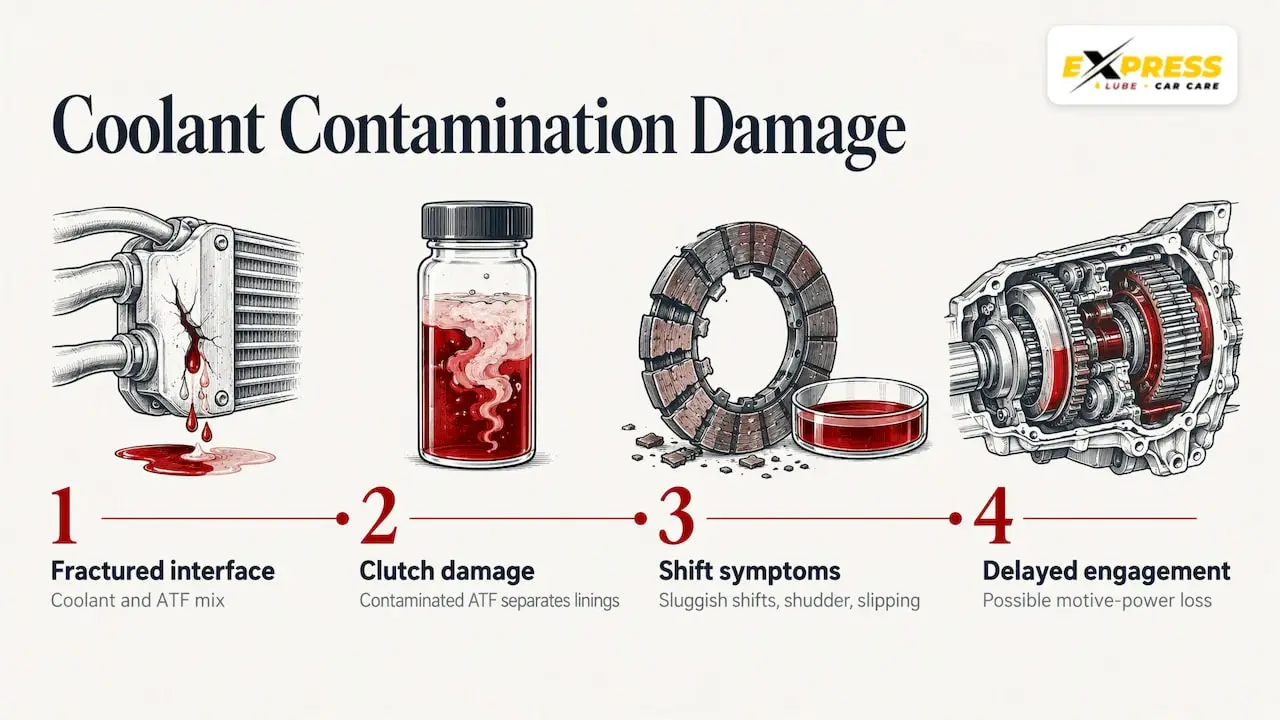
When ATF and coolant mix, the problem goes beyond a leak. NHTSA reported that coolant-contaminated ATF can separate clutch linings from their plates and bands, leading to sluggish shifts, shudder, slipping, delayed engagement and eventually loss of motive power, as described in the Federal Register analysis. In the Nissan application NHTSA studied, a fractured interface inside the cooling cylinder caused the crossover. If you see milky or pink coolant, park it and call a shop. Don’t wait for a convenient weekend.
Is it safe to drive with a transmission cooler leak?
Not for long, and not if it’s more than a seep. Here’s the plain logic: the cooler’s job is to keep fluid at a workable temperature, and the fluid’s job is to lubricate and apply pressure to the clutches. Lose fluid and both jobs suffer. The transmission can slip, run hot and wear out internal parts.
There is also a fire side to this. The Ford recall notice mentioned above says that fluid contacting the exhaust can create a fire risk. That’s the reason a dripping line isn’t something to monitor for a month.
What’s reasonable depending on what you see:
- A few drops overnight, normal shifting: Check the fluid level per your owner’s manual, avoid towing and long trips, and book an inspection this week.
- A puddle, fluid trail, burning smell or smoke: Don’t drive it. Have it towed.
- Pink or milky coolant, or shifting problems: Stop driving and have it inspected right away.
Topping off the transmission is a short-term bridge at most. If you’re not sure how to read your dipstick (many newer vehicles don’t have one), skip the guesswork. Our four-check triage for transmission fluid leaks walks through what you can safely look at in a driveway.
How a shop diagnoses a cooler leak
Here’s where a professional saves you money. Fluid runs back along lines and gets blown around by airflow, so the wettest spot is rarely the source. A good diagnosis looks like this:
- Confirm the fluid. Is it ATF, engine oil, coolant, or a mix?
- Clean the area. Degrease the lines, fittings, radiator and transmission case so old residue doesn’t mislead anyone.
- Run the vehicle and watch. With the engine running and the transmission warm, a technician uses a light to see where fresh fluid appears first.
- Inspect the hardware, not only the seal. One parts-industry guide makes a good point: a damp fitting doesn’t always call for a simple O-ring fix, and the socket, tube end and retaining clip need to be checked for structural integrity before reassembly.
- Check the coolant side. If ATF is in the coolant, or coolant is in the ATF, the internal cooler is suspect and the fluid condition matters as much as the part.
- Look upstream and downstream. Pan gasket, axle or pump seals and the cooler connections all leak in the same general area.
This is why we recommend proper diagnostics before replacing parts. Swapping a line that wasn’t the source costs you twice.
What does repair involve, and what affects the cost?
Repairs range from small to major, depending on what failed:
- Fitting or O-ring reseal. Possible when the fitting and its seat are sound.
- Line replacement. Rusted, rubbed-through or leaking-crimp lines are usually replaced rather than patched, because a patched line is a failure waiting to happen under heat and pressure.
- External cooler replacement. Common on tow-equipped trucks and SUVs.
- Radiator replacement. When the internal cooler has failed, the radiator is replaced, then the transmission side needs a flush or fluid service so contaminated fluid doesn’t stay in the system. Our radiator and cooling system service page covers the coolant side of that job.
- Transmission work. If coolant has already damaged clutches, the conversation shifts. We lay out the trade-offs in rebuild versus replace.
What moves the price: how your vehicle is built (cooler inside the radiator or external), how hard the lines are to reach, whether fittings and clips are salvageable, the fluid service afterward, parts choice, and labor rates. We don’t post a flat price for this job because two vehicles with the same symptom can need very different work. We’d rather inspect it and give you a real number than guess.
Our perspective: fix the leak before it becomes the repair you really dread
We see the same pattern again and again. A driver notices a few spots on the driveway, tops off the fluid for a couple of months, and then the transmission starts to slip. At that point a line or fitting repair has turned into a much bigger conversation. The leak was the cheap warning.
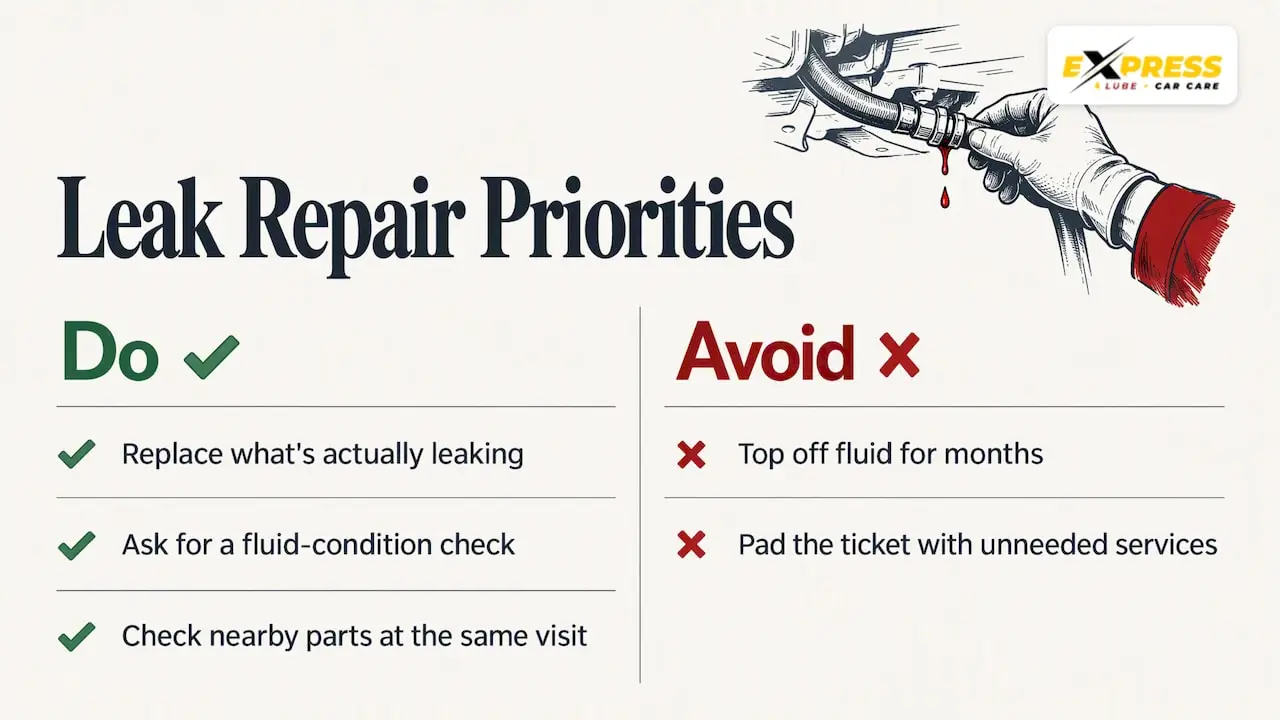
Our approach is simple. Every technician at our Brown Boulevard shop is ASE-certified, and we start with a digital vehicle inspection that includes photos and videos, so you see the wet fitting, the cracked line or the milky coolant yourself, not just a line on an estimate. We recommend replacing what’s actually leaking, tell you plainly what can wait, and don’t pad the ticket with services you didn’t need. Most jobs are same-day, and qualifying repairs carry our 24-month/24,000-mile warranty.
One more thing: when a leak is found, ask the shop to check the fluid condition and the nearby parts at the same visit. Cooler problems often sit next to old fluid and aging hoses, and it’s better to solve them in one trip than two.
— Express Lube & Car Care
Can we look at it for you?
If you’re seeing red or pink drops, damp lines, or strange coolant, our transmission repair service in Arlington covers leak diagnosis, line and cooler repair, and fluid service, alongside the rest of our full list of services. Our home page has the full overview.

If repair cost is a concern, we can talk through third-party financing on our auto repair financing page. Approval and terms are decided by the finance provider, and nothing is guaranteed.
How to keep cooler lines from leaking in the first place
You can’t stop rubber from aging, but you can catch trouble early:
- Follow the manufacturer’s schedule for transmission fluid, not a universal number. Your owner’s manual lists the interval and fluid type for your vehicle. Our fluid replacement schedule guide explains how to read it.
- Have lines and fittings looked at during routine service. A quick look under the vehicle during an oil change catches damp spots and chafed lines.
- Keep the cooling system healthy. Old coolant and an overheating engine stress the radiator, and with an in-radiator cooler that matters to the transmission too.
- Be careful with towing. If you tow, make sure the cooling capacity matches your vehicle’s requirements per the owner’s manual.
- Act on small signs. A spot on the garage floor is cheap information.
FAQ
How much does it cost to fix a transmission cooler leak?
It depends on what is leaking. A fitting reseal is a very different job from a line replacement or a radiator with a failed internal cooler. Online estimates vary widely and don’t account for your vehicle, so the reliable answer comes from an inspection. Call us at (682) 248-3416 and we’ll tell you what we find.
Is it okay to drive with a transmission leak?
Only a very short, gentle trip to a shop, and only if the leak is minor and the transmission shifts normally. Low fluid can make a transmission slip and overheat, and fluid on hot exhaust parts can be a fire risk. If you see a puddle, smoke, burning smell or pink coolant, have the vehicle towed.
Where is the most common place for a transmission to leak?
Pan gaskets, axle and pump seals, and cooler lines and fittings are all common. Cooler connections are easy to overlook because fluid travels along the lines, and they can be mistaken for a pan leak. That’s why a technician cleans the area and watches where fresh fluid first appears.
How can you tell if a transmission cooler is bad?
Look for ATF on the radiator or lines, pink or milky coolant, slipping or delayed shifts, and low fluid. Pink, slimy coolant is the strongest clue that the internal cooler has failed. A pressure test and fluid inspection by a technician confirms it.
Can a transmission fluid leak at the radiator be fixed without replacing the radiator?
If the leak is at a line, clamp, fitting or O-ring, often yes. If the cooler inside the radiator is breached, the radiator is typically replaced, and the transmission fluid system needs service so no coolant remains in it.
Schedule a transmission cooler inspection in Arlington
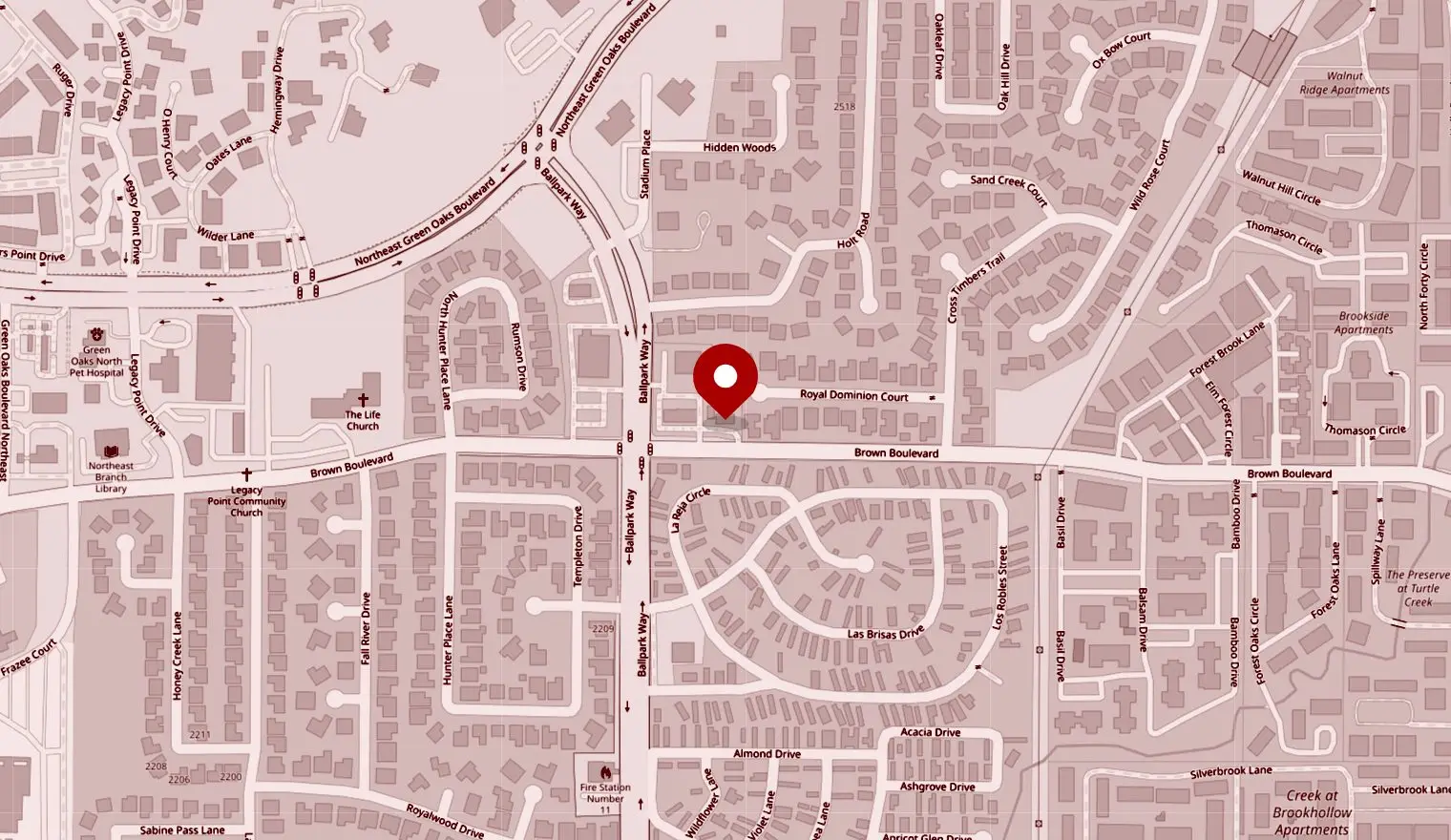
If your car is dripping, shifting oddly or showing pink coolant, let us find the source before it gets more expensive. Schedule service at Express Lube & Car Care Arlington through our online appointment page, or call (682) 248-3416. You’ll find us at 2105 Brown Blvd, Arlington, TX 76006, an easy trip from I-30 and Highway 360.
Sources
- NHTSA analysis, Federal Register, November 1, 2016
- Ford TSB 00-9-1, transmission fluid leak at radiator cooler
- Manufacturer service bulletin on transmission fluid leaks, NHTSA
- FTC, Auto Repair Basics
- Ford recall notice 20V-691, NHTSA
- Transmission cooler lines guide, SPELAB