

TL;DR:
- Following your vehicle’s maintenance schedule prevents small problems from becoming costly repairs and ensures safety.
- It involves adhering to manufacturer-recommended service intervals based on mileage or time, tailored to your driving conditions.
A vehicle maintenance schedule is defined as a manufacturer-issued timetable that specifies when your car needs preventive services, based on mileage or time intervals, to stay safe and reliable. Think of it as your car’s personal health calendar. Miss enough appointments, and small problems quietly grow into expensive ones. Unperformed maintenance costs U.S. drivers $50 billion annually, leading to shorter vehicle lifespans and more breakdowns. That number tells you this isn’t a minor oversight. Following your car service schedule is one of the most direct ways to protect both your safety and your wallet.
What is a vehicle maintenance schedule and what does it include?
A vehicle maintenance schedule is a structured plan, built from engineering data, that tells you exactly which services your car needs and when. Manufacturers develop these schedules after extensive testing, so the intervals reflect real wear patterns in your specific engine, transmission, and drivetrain. Following them is the only reliable way to maintain warranty protection and peak performance.
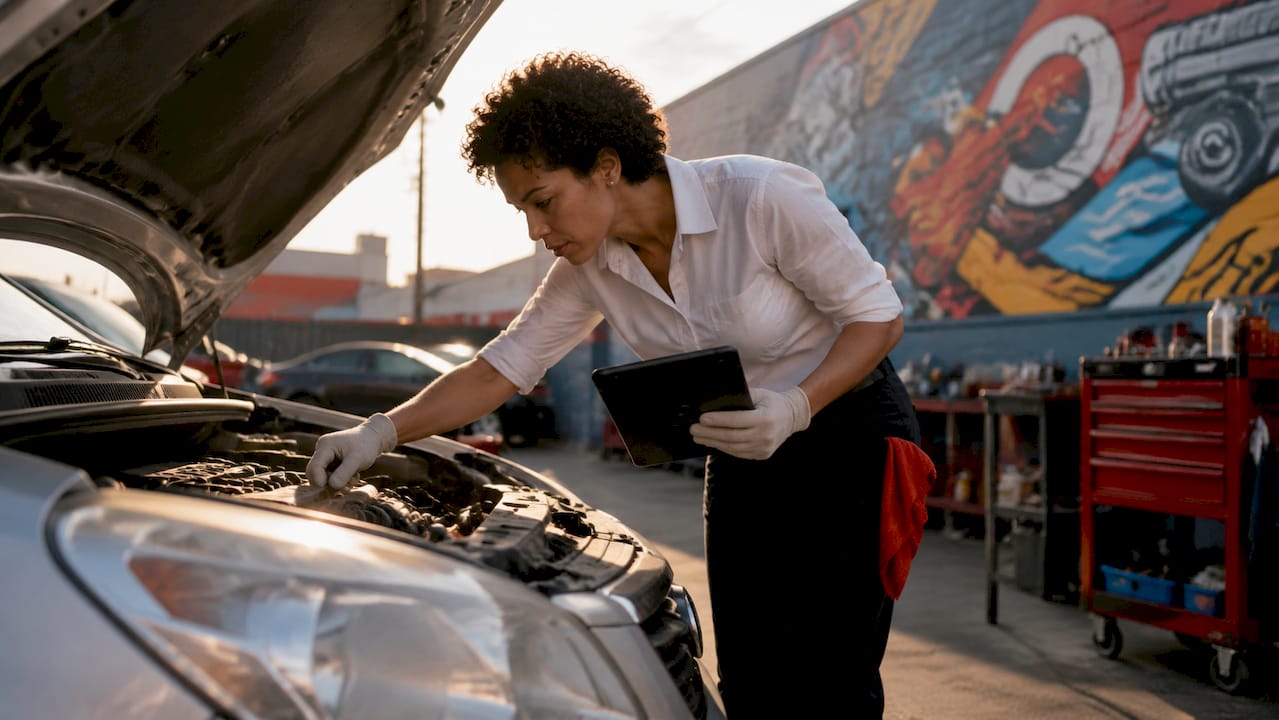
A complete maintenance schedule runs from oil changes every 3,000–10,000 miles all the way up to timing belt replacements at 60,000–100,000 miles, covering 14 distinct services in total. That range is wide because different vehicles and driving habits create different wear rates. Your owner’s manual narrows it down to your exact car.
Here is a quick reference for the most common service intervals:
| Mileage Interval | Key Services |
|---|---|
| Every 3,000–5,000 miles | Oil and filter change, tire pressure check |
| Every 5,000–7,500 miles | Tire rotation, fluid top-offs |
| Every 15,000–30,000 miles | Air filter, cabin filter, brake inspection |
| Every 30,000 miles | Fuel filter, battery check, coolant flush |
| Every 60,000–90,000 miles | Spark plugs, timing belt, transmission fluid |
Manufacturer schedules center around milestones like 30,000, 60,000, and 90,000 miles for major component maintenance. Missing these milestones can trigger system-wide failures, not just a single broken part.
Pro Tip: Check your owner’s manual for both a “normal” and a “severe” driving schedule. If you frequently drive in stop-and-go traffic, tow loads, or extreme heat like a Texas summer, you likely fall under the severe category and need more frequent service.
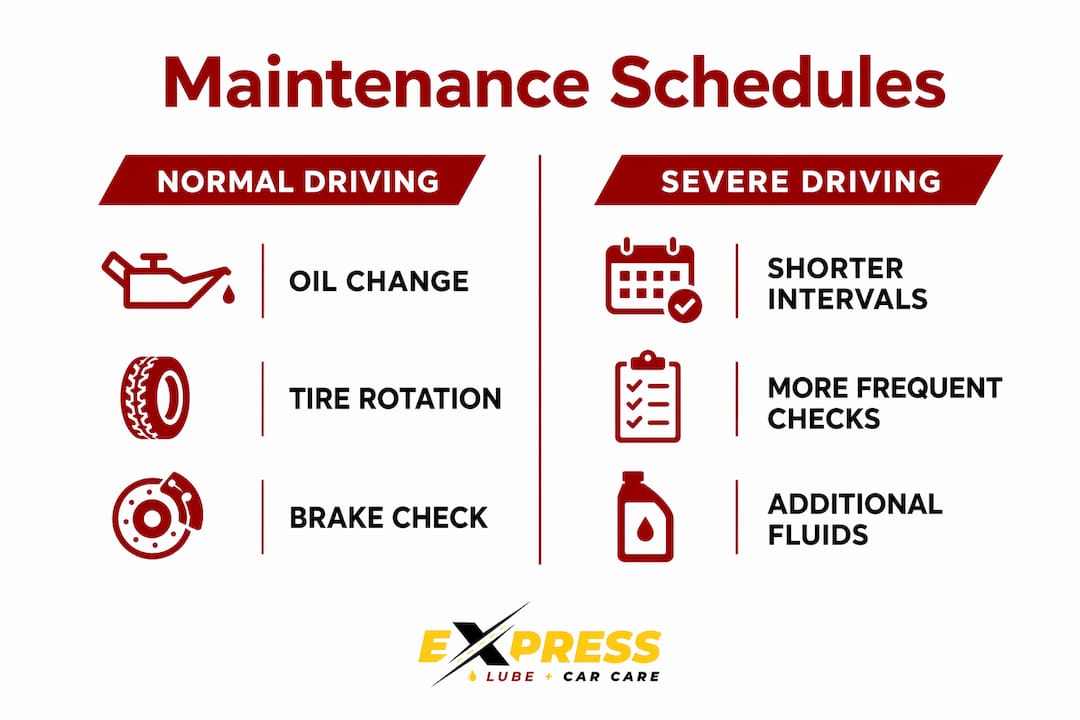
Standard and severe maintenance schedules differ significantly based on driving conditions. Severe schedules require shorter intervals because demanding use accelerates wear on fluids, brakes, and filters faster than highway driving does.
Why following your car service schedule saves money and improves safety
Routine preventive maintenance is not an expense. It is an investment with a clear return. Routine preventive maintenance costs $700–$1,200 annually, while reactive repairs on neglected vehicles average $3,000–$5,000 per year. That gap represents thousands of dollars you keep in your pocket simply by staying on schedule.
Car owners pay more than $1,300 annually on maintenance and repairs on average. Following manufacturer schedules helps keep that number at the lower end by stopping small failures before they cascade into larger ones.
Skipping an oil change seems harmless until sludge builds in the engine. Skipping a brake inspection seems fine until the rotors warp. Each missed service creates a domino effect where one worn part stresses the next. The real cost of neglect is not one big repair bill. It is a series of them arriving one after another.
Safety is the other side of this equation. Timely brake inspections catch worn pads before they grind into rotors. Tire rotations catch uneven wear before a blowout happens on the highway. Fluid checks catch low coolant before your engine overheats on a summer commute. These are not hypothetical risks. They are the exact failures that routine car upkeep prevents.
- Brakes: Inspections every 15,000–30,000 miles catch pad wear early and prevent rotor damage.
- Tires: Rotations every 5,000–7,500 miles extend tire life and maintain even traction.
- Fluids: Coolant, brake fluid, and transmission fluid checks prevent overheating and slipping.
- Belts and hoses: Timing belt replacement at the manufacturer interval prevents catastrophic engine failure.
Experts advise scheduling service 2–3 weeks before the service sticker deadline. Waiting until the last day risks exceeding the recommended interval if your schedule fills up or life gets busy.
How to find and personalize your maintenance plan
Your owner’s manual is the single most authoritative source for your vehicle’s service schedule. Every car sold in the U.S. includes one, and the maintenance section lists every required service with its exact mileage or time interval. If you no longer have the manual, your manufacturer’s website offers a digital version searchable by year, make, and model.
For even more precision, use a VIN lookup tool. Your Vehicle Identification Number encodes your exact engine type, trim level, and production specifications. Plugging it into your manufacturer’s online maintenance portal generates a schedule built specifically for your car, not just a general model range. This matters because a V6 and a four-cylinder version of the same model can have different service intervals.
Here is how to build a personalized routine:
- Locate your owner’s manual and find the maintenance schedule section. Note every service interval listed under both normal and severe conditions.
- Use your VIN on the manufacturer’s website to confirm vehicle-specific intervals and check for any technical service bulletins that update the schedule.
- Assess your driving conditions. Daily highway commuting qualifies as normal use. Frequent short trips under 10 miles, towing, or driving in extreme heat or dust qualifies as severe use.
- Adjust your intervals accordingly. Severe-condition drivers should shorten oil change intervals and inspect brakes more frequently than the standard schedule suggests.
- Log every service. Keep a simple notebook in the glove box or use a free app to record the date, mileage, and service performed each visit.
Pro Tip: Ask your service advisor to show you the specific OEM schedule page before approving any work. Verifying OEM documentation at the service counter prevents paying for services that sound necessary but are not manufacturer-required.
There is a clear distinction between required service and recommended service. Required services are manufacturer-mandated and tied to your warranty. Recommended services are suggested by the service advisor and may or may not align with your OEM schedule. Knowing the difference saves you money every single visit.
For drivers who want a deeper breakdown of tasks by mileage, the car maintenance schedule by mileage guide at Expresslubearlington covers the top seven checks in detail.
Common maintenance mistakes that cost you more in the long run
The most expensive maintenance mistake is also the most common: waiting too long. Most drivers only act when the dashboard warning light appears or the service sticker is overdue. By that point, the interval has already been exceeded and wear has progressed further than it should have.
Here are the mistakes that consistently lead to bigger repair bills:
- Ignoring service reminders. Dashboard alerts and service stickers exist for a reason. Dismissing them pushes your vehicle past safe operating thresholds.
- Confusing dealer upsells with required maintenance. A service advisor recommending a fuel system cleaning at 20,000 miles may be offering a genuinely useful service or padding the bill. Always cross-check against your OEM schedule.
- Failing to track service history. Without records, you cannot know when the last oil change, tire rotation, or brake inspection happened. Gaps in history lead to doubled-up or skipped services.
- Skipping seasonal adjustments. Driving in severe weather conditions accelerates wear on tires, brakes, and fluids in ways a standard schedule does not fully account for.
- Assuming newer cars need less maintenance. Modern vehicles have longer oil change intervals, but they still require regular inspections, filter changes, and fluid checks on schedule.
Pro Tip: Set a recurring calendar reminder 2–3 weeks before your estimated service date based on your average monthly mileage. This gives you time to book an appointment without rushing or exceeding the interval.
Manufacturer maintenance intervals reflect predictable wear patterns. Skipping routine fluid or parts changes does not just delay maintenance. It creates secondary failures in connected systems, turning a $60 oil change into a $1,200 engine repair. For a practical look at how these errors add up, the common car repair mistakes breakdown at Expresslubearlington is worth reading before your next service visit.
Key Takeaways
A vehicle maintenance schedule is the single most effective tool for reducing repair costs, extending vehicle life, and keeping your car safe on the road.
| Point | Details |
|---|---|
| Definition matters | A maintenance schedule is a manufacturer-issued timetable, not a dealer suggestion. |
| Cost gap is real | Preventive maintenance costs $700–$1,200/year versus $3,000–$5,000 for reactive repairs. |
| Know required vs. recommended | Always verify services against your OEM schedule before approving work. |
| Schedule early | Book service 2–3 weeks before your sticker date to stay within manufacturer intervals. |
| Track everything | Logging every service by date and mileage prevents gaps and duplicate work. |
Why I think most car owners are one missed service away from a big bill
Here is what I have seen over and over: car owners who are otherwise careful with their money treat vehicle maintenance as optional until something breaks. They skip the $80 oil change, then spend $1,800 on a seized engine bearing six months later. The math never works in their favor, but the pattern keeps repeating.
The misconception I hear most often is that modern cars “take care of themselves.” They do not. Longer oil change intervals and better materials have raised the bar, but they have not eliminated the need for consistent service. Parts like timing belts, spark plugs, and transmission fluid still have finite lifespans. Neglecting them causes major engine or transmission damage that no amount of good intentions will undo.
My honest recommendation: treat your owner’s manual like a contract. The manufacturer tested your car extensively and wrote those intervals for a reason. When a service advisor suggests something not in that manual, ask them to show you the OEM page. If they cannot, you have your answer. Pair that habit with a trusted, certified shop and you will spend far less on your car over its lifetime than the average driver does.
For car owners who are newer to this, the car care tips for new drivers resource offers a useful global perspective on maintenance habits that translate well regardless of where you drive.
— Hassan
Keeping your car on schedule with Expresslubearlington
Staying on top of your vehicle’s service schedule is straightforward when you have the right team behind you. Expresslubearlington is a RepairPal Certified Shop and a CarFax Top-Rated Service Center serving drivers across the DFW area. Our ASE-certified technicians handle everything from oil changes and tire rotations to brake inspections and major mileage services.
We work from your manufacturer’s schedule, not a generic checklist, so you only pay for what your car actually needs. Whether you are due for a routine check or catching up on missed services, our team gives you a clear picture of your vehicle’s condition without the upsell pressure. Learn more about our certified auto repair services and see why DFW drivers trust us to keep their vehicles running right.
FAQ
What is a vehicle maintenance schedule?
A vehicle maintenance schedule is a manufacturer-issued plan that specifies which preventive services your car needs and at what mileage or time intervals. It covers everything from oil changes to timing belt replacements across the life of the vehicle.
How often should I service my vehicle?
Most vehicles need an oil change every 3,000–10,000 miles depending on oil type, with major inspections at 30,000, 60,000, and 90,000-mile milestones. Your owner’s manual lists the exact intervals for your specific car.
What is the difference between required and recommended maintenance?
Required maintenance is manufacturer-mandated and tied to your warranty. Recommended maintenance is suggested by a service advisor and may not appear in your OEM schedule. Always verify against your owner’s manual before approving additional services.
How do I find my car’s maintenance schedule?
Check your owner’s manual first, then use your manufacturer’s website with your VIN for a vehicle-specific schedule. A VIN lookup generates intervals based on your exact engine, trim, and production specifications.
Does skipping maintenance really cost more in the long run?
Yes. Routine preventive maintenance averages $700–$1,200 per year, while neglected vehicles face reactive repair costs of $3,000–$5,000 annually. Skipping one service often triggers failures in connected systems, multiplying the total cost.