

Most small tread punctures can be safely repaired, but only when three conditions line up: the hole sits in the tread, it measures a quarter inch (6 mm) or less, and the tire still has more than 2/32 inch of tread remaining. The industry-accepted fix is a combined patch-and-plug installed after the tire comes off the wheel, which follows specialized processes to repair carbon fiber where applicable, and never a plug jammed in from the outside. If your tire doesn’t meet all three conditions, or if you’ve been driving on it flat, replacement is the safer call. Don’t drive far on a flat while you sort this out.
TL;DR:
- Repairs are only recommended for holes in the tread that are 1/4 inch or less and when the tire has more than 2/32 inch of remaining tread; sidewall or shoulder punctures are never repairable.
- If the tire has been driven on while flat or shows visible bulges, soft spots, or previous repairs, replacement is the safest choice.
- A proper repair involves dismounting the tire, internal inspection, cleaning, inserting a vulcanizing stem, and applying an internal patch combined with a plug from the inside.
- Sealants and plug-only fixes are temporary solutions and should only be used to transport the vehicle to a repair shop for a proper fix.
- Worn tires near the 2/32 inch tread limit or with multiple punctures often require replacement, not repair, regardless of puncture size.
Table of Contents
- How to Tell if Your Puncture Qualifies for a Safe Repair
- Step-By-Step: What a Proper Puncture Repair Involves
- Emergency Fixes vs. When You Need a Professional
- What a Professional Puncture Repair Costs and How Long It Takes
- Why Choose a Trained Shop: Express Lube & Car Care’s Approach
- Our Take: Stop Trusting the Plug-Only Fix
- Get Your Tire Inspected the Right Way
- Sources
- FAQ
How to Tell if Your Puncture Qualifies for a Safe Repair
Not every hole in your tire deserves a second chance. Tire technicians use a short checklist to figure out whether a puncture is a quick fix or a sign it’s time to shop for a replacement, and it’s worth knowing before you head to the shop.
Location matters more than you’d think. Repairs are only approved in the tread, the center portion of the tire that touches the road. A nail through the sidewall or shoulder isn’t repairable, full stop. Those areas flex constantly as you drive, and a patch there is a recipe for a blowout down the road.
Size sets a hard ceiling. The industry limit for a repairable puncture is 1/4 inch, or about 6 mm. Anything wider than that has torn too much of the tire’s internal structure to seal safely.
Statistic Callout: A tire worn down to 2/32 inch of tread or less should never be repaired, no matter how small the puncture looks. At that point the tire itself is at the end of its service life.
A few other red flags push a tire straight into replacement territory:
- You drove on it while flat, even for a short distance.
- There’s a visible bulge or soft spot near the puncture.
- The tire already has a previous repair nearby.
- You count more than one puncture in the same tire.
That last point about driving on a flat deserves extra attention. Heat and flexing from a flat tire can cause internal ply or belt damage that you can’t see from the outside, which is exactly why a proper inspection means pulling the tire off the rim entirely. A technician can’t judge the inside of your tire by staring at the outside. If you’re on the fence about a tire that’s taken damage, our guide on choosing between repair and replacement walks through the bigger picture.
Step-By-Step: What a Proper Puncture Repair Involves
A rushed repair is often worse than no repair at all. Here’s what the industry-standard process actually looks like when it’s done right.
- Demount the tire and mark the puncture location on both the outside and inside so nothing gets missed.
- Inspect the inner liner under bright shop lighting, checking for hidden damage, separation, or a second puncture.
- Clean and prepare the injury channel, removing damaged rubber so the repair material has a solid surface to bond to.
- Insert a vulcanizing rubber stem through the channel to fill the puncture from the inside out.
- Apply an internal patch over the inner liner to seal the injury. This combined patch-and-plug approach is the only method Michelin and most manufacturers recognize as a permanent fix.
- Remount and balance the tire, then re-inspect the repair once it’s back on the vehicle.
- Document the work, including any limitations on the repair, so you know what’s covered going forward.
Pro Tip: Ask whether the shop balances the wheel after the repair. A patch changes the tire’s weight distribution slightly, and skipping the rebalance can leave you with a faint vibration at highway speed.
Every step matters, but the internal inspection is the one shortcuts skip most often. A technician who only looks at the puncture from the outside has no way of knowing whether the tire’s belts or cords took hidden damage. That’s also why shops remount, balance, and re-inspect before handing the keys back. It’s a process, not a five-minute patch job, and that’s exactly the point.
Emergency Fixes vs. When You Need a Professional
Getting a nail in your tire on a Tuesday commute is stressful enough without wondering whether you’re making things worse by driving to work. Here’s the honest breakdown.
Plug kits and aerosol sealants are fine for one thing: getting you safely to a repair shop. They are not a substitute for a real repair. Aerosol sealants in particular only provide temporary mobility, and a tire that’s been filled with sealant still needs a full inspection before anyone calls it fixed.
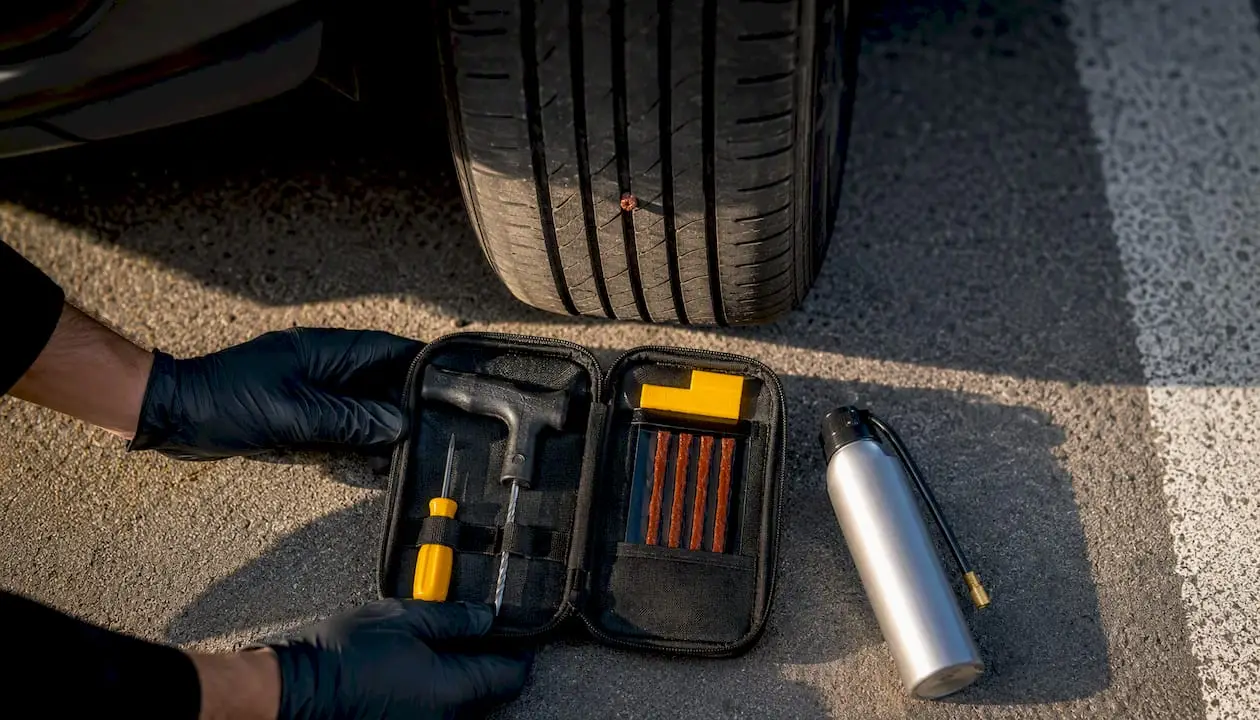
This is where the classic plug vs. patch debate matters. A plug-only repair, especially one done without removing the tire from the wheel, never gets inspected from the inside. That “outside-in” approach might seal the hole, but it leaves you guessing about what’s happening underneath. Industry groups don’t recognize it as a permanent fix, and neither should you.
A few situations take the decision out of your hands entirely:
- The puncture is in the sidewall or shoulder, not the tread.
- The hole measures wider than 1/4 inch.
- You drove any real distance on a flat tire.
- The tire is a run-flat or shows signs of internal damage from being underinflated.
When you do bring the car in, give the technician the full story: how long you drove on it, whether you used a sealant or plug kit already, and any noises or handling changes you noticed. That information speeds up diagnosis considerably, because it tells the tech exactly where to look for hidden damage before they even get the tire off the rim.
What a Professional Puncture Repair Costs and How Long It Takes
A standard patch-and-plug repair is generally one of the more affordable services a tire can need, though the exact price depends on your shop, your tire size, and local labor rates. Turnaround is usually quick. Most shops can inspect, repair, rebalance, and remount a tire well within the same visit, especially compared to ordering and waiting on a replacement tire.
A few things push the job toward “replace” instead of “repair,” which changes both the cost and the timeline:
- Multiple punctures close together or overlapping injuries.
- Specialty tires, including run-flats, which have different internal construction.
- Any sign of internal damage found once the tire is off the wheel.
Statistic Callout: Because tires with 2/32 inch or less of remaining tread aren’t candidates for repair regardless of puncture size, an older, worn tire often means a replacement conversation instead of a repair estimate.
Before any work starts, ask for a written estimate and ask whether the repair carries a warranty. That single question tells you a lot about how a shop stands behind its work. For a broader sense of what typical repair visits look like start to finish, our breakdown of vehicle repair timelines is a useful companion read.
Why Choose a Trained Shop: Express Lube & Car Care’s Approach
A puncture repair looks simple from the outside, which is exactly why so many go wrong. Express Lube & Car Care’s ASE-certified technicians follow the same demount-and-inspect process outlined by industry guidance, not a shortcut version of it.
Here’s what that means for you as a customer:
- ASE-certified technicians handle every tire inspection and repair.
- Express Lube & Car Care is a RepairPal Certified Shop, recognized by CarFax for dependable workmanship.
- You get a clear estimate before any work begins, so there are no surprises.
- Repairs come with a a warranty for peace of mind for peace of mind.
- Financing options are available if a repair turns into a bigger job.
The workflow is straightforward: your tire gets pulled, inspected inside and out, repaired if it qualifies, then rebalanced and rechecked before you leave the lot. If you’re dealing with a nail, a slow leak, or a tire that just doesn’t feel right, book an inspection and let a certified technician tell you exactly what’s going on underneath the rubber.
Our Take: Stop Trusting the Plug-Only Fix
The biggest gap between what drivers assume and what the industry actually recommends comes down to one habit: treating a plug as a finished repair instead of a way to get somewhere safer. Manufacturer guidance is consistent on this point, and it hasn’t changed in years. A plug seals a hole. It doesn’t tell anyone what’s happening on the inside of that tire, which is the part that actually determines whether it’s safe to keep driving on.
We’d also push back gently on the instinct to save a tire that’s already worn thin. A repair on a tire near the 2/32 inch mark buys you very little time and adds a variable most drivers don’t account for: a patched tire wearing unevenly against three others that aren’t. If your puncture checks every box for a safe repair, get it done properly and move on. If it doesn’t, treat replacement as the responsible choice, not a failure to save money.
Get Your Tire Inspected the Right Way
Express Lube & Car Care is the shop that treats a tire puncture as a diagnostic job, not a five-minute patch. Where a quick-fix plug leaves you guessing about hidden damage, our ASE-certified technicians pull the tire, inspect it inside and out, and give you a straight answer on repair versus replacement before any work begins.

Every eligible repair follows the same combined patch-and-plug process the manufacturers recommend, backed by a warranty for peace of mind and, if the job turns into something bigger, financing options to help spread out the cost. While you’re keeping up with tire care, it’s a good time to check whether your car is also due for other routine maintenance. Our guide to routine oil change benefits covers the other side of keeping your vehicle reliable. Call or book online today to get your tire inspected and know exactly where you stand.
Sources
If you want to verify any of this directly, the USTMA’s puncture repair guidance and Michelin’s repair policy lay out the same criteria covered here. It’s a fair question to ask any shop: do you follow RMA/USTMA and manufacturer repair standards?
- Puncture repair procedures (USTMA)
- Tire Repair (Tire Industry Association)
- Can my car tire be repaired? (Michelin)
FAQ
Can a Punctured Tire Be Repaired?
Yes, if the puncture is in the tread (not the sidewall or shoulder), measures 1/4 inch or less, and the tire has more than 2/32 inch of tread remaining. If any of those conditions aren’t met, replacement is the safer option.
How Much Should a Puncture Repair Cost?
A standard patch-and-plug repair is typically one of the lower-cost tire services available, though exact pricing varies by shop, tire size, and region. Ask for a written estimate before work begins so you know exactly what you’re paying for.
How Long Does a Professional Tire Repair Take?
Most shops can inspect and repair a qualifying puncture in a single visit, since it involves demounting the tire, patching it internally, and rebalancing before remounting.
Is a Tire Plug Safe on Its Own?
A plug alone, especially one installed without removing the tire from the wheel, is considered a temporary fix at best. Industry guidance recommends a combined patch-and-plug performed after the tire is dismounted and inspected internally.
What’s the Difference Between a Tire Patch and a Plug?
A plug fills the hole from the outside, while a patch seals the inner liner from the inside. The industry-standard repair combines both in a single unit installed after the tire is removed from the wheel, which is why patch-only or plug-only fixes fall short of the accepted standard.